
The Six‑Eared Macaque appears as a distinct supernatural being in Wu Cheng'en's Journey to the West (episode spanning chapters cited around 56–58, notably chapter 58). Within the novel's cosmology the Buddha identifies him as one of four "spiritual primates" that do not fall under the usual ten categories of beings; he emerges in the pilgrim journey as an impostor who seeks to replace Sun Wukong and claim the pilgrim rewards. Later retellings and adaptations sometimes reuse or rework the figure, but the primary origin and narrative function derive from the Ming‑dynasty novel.
In the primary text the macaque's outward form is that of a macaque/monkey indistinguishable from Sun Wukong; contemporaries in the story cannot tell real from fake. The salient physical marker invoked by the name is that he is a six‑eared macaque—the Buddha later "transforms it back into a six‑eared macaque" when exposing and subduing him. The sources do not provide a longer, consistent visual catalogue beyond this emphasis on six ears and exact similarity to Wukong.
In the narrative his central ability is flawless impersonation of Sun Wukong—so convincing that ordinary tests and other deities cannot distinguish him (he even responds correctly to the Headache Sutra). The Buddha describes him as near‑omniscient, "knowledgeable of past and future and comprehensive of all things," a quality linked in the text to his six ears and wide eavesdropping. As one of the "spiritual primates," he matches Sun Wukong in martial ability and resists defeat in direct combat until the Buddha adjudicates. His stated goal in the episode is to supplant Wukong and obtain the monk's rewards; when revealed by the Buddha he attempts to flee, is trapped under a giant golden alms bowl by the Buddha's hosts, and is subsequently killed by Sun Wukong.
Weaknesses
- conditionvulnerability to revelation and adjudication by supreme spiritual authority (the Buddha)
- othertrapping by the Buddha's agents using a giant golden alms bowl (narrative device)
Wards
- otherbring disputants before a higher spiritual authority
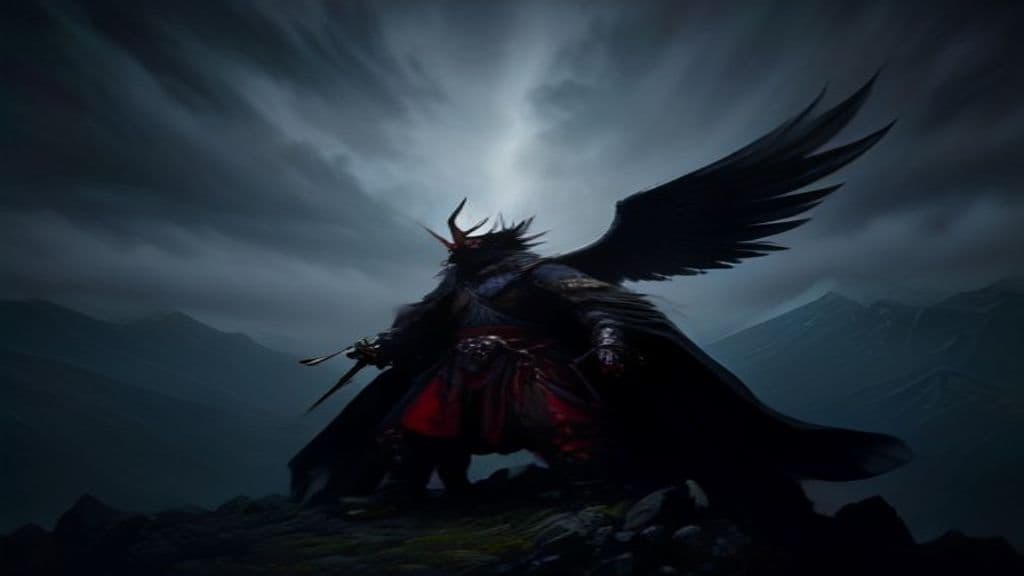
Tengu
Proud, warrior-like mountain spirits of Japan, associated with martial arts, pride, and the wild mountains. Neither fully good nor evil — they test and train warriors and monks, but punish the arrogant.

Kitsune
Fox spirits of Japanese mythology — intelligent, long-lived beings who gain additional tails (up to nine) as they age and grow in power. They serve as messengers of the god Inari and as powerful tricksters.

Sun Wukong
Sun Wukong (孫悟空, Sūn Wùkōng), popularly the "Monkey King," is a mythic non-human sapient figure from Chinese literary and religious tradition best known from the 16th‑century novel Journey to the West. Portrayed as an exceptional stone-born monkey who acquires supernatural powers through Taoist practice, he is alternately a rebellious trickster who challenges Heaven and, after punishment, a protector and disciple who accompanies the monk Tang Sanzang on a Buddhist pilgrimage.

Yaksha
Nature spirits of Hindu, Buddhist, and Jain cosmology — guardians of forests, treasures, and wilderness. Ambivalent beings, capable of great benevolence to the respectful and terrible harm to the greedy.
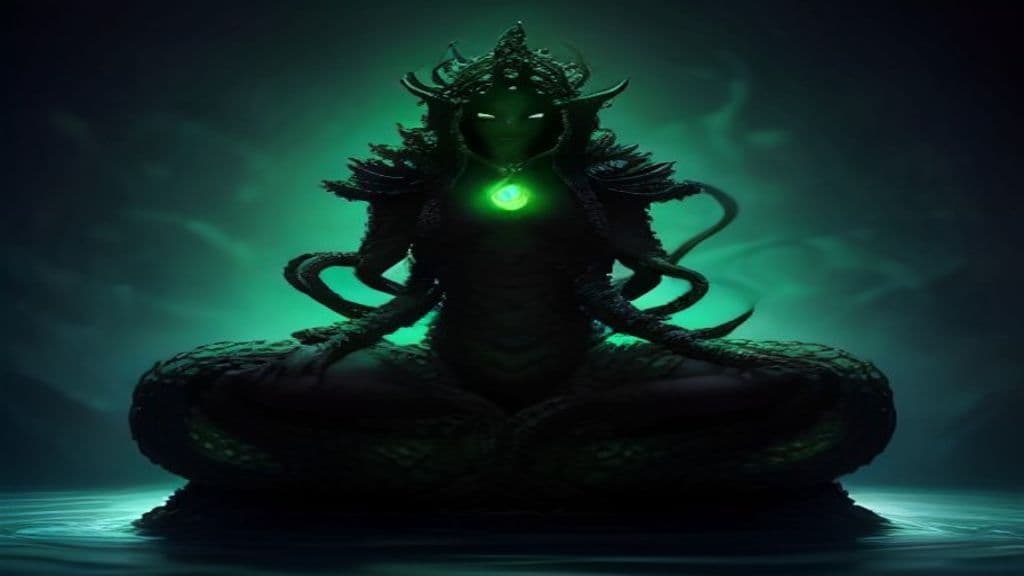
Naga
Divine serpent beings of Hindu, Buddhist, and Jain cosmology — powerful guardians of water, earth, and underground treasures. Revered as deities in South and Southeast Asia.
Acala
Acala (Sanskrit: अचल, 'The Immovable') is a wrathful protective deity (dharmapala) in Vajrayāna and East Asian esoteric Buddhism, classed among the Wisdom Kings (Vidyārāja). He functions as a ritual focus for visualization and mantra practice intended to remove obstacles and bind or destroy hostile forces.
Acalanātha (Acala / Achala)
Acalanātha (also Acala or Achala) is a wrathful deity and dharmapāla — a protector of the Dharma — prominent in Vajrayana and East Asian Mahayana Buddhist contexts. Presented as a fierce, non‑human or semi‑divine protector-figure, Acalanātha functions to defend the teaching and practitioners by removing obstacles and confronting threats to the transmission and practice of Buddhism.
Agni
Agni is the Vedic personification of fire in Hindu tradition: a sacred, mediating principle that manifests as terrestrial fire, atmospheric lightning, and celestial sun, and that receives and conveys sacrificial offerings. Prominent in the Rigvedic corpus, Agni functions as sanctifier, witness of rites of passage, and a transformational inner principle in later Upanishadic literature.
Aizen Myō-ō (Rāgarāja)
Aizen Myō-ō corresponds to the deity Rāgarāja, a wrathful/transformation-oriented figure venerated in Esoteric and Vajrayāna Buddhist traditions. The figure is especially revered in Chinese Esoteric Buddhism in Chinese communities and in the Japanese Esoteric schools Shingon and Tendai.
Akhu Tönpa
A Tibetan trickster figure, sent by Chenrezig to teach the art of being shrewd and witty, while championing the common man against social hierarchies. (Note: - Power tier should be Lesser or Minor Spirit, not Ancient, as it's more aligned with local spirit level of trickster figures. - The ability to outwit those in positions of power suggests Greater or P)
Akshobhya
Akshobhya is a transcendent buddha of Mahāyāna and Vajrayāna Buddhism, one of the Five Wisdom (Dhyāni) Buddhas. He personifies 'mirror knowledge' (ādarśa-jñāna), is conventionally placed in the East, and is lord of the eastern Pure Land Abhirati; in esoteric texts he is associated with the eastern Vajra division and invoked in mantra/mandala ritual contexts.
Akuma
Akuma (悪魔/あくま) in Japanese sources is an evil spirit, devil, or demon associated with misfortune and mental disturbance. The term appears in Buddhist texts and Heian-period literature and was later used to translate the Christian figure of Satan, as well as the Buddhist Mara.
Amanojaku
Amanojaku (天邪鬼 / あまのじゃく) is a Japanese yōkai-type being portrayed as a contrarian, heart-reading trickster. Treated in different contexts as a small ogre (ko-oni), a wicked demon (jaki) in Buddhist iconography, and a folkloric spirit that provokes human vice, it appears across regional tales with variable roles from malicious kidnapper to household oddity.
Amida Nyorai
Amida Nyorai (Amitābha / Amitāyus) is a principal Mahayana Buddha venerated across East Asia as the embodiment of Infinite Light and Infinite Life who presides over a Western Pure Land and is invoked as the savior who receives the dying into rebirth there.
Amitābha
Amitābha is a central celestial Buddha of Mahayana Buddhism who presides over the western Pure Land called Sukhāvatī. Devotional practices invoking his 'measureless' light and life (nianfo/nembutsu) are presented in Pure Land traditions as a path by which beings may be reborn in his buddhafield and quickly attain Buddhahood.
Amitābha Buddha
Amitābha is a principal Mahayana Buddha who presides over the Western Pure Land (the Land of Ultimate Bliss). Devotional practices—most centrally recitation of his name and chanting of Pure Land sutras—are presented in sources as the means by which Amitābha welcomes practitioners for rebirth in his hindrance-free realm.
Amoghapāśa
Amoghapāśa is recorded in the supplied sources as a named manifestation or form of the bodhisattva Avalokiteśvara/Lokeśvara attested in Mahāyāna and Vajrayāna contexts. The evidence in the provided material is archival and bibliographic (sūtra/dhāraṇī/maṇḍala filenames and database entries) rather than descriptive narrative or doctrinal exposition.
Community Record
- [1]Six‑Eared Macaque. Wikipedia: Six‑Eared Macaquewiki
- [2]Chapter 58 (Journey to the West). Omnisterra text of Journey to the West, chapter 58 excerptliterary
- [3]Lessons Learned from an Episode in Journey to the West. Minghui article recounting the episodeother
- [4]Six‑Eared Macaque | Public Domain Super Heroes | Fandom. pdsh fandom summary referencing Journey to the Westother
- [5]Origin of the Six‑Eared Macaque and the Character’s Influence on Black Myth: Wukong. Journey to the West Research discussion of origins and interpretationsother