
Avestan sources present Sraosha as a high-ranking yazata who stands under Ahura Mazda within the Zoroastrian divine order and is repeatedly associated with the Amesha Spentas. Texts portray him as established in the early Gathic material as the propagator of conscience and teacher of Mazda's religion; later tradition identifies him as one of the three guardians of the Chinvat bridge and as the unique companion who escorts the soul across the bridge to judgment (Yasna 56–57; Yasht 11; Vendidad references).
Avestan hymns offer laudatory epithets rather than fixed iconography: he is described as strong, sturdy, active, swift, stately, mighty, and awe-inspiring (Gathic/Yasna epithets such as Yasna 57.13; Yasna 56–57). The provided sources do not supply detailed, consistent corporeal or iconographic attributes (wings, colors, specific garments) in the primary Avestan texts cited.
Sraosha's functions in the texts include teaching and propagating the religion of Ahura Mazda to mankind (Yasna 57.24; Yasht 11.14), guarding humanity and households (Yasht 11.7, 11.20), propitiating haoma with sacrifice and overseeing correct ritual (Yasna 56–57), acting as a psychopomp and guardian at death—one of the three custodians of the Chinvat bridge who alone accompanies the soul across it—and combating hostile powers (called the 'fiend-smiter', opponent of Aeshma; Yasna 57.12, 57.19–22). Ritual speech and sacred formulae associated with Sraosha (e.g., recitation of Yasna sections, the Ahuna Vairya manthra) are presented as his means of opposing evil.
Weaknesses
None recorded.
Wards
- mantraRecitation of Yasna 56–57 (the 'hidden' yasht) / Srosh Yasht (Yasht 11) and associated sacred formulas (e.g., Ahuna Vairya)
- ritualPropitiatory sacrifice with haoma as performed within the Yasna liturgy
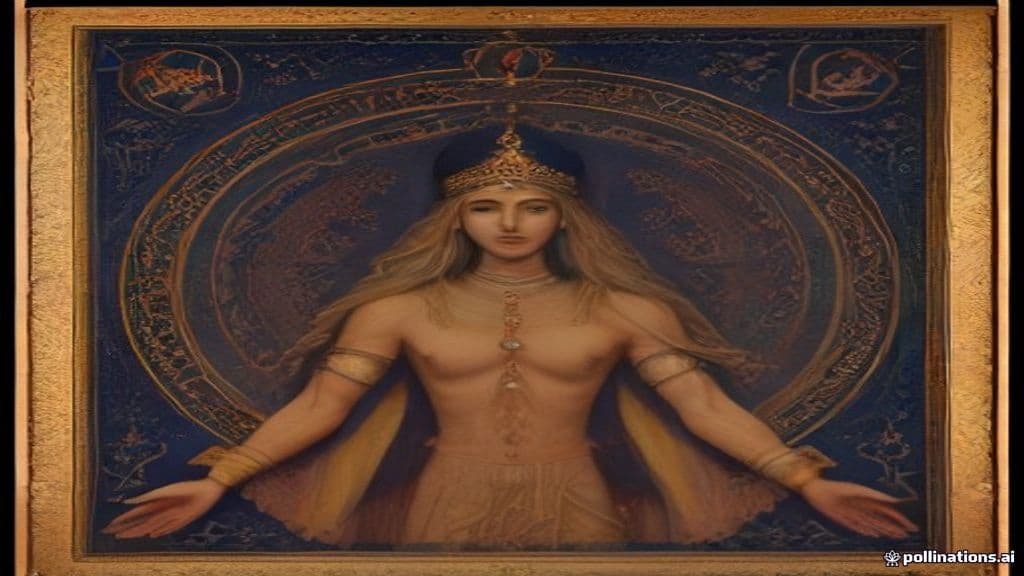
Rashnu
Rashnu is the Avestan personification and divine agent of justice and truth (asha) in Zoroastrian cosmology. He functions as one of the post‑mortem judges of souls, an embodiment of straightness/uprightness (razishta), and a liturgical figure commemorated on the 18th day of each Zoroastrian month.

Mithra
Mithra (Avestan Miθra) is an ancient Indo‑Iranian deity preserved in Iranian and Zoroastrian scriptures as a high Ahuric figure who guarantees covenants, truth, and the ordered life of society. Described in the Avesta as an ever‑watchful guarantor of contracts, protector of pastures, cattle and waters, and a diurnal heavenly presence, Mithra is liturgically venerated in hymns such as the Mihr Yasht and invoked in Khorda Avesta litanies. Modern scholarship notes similarities but significant differences between the Avestan Mithra and the Roman Mithras cult.
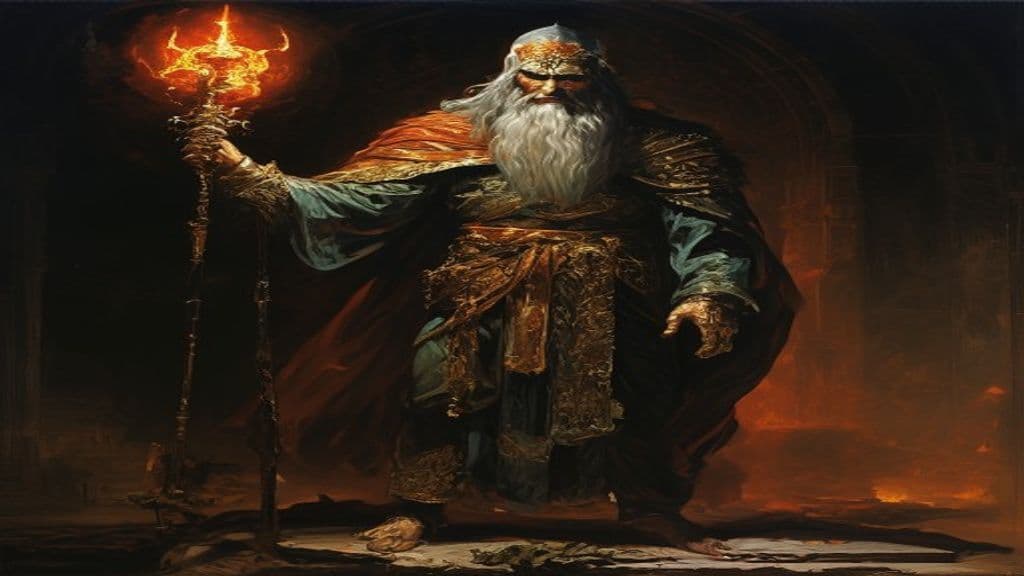
Aeshma
Aeshma is the Zoroastrian hypostasis of wrath — a fiendish being who personifies rage and functions as an ontological opponent to Ahuric principles and ritual discipline. In scripture and later tradition he distracts worship, foments violence and drunkenness, can be driven off by prayer or by divine agents such as Sraosha and Mithra, and will be overthrown or flee at the final renovation.
Ab-Zohr
Ab-Zohr is the culminating rite of the Zoroastrian Yasna service: a formal offering to the waters (Aban/Apas) that creates the consecrated liquid parahaoma and functions to purify, strengthen, and atone for damage done to waters. It is a ritual action rather than an independent supernatural being.
Aban (Āb/Ābān)
Aban (Avestan apas; Middle Persian āb/ābān) is the collective, sacred principle of the waters in Zoroastrian cosmology — both the element water and its personified hypostases (the Apas/Ahuranis). Aban functions as a primordial, life-giving creation, a calendrical and liturgical focus (day-name, month-name, Abanagan feast), and a ritual object of veneration (ape zaothra, Aban Yasht) rather than a malign force to be expelled.
Aban Yasht
The Aban Yasht is a hymn from the Persian tradition that praises Anahita, a goddess associated with water, fertility, and wisdom. It consists of 132 stanzas and is part of the 21 Yashts collection. (Note: - Power tier should be "Primordial" or possibly "Cosmic", given that it's a hymn of great spiritual significance and associated with a goddess. - The article incorrectly states that Anahita is associa)
Abtin
Abtin (Persian: آبتین), attested also as Athwya, is a mythic ancestral figure in Iranian tradition described in Avestan and later epic literature as one of a small set of formative human-like figures involved in preparing the corporeal world and as the father of the epic hero-king Fereydun in the Shahnama.
Adur Burzen-Mihr
Adur Burzen-Mihr is a consecrated Atash Behram — one of the three Great Fires of late antique Sasanian Zoroastrianism — historically associated with the farmer social estate and with a cultic location in northeastern Iran. Medieval texts (e.g., the Bundahishn) and later summaries record it as a major pilgrimage fire with legendary associations of protection and miraculous efficacy; its documentary history after the early Islamic period is unclear.
Adur Farnbag
Adur Farnbag is one of the three Great or Royal fires in the Zoroastrian ritual/topographical system of pre‑Islamic Iran. Presented in the sources as a continuously tended sacred fire housed in a temple, it is attested in secondary accounts as a focus of cultic activity, miracle stories, and association with elite ritual geography in the Parthian–Sasanian eras.
Adur Gushnasp
Adur Gushnasp (Middle Persian: Ādur ī Gušnasp; New Persian: Āzargušnasp) is a pre-Islamic Zoroastrian Great Fire — one of the three highest grade sacred temple fires (Atash Behram) of Sasanian-era Iran. Housed at the temple-site historically called Shiz (modern Takht-e Soleymān, Adurbadagan), it functioned as a continuously tended cultic fire, a pilgrimage destination, and a focal point of royal patronage and warrior-class identity.
Aeshma
Aeshma is the Zoroastrian hypostasis of wrath — a fiendish being who personifies rage and functions as an ontological opponent to Ahuric principles and ritual discipline. In scripture and later tradition he distracts worship, foments violence and drunkenness, can be driven off by prayer or by divine agents such as Sraosha and Mithra, and will be overthrown or flee at the final renovation.
Afrasiab
Afrasiab is the legendary king and arch-enemy of Iran in Iranian epic and Zoroastrian-influenced tradition. Attested from the Avestan Fraŋrasyan through Middle Persian and the Shahnameh, he functions as a powerful Turanian ruler associated with sorcery, subterranean dwellings, and opposition to Iranian heroes and divine agencies.
Aghrirat
Aghrirat is a named Turanian noble and peacemaker in the Shahnameh and Iranian mythic tradition, presented as a son of Pashang and brother of Afrasiab and Garsivaz. He is notable for his kind and gentle character and for attempting, largely unsuccessfully, to end the hostilities between Iran and Turan.
Ahriman (Angra Mainyu)
Angra Mainyu (Middle Persian Ahriman) is the hypostasis or personification of destructive, deceitful, and disordering mentality in Zoroastrian tradition. In the earliest (Gathic) layer it is presented as a choiceful destructive mainyu opposed to the constructive Spenta Mainyu; in later Pahlavi exegesis it becomes a personified cosmic antagonist who nevertheless is described as ontologically deficient and non-divine.
Ahura
Ahura is an Avestan term that designates a class of divinities in the Indo‑Iranian and Zoroastrian tradition, marking the sacred ‘lords’ who are to be reverenced and opposed to the rejected class of daevas. In Zoroastrian scripture the label functions as both a technical category and an honorific applied to high divine figures such as Ahura Mazda, Mithra, and Apam Napat.
Community Record
- [1]Sraosha (Wikipedia). Wikipedia article 'Sraosha' summarizing Avestan references (Gathas, Yasna, Yashts, Vendidad) and later traditionwiki
- [2]Srosh Yasht / Hadhokht Nask (Avesta, English translation). AVESTA: KHORDA AVESTA (English): SROSH YASHT HADHOKHT (translation and text fragment)other
- [3]Yasna (Avesta, English translations and commentary). AVESTA: YASNA (English translations of Yasna sections cited, including 56–57 references to Sraosha)other
- [4]Zoroastrian Origins Of Abrahamic Angels (archive). Archive paper discussing comparative-historical links and later adaptations of Zoroastrian angelology (mentions Sraosha <-> Gabriel parallels in later tradition)academic
- [5]The Fire of Sraosha (Vohuman / Zoroastrian Association of Europe). Article discussing Sraosha's role and cultic associations (household/hearth, ritual connections)other
- [6]Sraosha in Zoroastrian Tradition (archive). Archive essay compiling traditional references to Sraosha and his liturgical functionsother
- [7]Aeshma (Wikipedia). Wikipedia article on the hostile daeva Aeshma, identified in sources as Sraosha's chief adversarywiki