
Sources supplied here do not record a single unified creation myth for Velnias; rather, scholarship and encyclopedia summaries locate him as an indigenous pre-Christian chthonic deity of the Baltic and related Slavic tradition (Veles/Volos). Comparative and folkloric studies present him as an ancient underworld being whose authority connects pastoral economy, social order and cosmology: the underworld is metaphorically described as a pasture where souls graze, making the deity both a custodian of wealth (cattle) and a mediator between the living and the dead (Source 1). Modern discussions and comparative essays treat the Baltic Velnias and the Slavic Veles as culturally related but distinct attestations of a broader Indo-European chthonic figure (Sources 1, 10, 12).
Most academic and encyclopedic sources emphasize Velnias/Veles's functions more than a standardized physical form; the core corpus cited here gives no consistent, detailed description (Source 1). A modern popular website (Mythlok) offers a vivid variant calling Velnias/Velinas a one-eyed prophet who can raise whirlwinds and lead souls through the skies, but that depiction is not corroborated by the encyclopedia/scholarly summary and should be treated as a contemporary or site-specific interpretation (Source 8). In short: traditional sources supplied emphasize role and sphere rather than definite anthropomorphic features; some modern retellings supply additional attributes (e.g., one-eyed, storm-associated) without strong scholarly attestation (Sources 1, 8).
Across the cited materials Velnias/Veles is credited with multiple interlocking roles: guardian and protector of cattle and animals (linking him to wealth), guardian of the boundary between the living and the dead and guide of souls to an underworld imagined as a pasture, and patron of wilderness, hunting and animals (Source 1). Comparative readings and encyclopedic summaries also interpret him as connected to magic, esoteric knowledge, divination and poetic inspiration (Source 1). He functions as guarantor of oaths, with violation punishable by a malady described metaphorically as 'turning them yellow' (probably jaundice) (Source 1). Later Christian-era sources and metadata sometimes recast him pejoratively (for example, a Wikidata label records him as a 'demon in Baltic mythology'), indicating transformation of his reputation under Christian influence (Source 2). A modern online variant attributes abilities such as raising whirlwinds and leading souls through the skies, but this is not corroborated by the major encyclopedia summary and should be classed as an unverified or modern interpretive detail (Source 8).
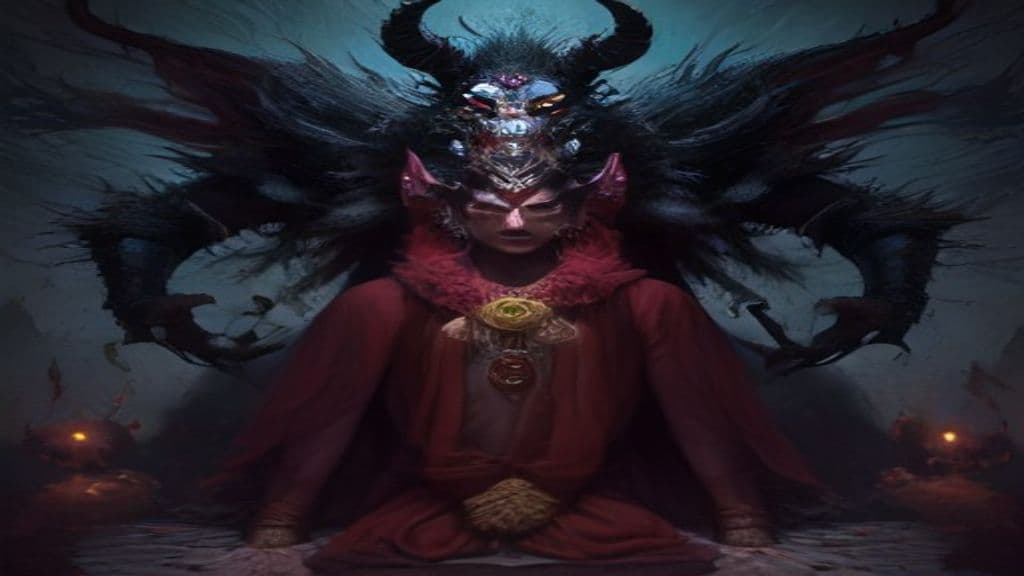
Adže / Adze
No folkloric entity named 'Adže' is documented in the provided sources. The string appears in heterogeneous, non-folkloric contexts (a Bosnian village name, an English woodworking tool entry, a performer pen name, a CIA document fragment) and one modern podcast episode list that mentions 'the Adze' among other vampire-like beings; none of these supply an ethnographic description of a supernatural being called 'Adže'.
Aitvaras
Aitvaras is a Baltic (primarily Lithuanian) household/nature spirit that, according to available summaries, lodges in homes and provides its household with material goods—often described as stolen gold and grain—while also bringing misfortune or trouble. It is variously described as a rooster- or chicken-like bird indoors and as a dragon-like or serpentine bird outdoors, often with fiery/meteor imagery.
Ala
A female weather-being in South Slavic folk cosmology (Bulgaria, Serbia, North Macedonia) associated with hail, destructive storms, and voracious appetite; she is said to lead hail-producing clouds to destroy crops and is sometimes blamed for eclipses by attempting to devour the Sun or Moon.
Alatyr
A sacred world-stone in East Slavic and wider Slavic folklore, described as the "father to all stones" and the "navel of the earth." Located at the world's center (often on Buyan island), it is associated with a miraculous spring, sacred letters, healing properties, and liminality between the human world and other realms.
Alka
Alka (plural alkas) is a class of sacred natural places in pre-Christian Baltic religion—Latvian and Lithuanian—functioning as set-apart cult sites where offerings and sacrifices were made. Treated as holy ground rather than a single anthropomorphic spirit, alkas served as loci connecting communities with ancestors and otherworldly realms and frequently appear in toponyms across the Baltic landscape.
Alkonost
The Alkonost is a legendary woman-headed bird of East Slavic folklore, depicted as an individual mythic avian figure who lives in the underworld alongside her counterpart Sirin. Her song enchants listeners into forgetfulness or bliss, she is said to bless fruit during the Apple Feast of the Saviour, and her reproductive actions are causally linked in lore to sudden storms at sea.
Alyosha Popovich
Alyosha Popovich (Алёша Попович / Олешко Попович) is a named human hero (bogatyr) of the East Slavic byliny tradition, remembered as the youngest member of the canonical trio of Kievan Rus' warriors. He is chiefly characterized by slyness, mockery, and trickery, and defeats foes by craft often aided by pious petition rather than mere brute strength.
Andrew the Apostle
Andrew the Apostle (Greek Ἀνδρέας, Latin Andreas) is one of the Twelve Apostles in the New Testament, a fisherman from Bethsaida, the brother of Simon Peter, described as the “first-called” who introduced others to Jesus. Post-biblical traditions depict him as an early missionary and founder of Christian communities (notably claims of missions to Thrace, Scythia, and founding the see of Byzantium) and as a martyr crucified at Patras.
Aq Bars
Aq Bars (Tatar: Ак Барс, 'White Leopard') is an ancient Bulgar tribal totem and heraldic emblem historically used in Volga Bulgaria and the Khanate of Kazan and adopted in the modern era as the official symbol of the Republic of Tatarstan (formally since 7 February 1992). It functions as a dynastic/tribal mark of identity (derived from the Barsil tribe) and as a political-state emblem rather than a personal supernatural being.
August curse
A modern cultural concept in Russia describing a perceived clustering of severe disasters, attacks, and adverse events during the month of August. Treated in sources as an explanatory frame combining statistical observation, seasonal and political factors, and occasional astrological or supernatural interpretation.
Auseklis
Auseklis is a named youthful celestial being in Latvian folk-song tradition (dainas), associated with the dawn and a particular eight-pointed star emblem. He appears among the Dieva dēli (sons of Dievs) as an attendant of the Sun (Saule), a suitor in the mythic 'celestial wedding', and a participant in household-like sky rituals.
Aušrinė
Aušrinė is the Lithuanian personification and deity of the morning star (planet Venus) in traditional Baltic cosmology. She is a feminine liminal figure associated with dawn, beauty, youth, love, health and renewal who appears each morning to prepare the way for Saulė (the Sun).
Community Record
- [1]Veles (Wikipedia entry). Wikipedia: "Veles, also known as Volos, is a chthonic god of the underworld..."wiki
- [2]Wikidata: Velnias. Wikidata entry label: "demon in Baltic mythology" (indicative of later reclassification)other
- [3]Velinas : The God of the Dead in Baltic Mythology - Mythlok. Mythlok: "Velnias or Velinas... a one-eyed prophet who can raise whirlwinds and lead the souls of the dead through the skies." (modern/site-specific depiction)other
- [4]Celtic Belenos and Balto-Slavic Veles | The Atlantic Religion. Comparative essay discussing cross-cultural parallels with Veles/Velnias (used here to indicate comparative scholarship exists)other
- [5]Mapping Folklore: Mythical Creatures of the Baltics and Beyond – Deep Baltic. Modern folklore mapping that references Baltic creatures and comparative motifs (used to support existence of modern retellings and mappings)other