Jewish Supernatural Beings

289 documented Jewish supernatural beings from the Evil Eye grimoire, including 93 lesser and 71 ancient in power tier.

page 5 of 5

Qliphah (Qlippoth)
Ancient

Qliphah (Qlippoth)

In Kabbalistic and later Western esoteric frameworks the qliphoth (singular qliphah) are the impure or oppositional spiritual forces that mirror and invert the sefirot; they belong to the metaphysical realm called the Sitra Achra and are later personified and mapped by Hermetic Qabalah traditions.
Qlippoth
Greater

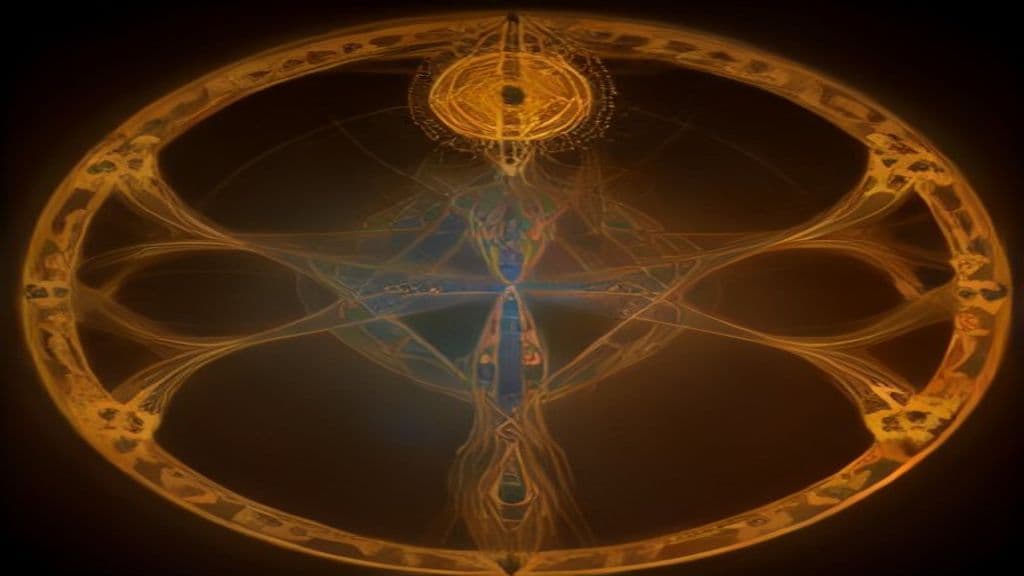
Qlippoth

Qlippoth (Hebrew קְלִיפּוֹת, qəlippōṯ, singular qəlippā) are the "husks" or "shells" in Jewish mystical literature that constitute the impure, obscuring counterpart to the sefirot. Originating in Zoharic mythic cosmology as coverings or forces of darkness (the Sitra Achra), the concept was later reinterpreted and systematized in Western occultism as infernal realms, orders of demonic beings, and mappings opposite the Tree of Life.

Queen of Sheba
Lesser

Queen of Sheba

A legendary royalwoman who appears across Hebrew, Christian, Jewish, Islamic, and Ethiopian Christian traditions as a powerful sovereign from 'Sheba' who visits King Solomon to test his wisdom and exchanges gifts and riddles. She is presented in primary accounts as a human monarch whose visit functions as a literary and theological focal point rather than as a supernatural being.

Rahab
Primordial

Rahab

In Jewish tradition, Rahab is a multifaceted concept representing both the mythical sea monster and various symbolic entities. (Note: * Power tier should be "Primordial" only if Rahab's abilities justify it; the source does not provide sufficient information about its abilities to determine its power level accurately. * Abilities: T)

Ramiel
Lesser

Ramiel

Ramiel (Raʿamʾēl) is named in the Enochic Book of the Watchers as one of the chiefs among the fallen angels who descended in the antediluvian age, took human wives, and became part of the corrupt company responsible for the Nephilim. The name is a Semitic theophoric compound commonly glossed as “God has thundered.” Later traditions sometimes conflate Ramiel with similarly named holy angels (Remiel/Jeremiel), but in the Book of Enoch Ramiel is listed among the condemned Watchers.

Raphael (Archangel)
Ancient

Raphael (Archangel)

Raphael is an archangel in Jewish and Christian traditions whose name means "God has healed." He appears in the Book of Tobit as a divine agent who guides Tobias and effects healing, and is commemorated in Christian liturgy as a principal angel invoked for healing, guidance, and protection of travelers.

Raziel
Greater

Raziel

Raziel is an angelic revealer in Jewish mystical literature, called the 'Angel of Secrets' and credited with transmitting esoteric books (notably Sefer Raziel) to prime ancestors; the name is also reused in modern fiction for characters and artifacts that evoke revelation or hidden knowledge.

Re'em (Jewish tradition)
Minor Spirit

Re'em (Jewish tradition)

A mysterious animal mentioned nine times in the Hebrew Bible, described as a creature of power and strength with unclear nature and translations. (Note: - Power tier should be Greater (as it is described with translations implying strength/ferocity comparable to powerful regional entities). - Weaknesses and wards should be addressed (not mentioned in )

Rephaite (Rephaim)
Ancient

Rephaite (Rephaim)

A Northwest Semitic lexical and cultural cluster referring both to an ancient people of unusually great stature remembered in the landscape of Canaan and to the long-dead or netherworld inhabitants (shades) invoked in funerary and ritual contexts; the same root and related terms appear in Ugaritic and Hebrew texts and carry overlapping meanings of ancestral dead and legendary giants.

Ruach
Ancient

Ruach

Ruach (רוּחַ) is a Hebrew term used in Jewish and related theological discourse to denote spirit, breath, or wind; it functions as the life‑giving principle that animates living beings and as a mode or influence of God's presence (e.g., Ruach Ha‑Kodesh, the Holy Spirit). The term is primarily conceptual and metaphorical rather than an individualized anthropomorphic spirit in the supplied sources.

Ruach Ha‑Kodesh (Holy Spirit)
Ancient

Ruach Ha‑Kodesh (Holy Spirit)

In Jewish textual tradition Ruach Ha‑Kodesh (the Holy Spirit) names the divine force, quality, or influence of the one God by which God communicates, empowers, and inspires humans. Treated predominantly as an attribute or mode of God's action rather than an independent created being, it is nonetheless sometimes personified in rabbinic literature and associated with sensory manifestations such as wind, noise, light, and fire.

Sachiel
Greater

Sachiel

Sachiel is a named angelic intelligence attested in Jewish and later Western occult sources, functioning as a planetary correspondent for Jupiter and associated with wealth, abundance, charity, and Thursday. The name is a product of textual transmission and conflation in medieval occult books and appears in talismanic and grimoire contexts rather than as a narrative visionary figure.

Samael
Ancient

Samael

An angelic figure in Jewish textual traditions whose roles include accuser/adapter (Satanic function), tempter, destroyer/angel of death, and, in later mystical texts, leader of demonic or qlippothic forces. Samael is presented variously across Second Temple literature, midrashim, and Kabbalah; his destructive functions are often framed as serving divine purposes rather than as an independent absolute evil.

Samandar (Jewish tradition)
Minor Spirit

Samandar (Jewish tradition)

No documentation in the supplied sources identifies Samandar as a supernatural being in Jewish tradition. The term appears in the provided corpus primarily as a toponym — a medieval city (capital) of Khazaria — and in various modern secular or personal-name usages. Claims about a Jewish spirit named Samandar are unsupported by the given material.

Sambation
Primordial

Sambation

In Jewish tradition, the Sambation is a metaphorical concept representing the boundaries beyond which the Ten Lost Tribes of Israel were exiled. (Note: * Power tier should be Lowered to Lesser or Minor Spirit since there's no attributed powers or behaviors. * Summary should be revised for accuracy: The Sambation is a river in Jewish tradition marking)

Samyaza
Ancient

Samyaza

Samyaza is a leading heavenly Watcher (one of the grigori) who instigates the descent of angels to mate with human women, transmit forbidden knowledge, and sire the Nephilim. In the Enochic tradition he leads the oath-bound band whose transgression brings divine punishment (binding and imprisonment); later and related traditions adapt his name and role in Manichaean, rabbinic, and legendary materials.

Sandalphon
Ancient

Sandalphon

Sandalphon is a highly elevated angelic figure in later Jewish and Christian mystical literature (rabbinic, midrashic, and Kabbalistic), often ranked among the chief angels. He functions as an intermediary who gathers human prayers and transmits them to God, is associated with heavenly song, and is placed in Kabbalah as representing the sephirah Malkuth and as chief of the Seventh Heaven.

Sariel
Ancient

Sariel

Sariel (Heb. Śārīʾēl) is a named angel attested in Jewish apocryphal literature and in late‑antique apotropaic contexts. He is listed among a small group of prominent angels charged with oversight functions (e.g., set over spirits who sin) and appears as an invoked protective name in ritual artefacts and sectarian practice.

Satan
Ancient

Satan

A central oppositional figure in Abrahamic traditions who functions variously as an accuser, tempter, tester, and rebel. In earliest Hebrew Bible contexts the term functions as a role within the divine council; in later Jewish, Christian, and Islamic developments the figure becomes a more fully personified adversary who incites humans to sin and leads hostile spirits.

Schrat
Primordial

Schrat

A diverse legendary creature in Jewish tradition associated with nature, particularly woodlands and domestic spaces, with malevolent intentions towards humans. (Note: 1. The power tier should be Lowered to Lesser (local spirit) based on the description in the source material. 2. Add a mention of Schrat being associated with mischief and household pests, which is me)

Se'irim
Lesser

Se'irim

Se'irim (Hebrew: שעיריּם, singular sa'ir) are a class of non-human, supernatural beings in Jewish textual tradition associated with wild, liminal, and desolate places. Texts and commentaries describe them as demonic or spirit-like creatures linked to ruins, the nether regions, and imagery of he-goats or hairy satyr-like figures; they are also used metaphorically in prophetic literature to signify desolation and divine judgment.

Sea Goat
Primordial

Sea Goat

A legendary creature with a hybrid appearance of both terrestrial and aquatic features. (Note: * Origin story: Include the fact that it's not specified in available sources, but also mention that one source (Wikipedia) describes it as a "legendary aquatic animal", implying its origins are likel)

Sefirot
Primordial

Sefirot

The sefirot are the ten divine emanations or creative attributes in Kabbalah through which the infinite Ein Sof reveals and continually creates the cosmos and structures the human soul. They function as dynamic, relational channels (often arranged as the Tree of Life) rather than separate gods or independent beings.

Senoy, Sansenoy and Semangelof
Lesser

Senoy, Sansenoy and Semangelof

A triad of named spirit-agents in Jewish folkloric summaries attested as protecting women during and shortly after childbirth and safeguarding newborn infants from attacks attributed to the night demon Lilith. Secondary and modern sources sometimes label them as angels or "medicinal angels," but primary ritual, linguistic, and iconographic data are not preserved in the supplied materials.

Sephirot
Ancient

Sephirot

In Kabbalah, the Sephirot (Sefirot) are the ten fundamental emanations or modes through which the Infinite (Ein Sof) reveals and manifests itself. They function as the structural channels of divine activity that mediate between absolute transcendence and the created world, ordering the descent of reality through the metaphysical Four Worlds (seder hishtalshelut).

Seraph (seraphim)
Ancient

Seraph (seraphim)

A seraph (Hebrew: saraph; plural seraphim) is a class of heavenly, non‑human beings in ancient Jewish scripture and later Jewish, Christian, and Islamic angelologies, associated with proximity to the divine throne, perpetual liturgical praise, and a burning or purifying quality tied to the root meaning of their name.

Serpents in Jewish Tradition (Biblical Context)
Primordial

Serpents in Jewish Tradition (Biblical Context)

Symbolic representation of evil and positive aspects, reflecting the complex nature of their symbolism. (Note: - Power tier: Downgrade to Greater (they are described as representing "evil power" but also have positive aspects) - Appearance: Add note that there is no physical description provided in source mate)

Seth
Ancient

Seth

Two distinct traditional personae share the name 'Seth' in the supplied corpus: (1) the Abrahamic Seth, the third son of Adam and Eve and an antediluvian patriarch associated in later traditions with righteous lineage and transmission of knowledge; and (2) the Egyptian god Set/Seth, a powerful deity ritually opposed in the cult of Osiris, for whom a temple rite titled 'The book of the victory over Seth' prescribes the making of a red-wax figure to effect his downfall.

Shade
Lesser

Shade

A shade is the shadowy spirit or ghost of a dead person in classical and ancient Near Eastern literary and religious cosmologies, understood as the diminished, insubstantial residuum of a person who dwells in the underworld (Hades, Sheol/tsalmavet) rather than among the living.

Shedim
Primordial

Shedim

In Jewish tradition, Shedim are spirits associated with foreign deities and idolatrous worship, embodying a theological context where monotheistic devotion is threatened by other divine entities. (Note: 1. Factual claim "Primordial" power tier should be adjusted to "Ancient", as Shedim are described as tied to foreign deities and do not appear to possess cosmic-level powers. 2. Remove reference to "m)

Solomon's Shamir
Primordial

Solomon's Shamir

A mysterious entity with the power to cut through or disintegrate stone, iron, and diamond. (Note: - Power tier should be Ancient (deity-level) instead of Primordial. - Weaknesses should not be listed as non-violent means of achieving goals; this seems unrelated to the source material's description)

Succubus (Jewish Tradition)
Primordial

Succubus (Jewish Tradition)

Female demon that seduces male humans through dreams, potentially leading to a hybrid child and the man's decline. (Note: 1. Power tier should be Ancient, not Primordial (Primordial powers are cosmic, while Ancient powers are deity-level). 2. No information on physical appearance is missing because it's simply not mentio)

Superstition in Judaism
Primordial

Superstition in Judaism

Credulous beliefs in the supernatural that deviate from God's will, often leading people away from monotheistic worship. (Note: 1. Power tier should be Ancient (as superstition is not on a cosmic level, but rather deity-level in its influence and condemnation within Judaism). 2. Sensory cues are missing. 3. Weaknesses could in)

Tannin (Jewish Tradition)
Primordial

Tannin (Jewish Tradition)

A sea monster from Jewish tradition, representing chaos and evil in Canaanite and Hebrew mythology. (Note: - Power tier: Should be Lesser, as the entity is described as a "sea monster" which implies a local, regional threat rather than cosmic or deity-level. - Abilities: The source does not describe specif)

The Exodus
Primordial

The Exodus

A foundational myth in Jewish tradition describing the liberation of the Israelites from ancient Egypt, considered a transformative event of divine intervention. (Note: - Power tier should be Primordial is incorrect; the Exodus is not an entity with abilities or behaviors, so it doesn't fit any of the power tiers. - Appearance should be mentioned as "Not depicted" si)

The Fall of Man (Jewish Tradition)
Primordial

The Fall of Man (Jewish Tradition)

A transformative event in Jewish tradition where Adam and Eve disobey God's command, introducing guilt, shame, and expulsion from the Garden of Eden. (Note: - Power tier: Primordial -> Ancient (The Fall is a transformative event for humanity, but it doesn't have cosmic implications) - Weaknesses: Remove this section or rephrase as "Contradictions" since G)

Theli (Dragon)
Primordial

Theli (Dragon)

A celestial being described as a dragon in Jewish mystical tradition, placed above the universe, with an ambiguous role within the mystical framework. (Note: 1. Remove "The purpose and powers of Theli within the universe might be multifaceted but not clearly defined in Jewish mysticism." since it's an assumption and not supported by the source. 2. Clarify )

Tiferet
Ancient

Tiferet

Tiferet (תִּפְאֶרֶת, Tif'eret) is the sixth sefirah on the Kabbalistic Tree of Life, a metaphysical emanation or divine attribute that functions as the harmonizing and balancing center among the sefirot, often associated with beauty, glory, and the Sun.

Tree of Life (Biblical)
Primordial

Tree of Life (Biblical)

A sacred entity in Jewish tradition associated with eternal life, located within the Garden of Eden. (Note: 1. Power tier: Primordial seems too high; while it's a significant entity, its power is more accurately described as deity-level (Ancient) in the biblical context. 2. Appearance: The draft should clar)

Tree of the Knowledge of Good and Evil
Primordial

Tree of the Knowledge of Good and Evil

In Jewish tradition, a tree with special significance located in the Garden of Eden, serving as a catalyst for moral awareness and discernment between good and evil. (Note: 1. The Power tier should be revised to "Primordial" with a note explaining that its exact nature and classification are unclear, as stated in the source material. 2. The description of sensory cues sh)

Tribe of Dan
Lesser

Tribe of Dan

The Tribe of Dan (Hebrew: דָּן, 'Judge') is one of the twelve Israelite tribes in the Hebrew Bible/Torah. In the biblical narrative it is a kin- and territorial-group with an ancestral eponym (Dan), an allotted territory that shifted, notable figures (most famously Samson), and a range of later historical and interpretive traditions about migration and identity.

Twin Sisters of Cain and Abel
Primordial

Twin Sisters of Cain and Abel

In Jewish tradition, the Twin Sisters of Cain and Abel are twin daughters born to Adam and Eve at the same time as Cain and Abel, serving a narrative function in explaining the origins of humanity. (Note: 1. Remove power tier "Primordial" as it is not supported by source material; instead, specify that their existence serves a narrative function in explaining the origins of humanity. 2. Clarify appeara)

Uriel
Greater

Uriel

Uriel is an archangel figure in Jewish and Christian apocryphal, liturgical, and popular traditions, variously described as an interpreter of prophecy, guardian of cosmological thresholds (Gate of Eden, Tartarus/pit), regent of light or the sun, and a guide or agent in salvation narratives. His prominence and specific functions vary by tradition (Second Book of Esdras, Ethiopian homily, apocryphal gospels, patristic and later angelologies).

Vehuiah
Greater

Vehuiah

Vehuiah is identified in the supplied sources as an angel in Kabbalistic thought and is referenced as "Angel number 1" in contemporary esoteric audio materials. The available documentation consists of a Wikidata entry labeling Vehuiah as an angel and several archive.org audio items (talks and recordings) that name Vehuiah but are not transcribed in the provided corpus.

Watcher
Greater

Watcher

Watcher is a polyvalent label applied across religious, literary, and technical domains to beings or systems defined primarily by observation, surveillance, or guarding. In the supplied sources it names an apocryphal class of angels (the Grigori), a localized monstrous guardian in Tolkien's fiction (the Watcher in the Water), a race of cosmic observers in Marvel Comics, and various monitoring programs in computing.

Yesod
Primordial

Yesod

Yesod (Hebrew יְסוֹד, Tiberian Yăsōḏ, "foundation") is the ninth sephirah on the Kabbalistic Tree of Life; a metaphysical locus and channel that collects, balances and transmits the light of the higher sephirot into Malkuth, functioning as the foundation through which divine emanation is made manifest.

Zadkiel
Ancient

Zadkiel

Zadkiel (Hebrew: צִדְקִיאֵל, Ṣīḏqīʾēl, 'God is my Righteousness'), also called Hasdiel in some sources, is an archangel in Jewish and Christian angelology associated primarily with kindness, benevolence, mercy, and forgiveness. In mystical systems Zadkiel is linked to the sephirah Chesed (the fourth sephirah) and the planet Jupiter; some texts identify him with the unnamed 'Angel of the Lord' who restrains Abraham in the Binding of Isaac, though this identification is disputed.

Zerachiel
Ancient

Zerachiel

Zerachiel (also Zachariel, Zakhariel, Saraqael) is an archangel named in the Book of Enoch and later angelic lists, described in the available sources as one of the "seven holy angels who watch" and as "the angel who is set over the spirits who sin in the spirit," said to lead souls to judgment.

Ziz
Primordial

Ziz

A giant, bird-like creature with griffin characteristics in Jewish tradition. (Note: * Power tier: Primordial is too high; based on the source material, it's more accurate to place the Ziz as Greater (powerful regional) given its ability to block out the sun. * Abilities: Add a note s)