Korean Supernatural Beings

45 documented Korean supernatural beings from the Evil Eye grimoire, including 11 primordial and 10 greater in power tier.

A'ra
Minor Spirit

A'ra

No reliable sources in the supplied material establish A'ra as a distinct supernatural entity. The token "A'ra" appears in the dataset as (a) part of general references to pre-Islamic Arabian deities, (b) a modern Korean female given name (A-ra/아라), and (c) an Arabic toponym (A'ra, one village merged into Ar'ara).

Arang (Korean folklore)
Ancient

Arang (Korean folklore)

Vengeful spirit driven by a desire for justice in Korean folklore, particularly during the Joseon Dynasty. (Note: 1. Power tier should be Primordial since it is described as having a cosmic level of influence in causing fear among magistrates. 2. The description for weaknesses is missing; add that Arang's weaknes)

Bon-Puri
Minor Spirit

Bon-Puri

A type of narrative or story recited during shamanic rituals on Jeju Island in Korea, used for spiritual and healing purposes. (Note: - Remove "Minor Spirit" power tier designation as it is not supported by the source material; Bon-Puri's nature and abilities don't align with the described power tiers. - Add a description of the app)

Bulgae (Korean Fire Dog)
Primordial

Bulgae (Korean Fire Dog)

A mythical Korean fire dog said to cause eclipses by biting the Sun and Moon. (Note: * The power tier is incorrect; according to the source, Bulgae cause eclipses by biting both the Sun and Moon, but there's no indication that they're on a primordial level. It should be at least Ancie)

Bulgasari (iron-eating monster)
Lesser

Bulgasari (iron-eating monster)

Bulgasari (불가사리, also romanized Bulgasali) is a kaiju-style iron-eating monster originating in mid-20th-century Korean cinema. The creature is best known from the lost 1962 South Korean film Bulgasari, in which a martial artist (Nam Hyeong) is resurrected as the iron-eating monster to enact revenge on his murderers; a distinct later North Korean film titled Pulgasari (1985) is related in film-history discussions but is a separate production.

Cheonyeo Gwishin (Virgin Ghost)
Lesser

Cheonyeo Gwishin (Virgin Ghost)

Cheonyeo gwishin is a subtype within the Korean category of gwisin: spirits/ghosts of humans who have died. The available sources identify gwisin as human-derived spirits distinct from non-human folkloric beings (e.g., dokkaebi) and note that contemporary media often depicts such ghosts as liminal, socially isolated figures.

Diting
Greater

Diting

Diting (Chinese: 谛听; pinyin: Dìtīng) is a divine mythical creature in Chinese Buddhist hagiography traditionally described as the steed and attendant guardian of the bodhisattva Kṣitigarbha (Dizang). Described as a composite beast with extraordinary hearing and discernment, Diting is associated in legend with guarding hell and distinguishing truth from falsehood in support of Kṣitigarbha's salvific activities.

Dokkaebi
Lesser

Dokkaebi

Dokkaebi (도깨비) are legendary supernatural beings in Korean folklore associated with nature, household objects, and trickster behavior; they can be mischievous or benevolent, rewarding virtue and punishing greed in folktales.

Dongti (Divine Punishment)
Greater

Dongti (Divine Punishment)

A manifestation of divine retribution in Korean mythology, serving as a concept rather than a specific supernatural being. (Note: * Power tier should be Lesser, not Greater, as it's a concept rather than a specific supernatural being. * Abilities description should reflect that the Dongti is an agent of retribution, but doesn't )

Dongui Bogam (동의보감)
Minor Spirit

Dongui Bogam (동의보감)

The Dongui Bogam (東醫寶鑑) is a seminal 17th‑century Korean compendium of traditional Korean medicine compiled by the royal physician Heo Jun and first published in 1613 during the Joseon period. It is treated in modern Korea as an important cultural and scientific heritage item and has been issued in various modern media formats, including commercial CD editions.

Egg Ghost (Korean Tradition)
Greater

Egg Ghost (Korean Tradition)

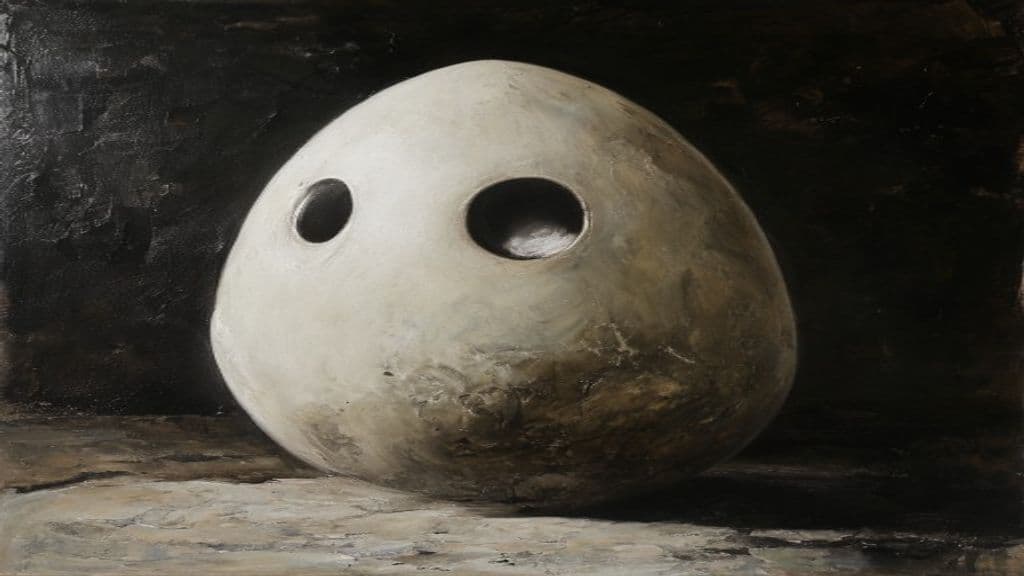
In Korean folklore, the Egg ghost is a malevolent entity that resembles an egg in appearance and serves as a harbinger of death. (Note: - The draft states "malevolent entity", but Source 1 doesn't explicitly state this. - Power tier: Based on the ability to determine a person's death upon sighting, it seems more likely that the Egg gh)

Fictitious Kings in Korean Genealogies
Minor Spirit

Fictitious Kings in Korean Genealogies

Entities appearing in 15th-16th century genealogies of Cheongju Han, Haengju Gi, and Taewon Seonu descent groups. (Note: - Power tier is Minor Spirit (but no description of abilities implies they might be lower still) - Origin story lacks clear indication that association with Jizi is an "Early Modern fabrication", inst)

Four Holy Beasts
Ancient

Four Holy Beasts

A set of four sacred animals in Chinese and broader East Asian cultural and astronomical tradition, mapped to the four cardinal directions and used as auspicious, protective, and cosmological symbols in literature, architecture, and material culture.

General Sinui
Minor Spirit

General Sinui

A legendary figure in Korean tradition who attempted to cheat death, but failed. (Note: 1. Power tier: Incorrectly classified as Minor Spirit. Given that General Sinui is a legendary figure who defied death, it's likely he should be categorized as a Greater (powerful regional) or at leas)

Goryeo Supernatural Ancestor
Primordial

Goryeo Supernatural Ancestor

A supernatural entity credited with uniting the Korean Peninsula and founding the Goryeo dynasty. (Note: 1. Remove "Primordial" power tier as it implies cosmic-level abilities, which is not supported by the source material that only mentions unification. 2. Add a statement about unknown weaknesses and wa)

Gumiho (Nine‑tailed fox)
Greater

Gumiho (Nine‑tailed fox)

A fox‑spirit in Korean storytelling derived from wider East Asian nine‑tailed‑fox motifs. Traditionally depicted as a shapeshifting fox that can take human form (commonly female in many stories), the gumiho appears across older folktales and numerous contemporary Korean media where it functions variously as trickster, predator, or sympathetic protagonist.

Gunungsin (War Gods)
Primordial

Gunungsin (War Gods)

Korean deities associated with war and conflict, possibly connected to the Jakjaegeon myth. (Note: 1. Power tier should be Primordial only if it's supported by source material; based on the provided sources, the power level is unspecified. 2. Abilities are unknown or unspecified in source material,)

Gwisin
Lesser

Gwisin

In Korean folklore, gwisin are spirits or ghosts that are humans who have died. Sources describe the term as a class of departed-human spirit, noted as similar to yogoe or mamul and explicitly contrasted with non-human beings such as dokkaebi.

Haneunim / Hananim
Ancient

Haneunim / Hananim

Haneunim (하느님) or Hananim (하나님) is the sky god in Korean mythology presented as the supreme heavenly deity. The figure functions as the Lord of Sky in older Korean cosmology, appears in the Dangun foundation myth (via the closely related Hwanin/Hwanung genealogy), and is identified in syncretic religious contexts with high deities such as Indra (Śakra), the Jade Emperor (Okhwang Sangje), and is named in modern Korean religions including Cheondoism and Jeungsanism; the terms have also been used as Korean translations for the Christian concept of God.

Heavenly Executioner Chiwoo
Lesser

Heavenly Executioner Chiwoo

Heavenly Executioner Chiwoo is a fictional human protagonist of a Korean manhwa (comic) series titled 치우천하, presented as an action-fantasy story set in an imagined ancient-Korean milieu. The character is a streetwise youth who discovers his father was a mangnani (executioner) and adopts that stigmatized social role amid imperial persecution of executioners; the series is partly inspired by legends of the mythic figure Chiyou but treats Chiwoo as a literary/fictional character rather than a pre-modern supernatural being.

Hwanung
Primordial

Hwanung

Divine being in Korean tradition, son of Hwanin, Lord of Heaven. Associated with human development and progress. (Note: - Power tier: Primordial may be too high given the description of abilities (institution of laws, teaching arts and medicine) which more closely align with a Greater (deity-level, but not cosmic) or A)

Igong Bonpuri
Minor Spirit

Igong Bonpuri

A supernatural being described in traditional shamanic narratives from Jejudo, Korea. Similarities with Buddhist mythology suggest it may be a type of Korean cultural cosmological entity. (Note: 1. Remove "Similarities with Buddhist mythology suggest it may be a type of Korean cultural cosmological entity" from summary as it's not directly supported by source material. 2. Power tier is Minor )

Igong Maji (Korean tradition)
Primordial

Igong Maji (Korean tradition)

A god of flowers in Korean shamanism, associated with natural cycles and fertility. (Note: 1. Power tier should be Ancient (deity-level) instead of Primordial, since it's described as "the god of flowers" and has a significant role in specific rituals. 2. The origin story is too vague; the )

Imugi (proto-dragon)
Lesser

Imugi (proto-dragon)

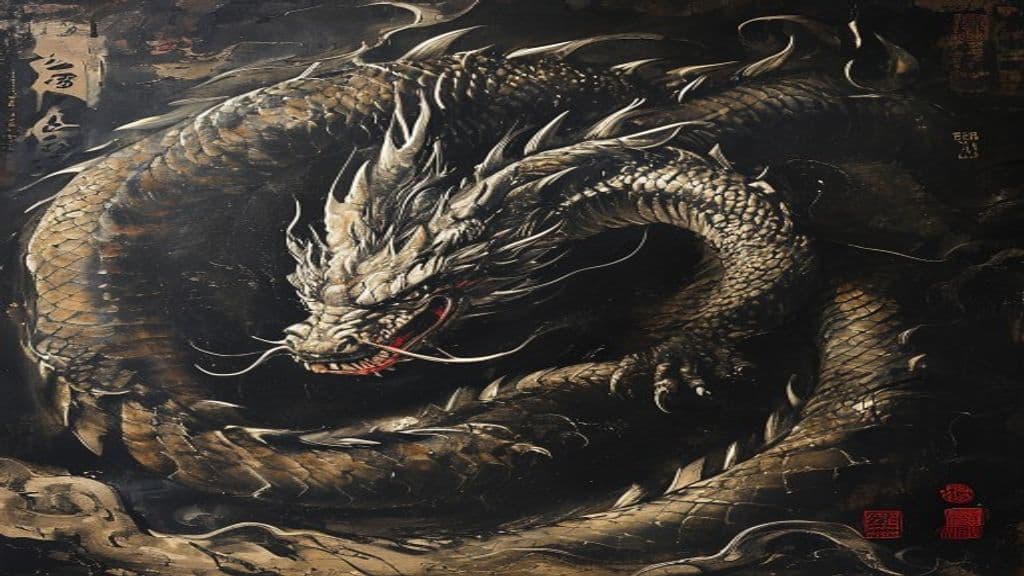
Imugi (이무기; also transcribed Imoogi) is a Korean folkloric proto‑dragon — a large serpentine, aspirant creature described in modern summaries as a 'lesser dragon' that may become a true Korean dragon through a transformative act.

Inmyeonjo
Primordial

Inmyeonjo

A mythological creature in Korean tradition with human and bird characteristics. (Note: - Power tier: Lower than Primordial (should be Lesser or Greater) since no deity-level abilities are described. - Origin story: Remove statement since it's true that no specific origin story is mentio)

Jangsanbeom (Jangsan tiger / Jangsan spirit)
Lesser

Jangsanbeom (Jangsan tiger / Jangsan spirit)

The name Jangsanbeom (often rendered in English as 'Jangsan tiger' or 'Jangsan spirit') appears in a contemporary South Korean cultural product (the 2017 film The Mimic). The single provided source references only the film and does not supply traditional folkloric details about the entity; further research into primary folkloric materials is required to determine whether Jangsanbeom is an established traditional being or a modern invention for the film.

Jangseung (Korean tradition)
Greater

Jangseung (Korean tradition)

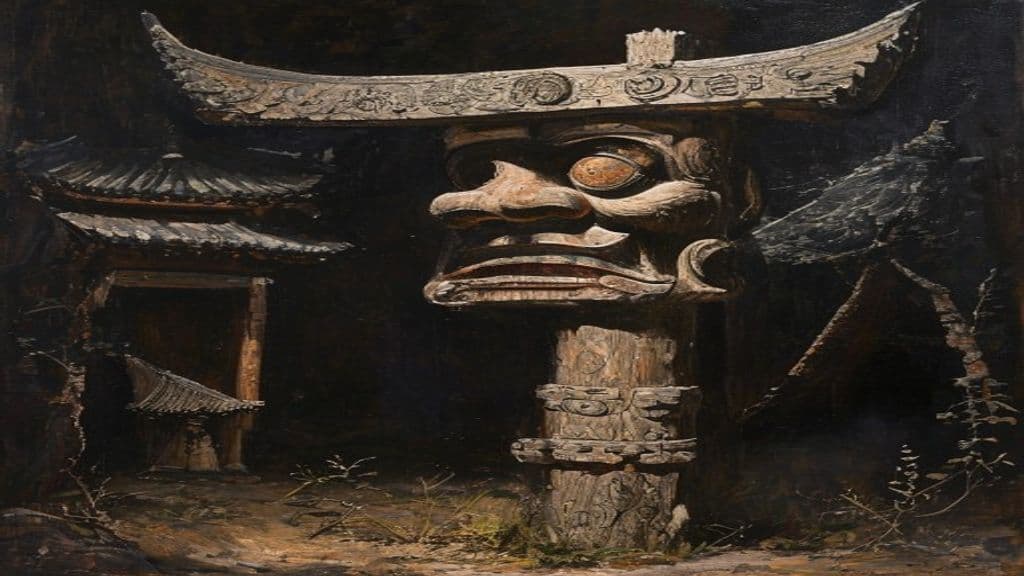
A physical object serving as a guardian or tutelary deity for Korean villages, typically made of wood and placed at village edges. (Note: * Power tier: Minor Spirit (a Greater entity would have more significant abilities) * Abilities: The jangseung is not believed to ward off evil spirits/demons, but rather serves as a deterrent and a r)

Jeonggamnok
Minor Spirit

Jeonggamnok

The Jeonggamnok is a compilation of prophetic works describing a messianic figure known as the 'True Man' with the surname Jeong, expected to bring about a new utopian dynasty. (Note: - Power tier: Primordial (due to the "messianic figure" and the scope of its prophetic works) - Origin story: missing - Appearance: missing - Abilities: should describe how it is believed the 'True Ma)

Kim Gyo-gak
Greater

Kim Gyo-gak

A historical Silla prince who became a Buddhist monk and is believed by Mount Jiuhua monks to have been the terrestrial manifestation (reincarnation) of the bodhisattva Ksitigarbha (Chinese: Jijang). His life at Mount Jiuhua is credited with transforming the mountain into a major Ksitigarbha sacred site.

Korean Creation Narratives
Primordial

Korean Creation Narratives

A category of shamanic stories that recount the mythological beginnings of the universe, including tales from mainland Korea and Jeju Island. (Note: - Power tier should be Ancient (deity-level), as the creation narratives describe mythological beginnings of the universe. - Origin story is not entirely unclear; specific stories from various regions)

Korean Mythological Pantheon
Primordial/Cosmic

Korean Mythological Pantheon

A diverse pantheon of deities and spirits in Korean mythology, worshipped through shamanic rituals. (Note: - Power tier is too high; a Primordial/Cosmic power tier typically implies entities that create or govern the universe, but Korean mythology doesn't describe such roles for its deities. - Abilities an)

Life Replacement Narratives (Korean Tradition)
Ancient

Life Replacement Narratives (Korean Tradition)

Shamanic narratives or mythological stories conveying cultural and spiritual significance in Korean regional traditions. (Note: - Power tier should be Primordial (as they convey cultural and spiritual significance at a cosmic level) rather than Ancient. - Abilities should mention that they do not have transformative effects on)

Masan
Minor Spirit

Masan

Masan (Korean: 마산) is documented in the provided sources solely as a geographic and administrative place in South Gyeongsang Province, South Korea — a former independent city now part of Changwon. No material in the supplied research notes describes a South Asian folk supernatural entity named "Masan."

Munjeon (Munjeon Bonpuri)
Lesser

Munjeon (Munjeon Bonpuri)

A Jeju Island household deity-concept focused on the house doorway, preserved in a shamanic narrative genre (Bonpuri) that explains the doorway's place within the Gasin, the ensemble of household deities.

Nine-tailed Fox
Greater

Nine-tailed Fox

A long-lived fox-spirit figure from Chinese myth (九尾狐) that appears across East Asia (e.g., kitsune, kumiho). Associated with age-linked transformation, shapeshifting into humans, ambiguous morality (trickster/seducer or occasionally honorable), and in some doctrinal sources a celestial/ritual role with talismans and jiao rites.

Onjo and Biryu's Baekje Creation Myth
Lesser

Onjo and Biryu's Baekje Creation Myth

The creation myth of Baekje revolves around the two brothers, Onjo and Biryu, who founded the dynasty. They possess human capabilities like decision-making and leadership skills. (Note: 1. Power tier: Greater (Onjo and Biryu's actions drove the founding of an entire kingdom) 2. Abilities: Add that their abilities also include diplomatic efforts and negotiations with other kingdoms 3.)

Qilin
Greater

Qilin

A legendary hooved chimerical creature of Chinese literary tradition (麒麟, qílín) whose appearances in classical accounts function as auspicious omens tied to the birth, arrival, or death of sages and illustrious rulers. The creature is part of a broader East Asian set of correspondents (Japanese kirin, Korean girin) and was historically conflated with the real giraffe in Ming-dynasty court encounters.

Samsin Halmeoni
Greater

Samsin Halmeoni

A Korean goddess associated with childbirth and fate, revered for her connection to family lineage. (Note: * Power tier: Lesser (based on the description of being a localized spirit) * Abilities: Add that she has no specific abilities or behaviors described * Sensory cues: None listed in source material * )

Semin-hwangje bon-puri
Primordial

Semin-hwangje bon-puri

A shamanic narrative associated with funeral ceremonies on southern Jeju Island, classified as one of the special bon-puri in Korean tradition. (Note: - The power tier should be adjusted to Lesser (local spirit) based on the source material, which describes a narrative associated with a specific geographic location and ceremonial context, rather tha)

Seonangdang
Ancient

Seonangdang

A term in Korean tradition referring to sacred stone cairns or trees dedicated to the deity Seonangshin. (Note: 1. Power tier: Primordial (given it's a term referring to sacred structures dedicated to a deity) 2. Abilities: Add that they are considered holy and serve as a connection between humans and Seonangsh)

Seonangshin
Primordial

Seonangshin

Korean patron deity of protection and war, guarding villages from harm. (Note: * Power tier should be Ancient, not Primordial, as the description implies a deity-level power but does not describe cosmic or universal implications. * Appearance is missing, but since it's not provi)

Song of Dorang-seonbi and Cheongjeong-gaksi
Minor Spirit

Song of Dorang-seonbi and Cheongjeong-gaksi

A Korean shamanic narrative about two supernatural entities associated with the natural world and fertility. (Note: 1. Power tier should be "Minor Spirit" -> not supported (based on lack of information about powers/abilities) 2. Remove power_tier as it's unclear 3. Add sensory_cues, wards, and weaknesses sections w)

Sosamshin
Greater

Sosamshin

In Korean mythology, Sosamshin is a household deity and the goddess of the birth of cattle. She occupies an important place in the cosmology of her source culture. (Note: * Power tier: Lesser (not Greater), given that Sosamshin is a household deity and not described as having deity-level powers. * Summary: While it's mentioned she occupies an important place in her sou)

Tan'gun
Primordial

Tan'gun

Legendary founder and first king of Gojoseon, considered divine with heavenly ancestry. (Note: - Power tier should be Primordial (but with caution, as it's not explicitly stated) - Appearance should note that no physical description exists - Abilities should specify that there is no information)

Tangun Mausoleum
Primordial

Tangun Mausoleum

The Tangun Mausoleum is a historical site in North Korea, honoring the founder of Gojoseon, Korea's first kingdom. (Note: 1. "Primordial" power tier is likely too high given that it's a historical site without supernatural powers. 2. Appearance should be updated to say "no information available" or removed altogether. 3.)