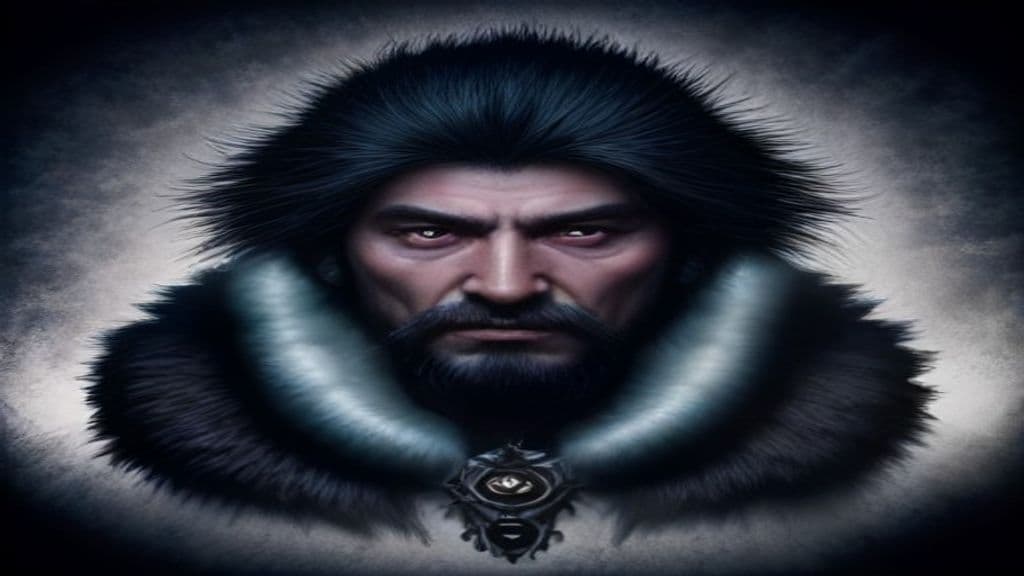
Mongolian Supernatural Beings

19 documented Mongolian supernatural beings from the Evil Eye grimoire, including 6 lesser and 5 ancient in power tier.

Almas
Lesser

Almas

Almas is presented in the provided source as a Mongolian 'wildman' reported in folklore and modern anecdote and treated within the modern subculture of cryptozoology as a disputed cryptid. The source frames Almas not as an established element of Mongolian cosmology but as an entity whose existence is unsubstantiated by mainstream science and discussed primarily in anecdotal and folkloric terms.

Bai-Ülgen
Ancient

Bai-Ülgen

Bai-Ülgen (often shortened to Ülgen) is a high creator-deity in Turkic religious cosmology, presented in available sources as a magnificent and wealthy divine figure who occupies a top position in the pantheon and is sometimes identified with the overarching sky god Tengri. Some modern references also list him within Mongolian contexts.

Burkan / Burkhan
Minor Spirit

Burkan / Burkhan

No folkloric information about a Mongolian mountain or forest spirit called 'Burkan' / 'Burkhan' is present in the supplied sources. The available materials only show unrelated modern or toponymic occurrences of the string 'Burkan' and do not provide ethnographic, mythological, or ritual details.

Dayan Deerh
Ancient

Dayan Deerh

Dayan Deerh (also Dayan Degereki) is a locally venerated shamanic and protective divinity of Khövsgöl Province, Mongolia, associated with fertility (granting cattle and children), shamanic patronage, and communal protection. His cult occupies a syncretic position between indigenous shamanism and Tibetan Buddhist (Yellow) practice and is centered around sites such as Tsagaannuur, a cave shrine near the Russia–Mongolia border, and communities around Lake Khövsgöl.

Erlik
Ancient

Erlik

Erlik (Erlig, Erlik Khan; Mongolian Erleg/Yerleg) is the chthonic ruler of the underworld in Turkic and related steppe mythologies, associated with death, disease, and malignant spirit-agents. He functions as judge and lord of the lowest realm (Tamag), opposes upper-world figures like Ülgen, and demands sacrifices to avert his taking of souls.

Ertnii Ezen ("Old Lord")
Minor Spirit

Ertnii Ezen ("Old Lord")

Attested in a single poetic stanza in Mongolian, Ertnii Ezen (ertnii = ancient, ezen = lord) appears as an evocative epithet linking antiquity, patrimony, and nature. The source presents the phrase as poetic language within a stanza celebrating horses, hereditary value, and Mother Nature's ancient memory, not as a described supernatural being or detailed mythic figure.

Etügen Eke
Ancient

Etügen Eke

Etügen Eke (also Etügen, Itügen, Etügen Ekhe) is an earth-mother goddess in Turkic and Mongolic Tengrism traditions, personifying the earth, fertility, homeland and natural forces. She is described in the sources as occupying a high place in the cosmic order, subordinate only to Kök‑Tengri, and is propitiated with seasonal sacrifices tied to pastoral and agricultural cycles.

Grey wolf (mythology)
Lesser

Grey wolf (mythology)

The Grey wolf is both the biological species Canis lupus and a mythic/symbolic animal in several Eurasian traditions. In Turkic, Mongolian, and broader Altaic contexts it is described as a sacred animal and national symbol; in other Eurasian mythic corpora wolves also appear as powerful mythic figures (e.g., Norse Fenrir) though those are distinct literary entities.

Kölün (name attested; no folkloric data in provided sources)
Minor Spirit

Kölün (name attested; no folkloric data in provided sources)

The provided source set contains a toponymic and regional signal for the string Kölün / Kolun but includes no ethnographic, mythic, or folkloric descriptions of a supernatural being by that name. References place related strings in geographic and database contexts (Hulunbuir region entry; a Wikidata item labeled Kolun) but supply no information about appearance, powers, rituals, or cultural practices tied to a water spirit called Kölün.

Mongolian Death Worm (Oov)
Primordial

Mongolian Death Worm (Oov)

A cryptid or mythological animal said to live in the Gobi Desert, associated with death. (Note: 1. Power tier should be Lesser (local spirit) since it's a desert-dwelling creature with unproven abilities and no concrete description. 2. Appearance, Abilities, Sensory cues, Weaknesses, and Wards n)

Naran Togoruu
Minor Spirit

Naran Togoruu

Naran Togoruu is the title of a 1972 novel by Mongolian author Sengiin Erdene. The supplied source material contains no folkloric description or ritual information identifying Naran Togoruu as a supernatural 'Sun Crane' spirit.

Od İyesi
Lesser

Od İyesi

Od İyesi is the Turkic and Mongolic guardian spirit (iye) of fire and hearth. Conceived as the 'possessor' or master of the element fire, it appears in male and female personifications (e.g., Od Ana, Od Ata/Od Khan) and as household-specific forms (Ocak iyesi — hearth spirit, Soba iyesi — stove spirit).

Olgoi-Khorkhoi (Mongolian Death Worm)
Lesser

Olgoi-Khorkhoi (Mongolian Death Worm)

A wormlike cryptid from Mongolian tradition said to live beneath the sands of the Gobi Desert and described in modern references as strange and deadly. Available references are brief and derive from popular summaries and reference entries rather than detailed ethnography.

Ovoo (Ovoo-yi süme / Ovootai süme)
Lesser

Ovoo (Ovoo-yi süme / Ovootai süme)

An ovoo is a constructed ritual cairn or shrine in Mongolian and other Mongolic folk religious practice that marks and sacralizes places (borders, passes, high points) and serves as a negotiated contact point for offerings and ritual exchange with the non-visible world. It is primarily a material and ritual locus rather than an individualized supernatural being.

Ovoo Spirits (sacred cairn spirits)
Lesser

Ovoo Spirits (sacred cairn spirits)

Spirits understood as the local, animating presences of ovoo (sacred cairn) sites within Mongolian shamanic practice (Böö Mörgöl/Tengerism). They function as place-spirits tied to specific cairns and the social-religious life surrounding those sites.

Sagaan Ubgen (White Old Man)
Greater

Sagaan Ubgen (White Old Man)

Sagaan Ubgen (Tsagaan Ubgen / Tsagan Evgen) is an elder male guardian figure in Mongolian and Buryat shamanic and syncretic Buddhist contexts associated with longevity, fertility, wealth, and prosperity. He appears as a kindly white-bearded old man in ritual performance (tsam/cham), where he enacts renewal and blessing, and has been adapted into Tibetan cham repertoires.

Tengri
Ancient

Tengri

Tengri is the supreme sky/heaven principle in early Turkic and Mongolic religious frameworks, functioning as both the cosmic blue sky and a source of sovereign will, fate, and legitimacy. Central to Tengrism, Tengri is invoked in cosmology, political ideology, and shamanic/ancestor-associated practices.

Wind Horse
Minor Spirit

Wind Horse

In Mongolian shamanistic tradition, the Wind Horse is a symbolic representation of the human soul associated with flight and liberation. (Note: 1. Power tier should be Greater (its association with flight, liberation, and being in the center of cardinal directions suggests deity-level abilities). 2. Appearance is not explicitly described, but)

Zasa Mergen Baatar
Greater

Zasa Mergen Baatar

Zasa Mergen Baatar is a figure in Buryat mythology described in sources as the 'tornado-god' and as the eldest son of the sky-deity Han Hormasta; he is attested riding a brown hawk-horse and is described in a marriage episode in which he wrestled the three sons of Atai Ulaan and thereby obtained Sesegen Nogoon as his bride.