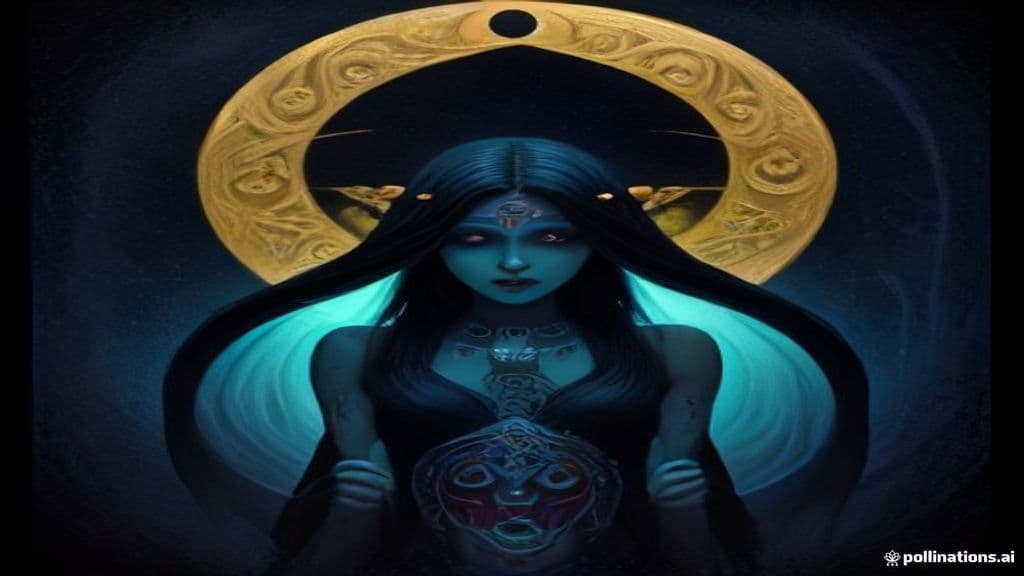
In the ophitic accounts summarized in the provided material (drawing on patristic polemic such as Irenaeus as mediated in modern compilation), Achamōth is described as "Sophia Achamôth," the daughter of Sophia, the divine Wisdom. Within that mythic schema Achamōth occupies an emanational, filial position: she is presented as a subordinate or derived feminine principle whose genealogical relation links the higher Sophia to lower figures; in the Ophite narrative cited she is named as the mother of the serpent‑shaped Ilda‑Baoth, called the "son of darkness" (Source 3). This situates Achamōth within Gnostic cosmogonies that explain the origin of inferior creator‑beings and rework biblical motifs (e.g., the Edenic serpent) through layered emanation.
The supplied sources do not record any physical or sensory description of Achamōth. No anthropomorphic, iconographic, or symbolic appearance for her is quoted in the provided materials; related serpent imagery in Ophite sources pertains to other figures and cultic objects rather than to a depiction of Achamōth herself (Source 3).
The provided documents do not ascribe specific powers, actions, or operative behaviors to Achamōth beyond her mythological and genealogical role as an emanational daughter of Sophia and as mother of lower figures in Ophite accounts. The sources frame her function in terms of relational cosmology (origin and descent) rather than enumerating personal abilities or interventions (Source 3).
57 Mnemosyne
57 Mnemosyne is a large main-belt asteroid (S-type) discovered in 1859 and named after the Greek Titaness Mnemosyne. It is a non-sentient astronomical body studied for its orbital and rotational properties and has been used in dynamical measurements related to Jupiter.
Aamon
Aamon (also Amon) is a named spirit in early modern Western grimoire tradition (Pseudomonarchia Daemonum; the Ars Goetia / Lesser Key of Solomon). He is presented as a high-ranking infernal officer (Marquis/Prince) who governs forty legions and is credited with knowledge of past and future and with affecting human relationships (reconciling or procuring feuds and favor).
Abaddon
In Hebrew scripture Abaddon is primarily a noun meaning 'destruction' or a section/condition of the underworld paired with Sheol; in the New Testament Book of Revelation Abaddon is personified as an angelic figure (Greek Apollyon) described as the king of an army of locusts released from the abyss during the apocalypse.
Abadir
Abadir is a polysemous name attested in distinct cultural contexts: a legendary founding saint and clan ancestor in eastern Ethiopia (Sheikh Abadir Umar Al‑Rida / Aw Abadir), a term applied to cone‑shaped cult stones in Phoenician religious description, and a personal name of a martyr (Abadir/Apater) in the Coptic Synaxarium. The attestations are independent usages of the same name rather than a single supernatural being.
Abadiu of Antinoe
Abadiu of Antinoe was a fourth‑century bishop of Antinoe (Antinoopolis, in Roman Egypt) commemorated as a martyr and saint in the Coptic Orthodox Church, with a feast day on 26 December. Sources record that he was killed during a theological dispute with Arian opponents and reference him in collections of Egyptian martyrs.
Abagtha
Abagtha (Hebrew: אבגתא, ’Ǎḇaḡṯā) is a named human court official in the Hebrew Bible’s Book of Esther, listed among seven chamberlains who ministered before King Ahasuerus and were commanded to bring Queen Vashti before the king. He is attested only in Esther 1:10 and is presented as an institutional palace attendant rather than a supernatural being.
Abanoub
Abanoub is a 4th‑century Egyptian Christian child martyr venerated in the Coptic tradition. Remembered for his public confession of Christ, miraculous healings associated with his passion, and the translation and veneration of his relics, his feast is observed on July 31 (Epip 24) and his cult centers include Nehisa and Samanoud.
Abaskhiron the Soldier
A Coptic Orthodox martyr venerated for refusing imperial idolatry during the Diocletian persecution; reputedly healed by the Archangel Michael, preserved in monastery relics, and commemorated on 14 June (7 Paoni).
Abdel Messih El-Makari
Abdel Messih El-Makari (1892–1963) was a Coptic Orthodox monk and priest venerated as a 20th‑century Coptic saint. Associated with the Monastery of Saint Samuel the Confessor and the Monastery of Saint Macarius (Scetes/Wadi El‑Natrun), he is remembered for humility, asceticism, charity, and reported spiritual gifts such as prescience, discerning of spirits, and healing.
Abel
Abel is the second son of Adam and Eve in the Genesis narrative, a shepherd whose accepted offering and subsequent murder by his brother Cain form the biblical account of the first death. Later interpretive traditions expand his role, treating him as an archetypal righteous victim, a postmortem avenging or adjudicating figure, and in some systems (notably Mandaean) identifying him with an angelic lightbeing.
Abib and Apollo
Abib and Apollo are Christian ascetics and hagiographic saints of Akhmim (Upper Egypt) attested in Coptic sources and the Historia Monachorum. Remembered for extreme asceticism, monastic leadership, angelic encounters, and inclusion in the Coptic Synaxarion (feast day November 4).
Abiel
Abiel is attested in the supplied sources only as a male given name — borne by several historical American individuals and listed as two minor biblical figures. The provided materials contain no evidence presenting Abiel as a supernatural, mythological, or folkloric entity.
Community Record
- [1]Die Ophiten oder Schlangenbrüder (archive.org). Die Ophiten oder Schlangenbrüder — summary referencing Irenaeus on Ophite belief that names Sophia Achamôth as mother of Ilda‑Baoth; also notes serpent cult practices in some Ophite sects.other
- [2]Sophia (Gnosticism) — Wikipedia (Achamōth mention). Wikipedia entry on Sophia (Gnosticism) mentioning Achamoth/Achamōth in the context of Gnostic traditions and the figure's relation to Sophia.wiki
- [3]Wikidata entry: Achamoth (Q29365806). Wikidata item for Achamoth, which links to later reference works (e.g., Dictionnaire infernal) though the provided material does not quote that content.other