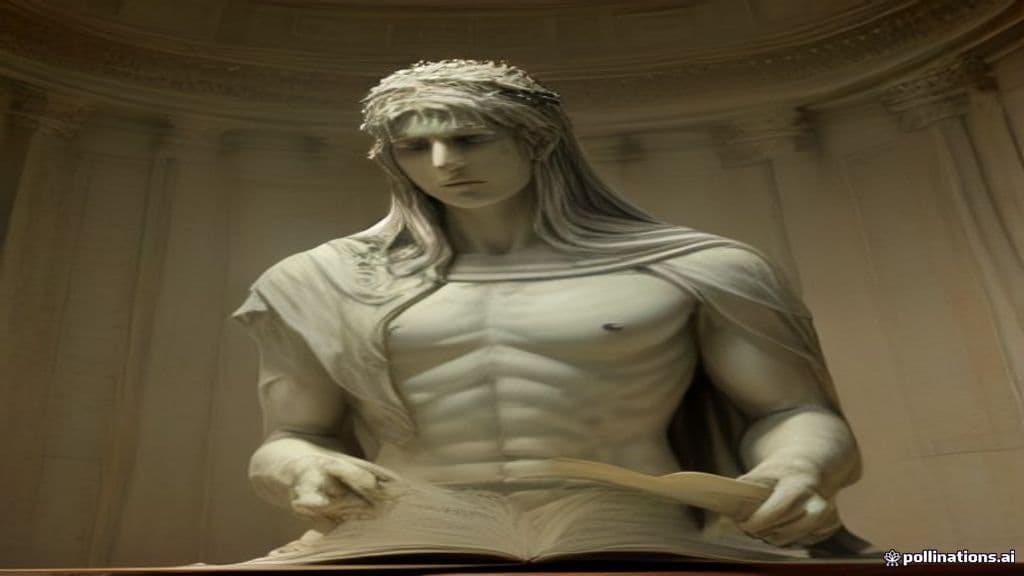
In mythic genealogies preserved in classical sources and modern summaries, Agrippa is listed as a descendant of Aeneas and a king of Alba Longa, the ancient Latin city southeast of Rome; one modern summary records him as "listed as king of Alba Longa in the time of Augustus" (treated as a dynastic/ancestral figure within Rome's foundational narratives). Separately, Agrippa is a Latin praenomen/surname borne by several historical persons across the Roman and Herodian worlds (notably Marcus Vipsanius Agrippa, Agrippa Postumus, and Herod Agrippa I & II). In the early modern period the name appears as the surname of Heinrich (Henry) Cornelius Agrippa (1486–1535), an author later discussed in writings on necromancers and occult practitioners; in this reception Agrippa functions as a historical/biographical figure within the literature of Renaissance magic rather than as a unified spirit-figure.
The sources supply no consistent anthropomorphic or iconographic description that applies to a single supernatural "Agrippa." Mythic Agrippa is presented genealogically as a king of Alba Longa without descriptive adjectives. Biographical treatments of historical Agrippas (Marcus Vipsanius Agrippa, Herod Agrippa, Heinrich Cornelius Agrippa) are conventional historical or bibliographical accounts and likewise do not establish a shared physical appearance or emblematic form for an entity called "Agrippa."
No supernatural powers or behaviors are ascribed to a singular entity named Agrippa in the provided materials. In mythic context Agrippa's role is dynastic and political (as a king and descendant in foundational genealogies). Historical bearers of the name are noted for political, military, or literary activity (e.g., Marcus Vipsanius Agrippa as a Roman statesman and general). Heinrich Cornelius Agrippa is treated in later literature as an occult author associated with magical learning and, in 19th-century surveys of necromancers, included among practitioners, but the excerpts do not enumerate occult powers or present him as a supernatural being.
*Péh₂usōn (reconstructed)
Péh₂usōn is a hypothetical Proto‑Indo‑European pastoral guardian reconstructed by comparative scholars from parallels in Greek and Vedic traditions. Proposed as a Graeco‑Aryan ancestor‑figure, the reconstruction describes a protector of flocks, roads, and travellers rather than an attested historical cultic personality.
57 Mnemosyne
57 Mnemosyne is a large main-belt asteroid (S-type) discovered in 1859 and named after the Greek Titaness Mnemosyne. It is a non-sentient astronomical body studied for its orbital and rotational properties and has been used in dynamical measurements related to Jupiter.
Aamon
Aamon (also Amon) is a named spirit in early modern Western grimoire tradition (Pseudomonarchia Daemonum; the Ars Goetia / Lesser Key of Solomon). He is presented as a high-ranking infernal officer (Marquis/Prince) who governs forty legions and is credited with knowledge of past and future and with affecting human relationships (reconciling or procuring feuds and favor).
Aba (disambiguation / name-form)
Aba is a polyvalent name-form attested across many unrelated contexts (place names, personal names, animal names, and brief mythological listings). The provided sources do not support a single, coherent supernatural entity called "Aba" and offer no descriptive or ritual material for such a being.
Abandinus
Abandinus is a locally attested Romano‑Celtic theonym known from a single inscribed bronze feather (votive object) dedicated at Godmanchester (the Roman fort Durovigutum) in Cambridgeshire. Scholars interpret him as a local god or male spirit tied to a specific place and possibly associated with a nearby spring or stream; this association is tentative and based on etymological readings of the name.
Abarbarea
Abarbarea is a name attested in classical Greek and Roman sources for freshwater nymphs (naiads). The name appears for at least two individual mythic figures — a naiad wife of Bucolion and a naiad counted among ancestors of the Tyrians — and Hesychius records plural forms that may indicate the name was also used as a class-name (Abarbareai / Abarbalaiai).
Abas
Abas (Ancient Greek: Ἄβας, gen.: Ἄβαντος) is not a single mythic being but a recurring personal name borne by multiple mortals and minor mythic figures in Greek epic and genealogical traditions — kings, founders, seers, warriors, attendants, a centaur, and a youth transformed by a goddess. The name is glossed in the sources as 'guileless' or 'good-hearted' and appears across Argive, Theban, Trojan, Euboean, and other local cycles.
Abderus
Abderus (Ancient Greek: Ἄβδηρος, romanized Ábdēros) is a mortal heroic figure in Greek myth closely associated with Heracles, remembered as the youth left in charge of the Mares of Diomedes who was killed by them. He functions as an eponymous local/divine-hero ancestor for the city of Abdera and received funerary commemoration and athletic agones at his tomb.
Abellio
Abellio is a theonym attested in Roman‑period inscriptions from the Comminges area of the Pyrenees and reported as worshipped in the Garonne Valley of ancient Gallia Aquitania. Surviving evidence is limited to a small number of inscriptions; scholars have variously hypothesized solar or arboreal associations and compared the name to forms of Apollo or to Celtic Belenus, but the deity's precise role in local cosmology remains uncertain.
Abnoba
Abnoba is a Gaulish theonym and toponym attested in Roman-era sources and inscriptions: a localized deity associated with woods, springs and the sources of rivers (notably the Danube) and simultaneously the name applied to a mountain or mountain range in the Black Forest/Baar/Odenwald region. Roman altars equate her with Diana, reflecting syncretic cult practice in frontier provinces.
Abomination of Desolation
An apocalyptic prophetic phrase originating in the Book of Daniel designating a profaning thing or act that renders the Jerusalem Temple cult desolate; later reused in the Synoptic Gospels as an eschatological sign prompting urgent flight. The term denotes ritual/cultic impurity (Hebrew shiqquts) and is variously interpreted as pagan offerings or altar, a foreign cult statue, or (in some New Testament readings) an acting agent.
Aborigines (mythology)
A mytho-historical label used in Roman and general reference sources to denote the oldest inhabitants of a region (specifically central Italy in the cited Roman context). The term functions as an identity/category for original human populations rather than as a characterized supernatural being in the provided sources.
Community Record
- [1]Agrippa (mythology) - Wikipedia. "Agrippa, said to have reigned 914873 BC, /rp/, was a descendant of Aeneas and King of Alba Longa, the capital of Latium, southeast of Rome. He was listed as king of Alba Longa in the time of Augustus."wiki
- [2]Agrippa (praenomen) - Wikipedia (list). "Agrippa (praenomen), a Latin personal name."wiki
- [3]Herod Agrippa II - Wikipedia. "Herod Agrippa II, Roman name: Marcus Julius Agrippa, Hebrew:, AD 27/28 c"wiki
- [4]Agrippa (list entry including Marcus Vipsanius Agrippa). "Marcus Vipsanius Agrippa (63–12 BC), Roman statesman and general, friend and lieutenant of Augustus Caesar."wiki
- [5]Lives of the Necromancers - William Godwin (excerpt). "Henry Cornelius Agrippa was born in the year 1486" (Godwin includes Cornelius Agrippa within a survey of necromancers/occultists).other
- [6]Lives of the Necromancers - mirror. Godwin's biographical treatment of Cornelius Agrippa places him among historic figures discussed in the history of necromancy.other