
Alastor is not presented in classical sources as a single biographical being with a life-story but as a functional personification and epithet. In archaic and classical Greek usage the term denotes an avenging force or personified curse; it is used as an epithet of Zeus (e.g., Zeus Alastor) who avenges evil deeds—particularly familial bloodshed—and is described as allied with the Erinyes. Tragic writers used the name generically to designate any deity or daemon who avenges wrongs committed by men (illustrated in literary contexts such as Euripides' Electra). By the 4th century BC the word alastor had also degraded in ordinary speech to a pejorative meaning roughly 'scoundrel.' In later Christian demonological reception the figure/label was recast as a kind of possessing entity and likened to Nemesis, and the name was used more broadly for harmful spirits.
Classical sources do not supply a consistent, stable embodied form for Alastor; ancient attestations emphasize function and epithet rather than standardized iconography. The term appears variably as an epithet of a god (Zeus Alastor), as a personified curse or daemon allied to the Erinyes, and is applied by writers to different agents who enact vengeance. Consequently no single classical visual description is preserved in the provided material. Separately, modern fictional traditions (not ancient) have depicted an entity named Alastor with a vivid corporeal appearance (for example, a Greyhawk source describing a ghostly farm lad), but that portrayal belongs to a distinct fictional tradition and is not part of the classical attestations.
In classical material Alastor's operative 'abilities' are moral-retributive rather than technical powers: as an avenging spirit or personification of a curse it relentlessly pursues the guilty and enacts vengeance—specifically noted as punishing children for the sins of their fathers—and functions in the chthonic system of punishment alongside the Erinyes. As an epithet of Zeus the avenging aspect enforces retribution for evil deeds, especially familial bloodshed. Later Christian demonological readings attribute to Alastor characteristics of a possessing spirit and equate or liken it to Nemesis, using the name as a general label for a class of harmful spirits; these are interpretive receptions rather than uniform classical attributes.
Weaknesses
- otherNo specific vulnerabilities attested in provided classical sources; cultic propitiation implied
Wards
- ritualCultic propitiation at an altar (Zeus Alastor at Thasos)

Erinyes
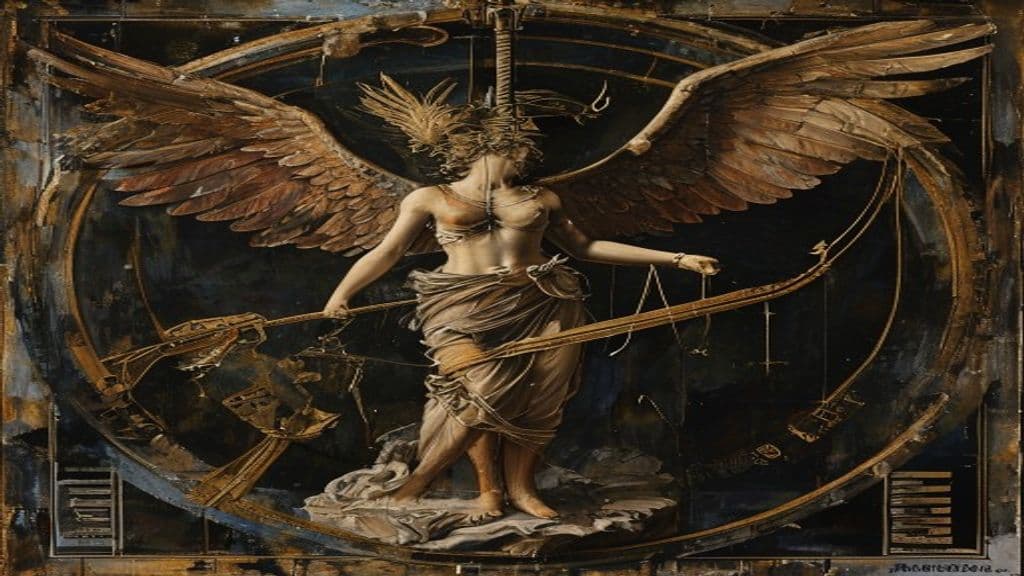
The three avenging Furies of Greek myth — Alecto, Megaera, and Tisiphone — who pursued and tormented those guilty of crimes against blood kin, especially murder of family members.
Nemesis
Nemesis (Greek: Νέμεσις), also called Rhamnousía in her local cult, is the personified goddess of distributive justice and retributive balance in ancient Greek religion and myth. She functions to restore due measure—rewarding or withholding according to desert—and punishes hubris and excessive fortune.
*Péh₂usōn (reconstructed)
Péh₂usōn is a hypothetical Proto‑Indo‑European pastoral guardian reconstructed by comparative scholars from parallels in Greek and Vedic traditions. Proposed as a Graeco‑Aryan ancestor‑figure, the reconstruction describes a protector of flocks, roads, and travellers rather than an attested historical cultic personality.
57 Mnemosyne
57 Mnemosyne is a large main-belt asteroid (S-type) discovered in 1859 and named after the Greek Titaness Mnemosyne. It is a non-sentient astronomical body studied for its orbital and rotational properties and has been used in dynamical measurements related to Jupiter.
Aamon
Aamon (also Amon) is a named spirit in early modern Western grimoire tradition (Pseudomonarchia Daemonum; the Ars Goetia / Lesser Key of Solomon). He is presented as a high-ranking infernal officer (Marquis/Prince) who governs forty legions and is credited with knowledge of past and future and with affecting human relationships (reconciling or procuring feuds and favor).
Aba (disambiguation / name-form)
Aba is a polyvalent name-form attested across many unrelated contexts (place names, personal names, animal names, and brief mythological listings). The provided sources do not support a single, coherent supernatural entity called "Aba" and offer no descriptive or ritual material for such a being.
Abaddon
In Hebrew scripture Abaddon is primarily a noun meaning 'destruction' or a section/condition of the underworld paired with Sheol; in the New Testament Book of Revelation Abaddon is personified as an angelic figure (Greek Apollyon) described as the king of an army of locusts released from the abyss during the apocalypse.
Abadir
Abadir is a polysemous name attested in distinct cultural contexts: a legendary founding saint and clan ancestor in eastern Ethiopia (Sheikh Abadir Umar Al‑Rida / Aw Abadir), a term applied to cone‑shaped cult stones in Phoenician religious description, and a personal name of a martyr (Abadir/Apater) in the Coptic Synaxarium. The attestations are independent usages of the same name rather than a single supernatural being.
Abadiu of Antinoe
Abadiu of Antinoe was a fourth‑century bishop of Antinoe (Antinoopolis, in Roman Egypt) commemorated as a martyr and saint in the Coptic Orthodox Church, with a feast day on 26 December. Sources record that he was killed during a theological dispute with Arian opponents and reference him in collections of Egyptian martyrs.
Abagtha
Abagtha (Hebrew: אבגתא, ’Ǎḇaḡṯā) is a named human court official in the Hebrew Bible’s Book of Esther, listed among seven chamberlains who ministered before King Ahasuerus and were commanded to bring Queen Vashti before the king. He is attested only in Esther 1:10 and is presented as an institutional palace attendant rather than a supernatural being.
Abanoub
Abanoub is a 4th‑century Egyptian Christian child martyr venerated in the Coptic tradition. Remembered for his public confession of Christ, miraculous healings associated with his passion, and the translation and veneration of his relics, his feast is observed on July 31 (Epip 24) and his cult centers include Nehisa and Samanoud.
Abarbarea
Abarbarea is a name attested in classical Greek and Roman sources for freshwater nymphs (naiads). The name appears for at least two individual mythic figures — a naiad wife of Bucolion and a naiad counted among ancestors of the Tyrians — and Hesychius records plural forms that may indicate the name was also used as a class-name (Abarbareai / Abarbalaiai).
Abas
Abas (Ancient Greek: Ἄβας, gen.: Ἄβαντος) is not a single mythic being but a recurring personal name borne by multiple mortals and minor mythic figures in Greek epic and genealogical traditions — kings, founders, seers, warriors, attendants, a centaur, and a youth transformed by a goddess. The name is glossed in the sources as 'guileless' or 'good-hearted' and appears across Argive, Theban, Trojan, Euboean, and other local cycles.
Abaskhiron the Soldier
A Coptic Orthodox martyr venerated for refusing imperial idolatry during the Diocletian persecution; reputedly healed by the Archangel Michael, preserved in monastery relics, and commemorated on 14 June (7 Paoni).
Community Record
- [1]Alastor - Wikipedia. Wikipedia: Alastorwiki
- [2]Wikidata: Alastor. Wikidata entry for Alastorother
- [3]Greyhawk: Alastor Land (fictional depiction). Greyhawk Online — Alastor Land (modern fictional portrayal cited in notes)other
- [4]Alastor (poem) — Percy Bysshe Shelley. Shelley's poem 'Alastor' (modern literary work referencing the name)literary
- [5]Archive: Alastor Bozzelli Favorites. Archive entry referencing the name Alastorother