
In the literary tradition sampled here—chiefly Plutarch—Arimanius (Areimanios) functions as the dark or evil principle opposing Oromazes (Ahura Mazda) within a dualistic cosmogony derived from Greek expositions of Persian theology. Plutarch narrates that Areimanius engendered harmful beings whose intrusion into the good creation produced present mixtures of good and evil; a future final overthrow of Areimanius and the restoration of pure good is also part of that narrative. Separately, the name appears in Roman Mithraic dedications: here it is a deity-name adopted into cult practice, but the epigraphic record does not preserve a matching Persian dualistic origin story, and modern scholars caution that the Roman cult likely reinterpreted or detached the name from its original Iranian theological content.
Classical literary sources do not present a consistent anthropomorphic description. In some Roman Mithraic material culture the name Arimanius is associated—in fragmentary and interpretive contexts—with images such as a winged figure, sometimes depicted with keys, and scholarly proposals have linked some statue bases dedicated to Arimanius to lion-headed figures found in Mithraic contexts. These iconographic associations are fragmentary, inconsistent across finds, and not uniformly labeled in the inscriptions; the literary tradition (e.g., Plutarch) does not supply a specific visible form.
In Plutarch's account Arimanius is a creative and destructive principle responsible for producing evils that oppose Oromazes—Plutarch specifically links Areimanius to pestilence and famine and to the generation of malign beings that have entered the created world. Hesychius and later glossators sometimes equate the name with Hades/Pluto, giving the figure underworld associations in some interpretive traditions. In the Roman Mithraic inscriptional record the dedications to 'Deo Areimanio' do not preserve explicit statements of malevolent deeds; scholarship summarized in the sources suggests the name in Mithraea may have been treated without the unequivocal 'evil' valence found in Plutarch.
Weaknesses
- otherNo explicit weakness recorded in supplied sources; literary texts note that 'water-rats belong to this god' and that men skilled at killing rats are fortunate, but sources do not present this as a metaphysical vulnerability of Arimanius.
Wards
- ritualHaoma/Soma (omomi) mixed with wolf's blood (Plutarchian rite)
- otherPractical rodent control (implied preventative practice)
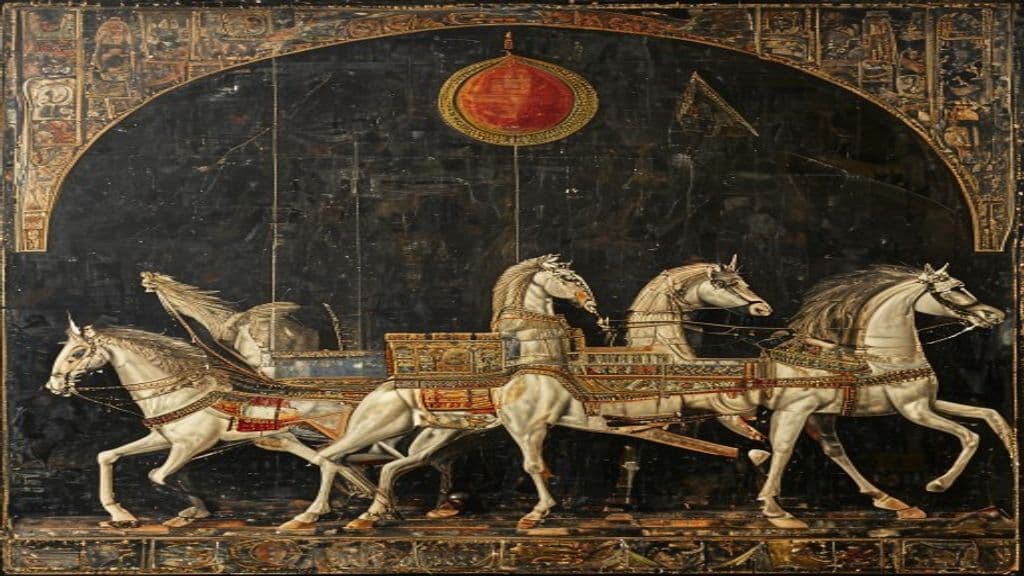
*Péh₂usōn (reconstructed)
Péh₂usōn is a hypothetical Proto‑Indo‑European pastoral guardian reconstructed by comparative scholars from parallels in Greek and Vedic traditions. Proposed as a Graeco‑Aryan ancestor‑figure, the reconstruction describes a protector of flocks, roads, and travellers rather than an attested historical cultic personality.
Ab-Zohr
Ab-Zohr is the culminating rite of the Zoroastrian Yasna service: a formal offering to the waters (Aban/Apas) that creates the consecrated liquid parahaoma and functions to purify, strengthen, and atone for damage done to waters. It is a ritual action rather than an independent supernatural being.
Aba (disambiguation / name-form)
Aba is a polyvalent name-form attested across many unrelated contexts (place names, personal names, animal names, and brief mythological listings). The provided sources do not support a single, coherent supernatural entity called "Aba" and offer no descriptive or ritual material for such a being.
Aban (Āb/Ābān)
Aban (Avestan apas; Middle Persian āb/ābān) is the collective, sacred principle of the waters in Zoroastrian cosmology — both the element water and its personified hypostases (the Apas/Ahuranis). Aban functions as a primordial, life-giving creation, a calendrical and liturgical focus (day-name, month-name, Abanagan feast), and a ritual object of veneration (ape zaothra, Aban Yasht) rather than a malign force to be expelled.
Aban Yasht
The Aban Yasht is a hymn from the Persian tradition that praises Anahita, a goddess associated with water, fertility, and wisdom. It consists of 132 stanzas and is part of the 21 Yashts collection. (Note: - Power tier should be "Primordial" or possibly "Cosmic", given that it's a hymn of great spiritual significance and associated with a goddess. - The article incorrectly states that Anahita is associa)
Abandinus
Abandinus is a locally attested Romano‑Celtic theonym known from a single inscribed bronze feather (votive object) dedicated at Godmanchester (the Roman fort Durovigutum) in Cambridgeshire. Scholars interpret him as a local god or male spirit tied to a specific place and possibly associated with a nearby spring or stream; this association is tentative and based on etymological readings of the name.
Abarbarea
Abarbarea is a name attested in classical Greek and Roman sources for freshwater nymphs (naiads). The name appears for at least two individual mythic figures — a naiad wife of Bucolion and a naiad counted among ancestors of the Tyrians — and Hesychius records plural forms that may indicate the name was also used as a class-name (Abarbareai / Abarbalaiai).
Abas
Abas (Ancient Greek: Ἄβας, gen.: Ἄβαντος) is not a single mythic being but a recurring personal name borne by multiple mortals and minor mythic figures in Greek epic and genealogical traditions — kings, founders, seers, warriors, attendants, a centaur, and a youth transformed by a goddess. The name is glossed in the sources as 'guileless' or 'good-hearted' and appears across Argive, Theban, Trojan, Euboean, and other local cycles.
Abderus
Abderus (Ancient Greek: Ἄβδηρος, romanized Ábdēros) is a mortal heroic figure in Greek myth closely associated with Heracles, remembered as the youth left in charge of the Mares of Diomedes who was killed by them. He functions as an eponymous local/divine-hero ancestor for the city of Abdera and received funerary commemoration and athletic agones at his tomb.
Abellio
Abellio is a theonym attested in Roman‑period inscriptions from the Comminges area of the Pyrenees and reported as worshipped in the Garonne Valley of ancient Gallia Aquitania. Surviving evidence is limited to a small number of inscriptions; scholars have variously hypothesized solar or arboreal associations and compared the name to forms of Apollo or to Celtic Belenus, but the deity's precise role in local cosmology remains uncertain.
Abnoba
Abnoba is a Gaulish theonym and toponym attested in Roman-era sources and inscriptions: a localized deity associated with woods, springs and the sources of rivers (notably the Danube) and simultaneously the name applied to a mountain or mountain range in the Black Forest/Baar/Odenwald region. Roman altars equate her with Diana, reflecting syncretic cult practice in frontier provinces.
Abomination of Desolation
An apocalyptic prophetic phrase originating in the Book of Daniel designating a profaning thing or act that renders the Jerusalem Temple cult desolate; later reused in the Synoptic Gospels as an eschatological sign prompting urgent flight. The term denotes ritual/cultic impurity (Hebrew shiqquts) and is variously interpreted as pagan offerings or altar, a foreign cult statue, or (in some New Testament readings) an acting agent.
Community Record
- [1]Arimanius - Wikipedia. Wikipedia, 'Arimanius' entry (summary of Plutarch and inscriptional evidence).wiki
- [2]Mithras and Arimanius - History of York. History of York, 'Mithras and Arimanius' (artifact captions noting 'Arimanius with his wings and keys').other
- [3]RIB 641. Statue dedicated to Arimanius | Roman Inscriptions of Britain. Roman Inscriptions of Britain (RIB 641) — statue base/inscription referencing Arimanius and noting a 'figure of a winged...'.academic
- [4]Fragment with inscription to Arimanius, Casa di Diana — The New Mithraeum. The New Mithraeum, fragmentary inscription from Casa di Diana referencing Arimanius (inscriptional evidence).other
- [5]Agrestius — The New Mithraeum. The New Mithraeum entry noting a statue base and possible association with lion-headed imagery in a Mithraic context tied to Arimanius.other
- [6]Notes from Ralph Cudworth on Plutarch and the 'Persian or Zoroastrian trinity'. Ralph Cudworth, notes summarizing Hesychius and Plutarch's identification equating Arimanius with Hades/Pluto (normalized text).academic