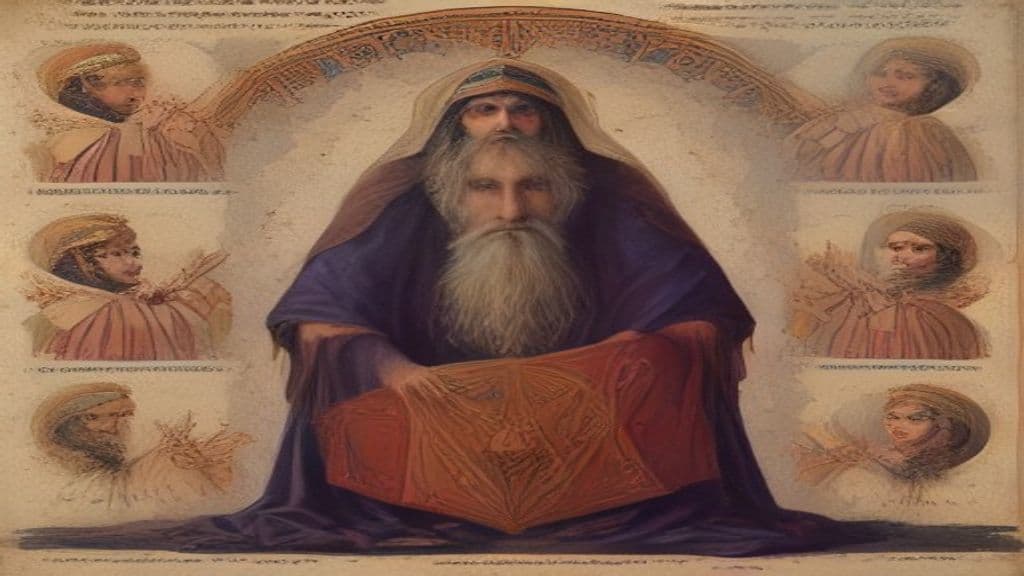
The supplied sources identify Asmodai primarily through literary attestations rather than a single creation myth. The deuterocanonical Book of Tobit is the principal scriptural locus cited; later Talmudic and Solomonic legends incorporate the figure as a powerful hostile spirit or 'king of demons.' Modern reference works summarized in the sources also note a hypothesis that the figure may have conceptual or historical parallels with the Mazdian/Iranian demon Aeshma, but they emphasize that any linguistic or conceptual relationship is uncertain rather than established.
The provided materials do not supply a reliable traditional physical description. Encyclopedic summaries and the cited reference fragments focus on role and attestation (status as a king of demons and presence in Tobit and Solomonic legends) without giving consistent iconographic details in the supplied excerpts.
Within the cited sources Asmodai is presented as a principal hostile spirit and 'king of demons' whose narrative function is to oppose, trouble, or harm humans. The references link him to the Book of Tobit and to Solomonic legends, contexts in which he acts as an active adversary in human affairs; the supplied excerpts do not catalogue a detailed list of powers (possession formulas, supernatural faculties, or specific supernatural acts) beyond this role-based description.
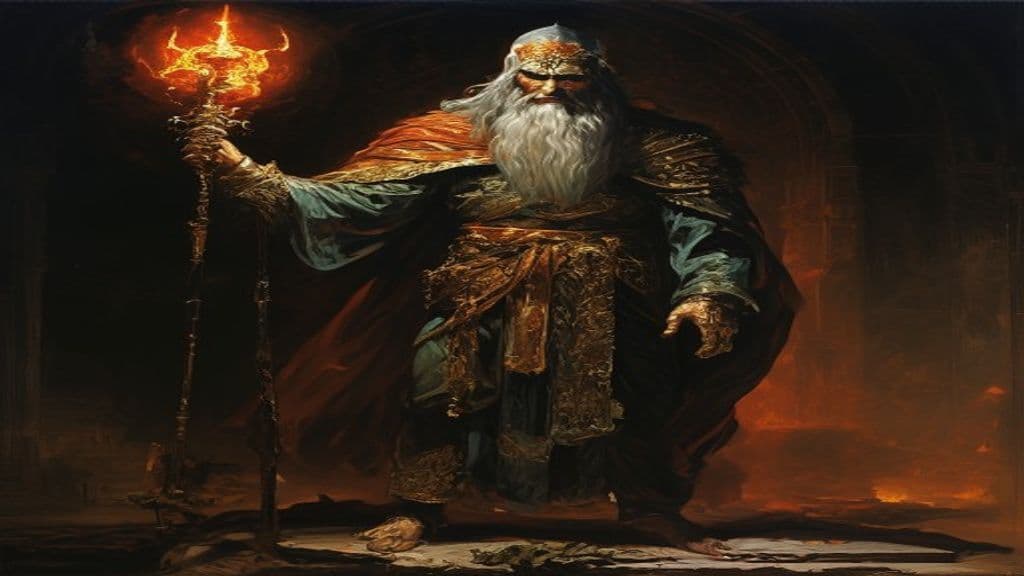
57 Mnemosyne
57 Mnemosyne is a large main-belt asteroid (S-type) discovered in 1859 and named after the Greek Titaness Mnemosyne. It is a non-sentient astronomical body studied for its orbital and rotational properties and has been used in dynamical measurements related to Jupiter.
Aamon
Aamon (also Amon) is a named spirit in early modern Western grimoire tradition (Pseudomonarchia Daemonum; the Ars Goetia / Lesser Key of Solomon). He is presented as a high-ranking infernal officer (Marquis/Prince) who governs forty legions and is credited with knowledge of past and future and with affecting human relationships (reconciling or procuring feuds and favor).
Aaron
Aaron is a central human figure in Israelite sacred literature: the elder brother of Moses, the first high priest (progenitor of the Aaronide priesthood), and a spokesman/prophet who mediates between Israel and God in Exodus–Deuteronomy narratives. His role in the texts establishes hereditary priestly authority, ritual functions (sacrifices, blessing, use of Urim and Thummim), and institutional norms for Israelite cultic life.
Abaddon
In Hebrew scripture Abaddon is primarily a noun meaning 'destruction' or a section/condition of the underworld paired with Sheol; in the New Testament Book of Revelation Abaddon is personified as an angelic figure (Greek Apollyon) described as the king of an army of locusts released from the abyss during the apocalypse.
Abadir
Abadir is a polysemous name attested in distinct cultural contexts: a legendary founding saint and clan ancestor in eastern Ethiopia (Sheikh Abadir Umar Al‑Rida / Aw Abadir), a term applied to cone‑shaped cult stones in Phoenician religious description, and a personal name of a martyr (Abadir/Apater) in the Coptic Synaxarium. The attestations are independent usages of the same name rather than a single supernatural being.
Abadiu of Antinoe
Abadiu of Antinoe was a fourth‑century bishop of Antinoe (Antinoopolis, in Roman Egypt) commemorated as a martyr and saint in the Coptic Orthodox Church, with a feast day on 26 December. Sources record that he was killed during a theological dispute with Arian opponents and reference him in collections of Egyptian martyrs.
Abagtha
Abagtha (Hebrew: אבגתא, ’Ǎḇaḡṯā) is a named human court official in the Hebrew Bible’s Book of Esther, listed among seven chamberlains who ministered before King Ahasuerus and were commanded to bring Queen Vashti before the king. He is attested only in Esther 1:10 and is presented as an institutional palace attendant rather than a supernatural being.
Abanoub
Abanoub is a 4th‑century Egyptian Christian child martyr venerated in the Coptic tradition. Remembered for his public confession of Christ, miraculous healings associated with his passion, and the translation and veneration of his relics, his feast is observed on July 31 (Epip 24) and his cult centers include Nehisa and Samanoud.
Abaskhiron the Soldier
A Coptic Orthodox martyr venerated for refusing imperial idolatry during the Diocletian persecution; reputedly healed by the Archangel Michael, preserved in monastery relics, and commemorated on 14 June (7 Paoni).
Abdel Messih El-Makari
Abdel Messih El-Makari (1892–1963) was a Coptic Orthodox monk and priest venerated as a 20th‑century Coptic saint. Associated with the Monastery of Saint Samuel the Confessor and the Monastery of Saint Macarius (Scetes/Wadi El‑Natrun), he is remembered for humility, asceticism, charity, and reported spiritual gifts such as prescience, discerning of spirits, and healing.
Abdiel
Abdiel (Hebrew עֲבְדִּיאֵל) is primarily a theophoric Hebrew personal name meaning "servant of El/servant of God," attested once in the Hebrew Bible (1 Chronicles 5:15). In later literature—most notably John Milton's Paradise Lost—Abdiel is reimagined as a faithful seraph who opposes Satan's revolt. The provided sources do not treat Abdiel as an autonomous folkloric spirit type or record rituals or wards associated with the name.
Abel
Abel is the second son of Adam and Eve in the Genesis narrative, a shepherd whose accepted offering and subsequent murder by his brother Cain form the biblical account of the first death. Later interpretive traditions expand his role, treating him as an archetypal righteous victim, a postmortem avenging or adjudicating figure, and in some systems (notably Mandaean) identifying him with an angelic lightbeing.
Community Record
- [1]Asmodeus — Wikipedia. Wikipedia, Asmodeus, article summarizing Asmodeus as 'a king of demons' in Solomonic legend and related traditions.wiki
- [2]Asmodeus — Wikidata Q733322. Wikidata entry summarizing Asmodeus as 'king of demons from the deuterocanonical Book of Tobit'.wiki
- [3]Asmodai — Thelemapedia (fragment). Thelemapedia entry fragment noting Asmodai's prominence in Tobit, mention in Talmudic legends, and a likely (but not certain) origin in Mazdian religion.other
- [4]Asmodai — New World Encyclopedia. New World Encyclopedia entry noting functional parallels between Zoroastrian Aeshma and Asmodai/Asmodeus while cautioning that linguistic relationship does not necessarily denote conceptual continuity.other
- [5]TV MADNESS - WHY AND HOW THEY LIVE AMONGST US (archive). Archive.org search result / media referencing modern cultural uses of the name 'Asmodai' (modern media instance; not a traditional source).other
- [6]Crown of Thorns Blooper Reel: Chapters 26—50 (archive). Archive.org item showing contemporary/pop-cultural appearance of the name 'KING ASMODAI' among other beings in modern listings (not a primary traditional source).other
- [7]Asmodai — New World Encyclopedia (duplicate citation for etymology note). See New World Encyclopedia entry for discussion of possible parallels with Zoroastrian Aeshma and cautions about etymological claims.other