
The source provides no single creation myth for the baobh-shìth; instead the creature appears as part of Highland fairy belief (the sidhe corpus). Folktales present the baobh-shìth as an otherworldly female who responds to human speech and desire at night, a pattern tied to a traditional Scottish belief that a wish made at night without also invoking God's protection may be fulfilled in a harmful manner. Folklorists link her taxonomy to fairies generally while noting shared traits with succubi and other seductive night-spirits, situating her as a liminal fairy figure whose actions reflect cultural anxieties about solitude, wilderness, and unguarded speech after dark.
In the recorded tales the baobh-shìth appears as a strikingly beautiful woman whose outward attractiveness conceals her lethal nature. At least one tale explicitly records a nonhuman identifying trait: the women in that variant were said to have deer hooves instead of feet. The accounts emphasize deceptive human form employed to seduce male victims prior to attack, though physical monstrousity (such as hooved feet) may reveal their otherworldly identity in certain variants.
Tales describe the baobh-shìth as seducing men and then attacking and killing them; in one recorded variant the victims were later found with their throats cut and chests opened. A recurring narrative motif is that these fairies appear almost immediately after hunters express a wish for female companionship at night, linking their activity to the folkloric idea that unguarded nocturnal wishes can be answered by the unseen. Scholarly commentary cited in the source (Katharine Briggs) also treats iron as a practical deterrent in at least one tale, and animals (notably a black dog) are reported to drive the women away; a modern literary adaptation cited in the source attributes additional mimicry powers to a baobh-shìth, but that portrayal is explicitly a contemporary fictional expansion and not presented as a traditional attribute in the provided material.
Weaknesses
- substanceiron (e.g., iron-shod horses prevented pursuit in a tale)
- otherguardian animals (a black dog drove the women away in a recorded story)
- ritualinvoking God's protection when making a wish at night (prevents the wish being fulfilled by a malevolent agency)
Wards
- substanceiron (horses shod with iron acted as a barrier in a tale)
- otherguard animals (a dog defended its master and drove the women from a cave)
- ritualinvocation of God's protection when making nocturnal wishes
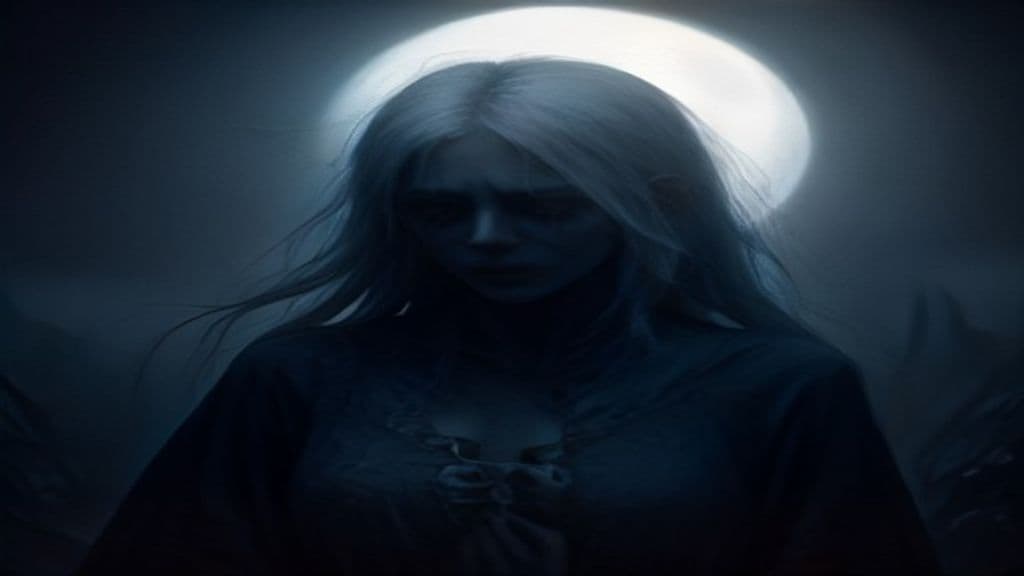
Banshee
A female spirit of Irish and Scottish folklore whose wail heralds an impending death in a family of Gaelic descent. Not a cause of death — a witness to it.

Rusalka
Water spirits in Slavic folklore — the spirits of young women who died by drowning or suicide, bound to rivers and lakes. Beautiful and dangerous, they can bewitch men to their deaths.
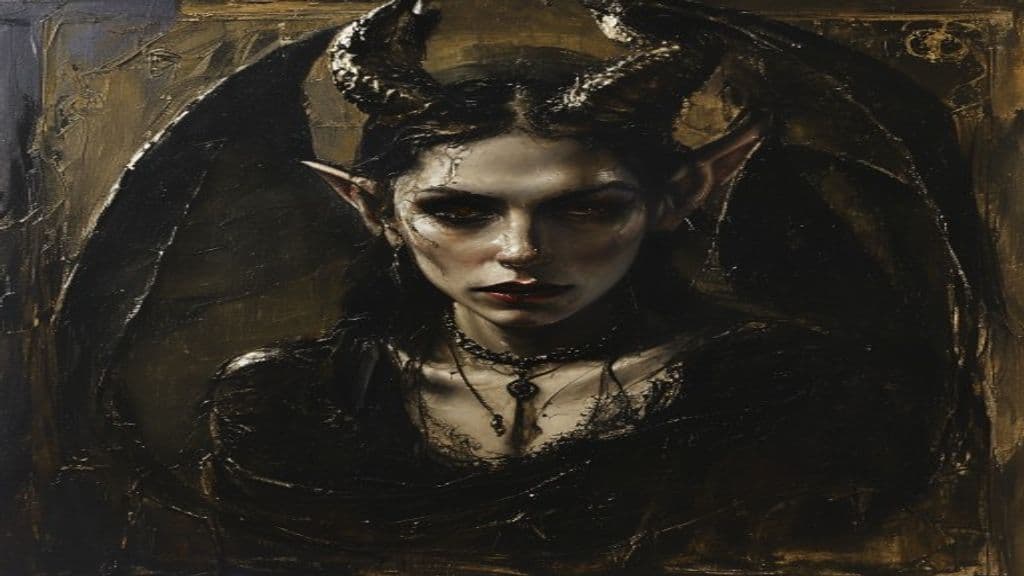
Succubus (Jewish Tradition)
Female demon that seduces male humans through dreams, potentially leading to a hybrid child and the man's decline. (Note: 1. Power tier should be Ancient, not Primordial (Primordial powers are cosmic, while Ancient powers are deity-level). 2. No information on physical appearance is missing because it's simply not mentio)
Abandinus
Abandinus is a locally attested Romano‑Celtic theonym known from a single inscribed bronze feather (votive object) dedicated at Godmanchester (the Roman fort Durovigutum) in Cambridgeshire. Scholars interpret him as a local god or male spirit tied to a specific place and possibly associated with a nearby spring or stream; this association is tentative and based on etymological readings of the name.
Abarta (Ábartach)
Abarta (also Ábartach) is a figure of Irish myth who, in surviving accounts, tricks Fionn mac Cumhaill's warriors by giving them a supernatural grey horse that bears them into the Otherworld. Sources variably identify him as a member of the Tuatha Dé Danann or as a Fomorian; after the incident he is compelled to release the captured warriors and is refused entry to the Fianna.
Abcán (Abhcán)
Abcán (modern spelling Abhcán) is a named dwarf poet and musician of the Tuatha Dé Danann in Irish myth. He appears in a small number of narratives as a musician whose art has soporific power and as the ferryman who brings the goddess Ruad from the Otherworld to the human world.
Abhean
Abhean is a named poet of the Tuatha Dé Danann in medieval Irish literature, described as a poet in particular of Lugh and recorded as having been killed by Óengus before Midir in a poem by Fland Mainistreach preserved in the Lebor Gabála Érenn.
Abnoba
Abnoba is a Gaulish theonym and toponym attested in Roman-era sources and inscriptions: a localized deity associated with woods, springs and the sources of rivers (notably the Danube) and simultaneously the name applied to a mountain or mountain range in the Black Forest/Baar/Odenwald region. Roman altars equate her with Diana, reflecting syncretic cult practice in frontier provinces.
Accolon
Accolon is a mortal knight of the Arthurian court, presented in the Post-Vulgate Merlin tradition and Malory's Le Morte d'Arthur as Morgan le Fay's paramour and instrument in a plot to supplant King Arthur; his tale centers on enchanted weapons (Excalibur and its scabbard), love-manipulation, and a tragic duel with Arthur.
Achall
Achall is an eponymous mortal woman in the Ulster Cycle of early Irish literature whose grief-induced death is given as the origin of the hill-name Achall (identified with the modern Hill of Skryne). She appears as a genealogical and etiological figure tied to Tara and later legendary events at the hill, rather than as a recurring supernatural agent.
Achtland
Achtland is a figure from Irish tradition who, according to the surviving account, was a mortal woman famed for rejecting mortal suitors who married a member of the Tuatha Dé Danann and crossed into the síde to become immortal as his wife.
Adar Llwch Gwin
Legendary large, intelligent birds from Welsh tradition said to understand human speech and obey their master's commands; best known for tearing their master Drudwas ap Tryffin to pieces when bound by a literal order in an Arthurian battle narrative. The term later came to be applied to raptors and metaphorically to brave men in medieval Welsh poetry.
Adar Rhiannon
Adar Rhiannon ('birds of Rhiannon') are a set of three magical birds in medieval Welsh narrative (the Mabinogi) whose song can 'wake the dead and lull the living to sleep.' They appear as otherworldly song‑beings tied to the figure Rhiannon and function within tales as providers of enchanted music that sustains and consoles characters.
Aderyn y Corff
Aderyn y Corff (literally 'bird of the corpse') is a bird-like death-porter in Welsh folklore said to call outside the door of a person about to die. Described as an avian portent that may lack feathers or wings and as existing on another plane when not manifesting, it is treated in Welsh ghost lore and sometimes naturalized as a screech owl in modern accounts.
Adhene
A class of Manx fairies (Cloan ny moyrn) described in Isle of Man tradition as a social people of beings said to be "fallen angels cast from heaven but too good for hell," who interact with human livelihoods and families, sometimes benevolent but often mischievous.
Community Record
- [1]Baobh-shìth - Wikipedia. Wikipedia: 'Baobh-shìth' entrywiki