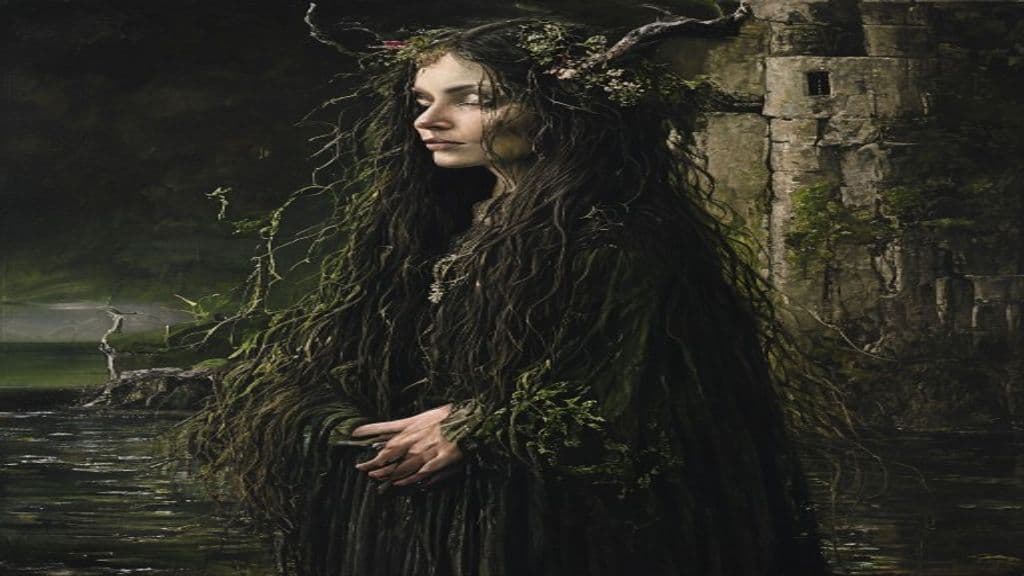
In the cycle of tales surrounding Balor, Ethniu (Eithne) is kept from men to prevent a prophecy that her son would kill Balor. In versions recorded in the 19th and later centuries, a figure named Biróg (Biroge of the Mountain) assists the man Mac Cinnfhaelaidh (identified with Cian in mythic retellings) to gain secret access to Ethniu in the tower on Tory Island. After Ethniu bears triplets and a Fomorian messenger drowns two of them, Biróg rescues the surviving infant from the harbour and returns him into the care network of his father, who gives the child in fosterage to Gavida the smith. In later literary retellings (e.g., Lady Gregory, T. W. Rolleston) this rescued child is associated with Lugh and Biróg is reframed as a druidess; other summaries describe her as a leanan sídhe or filidh, reflecting variant classifications across sources.
The available sources do not provide a detailed physical description of Biróg. Narrative and secondary summaries identify her variably by role — as a leanan sídhe or female familiar spirit, as a filidh (poet/seer), and in later literary retellings as a druidess — but these labels indicate differing social or functional presentations rather than an attested set of physical traits in the cited material.
Across the tale variants Biróg's demonstrated abilities are practical, clandestine, and protective rather than specified magical formulas: she enables clandestine access to the tower on Tory Island so that Mac Cinnfhaelaidh/Cian can reach Ethniu, she rescues the sole surviving infant after an attempted drowning, and she acts as a custodian/facilitator by returning the child to its father to be placed in fosterage. Different sources characterize her as a leanan sídhe (implying a familiar or spirit-associate), a filidh (implying poet-seer skills), or a druidess (in later retellings), but the core attested behaviors in the sources are aid in secret access, rescue of a child, and intermediary action on behalf of human principals.

Balor
Balor is a leader of the Fomorians in the Irish Mythological Cycle, portrayed in medieval texts as a formidable war‑champion and in later folklore as a one‑eyed giant/tyrant whose baleful eye causes great destruction; he is killed by his grandson Lugh in the battle narratives and in folktale variants. Scholarly readings link his name to a Common Celtic root meaning 'the flashing one,' which has informed interpretations of him as a personified destructive natural force.
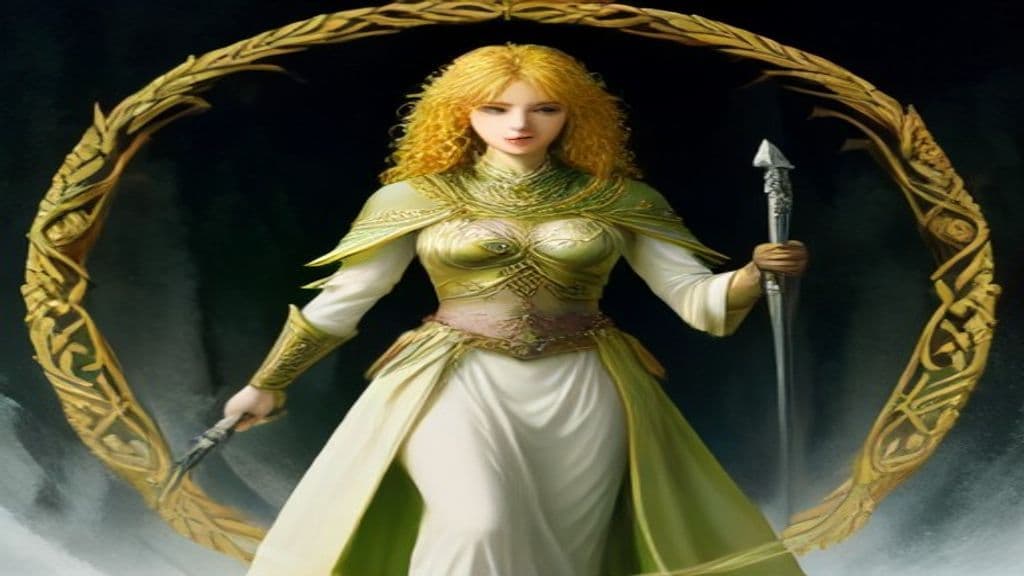
Lugh
Lugh is a prominent figure of Irish myth, a member of the Tuatha Dé Danann variously portrayed as a warrior, king, master craftsman and saviour. Epithets (e.g., Lámfada, Samildánach) stress his long arm and polyvalent skill; medieval texts place him centrally in the mythic history of Ireland (notably the Battle of Mag Tuired) and later comparative traditions identify him with the pan‑Celtic Lugus and, by interpretatio romana, with Mercury.
Abandinus
Abandinus is a locally attested Romano‑Celtic theonym known from a single inscribed bronze feather (votive object) dedicated at Godmanchester (the Roman fort Durovigutum) in Cambridgeshire. Scholars interpret him as a local god or male spirit tied to a specific place and possibly associated with a nearby spring or stream; this association is tentative and based on etymological readings of the name.
Abarta (Ábartach)
Abarta (also Ábartach) is a figure of Irish myth who, in surviving accounts, tricks Fionn mac Cumhaill's warriors by giving them a supernatural grey horse that bears them into the Otherworld. Sources variably identify him as a member of the Tuatha Dé Danann or as a Fomorian; after the incident he is compelled to release the captured warriors and is refused entry to the Fianna.
Abcán (Abhcán)
Abcán (modern spelling Abhcán) is a named dwarf poet and musician of the Tuatha Dé Danann in Irish myth. He appears in a small number of narratives as a musician whose art has soporific power and as the ferryman who brings the goddess Ruad from the Otherworld to the human world.
Abhean
Abhean is a named poet of the Tuatha Dé Danann in medieval Irish literature, described as a poet in particular of Lugh and recorded as having been killed by Óengus before Midir in a poem by Fland Mainistreach preserved in the Lebor Gabála Érenn.
Abnoba
Abnoba is a Gaulish theonym and toponym attested in Roman-era sources and inscriptions: a localized deity associated with woods, springs and the sources of rivers (notably the Danube) and simultaneously the name applied to a mountain or mountain range in the Black Forest/Baar/Odenwald region. Roman altars equate her with Diana, reflecting syncretic cult practice in frontier provinces.
Accolon
Accolon is a mortal knight of the Arthurian court, presented in the Post-Vulgate Merlin tradition and Malory's Le Morte d'Arthur as Morgan le Fay's paramour and instrument in a plot to supplant King Arthur; his tale centers on enchanted weapons (Excalibur and its scabbard), love-manipulation, and a tragic duel with Arthur.
Achall
Achall is an eponymous mortal woman in the Ulster Cycle of early Irish literature whose grief-induced death is given as the origin of the hill-name Achall (identified with the modern Hill of Skryne). She appears as a genealogical and etiological figure tied to Tara and later legendary events at the hill, rather than as a recurring supernatural agent.
Achtland
Achtland is a figure from Irish tradition who, according to the surviving account, was a mortal woman famed for rejecting mortal suitors who married a member of the Tuatha Dé Danann and crossed into the síde to become immortal as his wife.
Adar Llwch Gwin
Legendary large, intelligent birds from Welsh tradition said to understand human speech and obey their master's commands; best known for tearing their master Drudwas ap Tryffin to pieces when bound by a literal order in an Arthurian battle narrative. The term later came to be applied to raptors and metaphorically to brave men in medieval Welsh poetry.
Adar Rhiannon
Adar Rhiannon ('birds of Rhiannon') are a set of three magical birds in medieval Welsh narrative (the Mabinogi) whose song can 'wake the dead and lull the living to sleep.' They appear as otherworldly song‑beings tied to the figure Rhiannon and function within tales as providers of enchanted music that sustains and consoles characters.
Aderyn y Corff
Aderyn y Corff (literally 'bird of the corpse') is a bird-like death-porter in Welsh folklore said to call outside the door of a person about to die. Described as an avian portent that may lack feathers or wings and as existing on another plane when not manifesting, it is treated in Welsh ghost lore and sometimes naturalized as a screech owl in modern accounts.
Adhene
A class of Manx fairies (Cloan ny moyrn) described in Isle of Man tradition as a social people of beings said to be "fallen angels cast from heaven but too good for hell," who interact with human livelihoods and families, sometimes benevolent but often mischievous.
Community Record
- [1]Biróg — Wikipedia. Wikipedia entry 'Biróg' (summary and attestation paragraph as cited in research notes)wiki
- [2]Birog (Celtsite). Celtsite: 'Birog was a filidh who helped Cian to gain access to the Crystal Tower on Tory Island...' (as cited in research notes)folk
- [3]Cian (Celtsite). Celtsite entry on Cian summarizing the episode with Birog and Ethniu (as cited in research notes)folk
- [4]Lady Gregory / T. W. Rolleston retellings (referenced in summaries). Referenced in Wikipedia and research notes as later literary retellings that recast Biróg as a druidess and link the rescued child to Lugh.literary