
Cassiel appears in a range of extracanonical and occult sources rather than a single narrative origin. In Jewish merkavah and hekhalot texts (e.g., Hekhalot Rabbati) Cassiel functions as a guardian of high heavenly halls; the Zohar names Cassiel as one of Gabriel’s chief aides. Sefer Raziel and medieval magical compilations list Cassiel (under variant forms such as Kasfiyail/Kafziel) among planetary archangels tied to Saturn; Arabic angelological writers transmit related forms. In Western medieval and Renaissance magical manuals Cassiel is incorporated as the angelic intelligence of Saturn and appears in angel lists, sigils, and ritual rosters (Heptameron, Key of Solomon, Sigillum Dei, Sworn Book of Honorius). Across these traditions Cassiel’s roles and names vary through transliteration and syncretism rather than originating in a single foundational myth.
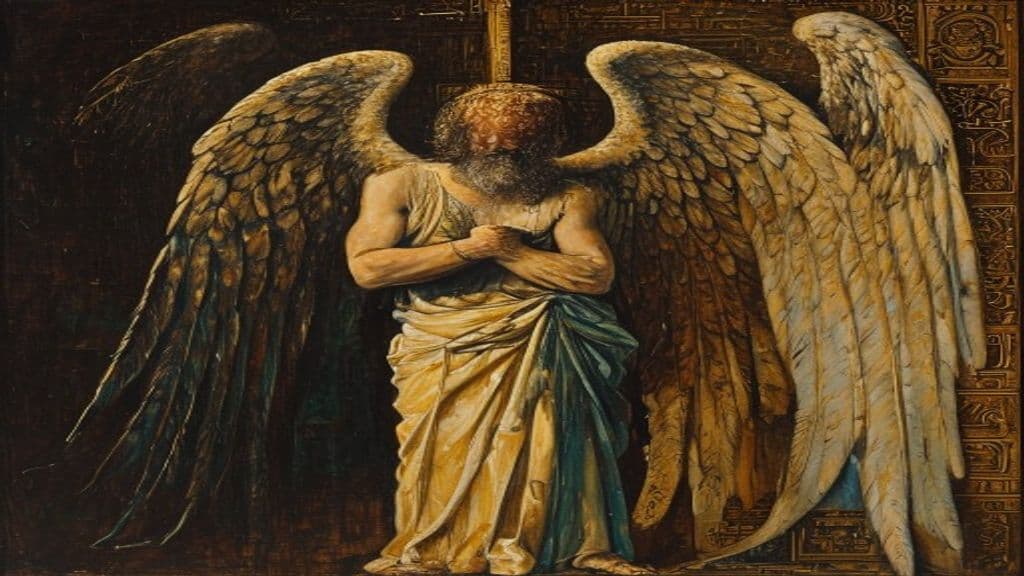
Descriptions differ by source tradition. Merkavah material emphasizes Cassiel’s office and instruments rather than a standardized anthropomorphic portrait: he is represented as a palace guardian armed with formidable weapons (a lightning-dripping sword that is said to cry 'Ruin!', bow, tempests, light, and powerful winds). In later Western occult iconography (e.g., Francis Barrett’s The Magus) Cassiel is depicted syncretically as a dragon-riding djinn with a beard. The compiled attestations show no single canonical appearance but range from awe-inspiring heavenly guardian to medieval occult visualizations.
Sources attribute several interlocking offices and powers to Cassiel: guardian and enforcer of access to heavenly palaces (Hekhalot Rabbati), princely or archangelic rule over the planetary sphere of Saturn (Sefer Raziel; medieval magical lists), aide to higher angels such as Gabriel (Zohar), and in some Jewish attestations a role among angels of death (one source specifies presiding over the deaths of young men). Instruments and powers in guardian contexts include a lightning-dripping sword, storms, and overwhelming light/winds. In the ceremonial-magic corpus Cassiel functions as an invokeable planetary intelligence—named in sigils and angelic rosters used in ritual operations concerning Saturn.
Weaknesses
- otherNo explicit vulnerabilities recorded in the provided sources
Wards
- ritualInvocations and sigils within exorcistic and ceremonial manuals (e.g., Sigillum Dei, Key of Solomon)
57 Mnemosyne
57 Mnemosyne is a large main-belt asteroid (S-type) discovered in 1859 and named after the Greek Titaness Mnemosyne. It is a non-sentient astronomical body studied for its orbital and rotational properties and has been used in dynamical measurements related to Jupiter.
Aamon
Aamon (also Amon) is a named spirit in early modern Western grimoire tradition (Pseudomonarchia Daemonum; the Ars Goetia / Lesser Key of Solomon). He is presented as a high-ranking infernal officer (Marquis/Prince) who governs forty legions and is credited with knowledge of past and future and with affecting human relationships (reconciling or procuring feuds and favor).
Aaron
Aaron is a central human figure in Israelite sacred literature: the elder brother of Moses, the first high priest (progenitor of the Aaronide priesthood), and a spokesman/prophet who mediates between Israel and God in Exodus–Deuteronomy narratives. His role in the texts establishes hereditary priestly authority, ritual functions (sacrifices, blessing, use of Urim and Thummim), and institutional norms for Israelite cultic life.
Ababil
Ababil (Arabic: أبابيل, romanized abābīl) are miraculous birds mentioned in the Qur'anic account of Surah Al‑Fil. In Islamic tradition they appear as a divinely sent avian host that defended the Kaaba by pelting an invading army with small clay stones; tradition places the event in the year traditionally given as 570 CE.
Abaddon
In Hebrew scripture Abaddon is primarily a noun meaning 'destruction' or a section/condition of the underworld paired with Sheol; in the New Testament Book of Revelation Abaddon is personified as an angelic figure (Greek Apollyon) described as the king of an army of locusts released from the abyss during the apocalypse.
Abadir
Abadir is a polysemous name attested in distinct cultural contexts: a legendary founding saint and clan ancestor in eastern Ethiopia (Sheikh Abadir Umar Al‑Rida / Aw Abadir), a term applied to cone‑shaped cult stones in Phoenician religious description, and a personal name of a martyr (Abadir/Apater) in the Coptic Synaxarium. The attestations are independent usages of the same name rather than a single supernatural being.
Abagtha
Abagtha (Hebrew: אבגתא, ’Ǎḇaḡṯā) is a named human court official in the Hebrew Bible’s Book of Esther, listed among seven chamberlains who ministered before King Ahasuerus and were commanded to bring Queen Vashti before the king. He is attested only in Esther 1:10 and is presented as an institutional palace attendant rather than a supernatural being.
Abdiel
Abdiel (Hebrew עֲבְדִּיאֵל) is primarily a theophoric Hebrew personal name meaning "servant of El/servant of God," attested once in the Hebrew Bible (1 Chronicles 5:15). In later literature—most notably John Milton's Paradise Lost—Abdiel is reimagined as a faithful seraph who opposes Satan's revolt. The provided sources do not treat Abdiel as an autonomous folkloric spirit type or record rituals or wards associated with the name.
Abdul Qadir Gilani
A historical 11th–12th century Hanbali jurist, preacher, and Sufi shaykh who became the eponym and principal early figure of the Qadiriyya tariqa; venerated in Sunni Sufi traditions as an Awliya (saint) and often given exalted hagiographical ranks such as Muḥi al‑Dīn and Ghawth.
Abel
Abel is the second son of Adam and Eve in the Genesis narrative, a shepherd whose accepted offering and subsequent murder by his brother Cain form the biblical account of the first death. Later interpretive traditions expand his role, treating him as an archetypal righteous victim, a postmortem avenging or adjudicating figure, and in some systems (notably Mandaean) identifying him with an angelic lightbeing.
Abiathar
Abiathar (Hebrew: אֶבְיָתָר, ʾEḇyāṯār) is a named human priestly figure in the Hebrew Bible. He is presented as a survivor of the Nob massacre who fled to David with priestly regalia, served as a priest and counselor in David's court, and was later deposed and sent to Anathoth by Solomon for supporting Adonijah.
Abiel
Abiel is attested in the supplied sources only as a male given name — borne by several historical American individuals and listed as two minor biblical figures. The provided materials contain no evidence presenting Abiel as a supernatural, mythological, or folkloric entity.
Community Record
- [1]Cassiel — Wikipedia. Wikipedia, 'Cassiel' articlewiki
- [2]Llewellyn Encyclopedia entry: Cassiel. Llewellyn Encyclopedia entry for 'Cassiel'other
- [3]Archive: Cassiel/Fournier materials (collection references). Archive holdings referencing 'Cassiel' materialsother