
The name Κλυτίος (Clytius) is an ordinary Greek personal name meaning "famous/renowned" and is applied independently to many individuals in the mythic corpus. One attestation places a figure named Clytius among the Giants born of Gaia (Earth) and the defeated forces in the Gigantomachy; in that context he is one of the earth-born opponents of the Olympian order. Other attestations apply the same name to a variety of mortals (Argonauts or related crew, Trojan princes and elders, warriors in various campaigns, attendants and ancestral figures). The name's recurrence reflects naming practices rather than a single continuous identity.
When represented as one of the Giants, Clytius shares the collective Giant iconography: enormous bulk and invincible might, "long locks drooping from their head and chin" and dragon-like scales on their feet, often shown in combat with gods (vase-paintings depict Hecate battling a giant labeled Clytius). Mortal bearers of the name lack a consistent physical description in the sources and appear in lists, genealogies, and narrative roles typical of heroes and attendants.
As a Giant, Clytius participates in the Gigantomachy: Giants hurl rocks and burning oaks at the sky and engage the Olympian gods in massive combat; the tradition portrays Giants as supernaturally strong, martial, and difficult for gods alone to slay (an oracle required mortal aid). Mortal Clytiuses perform ordinary epic functions — fighting in wars, serving as attendants, founding lineages or acting as eponymous ancestors — without unique supernatural powers attested in the cited materials. The modern taxonomic uses of the name denote species of insects and butterflies and are non-mythic.
Weaknesses
- otherrequires mortal aid to be slain (oracle limitation on Giants)
Wards
None recorded.

Hercules
Hercules (Latin: Hercules) is the Roman reception of the Greek divine hero Heracles: a semi-divine, divinized heroic figure son of Jupiter and the mortal Alcmena who was widely venerated across Italy. Represented in cult, votive art, and literature, he functions as a protector and martial champion whose identity was adapted through Etruscan and local Italic contexts.

Hera
Hera is an ancient Greek goddess, queen of the Olympian gods, and a principal tutelary deity of marriage, women, and family. She functions in myth and cult as protector of lawful marriage and women in childbirth, a civic tutelary figure (notably of Argos), and a sometimes-jealous consort of Zeus with archaic fertility associations in certain local rites.
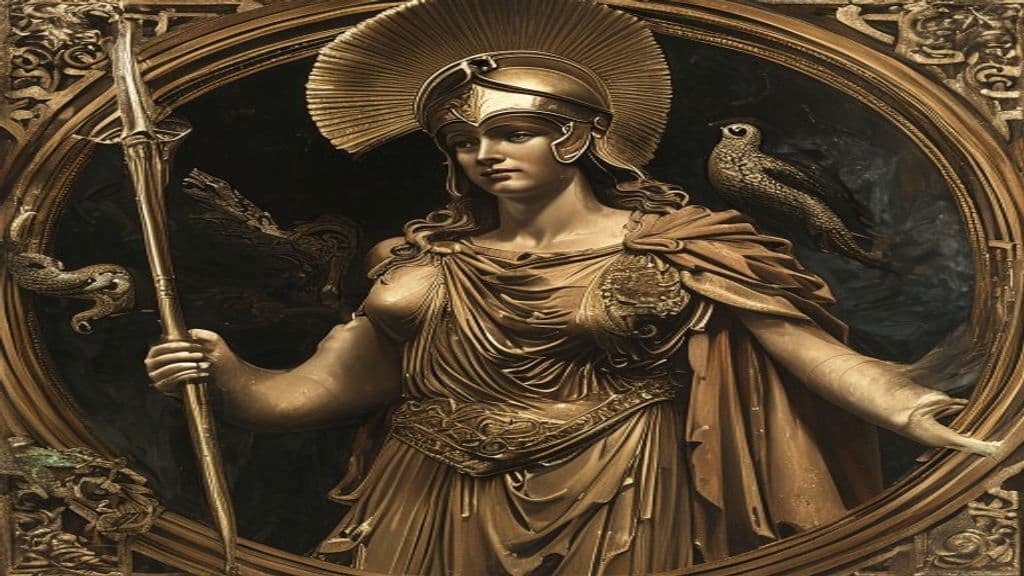
Athena
Athena is a major ancient Greek goddess associated with wisdom, handicraft (notably weaving), and warfare; she serves as a tutelary protector of cities—most prominently Athens—and is central to myth, cult, and civic identity in the Greek world.
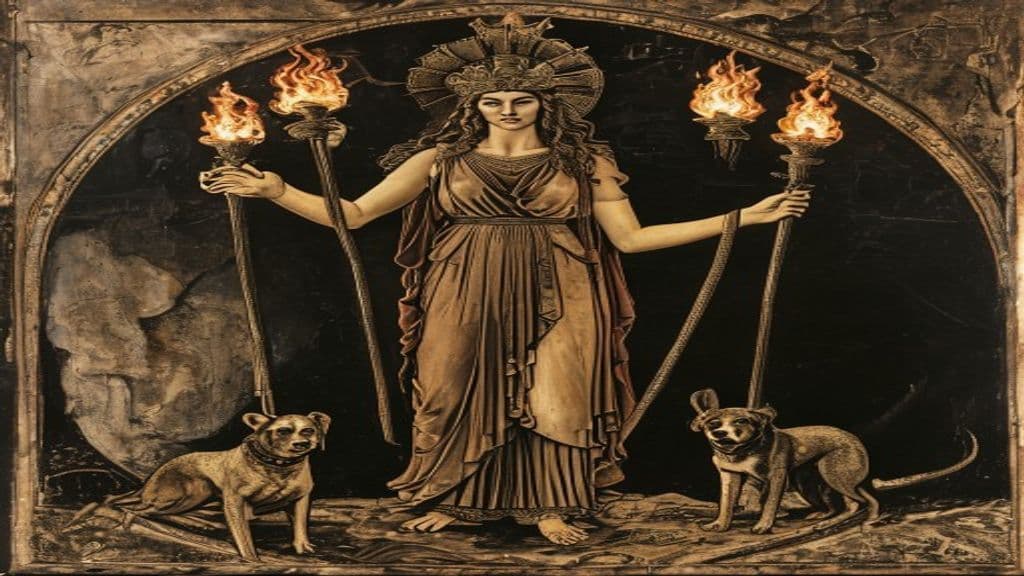
Hecate
Hecate (Ancient Greek: Ἑκάτη) is a liminal goddess in ancient Greek religion associated with crossroads, night, light, magic/witchcraft, the Moon, and household protection. She appears in early Greek poetry (Hesiod) with broad domains and in later traditions (notably the Chaldean Oracles) with expanded cosmological roles; she retained important regional cults, especially in Anatolia (Lagina) and had popular associations with witches in Thessaly.
*Péh₂usōn (reconstructed)
Péh₂usōn is a hypothetical Proto‑Indo‑European pastoral guardian reconstructed by comparative scholars from parallels in Greek and Vedic traditions. Proposed as a Graeco‑Aryan ancestor‑figure, the reconstruction describes a protector of flocks, roads, and travellers rather than an attested historical cultic personality.
3-D Man
3-D Man is a Marvel Comics superhero identity associated with a 1950s-era origin in which the body of Chuck Chandler can materialize in three-dimensional existence when activated by his brother Hal via a pair of glasses. The mantle was later assumed by Delroy Garrett (formerly Triathlon) in modern continuity.
5 Ronin
5 Ronin is a 2011 Marvel Comics five-issue limited series that reimagines five Marvel superhero archetypes as rōnin (masterless samurai) in a fictionalized post‑Sekigahara feudal Japan. The work places Wolverine, Hulk, Punisher, Psylocke, and Deadpool analogues into period roles to explore displacement, revenge, and identity in an era of political upheaval.
58 Concordia
58 Concordia is a fairly large main-belt asteroid orbiting the Sun, discovered in 1860 and named after the Roman goddess Concordia. Astronomical sources classify it as a C-type (carbonaceous) body with a multi-year orbital period and measurable rotation and pole orientations.
9MOTHER9HORSE9EYES9
An anonymous Reddit screen name and online persona used by the author of the Interface series, a multipart speculative-horror narrative posted in short installments across Reddit in 2016. The name functions as the signature of an authorial identity and as a focal label for a fandom that created archives, a subreddit, and a wiki documenting the story and its fictional phenomena (notably entities called "flesh interfaces").
A.R.G.U.S.
A.R.G.U.S. is a fictional clandestine United States government agency in the DC Comics universe that investigates, contains, and manages superhuman, meta-human, and supernatural incidents and assets. Introduced in The New 52 continuity, it functions as an institutional actor providing intelligence, logistical support, covert task forces (notably Task Force X / the Suicide Squad), and a dedicated magic division across comics and media adaptations.
Aba (disambiguation / name-form)
Aba is a polyvalent name-form attested across many unrelated contexts (place names, personal names, animal names, and brief mythological listings). The provided sources do not support a single, coherent supernatural entity called "Aba" and offer no descriptive or ritual material for such a being.
Abandinus
Abandinus is a locally attested Romano‑Celtic theonym known from a single inscribed bronze feather (votive object) dedicated at Godmanchester (the Roman fort Durovigutum) in Cambridgeshire. Scholars interpret him as a local god or male spirit tied to a specific place and possibly associated with a nearby spring or stream; this association is tentative and based on etymological readings of the name.
Abarbarea
Abarbarea is a name attested in classical Greek and Roman sources for freshwater nymphs (naiads). The name appears for at least two individual mythic figures — a naiad wife of Bucolion and a naiad counted among ancestors of the Tyrians — and Hesychius records plural forms that may indicate the name was also used as a class-name (Abarbareai / Abarbalaiai).
Abas
Abas (Ancient Greek: Ἄβας, gen.: Ἄβαντος) is not a single mythic being but a recurring personal name borne by multiple mortals and minor mythic figures in Greek epic and genealogical traditions — kings, founders, seers, warriors, attendants, a centaur, and a youth transformed by a goddess. The name is glossed in the sources as 'guileless' or 'good-hearted' and appears across Argive, Theban, Trojan, Euboean, and other local cycles.
Abderus
Abderus (Ancient Greek: Ἄβδηρος, romanized Ábdēros) is a mortal heroic figure in Greek myth closely associated with Heracles, remembered as the youth left in charge of the Mares of Diomedes who was killed by them. He functions as an eponymous local/divine-hero ancestor for the city of Abdera and received funerary commemoration and athletic agones at his tomb.
Abellio
Abellio is a theonym attested in Roman‑period inscriptions from the Comminges area of the Pyrenees and reported as worshipped in the Garonne Valley of ancient Gallia Aquitania. Surviving evidence is limited to a small number of inscriptions; scholars have variously hypothesized solar or arboreal associations and compared the name to forms of Apollo or to Celtic Belenus, but the deity's precise role in local cosmology remains uncertain.
Community Record
- [1]Clytius (Wikipedia). Wikipedia entry 'Clytius' (summary of classical attestations and name meaning).wiki
- [2]The Gigantomachy (Apollodorus summary/archive recording). Archive recording summarizing Apollodorus' account of the Giants: description of Giants' bulk, appearance, and behavior in the Gigantomachy.literary
- [3]Hecate & Giant Clytius - Ancient Greek Vase Painting (Theoi Gallery). Iconographic evidence depicting Hecate battling a giant labeled Clytius in Gigantomachy vase-painting.other
- [4]Wikidata: Clytius (taxonomic/name reuse). Wikidata entry noting modern taxonomic usages of the name 'Clytius'.other
- [5]New Taxa Of Butterflies Supported By Genomics (T REPORT 12(3)). Modern entomological publication noting new butterfly taxa using the name 'Clytius' (e.g., Clytius mattus) and the continued reuse of classical names in taxonomy.other
- [6]Bolla clytius — Mottled Bolla (regional butterfly guides). Field guide entry for the butterfly species Bolla clytius (common name Mottled Bolla), demonstrating modern biological reuse of the name.other