
Darna was created for Filipino comic books by Mars Ravelo (writer) and Nestor Redondo (artist) first appearing in 1950. The character was conceived in the wake of World War II as a Filipino superheroine intended to inspire hope. In the Golden Age origin, Darna is presented as an extraterrestrial warrior from the planet "Marte"; later adaptations revise her framing (for example, casting her as a "Warrior of Light" or emphasizing the mortal-to-hero amulet motif). The civilian girl Narda becomes Darna by swallowing a white magic stone inscribed with the name "Darna" and shouting that name; she reverts to Narda by shouting "Narda." The name "Darna" is an anagram of "Narda," and the transformation-by-amulet concept intentionally draws on Philippine folklore about mortals made worthy of magic amulets.
Across comics, film, and television, Darna is typically depicted in a red two-piece costume (often described as a red bikini or shorts) with a gold star on each breast cap, a red helmet adorned with a gold winged medallion, gold bracelets, a gold-rimmed red boots, and a golden medallion belt with a central loincloth. Costume details and visual design have varied between film and television adaptations; the helmet's winged medallion motif has been cited as inspired by Philippine airforce emblem imagery in popular accounts of the iconography.
Darna's core mechanic is transformation: Narda swallows a magic stone (the amulet) bearing the word "Darna" and calls that name to transform into the heroine; in many versions the stone exits Narda's mouth when she reverts and must be swallowed again to transform anew. The character is described as possessing exceptional strength and heroic attributes (early origin texts attribute qualities likened to classical figures), and functions as a protector/avenger who battles common criminals and a gallery of supernatural antagonists drawn from Philippine monster motifs. Behaviorally, Darna is framed as strong but compassionate; her civilian identity is a young girl often accompanied by her brother Ding and grandmother Lola Asay, who know of and assist with the secret in early accounts.
Weaknesses
- conditionTransformation requires possession and ingestion of the stone inscribed "Darna" and the spoken name; in many adaptations the stone leaves Narda's mouth on reversion and must be swallowed again to transform.
Wards
None recorded.

Manananggal
A terrifying Philippine vampire who severs its own upper body from its lower half at night, sprouting bat wings to fly out and feast on sleeping pregnant women's fetuses.
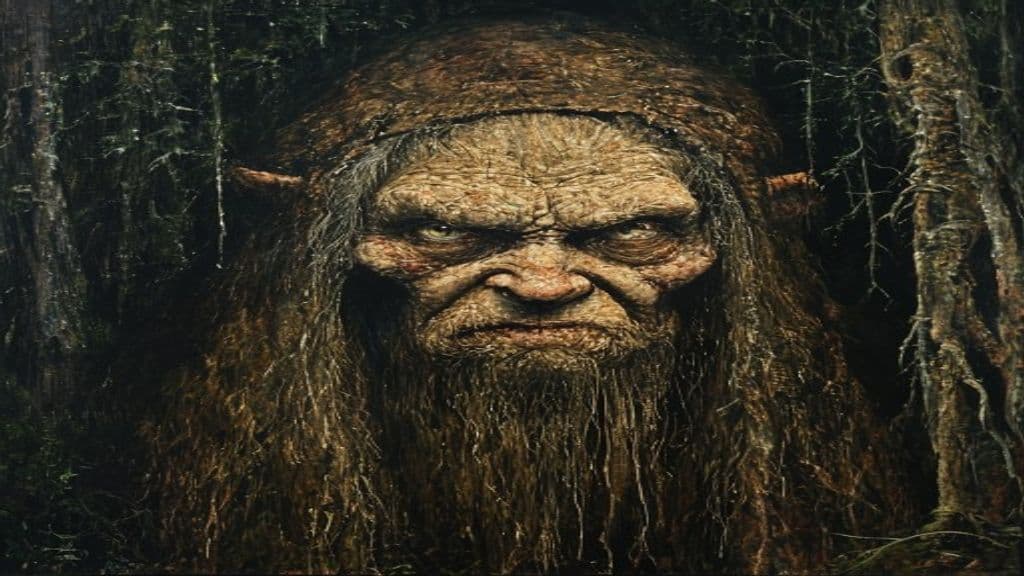
Baba Yaga
Baba Yaga is an ambivalent female figure of East Slavic folktale tradition, depicted variously as a fearsome, child-eating crone or as a helpful, maternal donor. She is associated with the deep forest, a hut described as standing on chicken legs, and the motific accoutrements of a mortar and pestle.
Aguingay
Aguingay (also Agingay) is a legendary woman from the Bulusan epic of Sorsogon, Philippines. Presented as a mortal of exceptional beauty and tragic fate, her life and death are etiologically linked to local landscape features (Mt. Bulusan and two lakes) and commemorated in an annual festival.
Alan
A class of non‑human spirit-beings in Tinguian (Philipine) folklore associated with reproductive wastes and springs; said to transform discarded menstrual blood, afterbirth, or miscarried tissue into human children whom they rear, and to dwell in fine houses near springs. Key described features include wings and backward-pointing fingers and toes.
Amalanhig
Amalanhig are Visayan undead beings in Philippine folk belief, described as aswang who failed to transfer their monstrosity or power before death and who rise from graves to attack living humans. Accounts portray them as externally human in appearance with enlarged upper canines and as predators that bite, feed with a pointed tongue in some tellings, or — in an alternative variant — tickle victims to death.
Angalo
Angalo is a primordial culture-hero and giant in Ilocano mythology credited with shaping the landscape of Luzon and explaining natural phenomena; narratives present him as the first man and an ancestral figure whose bodily acts produced mountains, valleys, seas, and celestial features.
Anggitay
A Philippine folkloric female equid–human hybrid often described with the upper body of a woman and the lower body of a horse. Frequently compared to the Greek centauride and sometimes presented as a female counterpart to the tikbalang; traditionally associated with an attraction to gemstones and jewelry and with a local homeland in Santo Tomas, Batangas in some accounts.
Anito
Anito is a category of non‑human and post‑human spiritual beings in indigenous Philippine animistic worldviews, encompassing ancestor spirits, nature spirits/local deities, and sometimes carved effigies (taotao) that house or represent those spirits. They mediate relations between the living and the unseen world, functioning as household guardians, owners of places, intercessors, or occasional agents of harm when offended.
Aswang
The most feared supernatural being in Philippine folklore — a shape-shifting monster that appears human by day but transforms at night to prey on pregnant women and children.
Bakla
Bakla is a Philippine social and gender category—commonly an assigned‑male‑at‑birth person who adopts a feminine gender expression and is often treated as a third gender. Historically some bakla served as indigenous ritual specialists (babaylan, katalonan), but the term itself denotes a social identity, not a supernatural being.
Bakunawa
A dragon- or serpent-like mythic being from Philippine tradition associated with the moon and eclipses; its actions explain lunar eclipses and some natural phenomena and were integrated into ritual practice and calendrical knowledge.
Bal-Bal
A Philippine folkloric undead/monster that steals corpses from funerals and graves and feeds on them, noted for keen scent for dead bodies, sharp claws and teeth, foul breath, and reportedly leaving a banana‑tree trunk in the coffin as a substitute for the stolen corpse.
Bathalà
In pre‑colonial Tagalog religion Bathalà (also Maykapál) functions as the transcendent supreme creator-preserver — the originator and ruler of the universe. The lexeme also served as an honorific applied to lesser tutelary spirits and portentous phenomena, and was later syncretized with the Christian Dios after Spanish contact.
Batibat
The Batibat is a vengeful, tree-dwelling female spirit in Philippine (Ilocano and Tagalog) folklore associated with causing suffocative sleep afflictions, nightmares, and sleep paralysis when trees that house it are felled and used near human sleeping spaces.
Community Record
- [1]Darna (Wikipedia). Wikipedia, Darnawiki
- [2]Darna — internationalhero.co.uk. International Hero — Darna (character account and gallery of enemies)other
- [3]Darna, the Film (1951) – Multo (Ghost). Multo (blog) — discussion of the 1951 film adaptation and early mechanicsother
- [4]Darna: ‘The Filipino Wonder Woman’ | The Hooded Utilitarian. The Hooded Utilitarian — essay on Darna's cultural significanceother