
In the canonical Genesis genealogy (Genesis 5) Enoch is the seventh antediluvian patriarch, son of Jared and father of Methuselah. Genesis reports that Enoch 'walked with God' and, at age 365, 'was no more; for God took him,' situating him among the antediluvian figures who precede the Flood. Later apocryphal compositions attributed to or about Enoch (the Books of Enoch) and rabbinic/mystical texts narrate his ascent into heaven, his reception of secret knowledge, and his appointment to offices within a celestial administration; some mystical works (notably 3 Enoch in the tradition summarized by the provided sources) go so far as to identify the transformed Enoch with the elevated angelic being Metatron.
The canonical account in Genesis gives no physical description beyond lifespan and the fact that he was 'taken' by God. Apocryphal and mystical writings emphasize transformation and exaltation rather than a single consistent corporeal portrait: summaries of later traditions attribute to the heavenly Enoch (especially where identified with Metatron) an enormous, transfigured state appropriate to an exalted celestial attendant. The provided sources note that apocryphal and rabbinic texts focus on roles and offices in heaven rather than supplying a uniform, detailed physical portrait; where extravagant physical imagery appears in esoteric literature (e.g., descriptions associated with Metatron in 3 Enoch), those details are part of specific apocryphal/mystical corpora rather than the Genesis account.
In Genesis Enoch's defining behavior is that he 'walked with God' and was uniquely 'taken' by God instead of experiencing ordinary death. Apocryphal traditions (as summarized in the sources) expand his functions: he is taught 'all secrets and mysteries' of heaven; appointed guardian of celestial treasures; described as chief among archangels and immediate attendant on God's throne; serves as a heavenly scribe of judgment and executor of divine decrees; and, in some esoteric works (e.g., 3 Enoch), is identified with Metatron, an angelic mediator who communicates God's word. Rabbinic and Sefer Hekalot materials place him in high heavens (Seventh Heaven) where he testifies about terrestrial corruption and demonic activity. Some traditions link him to roles connected with repentance and revelation to nations.
Weaknesses
- otherNo recorded weaknesses — sources do not depict Enoch as an adversary or provide vulnerabilities
Wards
- otherNo wards recorded — the provided sources contain no rituals or protective measures aimed against Enoch
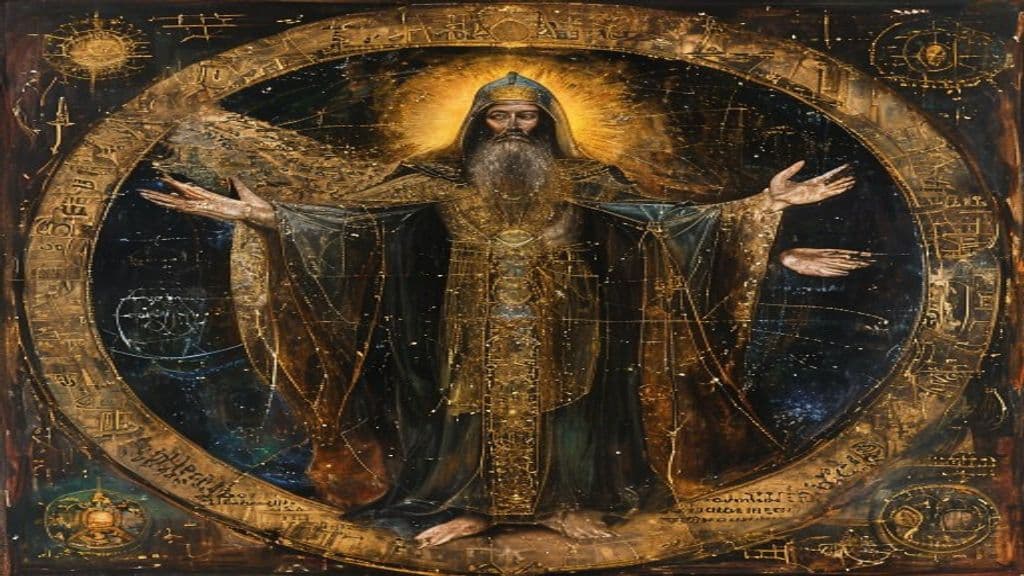
Metatron
An exalted heavenly figure in postbiblical Jewish literature, often identified with the transformed patriarch Enoch in later mystical texts and portrayed as a celestial scribe and high court official in merkabah and Kabbalistic writings.

Archangel
An archangel is a ranked heavenly messenger in Abrahamic and related religious literatures, understood in many traditions as a high‑level angelic agent charged with carrying out divine missions. The term and ranked office are framed by Greek etymology (archángelos, 'chief messenger') and by medieval Christian angelology (notably Pseudo‑Dionysius), while named figures such as Michael, Gabriel, and Raphael appear across Jewish, Christian, and Islamic texts and liturgies.
Aaron
Aaron is a central human figure in Israelite sacred literature: the elder brother of Moses, the first high priest (progenitor of the Aaronide priesthood), and a spokesman/prophet who mediates between Israel and God in Exodus–Deuteronomy narratives. His role in the texts establishes hereditary priestly authority, ritual functions (sacrifices, blessing, use of Urim and Thummim), and institutional norms for Israelite cultic life.
Abaddon
In Hebrew scripture Abaddon is primarily a noun meaning 'destruction' or a section/condition of the underworld paired with Sheol; in the New Testament Book of Revelation Abaddon is personified as an angelic figure (Greek Apollyon) described as the king of an army of locusts released from the abyss during the apocalypse.
Abadir
Abadir is a polysemous name attested in distinct cultural contexts: a legendary founding saint and clan ancestor in eastern Ethiopia (Sheikh Abadir Umar Al‑Rida / Aw Abadir), a term applied to cone‑shaped cult stones in Phoenician religious description, and a personal name of a martyr (Abadir/Apater) in the Coptic Synaxarium. The attestations are independent usages of the same name rather than a single supernatural being.
Abadiu of Antinoe
Abadiu of Antinoe was a fourth‑century bishop of Antinoe (Antinoopolis, in Roman Egypt) commemorated as a martyr and saint in the Coptic Orthodox Church, with a feast day on 26 December. Sources record that he was killed during a theological dispute with Arian opponents and reference him in collections of Egyptian martyrs.
Abagtha
Abagtha (Hebrew: אבגתא, ’Ǎḇaḡṯā) is a named human court official in the Hebrew Bible’s Book of Esther, listed among seven chamberlains who ministered before King Ahasuerus and were commanded to bring Queen Vashti before the king. He is attested only in Esther 1:10 and is presented as an institutional palace attendant rather than a supernatural being.
Abanoub
Abanoub is a 4th‑century Egyptian Christian child martyr venerated in the Coptic tradition. Remembered for his public confession of Christ, miraculous healings associated with his passion, and the translation and veneration of his relics, his feast is observed on July 31 (Epip 24) and his cult centers include Nehisa and Samanoud.
Abaskhiron the Soldier
A Coptic Orthodox martyr venerated for refusing imperial idolatry during the Diocletian persecution; reputedly healed by the Archangel Michael, preserved in monastery relics, and commemorated on 14 June (7 Paoni).
Abdel Messih El-Makari
Abdel Messih El-Makari (1892–1963) was a Coptic Orthodox monk and priest venerated as a 20th‑century Coptic saint. Associated with the Monastery of Saint Samuel the Confessor and the Monastery of Saint Macarius (Scetes/Wadi El‑Natrun), he is remembered for humility, asceticism, charity, and reported spiritual gifts such as prescience, discerning of spirits, and healing.
Abdiel
Abdiel (Hebrew עֲבְדִּיאֵל) is primarily a theophoric Hebrew personal name meaning "servant of El/servant of God," attested once in the Hebrew Bible (1 Chronicles 5:15). In later literature—most notably John Milton's Paradise Lost—Abdiel is reimagined as a faithful seraph who opposes Satan's revolt. The provided sources do not treat Abdiel as an autonomous folkloric spirit type or record rituals or wards associated with the name.
Abel
Abel is the second son of Adam and Eve in the Genesis narrative, a shepherd whose accepted offering and subsequent murder by his brother Cain form the biblical account of the first death. Later interpretive traditions expand his role, treating him as an archetypal righteous victim, a postmortem avenging or adjudicating figure, and in some systems (notably Mandaean) identifying him with an angelic lightbeing.
Abiathar
Abiathar (Hebrew: אֶבְיָתָר, ʾEḇyāṯār) is a named human priestly figure in the Hebrew Bible. He is presented as a survivor of the Nob massacre who fled to David with priestly regalia, served as a priest and counselor in David's court, and was later deposed and sent to Anathoth by Solomon for supporting Adonijah.
Abib and Apollo
Abib and Apollo are Christian ascetics and hagiographic saints of Akhmim (Upper Egypt) attested in Coptic sources and the Historia Monachorum. Remembered for extreme asceticism, monastic leadership, angelic encounters, and inclusion in the Coptic Synaxarion (feast day November 4).
Community Record
- [1]Enoch - Wikipedia. Wikipedia, 'Enoch' (summary of Genesis, apocrypha, and rabbinic traditions)wiki
- [2]Enoch - Wikidata. Wikidata entry for Enoch (identifier and linked summaries)other
- [3]Archive item: #541: The Book Of Enoch, Fallen Angels and Simulation Theory With Esoteric Eddie. Podcast/archive item linked in research notes referencing Book of Enoch traditions (used only as supplemental archive reference in provided materials)other
- [4]Archive items mentioning persons named Enoch (contextual, not textual traditions). Archive: 2020 Prairie Provincial Budget Review (contains personal names but not relevant to mythic tradition)other
- [5]Archive: Hilding Enoch Svensson Strandberg. Archive item (personal name occurrence; not a source for tradition)other