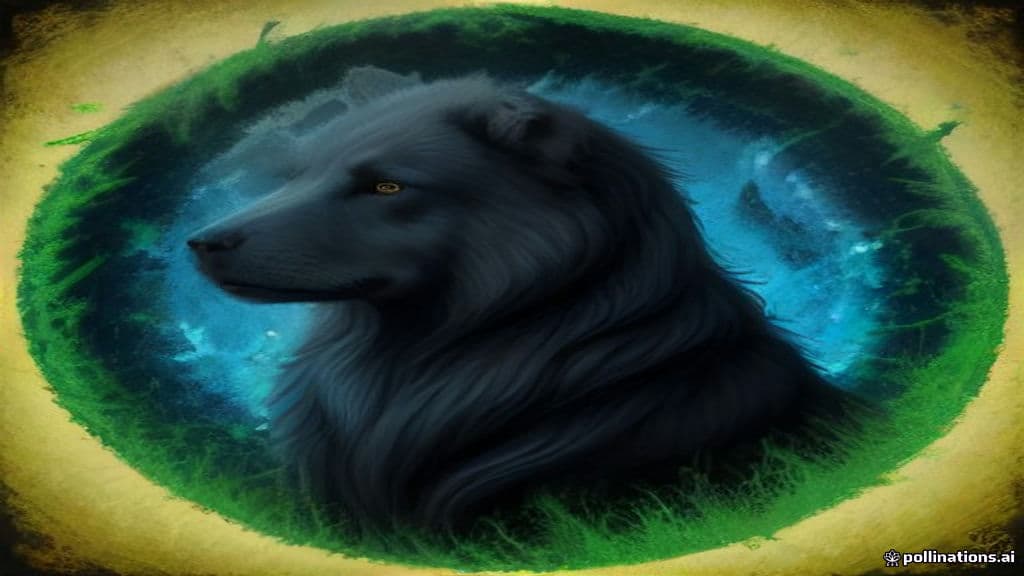
In the Lebor Gabála Érenn tradition Failinis is listed among the eric items belonging to Lugh Lámhfhada and described as the whelp of the smith or king of Iruaith (a mythical Scandinavian kingdom). In later Fenian-cycle ballads and prose a like creature appears in narratives about princes from Iruaith who bring the dog into contact with Fionn mac Cumhaill and the Fíanna; in these tales the three foreign owners swear not to carry the live dog out of Ireland but later kill and flay it to transport its hide. Manuscript variants and late ballad attestations present shifts of ownership, name-forms (Ṡalinnis/Shalinnis, Fer Mac), and certain powers across the Mythological and Fenian layers of the tradition.
Descriptions vary by source. A Fenian ballad calls the hound “a hound of the loveliest color,” mighty and large by day (said to be capable of overcoming fifty men) and at night a ‘thunderbolt, ball of fire’ (Old Irish: caer thened). In prose variants (the Fer Mac/Colloquy material) the dog is described as parti-coloured—displaying shades including white, black, and blue—and larger than other hounds, though in one episode it shrank to the size of a pine marten when dispensing drink. Gender is inconsistently presented across texts.
Across attestations Failinis is credited with martial invincibility (able to overcome many men), dominion over beasts and the capacity to catch all wild creatures including fish, and the supernatural transformation of running water into wine or mead when it bathes (attested in Lebor Gabála and Fenian ballad versions). In Fer Mac/Colloquy prose variants the hound disgorges liquor from its mouth and is said to vomit quantities of gold and silver as needed; that prose also attributes druidic wind-magic (summoning a wind by lifting its tail) and a destructive breath that turns bodies to dust and ashes.
Weaknesses
- otherkilling and flaying
Wards
- conditionoath against transport
- ritualorganized communal search
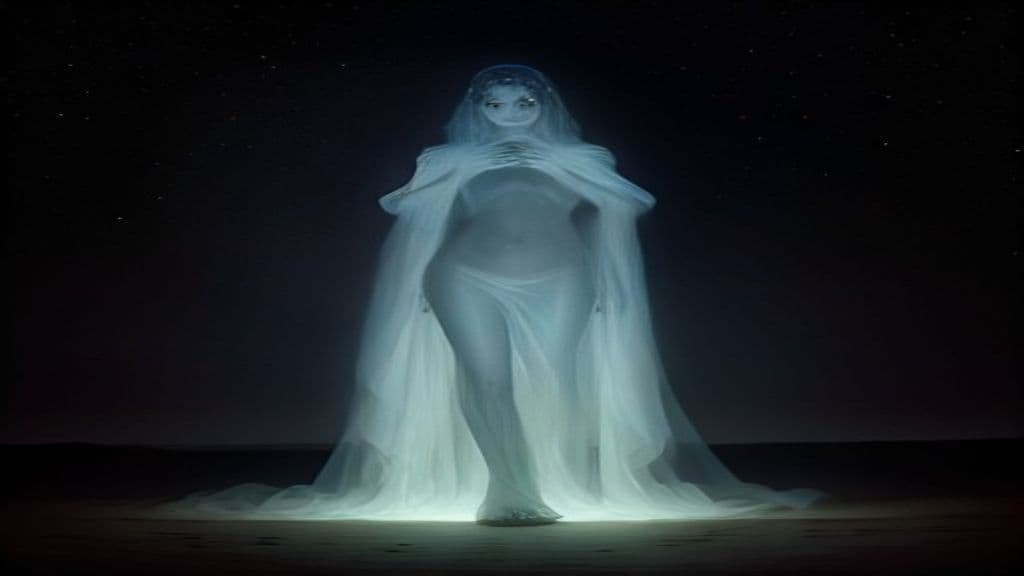
Jann
The weakest class of djinn in Islamic tradition, associated with desert winds and taking the form of snakes or whirlwinds, dwelling in empty wilderness and posing little threat to those who know the proper invocations.
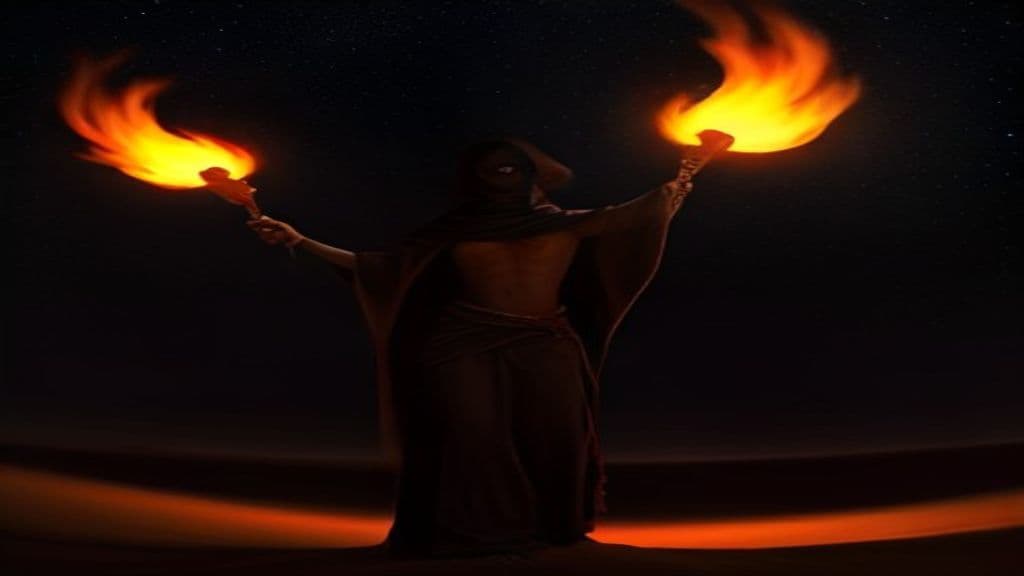
Djinn
The class of supernatural beings created from smokeless fire in Islamic cosmology — a parallel civilization to humanity, capable of belief or unbelief, with their own prophets, society, and judgment before God.
Abandinus
Abandinus is a locally attested Romano‑Celtic theonym known from a single inscribed bronze feather (votive object) dedicated at Godmanchester (the Roman fort Durovigutum) in Cambridgeshire. Scholars interpret him as a local god or male spirit tied to a specific place and possibly associated with a nearby spring or stream; this association is tentative and based on etymological readings of the name.
Abarta (Ábartach)
Abarta (also Ábartach) is a figure of Irish myth who, in surviving accounts, tricks Fionn mac Cumhaill's warriors by giving them a supernatural grey horse that bears them into the Otherworld. Sources variably identify him as a member of the Tuatha Dé Danann or as a Fomorian; after the incident he is compelled to release the captured warriors and is refused entry to the Fianna.
Abcán (Abhcán)
Abcán (modern spelling Abhcán) is a named dwarf poet and musician of the Tuatha Dé Danann in Irish myth. He appears in a small number of narratives as a musician whose art has soporific power and as the ferryman who brings the goddess Ruad from the Otherworld to the human world.
Abhean
Abhean is a named poet of the Tuatha Dé Danann in medieval Irish literature, described as a poet in particular of Lugh and recorded as having been killed by Óengus before Midir in a poem by Fland Mainistreach preserved in the Lebor Gabála Érenn.
Abnoba
Abnoba is a Gaulish theonym and toponym attested in Roman-era sources and inscriptions: a localized deity associated with woods, springs and the sources of rivers (notably the Danube) and simultaneously the name applied to a mountain or mountain range in the Black Forest/Baar/Odenwald region. Roman altars equate her with Diana, reflecting syncretic cult practice in frontier provinces.
Accolon
Accolon is a mortal knight of the Arthurian court, presented in the Post-Vulgate Merlin tradition and Malory's Le Morte d'Arthur as Morgan le Fay's paramour and instrument in a plot to supplant King Arthur; his tale centers on enchanted weapons (Excalibur and its scabbard), love-manipulation, and a tragic duel with Arthur.
Achall
Achall is an eponymous mortal woman in the Ulster Cycle of early Irish literature whose grief-induced death is given as the origin of the hill-name Achall (identified with the modern Hill of Skryne). She appears as a genealogical and etiological figure tied to Tara and later legendary events at the hill, rather than as a recurring supernatural agent.
Achtland
Achtland is a figure from Irish tradition who, according to the surviving account, was a mortal woman famed for rejecting mortal suitors who married a member of the Tuatha Dé Danann and crossed into the síde to become immortal as his wife.
Adar Llwch Gwin
Legendary large, intelligent birds from Welsh tradition said to understand human speech and obey their master's commands; best known for tearing their master Drudwas ap Tryffin to pieces when bound by a literal order in an Arthurian battle narrative. The term later came to be applied to raptors and metaphorically to brave men in medieval Welsh poetry.
Adar Rhiannon
Adar Rhiannon ('birds of Rhiannon') are a set of three magical birds in medieval Welsh narrative (the Mabinogi) whose song can 'wake the dead and lull the living to sleep.' They appear as otherworldly song‑beings tied to the figure Rhiannon and function within tales as providers of enchanted music that sustains and consoles characters.
Aderyn y Corff
Aderyn y Corff (literally 'bird of the corpse') is a bird-like death-porter in Welsh folklore said to call outside the door of a person about to die. Described as an avian portent that may lack feathers or wings and as existing on another plane when not manifesting, it is treated in Welsh ghost lore and sometimes naturalized as a screech owl in modern accounts.
Adhene
A class of Manx fairies (Cloan ny moyrn) described in Isle of Man tradition as a social people of beings said to be "fallen angels cast from heaven but too good for hell," who interact with human livelihoods and families, sometimes benevolent but often mischievous.
Community Record
- [1]Failinis — Wikipedia. Wikipedia, 'Failinis'wiki
- [2]Failinis — Wikidata. Wikidata entry Q5429692other