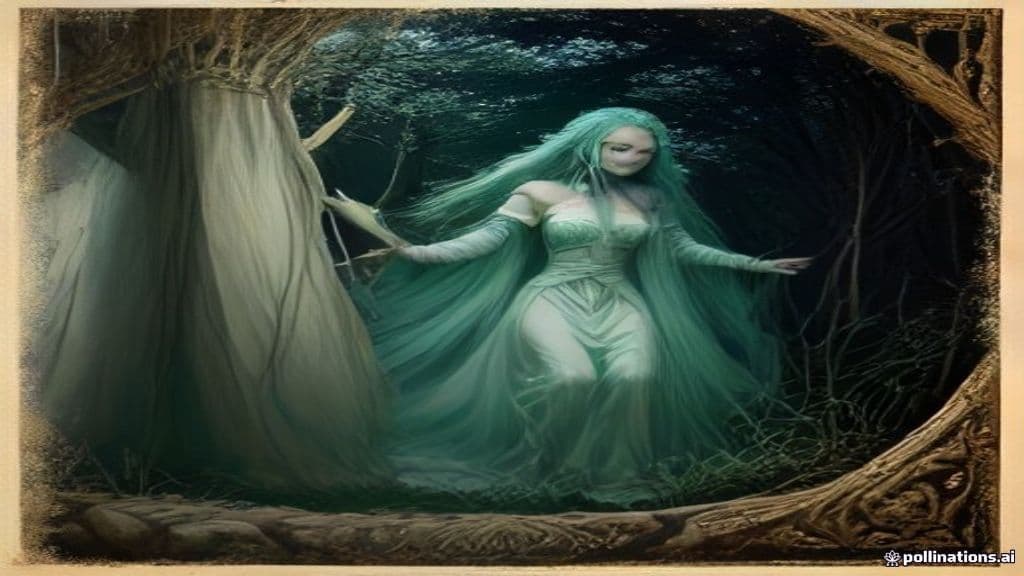
Flidais appears in medieval Irish texts as a named woman bound to a miraculous herd rather than as a systematically attested cultic origin-story figure. In saga material she is presented with family ties and social roles—wife, mother, and lover—appearing in sources such as Táin Bó Flidhais (set in Erris, County Mayo), passages of the Táin Bó Cúailnge (where she sleeps in Ailill mac Máta's tent and her herd supplies the army), and in genealogical lists (Metrical Dindshenchas; Lebor Gabála Érenn; Cóir Anmann). Some later and popular commentators have called her a cattle- or deer-goddess; medieval folk etymologies linking her name to deer (flid ois) and subsequent characterizations as a woodland or deer-associated deity are recorded in secondary tradition, but modern scholarly summaries of the medieval corpus stress that her attested mythology overwhelmingly concerns cattle, milking, and herd-provisioning rather than a clear woodland/divinity cult.
Direct physical description in the cited medieval material is sparse. She is given the epithet Foltchaín, glossed 'beautiful hair,' indicating notable beauty. Narratively she appears as a woman of rank who sleeps in tents (for example in the tent of Ailill mac Máta during the Táin Bó Cúailnge) and as a desirable partner (noted in The Tidings of Conchobar for her capacity to satisfy Fergus mac Róich). Beyond such markers of status and the epithet, the supplied sources do not provide extended bodily description.
In the saga corpus Flidais is chiefly attested as owner/guardian of a supernatural herd and of a favored white cow, the Maol (Maol Flidais). In Táin Bó Flidhais the Maol is said to be capable of feeding 300 men from one night's milking; in accounts of the Táin Bó Cúailnge her herd is said to supply milk for an entire army every seven days. She is portrayed in narratives as a wife, lover (notably of Fergus mac Róich), and mother (e.g., named as mother of Fand in the Metrical Dindshenchas; of Dinand and Bé Chuille in Lebor Gabála Érenn). A late/obscure note names a son, Nia Segamain, alleged to have been able to milk wild deer through power received from his mother—an element that has contributed to later deer-associated interpretations but that is treated as a secondary or contested reading in modern summaries. The extraordinary powers attributed to her herd are presented within saga narration rather than as ritual magic instructions.
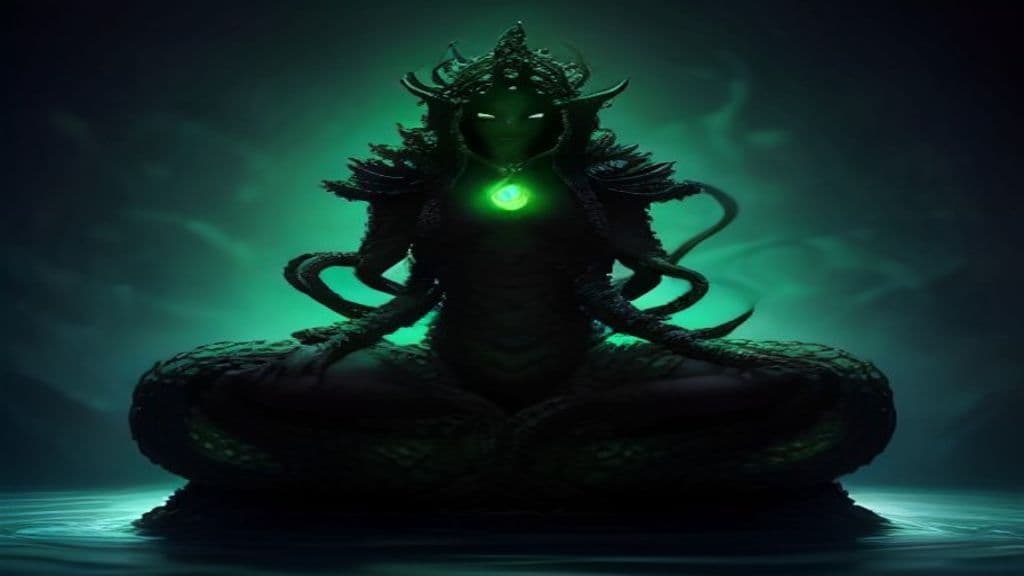
Naga
Divine serpent beings of Hindu, Buddhist, and Jain cosmology — powerful guardians of water, earth, and underground treasures. Revered as deities in South and Southeast Asia.
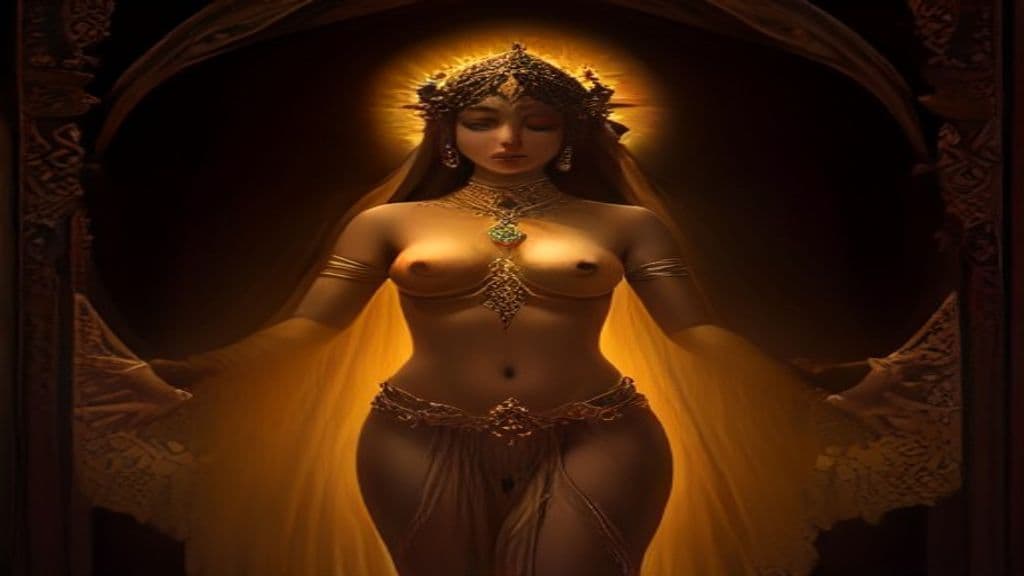
Apsara
Celestial dancers and water nymphs of Hindu cosmology — beautiful semi-divine beings who dance at the court of Indra and, by his command, descend to earth to distract sages from excessive asceticism.

Nuckelavee
The most terrifying creature of Orcadian folklore — a skinless, horse-headed demon of the sea whose breath spreads plague and whose presence causes crops to wither. It cannot cross fresh water.
Abandinus
Abandinus is a locally attested Romano‑Celtic theonym known from a single inscribed bronze feather (votive object) dedicated at Godmanchester (the Roman fort Durovigutum) in Cambridgeshire. Scholars interpret him as a local god or male spirit tied to a specific place and possibly associated with a nearby spring or stream; this association is tentative and based on etymological readings of the name.
Abarta (Ábartach)
Abarta (also Ábartach) is a figure of Irish myth who, in surviving accounts, tricks Fionn mac Cumhaill's warriors by giving them a supernatural grey horse that bears them into the Otherworld. Sources variably identify him as a member of the Tuatha Dé Danann or as a Fomorian; after the incident he is compelled to release the captured warriors and is refused entry to the Fianna.
Abcán (Abhcán)
Abcán (modern spelling Abhcán) is a named dwarf poet and musician of the Tuatha Dé Danann in Irish myth. He appears in a small number of narratives as a musician whose art has soporific power and as the ferryman who brings the goddess Ruad from the Otherworld to the human world.
Abhean
Abhean is a named poet of the Tuatha Dé Danann in medieval Irish literature, described as a poet in particular of Lugh and recorded as having been killed by Óengus before Midir in a poem by Fland Mainistreach preserved in the Lebor Gabála Érenn.
Abnoba
Abnoba is a Gaulish theonym and toponym attested in Roman-era sources and inscriptions: a localized deity associated with woods, springs and the sources of rivers (notably the Danube) and simultaneously the name applied to a mountain or mountain range in the Black Forest/Baar/Odenwald region. Roman altars equate her with Diana, reflecting syncretic cult practice in frontier provinces.
Accolon
Accolon is a mortal knight of the Arthurian court, presented in the Post-Vulgate Merlin tradition and Malory's Le Morte d'Arthur as Morgan le Fay's paramour and instrument in a plot to supplant King Arthur; his tale centers on enchanted weapons (Excalibur and its scabbard), love-manipulation, and a tragic duel with Arthur.
Achall
Achall is an eponymous mortal woman in the Ulster Cycle of early Irish literature whose grief-induced death is given as the origin of the hill-name Achall (identified with the modern Hill of Skryne). She appears as a genealogical and etiological figure tied to Tara and later legendary events at the hill, rather than as a recurring supernatural agent.
Achtland
Achtland is a figure from Irish tradition who, according to the surviving account, was a mortal woman famed for rejecting mortal suitors who married a member of the Tuatha Dé Danann and crossed into the síde to become immortal as his wife.
Adar Llwch Gwin
Legendary large, intelligent birds from Welsh tradition said to understand human speech and obey their master's commands; best known for tearing their master Drudwas ap Tryffin to pieces when bound by a literal order in an Arthurian battle narrative. The term later came to be applied to raptors and metaphorically to brave men in medieval Welsh poetry.
Adar Rhiannon
Adar Rhiannon ('birds of Rhiannon') are a set of three magical birds in medieval Welsh narrative (the Mabinogi) whose song can 'wake the dead and lull the living to sleep.' They appear as otherworldly song‑beings tied to the figure Rhiannon and function within tales as providers of enchanted music that sustains and consoles characters.
Aderyn y Corff
Aderyn y Corff (literally 'bird of the corpse') is a bird-like death-porter in Welsh folklore said to call outside the door of a person about to die. Described as an avian portent that may lack feathers or wings and as existing on another plane when not manifesting, it is treated in Welsh ghost lore and sometimes naturalized as a screech owl in modern accounts.
Adhene
A class of Manx fairies (Cloan ny moyrn) described in Isle of Man tradition as a social people of beings said to be "fallen angels cast from heaven but too good for hell," who interact with human livelihoods and families, sometimes benevolent but often mischievous.
Community Record
- [1]Flidais (Wikipedia). Wikipedia entry 'Flidais' (summary and discussion of interpretations, etymology, and attestations)wiki
- [2]The Driving of the Cattle of Flidais (Táin Bó Flidhais) - ancienttexts.org. The Driving of the Cattle of Flidais (text as presented at ancienttexts.org) — tale attesting Maol and herd prodigiesliterary
- [3]The Driving of the Cattle of Flidais - Mary Jones. Edition/translation of Táin Bó Flidhais (narrative details on Maol and herd)literary
- [4]Glenmasan Manuscript, Part 2 (celt.ucc.ie). Glenmasan Manuscript excerpts referencing Flidais and the Maol (narrative evidence)literary
- [5]Glenmasan Manuscript, Part 1 (celt.ucc.ie). Glenmasan Manuscript (contextual manuscript attestations cited in the corpus)literary
- [6]The Tidings of Conchobar son of Ness - ancienttexts.org. Passages noting Fergus mac Róich's appetite and Flidais' exceptional capacity to satisfy him (narrative context)literary
- [7]References to Lebor Gabála Érenn, Metrical Dindshenchas, and Cóir Anmann (as cited in Wikipedia). Summaries noting genealogical mentions (e.g., children Dinand and Bé Chuille; daughter Fand; wife of Adamair in Cóir Anmann) as referenced in the Wikipedia entrywiki
- [8]Heroic Romances of Ireland (archive.org). Collected translations/editions of Irish heroic romances that include cattle-raid material; cited in the supplied list as context for saga traditionsliterary