
The supplied materials do not provide a single mythic origin for fox spirits; instead they present the fox spirit as a cross-cultural motif. In East Asian popular culture and folklore the being is framed by compounds that combine 'fox' and 'supernatural' (e.g., Chinese húyāo 狐妖, Japanese yōko 妖狐) and in modern narratives the figure is sometimes reworked into particular story-lines — for example the Chinese manhua/TV franchise Fox Spirit Matchmaker (狐妖小红娘) centers the fox-being in matchmaking roles, while literary works such as Yangsze Choo's novel (discussed in the sources) present fox protagonists who take human form to pursue revenge. These examples illustrate how contemporary narratives adapt the fox-spirit motif rather than supplying a single primordial genealogy.
The provided sources do not give a systematic traditional physical description; cultural portrayals commonly show the fox spirit as associated with foxes (many traditions use red-fox imagery) and capable of transforming into human form. Modern fictional examples include a fox named Snow who transforms into a young woman to interact with humans, and the matchmaker-themed manhua/TV adaptations which depict fox-beings in human guise for social interaction.
Across the cited material fox spirits are associated with cunning, trickery, deception, shapeshifting into human form, seductiveness, and general supernatural power. In modern narratives they appear as agents in romantic matchmaking, as seductive or deceptive lovers, or as purposeful actors seeking vengeance (for example, a fox who becomes human to track down the human responsible for her child’s death). The sources portray these abilities as flexible motifs used in stories rather than as a fixed canonical power-set.
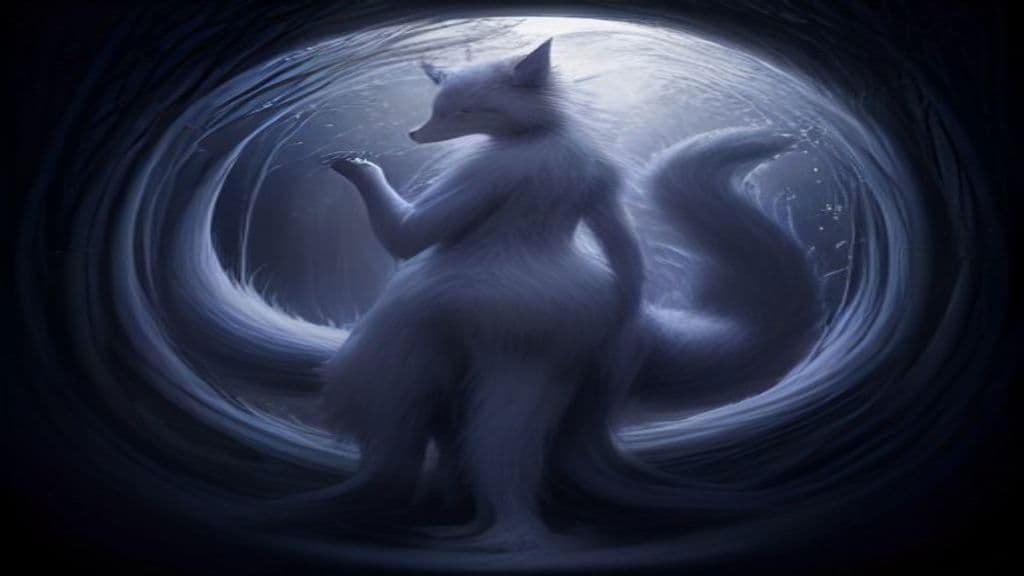
Kitsune
Fox spirits of Japanese mythology — intelligent, long-lived beings who gain additional tails (up to nine) as they age and grow in power. They serve as messengers of the god Inari and as powerful tricksters.

Yuki-onna
The Snow Woman of Japanese folklore — a spirit born of blizzards who appears to travelers lost in snowstorms. Beautiful and lethal, she can show mercy or bring death depending on her mood.
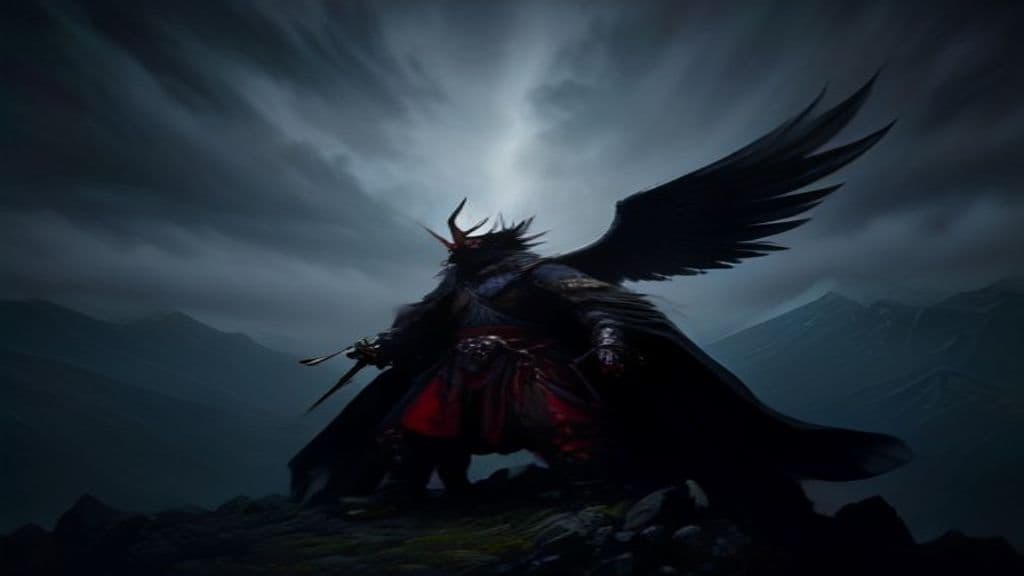
Tengu
Proud, warrior-like mountain spirits of Japan, associated with martial arts, pride, and the wild mountains. Neither fully good nor evil — they test and train warriors and monks, but punish the arrogant.

Banshee
A female spirit of Irish and Scottish folklore whose wail heralds an impending death in a family of Gaelic descent. Not a cause of death — a witness to it.

Rusalka
Water spirits in Slavic folklore — the spirits of young women who died by drowning or suicide, bound to rivers and lakes. Beautiful and dangerous, they can bewitch men to their deaths.

Domovoi
The house spirit of Slavic tradition — a small, invisible guardian of the home bound to a specific dwelling and its family. Protective when respected; dangerous when insulted or forgotten.
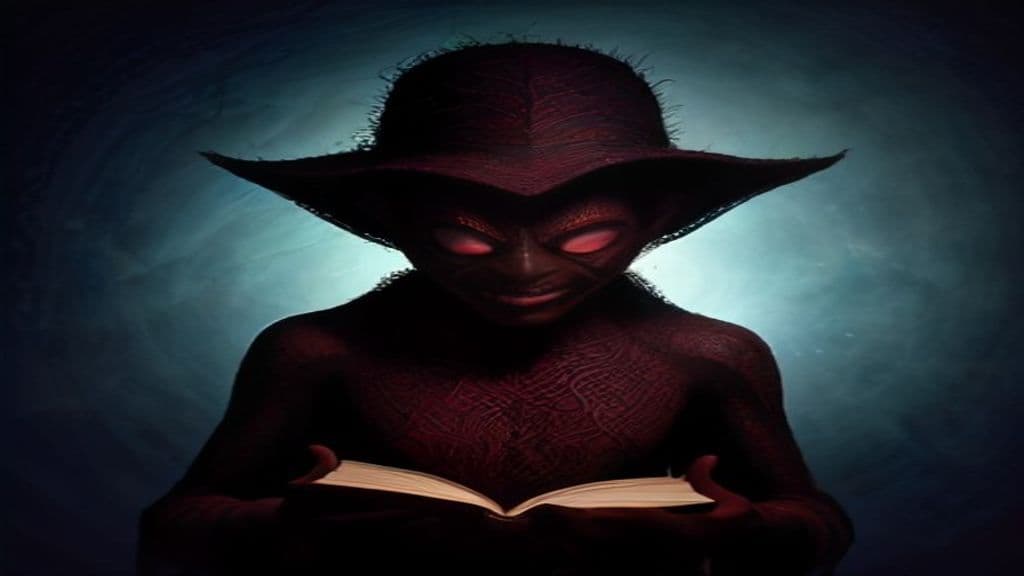
Anansi
The spider trickster god of Akan folklore — cunning, mischievous, and wise. Keeper of stories and teacher of human beings, brought through the slave trade into Caribbean and African-American tradition.
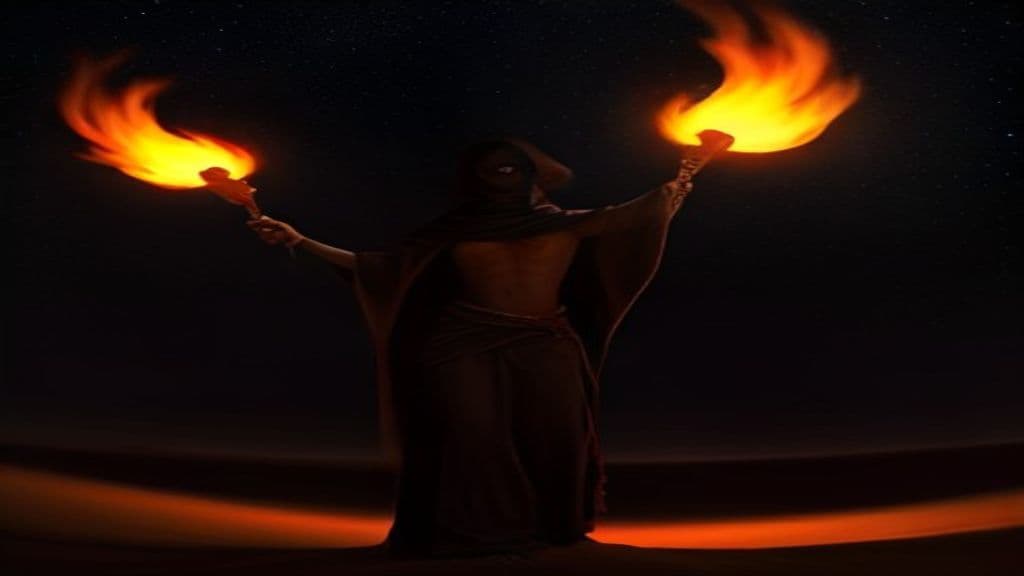
Djinn
The class of supernatural beings created from smokeless fire in Islamic cosmology — a parallel civilization to humanity, capable of belief or unbelief, with their own prophets, society, and judgment before God.
*Perkʷūnos
*Perkʷūnos is the reconstructed Proto-Indo-European thunder‑god hypothesized by comparative linguistics and mythology. Scholarly reconstructions portray him as a storm or thunder figure associated with fructifying rain and as the combatant who fights a multi‑headed water‑serpent to release life‑giving waters; no direct attestations from the Proto‑Indo‑European period survive and the figure is inferred from later Indo‑European traditions.
*Péh₂usōn (reconstructed)
Péh₂usōn is a hypothetical Proto‑Indo‑European pastoral guardian reconstructed by comparative scholars from parallels in Greek and Vedic traditions. Proposed as a Graeco‑Aryan ancestor‑figure, the reconstruction describes a protector of flocks, roads, and travellers rather than an attested historical cultic personality.
5 Ronin
5 Ronin is a 2011 Marvel Comics five-issue limited series that reimagines five Marvel superhero archetypes as rōnin (masterless samurai) in a fictionalized post‑Sekigahara feudal Japan. The work places Wolverine, Hulk, Punisher, Psylocke, and Deadpool analogues into period roles to explore displacement, revenge, and identity in an era of political upheaval.
57 Mnemosyne
57 Mnemosyne is a large main-belt asteroid (S-type) discovered in 1859 and named after the Greek Titaness Mnemosyne. It is a non-sentient astronomical body studied for its orbital and rotational properties and has been used in dynamical measurements related to Jupiter.
Abaddon
In Hebrew scripture Abaddon is primarily a noun meaning 'destruction' or a section/condition of the underworld paired with Sheol; in the New Testament Book of Revelation Abaddon is personified as an angelic figure (Greek Apollyon) described as the king of an army of locusts released from the abyss during the apocalypse.
Aban Yasht
The Aban Yasht is a hymn from the Persian tradition that praises Anahita, a goddess associated with water, fertility, and wisdom. It consists of 132 stanzas and is part of the 21 Yashts collection. (Note: - Power tier should be "Primordial" or possibly "Cosmic", given that it's a hymn of great spiritual significance and associated with a goddess. - The article incorrectly states that Anahita is associa)
Abath
No corroborated folkloric entity named "Abath" is documented in the provided sources. The string appears in the supplied material only as a surname/personal name in Aruban/Dutch-Caribbean archival records and as an unrelated taxonomic or encyclopedic hit; no mythic attributes, origin stories, rituals, or apotropaic practices for an entity called Abath are present in the documents reviewed.
Abatur
Abatur is an uthra (celestial emanation) in Mandaeism described as the 'father of the Uthras' and called the Ancient (ʿattīqā). He resides on the boundary between the World of Light and lower regions, functions as a judge who weighs souls (Abatur Muzania), and supplies instructions and materials to the demiurgic uthra Ptahil in accounts from the Diwan (Scroll) of Abatur.
Abatwa (Twa / Batwa)
Abatwa (also recorded as Twa, Batwa, Mutwa; singular forms Barhwa or Murhwa in some transcriptions) are indigenous hunter‑gatherer peoples of the Great Lakes region of Central Africa, historically identified as some of the earliest inhabitants of the area. The available sources treat them as human ethnic groups whose livelihoods, lands, and populations have been severely affected by conservation policies and modern violence.
Abellio
Abellio is a theonym attested in Roman‑period inscriptions from the Comminges area of the Pyrenees and reported as worshipped in the Garonne Valley of ancient Gallia Aquitania. Surviving evidence is limited to a small number of inscriptions; scholars have variously hypothesized solar or arboreal associations and compared the name to forms of Apollo or to Celtic Belenus, but the deity's precise role in local cosmology remains uncertain.
Abraham
Abraham (originally Abram) is the foundational patriarchal ancestor in the Hebrew Bible whose life establishes a covenantal relationship between his family/people and God. He functions as an exemplar of faith, the progenitor of promised descendants, and a narrative anchor for claims of land, blessing, and communal identity in later religious traditions.
Abraun
Abraun is an attested name in German-language plant-legend scholarship (Der abraun, ein beitrag zur pflanzensagenkunde, 1916) and a short database entry (Wikidata) labels it as a spirit from German mythology. Surviving accessible documentation is extremely limited: the principal academic treatment is a 1916 contribution to pflanzensagenkunde (plant-saga studies), but the excerpts available here contain only bibliographic metadata and do not record tales, descriptions, or rituals.
Community Record
- [1]Foxes in popular culture (Wikipedia summary used in research notes). Wikipedia: Foxes in popular culturewiki
- [2]Fox Spirit Matchmaker (manhua/TV). Wikipedia: Fox Spirit Matchmaker (contains Chinese title 狐妖小红娘 and Japanese variant 縁結びの妖狐ちゃん)wiki
- [3]Fox Spirit Matchmaker: Red-Moon Pact. Wikipedia: Fox Spirit Matchmaker: Red-Moon Pactwiki
- [4]Dreaming in Japanese — 'Fox Spirits (狐 hu) and Barbarians (胡 hu)'. Dreaming in Japanese: Fox Spirits (狐 hu) and Barbarians (胡 hu)other
- [5]Discussion of Yangsze Choo's 'The Fox Wife' (secondary source referenced in notes). Summary reference in research notes to Yangsze Choo's novel describing a fox who transforms into a young womanliterary
- [6]Fox Spirit Book of Love (anthology / modern media references). The StoryGraph: Fox Spirit Book of Love (series listing referenced in notes)other
- [7]Runalong The Shelves — The Fox Spirit Book of Love (blog reference). Runalong The Shelves blog entry on The Fox Spirit Book of Loveother