
The fuath are recorded in Gaelic oral tradition and 19th-century folklore collections as locally rooted uncanny beings tied to particular sites (mills, burns, lochs, farms). Collectors such as J. F. Campbell and accounts associated with the Dempster/Skibo estate preserved multiple variants set around places like the Mill of the Fuath (Moulin na Vuagha) beside a stream off Loch Migdale in Sutherland. The term itself is Gaelic (Scottish Gaelic fuath, plural fuathan) and functions both as a common noun for 'hatred/aversion'—from Old Irish fúath—and as a lexical label for ghosts or spectres; folklorists have treated fuath alternately as a narrow type of water-spirit or as a broader tribe that subsumes related local uncanny creatures.
Accounts vary widely across collected tales. In some variants a fuath appears humanoid and banshee-like (one story describes a nose-less banshee with yellow hair in a green silk dress seen at a mill). Other tales portray webbed or amphibious feet (a dirty, lame banshee with webbed feet carried by a shepherd). In capture episodes a fuath is said to collapse into a shapeless, jelly-like mass when exposed to light. Related local offspring figures (the brollachan, described as the fuath's son) are recorded as a shapeless body with eyes and mouth and extremely limited speech, indicating amorphous or mutable morphology in the tradition.
Folktales characterize fuath as hostile or uncanny presences tied to places: they emerge from water, haunt mills and streams, and are implicated in theft or mischief in narrative contexts (e.g., attempts to seize objects in various tales). Human interactions recorded in the material include capture, binding, and occasional intermarriage with humans in family rumour (the latter used etiologically to explain unusual family traits such as a mane and tail). Some variants associate banshee-like wailing with fuath figures, linking particular tales to death-omen motifs, though that function is attested only in certain story-variants.
Weaknesses
- substancesteel (awl, sewing needle)
- conditionexposure to light (causes collapse into a shapeless mass)
- otherbinding/tethering for transport (attested in capture narrative)
Wards
- substancesteel (awl, sewing needle) — used to force submission in a capture tale
- conditionillumination (shining light) — causes the creature to fall into a jelly-like mass in the captured example
- otherbinding/tethering — used to restrain a captured fuath in narrative accounts
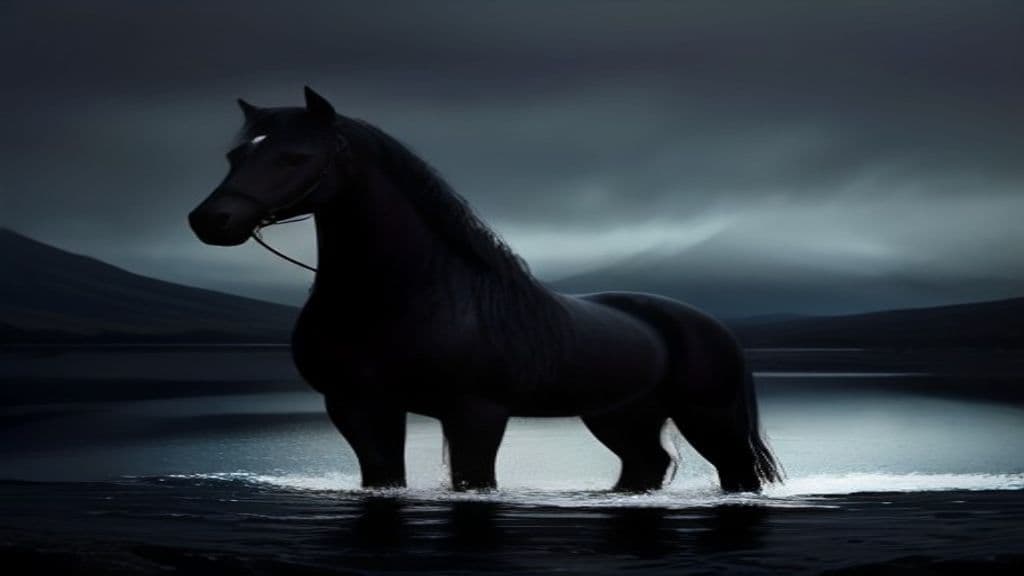
Kelpie
A Scottish shape-shifting water horse that appears as a beautiful tame horse near lochs and rivers, then drowns and devours any rider foolish enough to mount it.
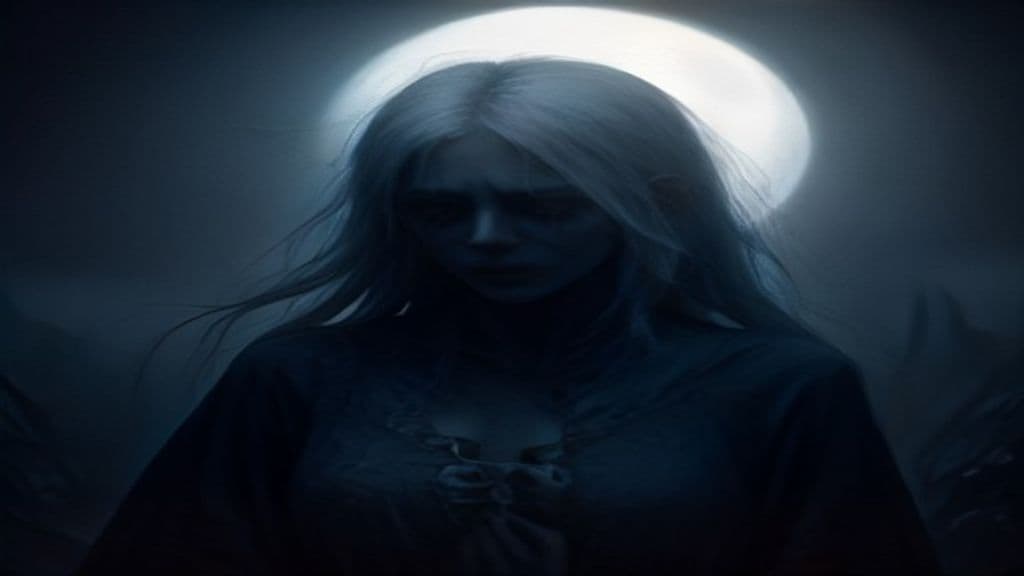
Banshee
A female spirit of Irish and Scottish folklore whose wail heralds an impending death in a family of Gaelic descent. Not a cause of death — a witness to it.

Beithir
In Scottish Gaelic tradition the beithir is a very large snakelike creature—often called a serpent or dragon—associated with mountains, corries and bodies of water. It is portrayed as venomous and deadly in local tales, linked in etymology and interpretation to lightning/thunderbolt imagery, and classed among water-associated monsters (fuath).

Nuckelavee
The most terrifying creature of Orcadian folklore — a skinless, horse-headed demon of the sea whose breath spreads plague and whose presence causes crops to wither. It cannot cross fresh water.
Abandinus
Abandinus is a locally attested Romano‑Celtic theonym known from a single inscribed bronze feather (votive object) dedicated at Godmanchester (the Roman fort Durovigutum) in Cambridgeshire. Scholars interpret him as a local god or male spirit tied to a specific place and possibly associated with a nearby spring or stream; this association is tentative and based on etymological readings of the name.
Abarta (Ábartach)
Abarta (also Ábartach) is a figure of Irish myth who, in surviving accounts, tricks Fionn mac Cumhaill's warriors by giving them a supernatural grey horse that bears them into the Otherworld. Sources variably identify him as a member of the Tuatha Dé Danann or as a Fomorian; after the incident he is compelled to release the captured warriors and is refused entry to the Fianna.
Abcán (Abhcán)
Abcán (modern spelling Abhcán) is a named dwarf poet and musician of the Tuatha Dé Danann in Irish myth. He appears in a small number of narratives as a musician whose art has soporific power and as the ferryman who brings the goddess Ruad from the Otherworld to the human world.
Abhean
Abhean is a named poet of the Tuatha Dé Danann in medieval Irish literature, described as a poet in particular of Lugh and recorded as having been killed by Óengus before Midir in a poem by Fland Mainistreach preserved in the Lebor Gabála Érenn.
Abnoba
Abnoba is a Gaulish theonym and toponym attested in Roman-era sources and inscriptions: a localized deity associated with woods, springs and the sources of rivers (notably the Danube) and simultaneously the name applied to a mountain or mountain range in the Black Forest/Baar/Odenwald region. Roman altars equate her with Diana, reflecting syncretic cult practice in frontier provinces.
Accolon
Accolon is a mortal knight of the Arthurian court, presented in the Post-Vulgate Merlin tradition and Malory's Le Morte d'Arthur as Morgan le Fay's paramour and instrument in a plot to supplant King Arthur; his tale centers on enchanted weapons (Excalibur and its scabbard), love-manipulation, and a tragic duel with Arthur.
Achall
Achall is an eponymous mortal woman in the Ulster Cycle of early Irish literature whose grief-induced death is given as the origin of the hill-name Achall (identified with the modern Hill of Skryne). She appears as a genealogical and etiological figure tied to Tara and later legendary events at the hill, rather than as a recurring supernatural agent.
Achtland
Achtland is a figure from Irish tradition who, according to the surviving account, was a mortal woman famed for rejecting mortal suitors who married a member of the Tuatha Dé Danann and crossed into the síde to become immortal as his wife.
Adar Llwch Gwin
Legendary large, intelligent birds from Welsh tradition said to understand human speech and obey their master's commands; best known for tearing their master Drudwas ap Tryffin to pieces when bound by a literal order in an Arthurian battle narrative. The term later came to be applied to raptors and metaphorically to brave men in medieval Welsh poetry.
Adar Rhiannon
Adar Rhiannon ('birds of Rhiannon') are a set of three magical birds in medieval Welsh narrative (the Mabinogi) whose song can 'wake the dead and lull the living to sleep.' They appear as otherworldly song‑beings tied to the figure Rhiannon and function within tales as providers of enchanted music that sustains and consoles characters.
Aderyn y Corff
Aderyn y Corff (literally 'bird of the corpse') is a bird-like death-porter in Welsh folklore said to call outside the door of a person about to die. Described as an avian portent that may lack feathers or wings and as existing on another plane when not manifesting, it is treated in Welsh ghost lore and sometimes naturalized as a screech owl in modern accounts.
Adhene
A class of Manx fairies (Cloan ny moyrn) described in Isle of Man tradition as a social people of beings said to be "fallen angels cast from heaven but too good for hell," who interact with human livelihoods and families, sometimes benevolent but often mischievous.
Community Record
- [1]Fuath - Wikipedia. Wikipedia contributors, 'Fuath,' Wikipedia, The Free Encyclopediawiki
- [2]Beithir - Wikipedia (mentions relationship to fuath as class). Wikipedia contributors, 'Beithir,' Wikipedia, The Free Encyclopediawiki
- [3]Genealogies from Rawlinson B 502 (contextual Celtic materials). University College Cork CELT project, Rawlinson B 502 materialacademic