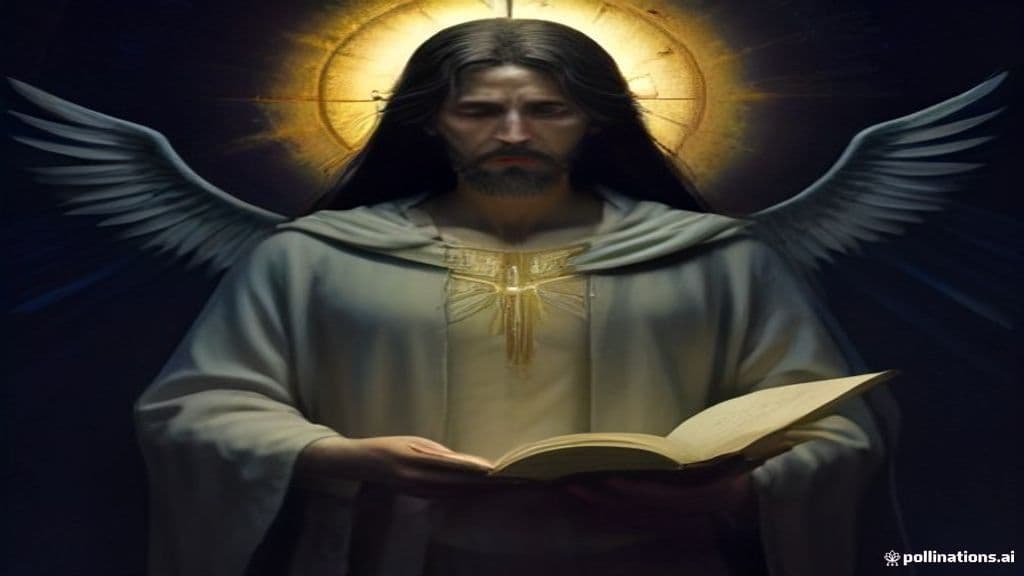
Within mainstream Trinitarian Christianity the Father is presented as the eternal first Person of the one God, who begets the Son and from whom the Holy Spirit proceeds; this intra‑divine relation is described as outside temporal sequence (e.g., 'before all ages') and is handed down in creeds and doctrinal summaries. Non‑Trinitarian movements disagree about the precise relations among Father, Son and Spirit, sometimes asserting the Father's supremacy, conceiving the Godhead as distinct beings, or identifying titles rather than distinct Persons.
Doctrinal sources supplied emphasize that God is spirit and that paternal language is metaphorical rather than a claim to human gender or corporeal form (e.g., 'God is neither man nor woman'). Scriptural and theological material do not give a fixed physical appearance; cultural/artistic traditions have nevertheless represented the Father visually (Western art often avoided full anthropomorphic depiction for many centuries, with fully human portrayals becoming common from about the tenth century onward), but these artistic conventions are not presented in the sources as doctrinal descriptions of God's literal form.
Christian teaching reflected in the supplied sources attributes to the Father the roles of creator and sustainer of heaven and earth, the origin of life, sovereign authority, and the giver of the Spirit; New Testament passages frame prayer, hearing, gift‑giving (e.g., wisdom and revelation), and the exercise of mighty power (such as raising the Son) as functions associated with the Father. The Father is also portrayed relationally as adoptive Parent of believers, the moral lawgiver, and the intra‑divine origin in Trinitarian theology.
Weaknesses
- otherDoctrinal sources attribute no weaknesses to God the Father; classical Christian formulations present the Father as omnipotent, eternal and without weakness.
Wards
- otherThe supplied sources do not present 'wards' against God the Father; rather, creedal confession, prayer, faith, obedience and keeping God's commandments are described as the normal means of relating to and communicating with the Father in Christian practice (not protections against or wards from Him).
Abaddon
In Hebrew scripture Abaddon is primarily a noun meaning 'destruction' or a section/condition of the underworld paired with Sheol; in the New Testament Book of Revelation Abaddon is personified as an angelic figure (Greek Apollyon) described as the king of an army of locusts released from the abyss during the apocalypse.
Abadir
Abadir is a polysemous name attested in distinct cultural contexts: a legendary founding saint and clan ancestor in eastern Ethiopia (Sheikh Abadir Umar Al‑Rida / Aw Abadir), a term applied to cone‑shaped cult stones in Phoenician religious description, and a personal name of a martyr (Abadir/Apater) in the Coptic Synaxarium. The attestations are independent usages of the same name rather than a single supernatural being.
Abadiu of Antinoe
Abadiu of Antinoe was a fourth‑century bishop of Antinoe (Antinoopolis, in Roman Egypt) commemorated as a martyr and saint in the Coptic Orthodox Church, with a feast day on 26 December. Sources record that he was killed during a theological dispute with Arian opponents and reference him in collections of Egyptian martyrs.
Abagtha
Abagtha (Hebrew: אבגתא, ’Ǎḇaḡṯā) is a named human court official in the Hebrew Bible’s Book of Esther, listed among seven chamberlains who ministered before King Ahasuerus and were commanded to bring Queen Vashti before the king. He is attested only in Esther 1:10 and is presented as an institutional palace attendant rather than a supernatural being.
Abanoub
Abanoub is a 4th‑century Egyptian Christian child martyr venerated in the Coptic tradition. Remembered for his public confession of Christ, miraculous healings associated with his passion, and the translation and veneration of his relics, his feast is observed on July 31 (Epip 24) and his cult centers include Nehisa and Samanoud.
Abaskhiron the Soldier
A Coptic Orthodox martyr venerated for refusing imperial idolatry during the Diocletian persecution; reputedly healed by the Archangel Michael, preserved in monastery relics, and commemorated on 14 June (7 Paoni).
Abdel Messih El-Makari
Abdel Messih El-Makari (1892–1963) was a Coptic Orthodox monk and priest venerated as a 20th‑century Coptic saint. Associated with the Monastery of Saint Samuel the Confessor and the Monastery of Saint Macarius (Scetes/Wadi El‑Natrun), he is remembered for humility, asceticism, charity, and reported spiritual gifts such as prescience, discerning of spirits, and healing.
Abel
Abel is the second son of Adam and Eve in the Genesis narrative, a shepherd whose accepted offering and subsequent murder by his brother Cain form the biblical account of the first death. Later interpretive traditions expand his role, treating him as an archetypal righteous victim, a postmortem avenging or adjudicating figure, and in some systems (notably Mandaean) identifying him with an angelic lightbeing.
Abib and Apollo
Abib and Apollo are Christian ascetics and hagiographic saints of Akhmim (Upper Egypt) attested in Coptic sources and the Historia Monachorum. Remembered for extreme asceticism, monastic leadership, angelic encounters, and inclusion in the Coptic Synaxarion (feast day November 4).
Abiel
Abiel is attested in the supplied sources only as a male given name — borne by several historical American individuals and listed as two minor biblical figures. The provided materials contain no evidence presenting Abiel as a supernatural, mythological, or folkloric entity.
Abijah of Judah
Abijah (also Abijam or Abiah) is presented in the biblical and later interpretive traditions as a short-reigning human king of Judah from the Davidic line. He is portrayed as a dynastic successor whose military actions (notably the battle at Mount Zemaraim) and moral evaluation in rabbinic literature are interpreted theologically in relation to the Davidic covenant.
Abimelech
Abimelech is a Hebrew personal name and occasionally a regnal title attested in the Hebrew Bible and later traditions. It appears as the name/title of Philistine rulers in the patriarchal narratives (the "king of Gerar" who interacts with Abraham and Isaac) and as the personal name of Abimelech son of Jerubbaal (Gideon) in Judges, a dynastic usurper whose brief rule ends in violent death.
Community Record
- [1]God the Father - Wikipedia. Wikipedia, 'God the Father' article (summary material cited in research notes).wiki
- [2]God the Father - Wikidata. Wikidata summary: 'in Christianity, the first of the three persons of the Trinity, who begets the Son and from whom the Holy Spirit proceeds.'wiki
- [3]Praying For Power | Ephesians 1:15-23 (archive). Archive sermon/lectionary on Ephesians quoting prayer to 'the glorious Father' for Spirit and power.other
- [4]Zeal For Worship | John 2: 12-25 (archive). Archive sermon/lectionary including Johannine material about the Father and the believer's relation.other
- [5]Jesus Graciously Heals | John 5:1-18 (archive). Archive sermon/lectionary with John/1 John material referencing the Father and believers as children of God.other
- [6]God the Father in Western art - Wikipedia. Wikipedia article on historical tendencies in Western art to depict the Father anthropomorphically from around the tenth century onward.wiki
- [7]God the Father in Paradise Lost — Character Analysis. Literary analysis noting Milton's portrayal of the Father 'seated above the crystal spheres in the Empyrean' as a cultural/literary depiction.literary