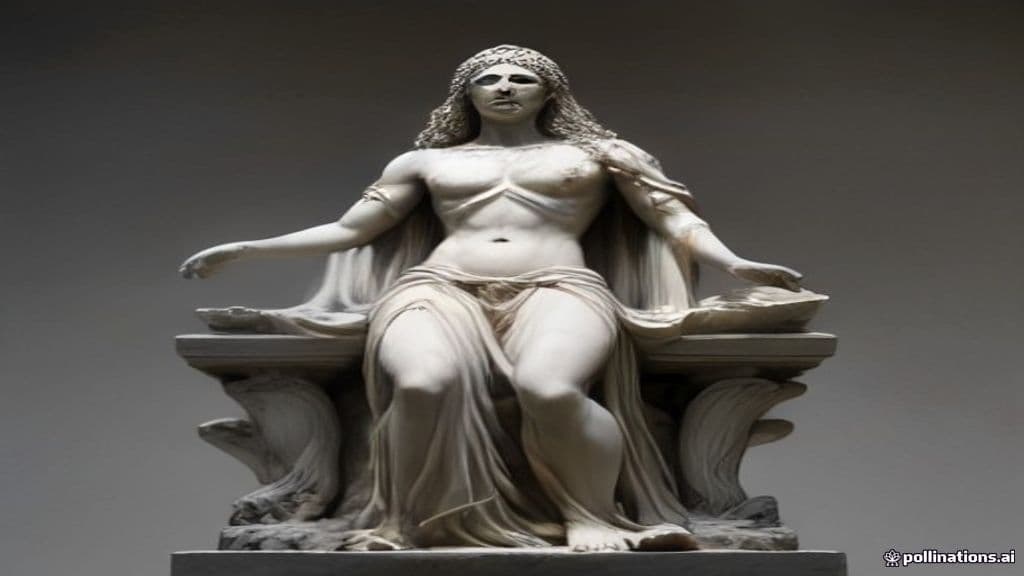
The Heracleidae are presented as the numerous children and later-line descendants of Heracles. After Heracles' death his offspring were persecuted (notably by Eurystheus) and driven into exile; successive generations consulted the Delphic oracle seeking to reclaim lands intended for their ancestor. The long, multi-generation attempt culminates in the traditionally narrated 'Return of the Heraclidae'—the recovery and redistribution of Peloponnesian territory to Heracleid leaders (for example Temenus, Cresphontes, and the twin progenitors of Spartan royal houses). Later authors frame this narrative as the mythic explanation for the Dorian takeover of the Peloponnese and as the genealogical basis for dynasties such as the Spartan Agiads and Eurypontids and the Temenids of Macedonia. Sources vary on some genealogical details (for instance a reported Lydian Heraclid line) and the story incorporates motif-level episodes—misread oracular pronouncements (the 'third fruit' later understood as 'third generation'), the identification of the 'narrow passage' as the straits at Rhium, and the aiding figure Oxylus.
Classical sources portray the Heracleidae as mortal human descendants and dynasts rather than as supernatural apparitions. Individual Heracleidae (Hyllus, Temenus, Cresphontes, Aristodemus, Procles, Eurysthenes, Tlepolemus, Telephus, etc.) appear in epic, tragic and historiographic accounts as heroic or founding figures and as ordinary mortals who lead armies and found dynasties. Homeric sources do not treat them as divine beings; tragedians and later historians depict them as legendary founders and rulers rather than beings with supernatural bodily attributes.
The Heracleidae possess no inherent magical powers in the cited traditions; their effective 'powers' are political, military and genealogical. They claim hereditary right to rule through descent from Heracles, organize and lead military expeditions to reclaim territory, and repeatedly consult and act upon Delphic oracular pronouncements. Their fortunes in narrative terms depend on correct obedience to oracular instruction and on performing civic-religious acts (expiatory sacrifice, lawful exile of a murderer) required to remove ritual pollution and secure divine sanction for collective action.
Weaknesses
- conditionritual pollution (miasma) from homicide or unatoned offense
- othermisinterpretation of oracular pronouncements
Wards
- ritualexpiatory sacrifice and legal exile
- ritualsupplication/asylum (suppliancy)

*Péh₂usōn (reconstructed)
Péh₂usōn is a hypothetical Proto‑Indo‑European pastoral guardian reconstructed by comparative scholars from parallels in Greek and Vedic traditions. Proposed as a Graeco‑Aryan ancestor‑figure, the reconstruction describes a protector of flocks, roads, and travellers rather than an attested historical cultic personality.
Aba (disambiguation / name-form)
Aba is a polyvalent name-form attested across many unrelated contexts (place names, personal names, animal names, and brief mythological listings). The provided sources do not support a single, coherent supernatural entity called "Aba" and offer no descriptive or ritual material for such a being.
Abandinus
Abandinus is a locally attested Romano‑Celtic theonym known from a single inscribed bronze feather (votive object) dedicated at Godmanchester (the Roman fort Durovigutum) in Cambridgeshire. Scholars interpret him as a local god or male spirit tied to a specific place and possibly associated with a nearby spring or stream; this association is tentative and based on etymological readings of the name.
Abarbarea
Abarbarea is a name attested in classical Greek and Roman sources for freshwater nymphs (naiads). The name appears for at least two individual mythic figures — a naiad wife of Bucolion and a naiad counted among ancestors of the Tyrians — and Hesychius records plural forms that may indicate the name was also used as a class-name (Abarbareai / Abarbalaiai).
Abas
Abas (Ancient Greek: Ἄβας, gen.: Ἄβαντος) is not a single mythic being but a recurring personal name borne by multiple mortals and minor mythic figures in Greek epic and genealogical traditions — kings, founders, seers, warriors, attendants, a centaur, and a youth transformed by a goddess. The name is glossed in the sources as 'guileless' or 'good-hearted' and appears across Argive, Theban, Trojan, Euboean, and other local cycles.
Abderus
Abderus (Ancient Greek: Ἄβδηρος, romanized Ábdēros) is a mortal heroic figure in Greek myth closely associated with Heracles, remembered as the youth left in charge of the Mares of Diomedes who was killed by them. He functions as an eponymous local/divine-hero ancestor for the city of Abdera and received funerary commemoration and athletic agones at his tomb.
Abellio
Abellio is a theonym attested in Roman‑period inscriptions from the Comminges area of the Pyrenees and reported as worshipped in the Garonne Valley of ancient Gallia Aquitania. Surviving evidence is limited to a small number of inscriptions; scholars have variously hypothesized solar or arboreal associations and compared the name to forms of Apollo or to Celtic Belenus, but the deity's precise role in local cosmology remains uncertain.
Abnoba
Abnoba is a Gaulish theonym and toponym attested in Roman-era sources and inscriptions: a localized deity associated with woods, springs and the sources of rivers (notably the Danube) and simultaneously the name applied to a mountain or mountain range in the Black Forest/Baar/Odenwald region. Roman altars equate her with Diana, reflecting syncretic cult practice in frontier provinces.
Abomination of Desolation
An apocalyptic prophetic phrase originating in the Book of Daniel designating a profaning thing or act that renders the Jerusalem Temple cult desolate; later reused in the Synoptic Gospels as an eschatological sign prompting urgent flight. The term denotes ritual/cultic impurity (Hebrew shiqquts) and is variously interpreted as pagan offerings or altar, a foreign cult statue, or (in some New Testament readings) an acting agent.
Aborigines (mythology)
A mytho-historical label used in Roman and general reference sources to denote the oldest inhabitants of a region (specifically central Italy in the cited Roman context). The term functions as an identity/category for original human populations rather than as a characterized supernatural being in the provided sources.
Absyrtus
Absyrtus (Ancient Greek: Ἄψυρτος) is a Colchian prince in the Greek Argonautic cycle, son of King Aeëtes and brother or half-brother of Medea. He appears in variant traditions either as a companion taken by Medea during her flight with Jason and murdered/dismembered to delay pursuit, or as a pursuer sent by Aeëtes who is overtaken and slain by Jason; his death functions as a key narrative device in the escape from Colchis.
Abundantia
Abundantia is the Roman divine personification of abundance and material plenty, used primarily in imperial propaganda and public iconography to signify secure grain supplies, wealth, and the promise of a 'Golden Age' under the emperor. She also appears in later medieval European folklore as Domina Abundia / Dame Habonde, a household benefactor in accounts condemned by ecclesiastical writers.
Community Record
- [1]Heracleidae - Wikipedia. Wikipedia: 'Heracleidae (Ἡρακλεῖδαι) or Heraclids were the numerous descendants of Heracles...' and discussion of the 'Return of the Heraclidae' as the Dorian invasion.wiki
- [2]The Heracleidae by Euripides (translation). Euripides, The Heracleidae — dramatic treatment of the persecuted offspring of Heracles seeking supplication and refuge.literary
- [3]Greek Reader — Euripides Heracleidae. Greek Reader materials on Euripides' Heracleidae; presents narrative elements of refuge and suppliancy.literary
- [4]Heracleidae - in ancient sources @ attalus.org. Compilation of ancient source notices on the Heracleidae, including chronicle and historiographic references.other
- [5]Eusebius, Chronicle (translations and notices). Eusebius' Chronicle and related chronicle notices preserve traditional datings and genealogical summaries connected with the Heracleidae narrative.other
- [6]Who Were the Heracleidae? Discover Heracles's Many Children | TheCollector. Modern summary of Heracleidae lists and their role as ancestral/ dynastic figures in Greek tradition.other
- [7]Historical Introduction - Merope - Matthew Arnold (etext). Historical/introduction material touching on classical traditions and interpretations of the Heracleidae narrative.other