
The name originates in the Hebrew Bible as a theophoric personal name borne by several human individuals and a clan. Separately, surviving summaries and later devotional materials show that cognate forms of the same name were adopted in apocryphal/deuterocanonical and popular Christian lists as the name of an angelic figure; the supplied sources do not give a primary apocryphal narrative tracing this development, only attest the dual use of the lexical form as both a human name in scripture and an angelic name in later writings.
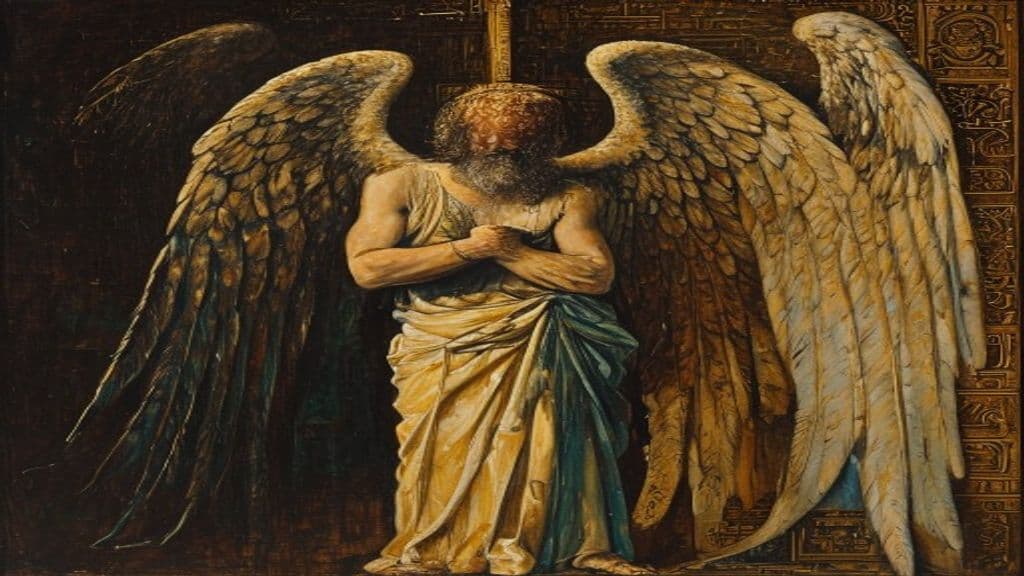
Primary textual descriptions of the angelic figure are not provided in the supplied materials. One modern glossary entry and some devotional summaries note an Orthodox iconographic convention depicting Jeremiel holding balancing scales, an attribute recorded in later pictorial tradition rather than in cited primary apocryphal texts.
The provided sources do not record explicit powers, deeds, or a detailed office for Jerahmeel. He is named in some later lists as an archangel, a rank that in general denotes a high celestial messenger, but specific functions are not attested in the excerpts. The iconographic attribute of balancing scales in some Orthodox representations implies an association with judgment or weighing in those later traditions, though this is not documented in primary sources within the supplied material.

Michael
Michael is presented in the supplied sources as a masculine given name and disambiguation headword applied to people, historical rulers, cultural works, places, and other uses; the provided material treats it as an onomastic item rather than as a single supernatural being.
Gabriel
A principal heavenly messenger in Jewish, Christian, and Islamic literatures, Gabriel is portrayed as an archangel who reveals and explains divine messages, announces births and divine intent, and executes certain divine judgments in apocalyptic texts.

Uriel
Uriel is an archangel figure in Jewish and Christian apocryphal, liturgical, and popular traditions, variously described as an interpreter of prophecy, guardian of cosmological thresholds (Gate of Eden, Tartarus/pit), regent of light or the sun, and a guide or agent in salvation narratives. His prominence and specific functions vary by tradition (Second Book of Esdras, Ethiopian homily, apocryphal gospels, patristic and later angelologies).

Jegudiel
Jegudiel (Hebrew: יַחְדִּיאֵל Yaḥdīʾēl) is presented in Eastern Christian tradition as one of the seven Archangels. He is associated with praise of God, bears iconographic attributes of a crown and a three‑thonged whip (or rod/staff), and functions as a patron and advisor for those who labor and for leaders such as kings and judges.

Barachiel
Barachiel (Hebrew: בַּרַכְאֵל, Baraḵʾēl, 'God has blessed') is an archangelic figure in Jewish mystical literature and in Byzantine Catholic and Eastern Orthodox Christian devotion, traditionally associated with blessings, guardianship of family and married life, and as chief of guardian angels. Mystical texts place him over the second heaven and attended by a vast retinue of ministering angels; Christian iconography portrays him with symbols of blessing such as a white rose, rose petals, a bread basket, or a staff.
Aaron
Aaron is a central human figure in Israelite sacred literature: the elder brother of Moses, the first high priest (progenitor of the Aaronide priesthood), and a spokesman/prophet who mediates between Israel and God in Exodus–Deuteronomy narratives. His role in the texts establishes hereditary priestly authority, ritual functions (sacrifices, blessing, use of Urim and Thummim), and institutional norms for Israelite cultic life.
Abaddon
In Hebrew scripture Abaddon is primarily a noun meaning 'destruction' or a section/condition of the underworld paired with Sheol; in the New Testament Book of Revelation Abaddon is personified as an angelic figure (Greek Apollyon) described as the king of an army of locusts released from the abyss during the apocalypse.
Abadir
Abadir is a polysemous name attested in distinct cultural contexts: a legendary founding saint and clan ancestor in eastern Ethiopia (Sheikh Abadir Umar Al‑Rida / Aw Abadir), a term applied to cone‑shaped cult stones in Phoenician religious description, and a personal name of a martyr (Abadir/Apater) in the Coptic Synaxarium. The attestations are independent usages of the same name rather than a single supernatural being.
Abadiu of Antinoe
Abadiu of Antinoe was a fourth‑century bishop of Antinoe (Antinoopolis, in Roman Egypt) commemorated as a martyr and saint in the Coptic Orthodox Church, with a feast day on 26 December. Sources record that he was killed during a theological dispute with Arian opponents and reference him in collections of Egyptian martyrs.
Abagtha
Abagtha (Hebrew: אבגתא, ’Ǎḇaḡṯā) is a named human court official in the Hebrew Bible’s Book of Esther, listed among seven chamberlains who ministered before King Ahasuerus and were commanded to bring Queen Vashti before the king. He is attested only in Esther 1:10 and is presented as an institutional palace attendant rather than a supernatural being.
Abanoub
Abanoub is a 4th‑century Egyptian Christian child martyr venerated in the Coptic tradition. Remembered for his public confession of Christ, miraculous healings associated with his passion, and the translation and veneration of his relics, his feast is observed on July 31 (Epip 24) and his cult centers include Nehisa and Samanoud.
Abaskhiron the Soldier
A Coptic Orthodox martyr venerated for refusing imperial idolatry during the Diocletian persecution; reputedly healed by the Archangel Michael, preserved in monastery relics, and commemorated on 14 June (7 Paoni).
Abdel Messih El-Makari
Abdel Messih El-Makari (1892–1963) was a Coptic Orthodox monk and priest venerated as a 20th‑century Coptic saint. Associated with the Monastery of Saint Samuel the Confessor and the Monastery of Saint Macarius (Scetes/Wadi El‑Natrun), he is remembered for humility, asceticism, charity, and reported spiritual gifts such as prescience, discerning of spirits, and healing.
Abdiel
Abdiel (Hebrew עֲבְדִּיאֵל) is primarily a theophoric Hebrew personal name meaning "servant of El/servant of God," attested once in the Hebrew Bible (1 Chronicles 5:15). In later literature—most notably John Milton's Paradise Lost—Abdiel is reimagined as a faithful seraph who opposes Satan's revolt. The provided sources do not treat Abdiel as an autonomous folkloric spirit type or record rituals or wards associated with the name.
Abel
Abel is the second son of Adam and Eve in the Genesis narrative, a shepherd whose accepted offering and subsequent murder by his brother Cain form the biblical account of the first death. Later interpretive traditions expand his role, treating him as an archetypal righteous victim, a postmortem avenging or adjudicating figure, and in some systems (notably Mandaean) identifying him with an angelic lightbeing.
Abiathar
Abiathar (Hebrew: אֶבְיָתָר, ʾEḇyāṯār) is a named human priestly figure in the Hebrew Bible. He is presented as a survivor of the Nob massacre who fled to David with priestly regalia, served as a priest and counselor in David's court, and was later deposed and sent to Anathoth by Solomon for supporting Adonijah.
Abib and Apollo
Abib and Apollo are Christian ascetics and hagiographic saints of Akhmim (Upper Egypt) attested in Coptic sources and the Historia Monachorum. Remembered for extreme asceticism, monastic leadership, angelic encounters, and inclusion in the Coptic Synaxarion (feast day November 4).
Community Record
- [1]Jerahmeel (Wikipedia). Wikipedia, entry 'Jerahmeel'wiki
- [2]Jerahmeel (archangel) (Wikipedia). Wikipedia, entry 'Jerahmeel (archangel)'wiki
- [3]Chronicles of Jerahmeel (Archive). Gaster, Moses. Chronicles of Jerahmeel (archive copy)literary
- [4]Jerahmeel ArchAngel (imaginova glossary). Imaginova glossary entry 'Jerahmeel ArchAngel' (notes Orthodox iconography showing balancing scales)other
- [5]Wikidata: Jerahmeel. Wikidata entry for Jerahmeelwiki