
In the Qur'anic and Islamic theological frame cited in the sources, jinn are a created order of beings distinct from angels and humans and capable of moral choice: they may be believers (mu'minun) or unbelievers (kuffar) depending on whether they accept God's guidance (Source: Wikipedia, Qur'anic commentary fragments). The provided materials do not contain a separate, systematized Coptic origin narrative for jinn; references to Coptic words or local legends in Burton and Harvard material are fragmentary and do not establish an independent Coptic cosmology of origins (Sources: Wikipedia; Jeffery/Scripture excerpts; Burton; Harvard Divinity Bulletin).
The supplied texts do not offer a single, consistent physical form for jinn. Classical and folkloric sources vary: in some literary cycles jinn take identifiable shapes or have named leaders (e.g., tales such as "The Fisherman and the Jinni" and Burton's marginalia referring to a "Queen of the Jinn") (Sources: Burton, The Thousand Nights and a Night). Other accounts show how legendary human figures could be later described with monstrous traits (an example: later classical Arabic sources demonizing Bilqis with donkey hooves and hairy legs) indicating variability and tale‑specific attributions rather than a uniform morphology (Source: Harvard Divinity Bulletin). Overall, the corpus emphasizes hiddenness rather than a stable corporeal form (etymology from janna 'to cover, hide') (Source: Appendix II - Semitic Roots).
Across the cited material, jinn are presented as autonomous intelligences able to choose belief or disbelief and therefore morally accountable (Source: Wikipedia). They can influence or prompt humans and are implicated in explanations of possession and Satanic prompting: "Satans among Jinn and men may prompt each other," and popular explanations for certain human behaviors invoked possession by a jinni or a shaitan (Sources: Jeffery/Scripture excerpts; answerings-islam.net fragments). Tales and notes indicate social organization and leadership among jinn (references to tribes such as Nimrod in tale contexts and to a Queen of the Jinn) and brief ritual notes (Burton) suggest they may be summoned or contacted through ritual media such as burning specific perfumes (Sources: Burton; The Thousand Nights and a Night). The provided corpus does not supply systematic lists of powers (e.g., shape‑changing formulas) beyond these themes.
Weaknesses
- otherno consistent weaknesses in provided sources
Wards
- substanceburning perfumes (fragmentary note as means to summon or contact jinn; no protective analogue documented in provided excerpts)
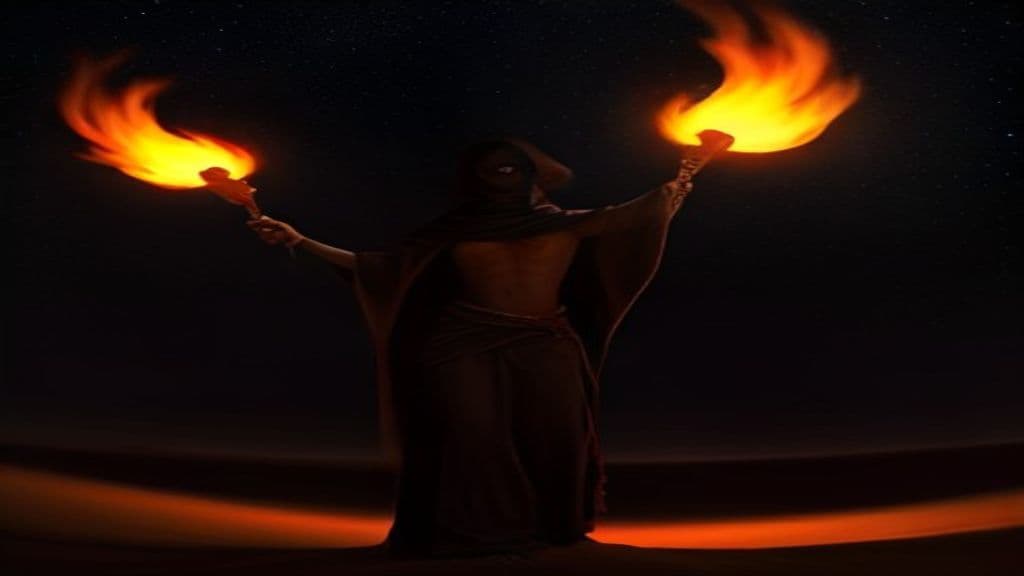
Djinn
The class of supernatural beings created from smokeless fire in Islamic cosmology — a parallel civilization to humanity, capable of belief or unbelief, with their own prophets, society, and judgment before God.

Marid
The most powerful class of jinn in Islamic tradition — beings of the sea, associated with the deep ocean, storms, and the granting of wishes at terrible cost. The classic genie of the Arabian Nights.

Jann
The weakest class of djinn in Islamic tradition, associated with desert winds and taking the form of snakes or whirlwinds, dwelling in empty wilderness and posing little threat to those who know the proper invocations.
*Perkʷūnos
*Perkʷūnos is the reconstructed Proto-Indo-European thunder‑god hypothesized by comparative linguistics and mythology. Scholarly reconstructions portray him as a storm or thunder figure associated with fructifying rain and as the combatant who fights a multi‑headed water‑serpent to release life‑giving waters; no direct attestations from the Proto‑Indo‑European period survive and the figure is inferred from later Indo‑European traditions.
*Péh₂usōn (reconstructed)
Péh₂usōn is a hypothetical Proto‑Indo‑European pastoral guardian reconstructed by comparative scholars from parallels in Greek and Vedic traditions. Proposed as a Graeco‑Aryan ancestor‑figure, the reconstruction describes a protector of flocks, roads, and travellers rather than an attested historical cultic personality.
57 Mnemosyne
57 Mnemosyne is a large main-belt asteroid (S-type) discovered in 1859 and named after the Greek Titaness Mnemosyne. It is a non-sentient astronomical body studied for its orbital and rotational properties and has been used in dynamical measurements related to Jupiter.
Ababil
Ababil (Arabic: أبابيل, romanized abābīl) are miraculous birds mentioned in the Qur'anic account of Surah Al‑Fil. In Islamic tradition they appear as a divinely sent avian host that defended the Kaaba by pelting an invading army with small clay stones; tradition places the event in the year traditionally given as 570 CE.
Abaddon
In Hebrew scripture Abaddon is primarily a noun meaning 'destruction' or a section/condition of the underworld paired with Sheol; in the New Testament Book of Revelation Abaddon is personified as an angelic figure (Greek Apollyon) described as the king of an army of locusts released from the abyss during the apocalypse.
Abadir
Abadir is a polysemous name attested in distinct cultural contexts: a legendary founding saint and clan ancestor in eastern Ethiopia (Sheikh Abadir Umar Al‑Rida / Aw Abadir), a term applied to cone‑shaped cult stones in Phoenician religious description, and a personal name of a martyr (Abadir/Apater) in the Coptic Synaxarium. The attestations are independent usages of the same name rather than a single supernatural being.
Aban Yasht
The Aban Yasht is a hymn from the Persian tradition that praises Anahita, a goddess associated with water, fertility, and wisdom. It consists of 132 stanzas and is part of the 21 Yashts collection. (Note: - Power tier should be "Primordial" or possibly "Cosmic", given that it's a hymn of great spiritual significance and associated with a goddess. - The article incorrectly states that Anahita is associa)
Abath
No corroborated folkloric entity named "Abath" is documented in the provided sources. The string appears in the supplied material only as a surname/personal name in Aruban/Dutch-Caribbean archival records and as an unrelated taxonomic or encyclopedic hit; no mythic attributes, origin stories, rituals, or apotropaic practices for an entity called Abath are present in the documents reviewed.
Abatur
Abatur is an uthra (celestial emanation) in Mandaeism described as the 'father of the Uthras' and called the Ancient (ʿattīqā). He resides on the boundary between the World of Light and lower regions, functions as a judge who weighs souls (Abatur Muzania), and supplies instructions and materials to the demiurgic uthra Ptahil in accounts from the Diwan (Scroll) of Abatur.
Abatwa (Twa / Batwa)
Abatwa (also recorded as Twa, Batwa, Mutwa; singular forms Barhwa or Murhwa in some transcriptions) are indigenous hunter‑gatherer peoples of the Great Lakes region of Central Africa, historically identified as some of the earliest inhabitants of the area. The available sources treat them as human ethnic groups whose livelihoods, lands, and populations have been severely affected by conservation policies and modern violence.
Abdul Qadir Gilani
A historical 11th–12th century Hanbali jurist, preacher, and Sufi shaykh who became the eponym and principal early figure of the Qadiriyya tariqa; venerated in Sunni Sufi traditions as an Awliya (saint) and often given exalted hagiographical ranks such as Muḥi al‑Dīn and Ghawth.
Abel
Abel is the second son of Adam and Eve in the Genesis narrative, a shepherd whose accepted offering and subsequent murder by his brother Cain form the biblical account of the first death. Later interpretive traditions expand his role, treating him as an archetypal righteous victim, a postmortem avenging or adjudicating figure, and in some systems (notably Mandaean) identifying him with an angelic lightbeing.
Community Record
- [1]Jinn (Wikipedia). "Like humans, they are accountable for their deeds and can be either believers (Mu'minun) or unbelievers (kuffar), depending on whether they accept God's guidance."wiki
- [2]Wikidata: jinn. supernatural spirits integrated in Islamic beliefs (Wikidata entry)other
- [3]The Thousand Nights and a Night (Burton), part79 marginalia. Burton marginal note: "[a] fact which proves // of certain perfumes, by burning which she could summon the Queen of the Jinn."literary
- [4]The Thousand Nights and a Night (Burton), tales. Collection reference: "The Fisherman and the Jinni." (tale title and narrative tradition)literary
- [5]The Qur'an as Scripture, Part 3 (Jeffery / answering-islam.net). Exegetical fragments: "But it is not only Allah who thus directs by prompting from within, for Satans among Jinn and men may prompt each other" (used as source for prompting/possession discussions).academic
- [6]The Qur'an as Scripture, Part 3 (injil.de mirror). Exegetical fragments on jinn and satanic promptings (mirror of Jeffery material).academic
- [7]Echoes of a Legendary Queen | Harvard Divinity Bulletin. Notes that later classical Arabic sources described Bilqis with donkey hooves and hairy legs as an example of demonization in later legend.academic
- [8]Appendix II - Semitic Roots (American Heritage Dictionary). Etymology: Arabic jinni, from jinn 'invisible beings,' from janna 'to cover, hide, conceal' (semantic core of hiddenness).other