
In Turkic/Altai accounts Kayra is the benign creator who orders the cosmos. In an Altai creation account Kayra (also rendered Kara Han) exists before the world, flying as a pure-white goose over an endless expanse of primordial water (time) and then brings ordered being into existence. After creating the universe Kayra plants the nine-boughed tree of life (Ulukayın/Ulukayin) from whose branches the human ancestor-lines (the nine clans or nine races) emerge. In some genealogical schemas Kayra is placed within a pantheon related to the sky-deity Tengri and is described as parent to other divine figures (for example three sons named Ulgan/Ulgen, Mergen, and Kyzaghan in one account).
In the attested Altai account Kayra is described as neither male nor female nor human in form but as a pure-white goose that flies constantly over primordial water; this avian image emphasizes a liminal, non-anthropomorphic creator. Kayra is also described in sources as 'both father and mother', indicating a non-binary parental aspect. The lexical variant Kara Han (Kara = black/land) appears in traditions as a name-form with different semantic resonances but the explicit physical depiction given in the provided materials is the white goose.
Kayra is credited with cosmic creation: bringing the ordered world into being, creating lesser gods, and planting the tree of life (Ulukayın) that produces human ancestor-lines (nine clans). Kayra is described as seated on the seventeenth layer of heaven and, from that high place, directing the fate of creation; one tradition describes Kayra as ruler of the three realms (air, water, and land). In one Altai account Kayra experiences anxiety prior to creation and then reassures itself during the act of ordering the world. In a local Tuvinian / Soyoth legend Kayra (Kaira Khan) also functions as a culture-bringer, teaching people crafts such as how to make arak (anise drink).
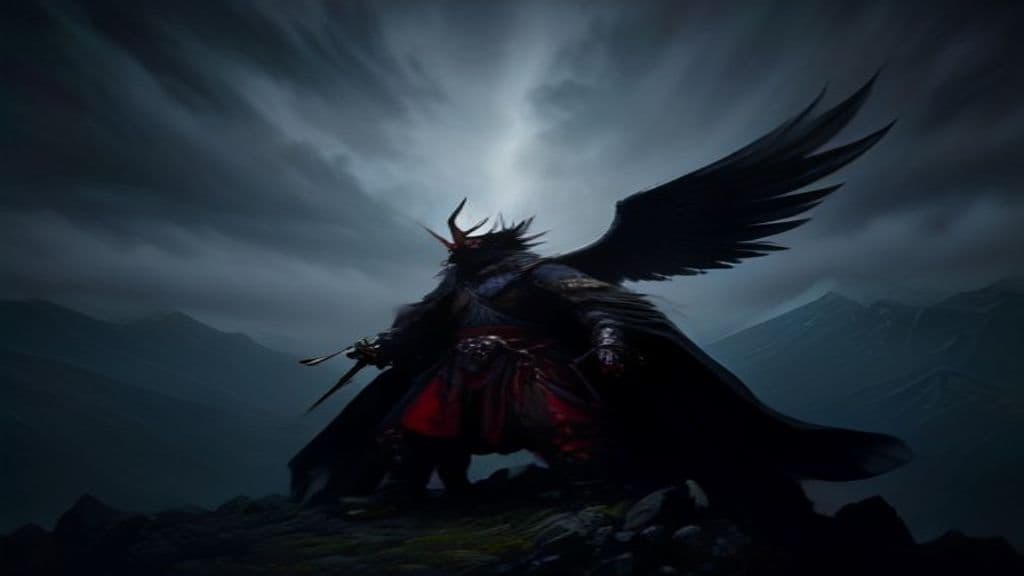
Abaasy
Abaasy (Abaahy, Abasy; Yakut: Абаасы, Abaası) are beings of the Sakha (Yakut) underworld, depicted in sources as destructive underworld spirits or demons associated with the long deceased. They inhabit the lower cosmic layer, serve an underworld ruler, are blamed for disease and madness, and may be appeased by blood sacrifice.
Abzar İyesi
A Turkic iyesi (possessive/guardian spirit) of the courtyard, outbuildings, and farmstead grounds; ambivalent in nature, it protects its domain but may harm livestock and cause mischief, often appearing in animal forms.
Aiy (Aiy-auk)
Aiy (also rendered Aiy-auk) is a name mentioned in relation to Siberian contexts in the queryer's sources, but the provided documents do not contain usable folkloric descriptions or ethnographic data about the entity. This entry records what the supplied materials do and do not establish and points to the research gap.
Ak Ana
Ak Ana (also Ağ Ana, Ak Ene) is the primordial water-mother of Turkic and some Siberian (Khanty, Mansi) traditions: a holy maternal creator principle associated with the pre-earth expanse of water, fertility of the land, and the threshold to the spirit world.
Al (Alı)
No folkloric or ethnographic evidence for a supernatural entity named "Al" or "Alı" is present in the supplied source set. The available materials are modern biographical, political, linguistic, and religious texts that do not describe a Turkish spirit, demon, or other supernatural being by this name.
Alaz
Alaz is the Turkic god of fire associated with hearths, flame, and the Great Fire (Ulugh Od). He is described as a powerful fire-being who sends protector-spirits (İye) to household hearths and can cause destructive fires when angered; fire under his authority is also a purifying force.
Alp Er Tunga
Alp Er Tunga is a legendary heroic ruler of Turan in early Turkic tradition, remembered as an ideal warrior-king and ancestral figure invoked in medieval dynastic genealogies. He also appears in Iranian epic tradition under the cognate name Afrosiyab/Afrasiab, where the figure is framed differently.
Ama (Mother of Waters)
No documentation for a Siberian supernatural figure called 'Ama' or 'Mother of Waters' was found in the supplied sources. The reviewed materials either list unrelated senses of the string 'Ama' or are unrelated recordings titled 'AMA.'
Amazons
A society of women-warriors in ancient Greek myth and legend, depicted as skilled horsemen and archers who inhabit the periphery of the Greek world and act as recurring opponents and counterparts to Greek heroes. Treated by ancient authors as a past people and by modern scholars as a mythic construct possibly inspired by Eurasian female warrior burials.
Amrak
Amrak is not attested in the provided sources as a supernatural being. The lexical string "Amrak" appears across unrelated secular contexts — as a historical regnal name (Amrak Khagan / Ashina Anluo), a Turkish place-name (Çamrak / amrak), titles in modern Arabic-language music, an institutional name/acronym (AMRAK Institute), and as a modern brand/typeface/project name. No folkloric, ritual, or mythological descriptions of an entity called "Amrak" are present in the cited material.
Antimachus
Antimachus is attested in the provided sources primarily as a classical Greek personal name borne by historical figures (notably Antimachus of Colophon, a poet and grammarian ca. 400 BC, and Antimachus I Theos, a Greco-Bactrian king). The name is also reused in modern contexts (a Wikidata taxon entry and small-press fictional/divinatory pages). The sources do not present Antimachus as a supernatural or folkloric entity.
Apa Qaghan
Apa Qaghan (阿波可汗, Ābō Kèhán) is an historical Ashina prince and mid-6th century claimant to the Göktürk khaganate. Sources portray him as a political and military actor involved in the succession disputes after Taspar Qaghan's death, ruling contested steppe territories and engaging with both western Turkic allies and Sui China.
Community Record
- [1]Kayra — Wikipedia. Wikipedia contributors, 'Kayra', Wikipedia, The Free Encyclopediawiki
- [2]Wikidata: Käyrä (Q47011968). Wikidata entry Q47011968wiki
- [3]Archive references and media mentioning Kayra. Archive.org item 'Kayra SP - Bölüm 8'other