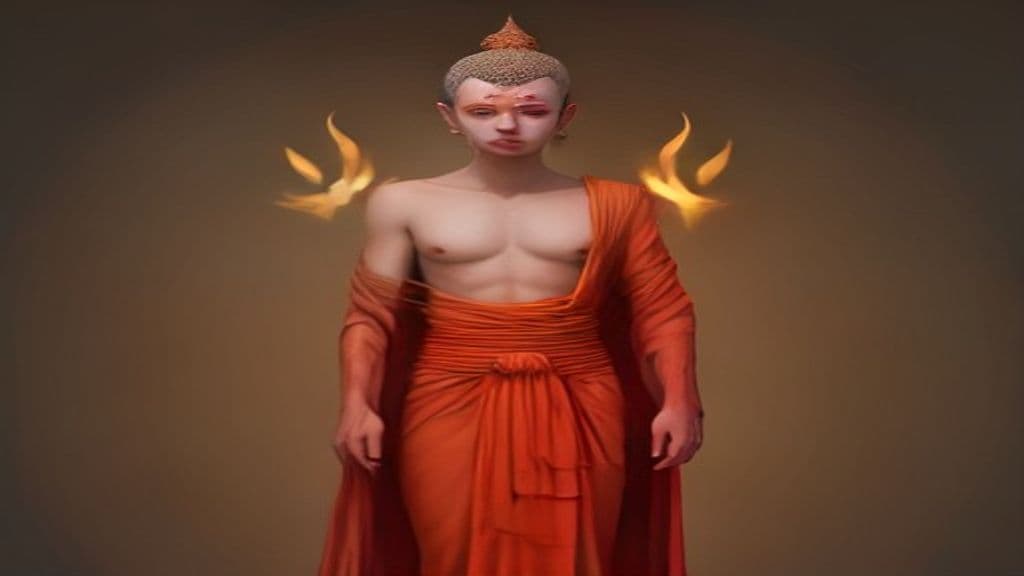
The primary narrative source for Kṣitigarbha is the Kṣitigarbha Bodhisattva Pūrvapraṇidhāna Sūtra, which presents Kṣitigarbha as a vow-bound bodhisattva whose compassionate resolves arise from past-life narratives (for example, stories of filial devotion such as a Brahmin maiden) and who pledges to take responsibility for instructing all sentient beings across the six realms during the interval between Gautama Buddha's death and the arising of Maitreya. Traditional accounts report the sutra was translated into Chinese by Śikṣānanda between 695 and 700 CE; modern scholarship notes uncertainty about the sutra's Indian versus Chinese origin, including the absence of known Sanskrit manuscript witnesses, but the sutra nevertheless functions as the doctrinal foundation for the Kṣitigarbha tradition in East Asia.
Kṣitigarbha is most commonly depicted as a shaven-headed Buddhist monk clad in simple monastic robes, frequently shown standing on a lotus base; he may also appear seated in some material cultures. Standard iconographic attributes are a khakkhara (monastic staff; Chinese 錫杖 Xīzhàng; Japanese shakujō) held in the right hand and a tear-shaped cintāmaṇi (wish‑fulfilling jewel, 如意寶珠) in the left. Some East Asian images include a Five Buddha crown (五佛冠 Wǔfó Guān), elongated ears or a third eye in the assimilated buddha-like iconography, and regional accretions such as an attendant dog in certain Chinese legends. In Japan, votive and folk practice frequently adorn statues with bibs, kerchiefs, kasa hats or haori and involve petitionary interaction such as tying ropes about statues.
Sources frame Kṣitigarbha's agency primarily as vow-driven salvific activity rather than supernatural combat: his central commitment is to instruct and liberate beings in the six realms during the post‑Gautama, pre‑Maitreya interval and to defer his own buddhahood until hells are emptied. Iconographic elements express symbolic capacities: the cintāmaṇi signifies illumination, wish‑fulfillment, and the potential to grant salvation; the khakkhara is described both as a compassionate monastic implement (used to warn small animals so they are not harmed) and, in tradition, as a device said to 'open the gates of Hell.' Practically, Kṣitigarbha functions as a protector invoked for the welfare of the dead, memorial relief for beings believed to be suffering in lower realms, and—as a regional adaptation in Japan—guardian or patron of children and deceased/aborted fetuses. Devotees petition him through sutra recitation, offerings, and localized acts of devotion (e.g., tying ropes to statues).
Weaknesses
None recorded.
Wards
- ritualRecitation of the Kṣitigarbha Bodhisattva Pūrvapraṇidhāna Sūtra
- ritualDevotional petitions and votive actions (offerings, tying ropes to statues, adorning statues with bibs/kerchiefs)
- otherFilial piety and merit-making (moral conduct and memorial practices to mitigate posthumous suffering)
Maitreya
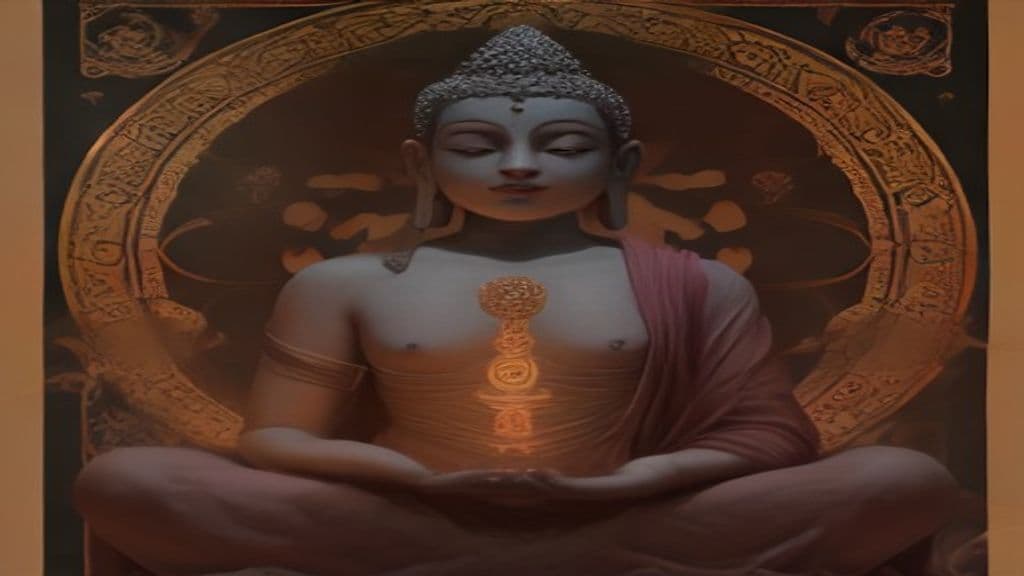
Maitreya (Pali: Metteyya) is the bodhisattva prophesied in Buddhist traditions to be the next fully awakened Buddha who currently resides in Tushita heaven and will be reborn on earth to re-establish the Dharma. In modern esoteric/Theosophical literature he is also depicted as an advanced spiritual teacher in a hidden hierarchy, a distinct framing from the classical Buddhist accounts.
Samantabhadra
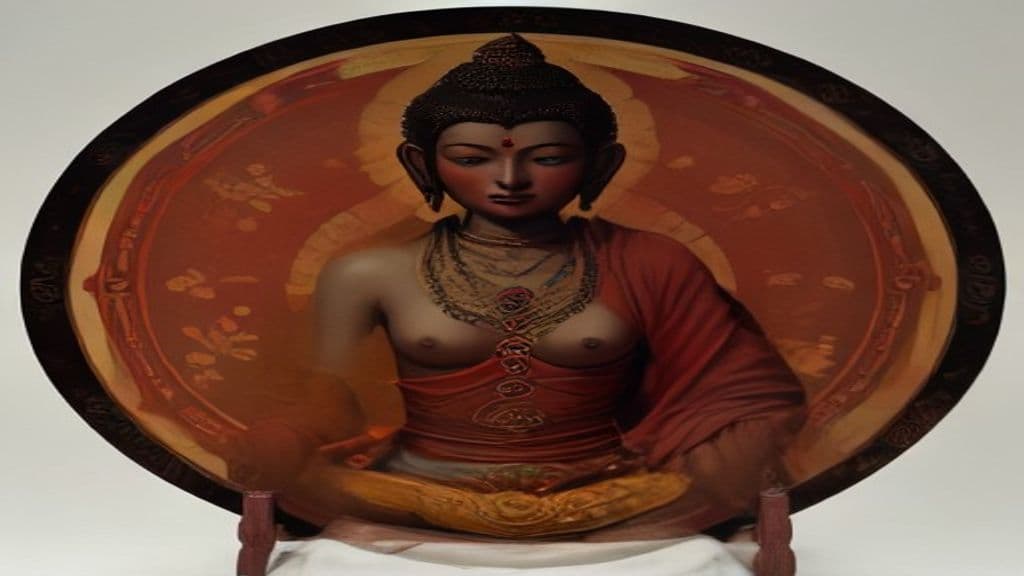
Samantabhadra is a sacred name used across Indian-origin traditions. In Mahāyāna Buddhism it denotes a major bodhisattva associated with practice, vows, and the transfer of merit; in Tibetan Buddhism the name (Tibetan: Kuntu Zangpo) is also used for an Adi‑Buddha or primordial principle in Dzogchen contexts; separately, Samantabhadra is the name of a historical second‑century Digambara Jain monk and author of works such as the Ratnakaranda Gaurav.
Acala
Acala (Sanskrit: अचल, 'The Immovable') is a wrathful protective deity (dharmapala) in Vajrayāna and East Asian esoteric Buddhism, classed among the Wisdom Kings (Vidyārāja). He functions as a ritual focus for visualization and mantra practice intended to remove obstacles and bind or destroy hostile forces.
Acalanātha (Acala / Achala)
Acalanātha (also Acala or Achala) is a wrathful deity and dharmapāla — a protector of the Dharma — prominent in Vajrayana and East Asian Mahayana Buddhist contexts. Presented as a fierce, non‑human or semi‑divine protector-figure, Acalanātha functions to defend the teaching and practitioners by removing obstacles and confronting threats to the transmission and practice of Buddhism.
Agni
Agni is the Vedic personification of fire in Hindu tradition: a sacred, mediating principle that manifests as terrestrial fire, atmospheric lightning, and celestial sun, and that receives and conveys sacrificial offerings. Prominent in the Rigvedic corpus, Agni functions as sanctifier, witness of rites of passage, and a transformational inner principle in later Upanishadic literature.
Aizen Myō-ō (Rāgarāja)
Aizen Myō-ō corresponds to the deity Rāgarāja, a wrathful/transformation-oriented figure venerated in Esoteric and Vajrayāna Buddhist traditions. The figure is especially revered in Chinese Esoteric Buddhism in Chinese communities and in the Japanese Esoteric schools Shingon and Tendai.
Akhu Tönpa
A Tibetan trickster figure, sent by Chenrezig to teach the art of being shrewd and witty, while championing the common man against social hierarchies. (Note: - Power tier should be Lesser or Minor Spirit, not Ancient, as it's more aligned with local spirit level of trickster figures. - The ability to outwit those in positions of power suggests Greater or P)
Akshobhya
Akshobhya is a transcendent buddha of Mahāyāna and Vajrayāna Buddhism, one of the Five Wisdom (Dhyāni) Buddhas. He personifies 'mirror knowledge' (ādarśa-jñāna), is conventionally placed in the East, and is lord of the eastern Pure Land Abhirati; in esoteric texts he is associated with the eastern Vajra division and invoked in mantra/mandala ritual contexts.
Akuma
Akuma (悪魔/あくま) in Japanese sources is an evil spirit, devil, or demon associated with misfortune and mental disturbance. The term appears in Buddhist texts and Heian-period literature and was later used to translate the Christian figure of Satan, as well as the Buddhist Mara.
Amanojaku
Amanojaku (天邪鬼 / あまのじゃく) is a Japanese yōkai-type being portrayed as a contrarian, heart-reading trickster. Treated in different contexts as a small ogre (ko-oni), a wicked demon (jaki) in Buddhist iconography, and a folkloric spirit that provokes human vice, it appears across regional tales with variable roles from malicious kidnapper to household oddity.
Amida Nyorai
Amida Nyorai (Amitābha / Amitāyus) is a principal Mahayana Buddha venerated across East Asia as the embodiment of Infinite Light and Infinite Life who presides over a Western Pure Land and is invoked as the savior who receives the dying into rebirth there.
Amitābha
Amitābha is a central celestial Buddha of Mahayana Buddhism who presides over the western Pure Land called Sukhāvatī. Devotional practices invoking his 'measureless' light and life (nianfo/nembutsu) are presented in Pure Land traditions as a path by which beings may be reborn in his buddhafield and quickly attain Buddhahood.
Amitābha Buddha
Amitābha is a principal Mahayana Buddha who presides over the Western Pure Land (the Land of Ultimate Bliss). Devotional practices—most centrally recitation of his name and chanting of Pure Land sutras—are presented in sources as the means by which Amitābha welcomes practitioners for rebirth in his hindrance-free realm.
Amoghapāśa
Amoghapāśa is recorded in the supplied sources as a named manifestation or form of the bodhisattva Avalokiteśvara/Lokeśvara attested in Mahāyāna and Vajrayāna contexts. The evidence in the provided material is archival and bibliographic (sūtra/dhāraṇī/maṇḍala filenames and database entries) rather than descriptive narrative or doctrinal exposition.
Community Record
- [1]Kṣitigarbha (Wikipedia). Wikipedia: Kṣitigarbha article (overview, iconography, sutra provenance, devotional practice)wiki
- [2]Earth Store (Kṣitigarbha) Sutra lecture series (YongHua 2009). Lecture series on the Kṣitigarbha Bodhisattva Pūrvapraṇidhāna Sūtra (used to document contemporary recitation and doctrinal emphasis)other
- [3]Kṣitigarbha Hall (Wikipedia). Wikipedia: Kṣitigarbha Hall (temple placement and funerary/memorial function)wiki
- [4]Xuanfa Institute — Ksitigarbha Sutra (text and chapter materials). Online sutra text and chapter materials (reference to the sutra as primary doctrinal source)literary
- [5]Reflections on the Ksitigarbha Sutra (ShapesInTheFog, parts 1 & 2). Contemporary reflections and commentary summarizing themes such as filial piety and the sutra's narrativeother
- [6]WorldWidePanorama — Pray to Ksitigarbha Bless for Family Peace. Temple/practice-focused page referencing devotional petitions to Kṣitigarbha for family peaceother
- [7]Buddha Museum — Vintage Chinese Gilt Bronze Ksitigarbha Ti-tsang Statue (object description). Material culture and iconographic description (statue attributes, regional variants)other
- [8]Archive: The 18 Root Bodhisattva Vows, Part 4 (video). Teaching material that references bodhisattva vows and their place in practice (context for vow language)other