In Yoruba sources Ògún is described in some traditions as an Irunmọlẹ (a primordial orisha) who came to earth early in the cosmogony; one common account says he 'cleared a path for the other orisha to enter Earth' using a metal machete with the assistance of a dog. Regional stories vary: he is associated with places such as Ire (Ire-Ekiti), a location where narrative tradition records he 'disappeared into the earth' (wọ ilẹ sun) rather than dying; diaspora forms preserve the core idea of a smith/warrior spirit who made life on earth possible and who continues to assist supplicants.
Traditional sources emphasize symbolic attributes rather than a fixed anthropomorphic portrait: iron implements (machete, sword, knives, blacksmith tools, scissors, wrenches, guns) and the presence of a dog are primary markers. Devotees and festivals display iron implements and followers may wear chains or strings of iron implements; specific clothing or physical descriptions are not uniformly prescribed in the provided materials.
Ògún is patron and guardian of iron, metallurgy, craftsmen (especially blacksmiths), hunters, warriors and those whose professions involve danger (drivers, warriors). He 'enables' human technological and craft activity by legitimizing and protecting it, and functions as a guarantor in oaths and justice (for example, tradition records that followers may 'kiss a piece of iron in the name of Ogun' in court). Some secondary Vodū-account summaries describe him as having ceased to age upon reaching adulthood, being immune to terrestrial disease and resistant to conventional injury while still susceptible to magical harm; that characterization is presented in those accounts as a tradition-specific portrayal.
Weaknesses
- conditionsubject to magical injury (tradition-specific limitation)
Wards
- symboliron implements (amulets, chains of implements)
- ritualofferings and sacrifices (meats, palm wine, kola nuts, red palm oil, water, yams)
- conditionoccupational and gender taboos (e.g., prohibitions on menstruating women touching blacksmith tools in some Ewe contexts)
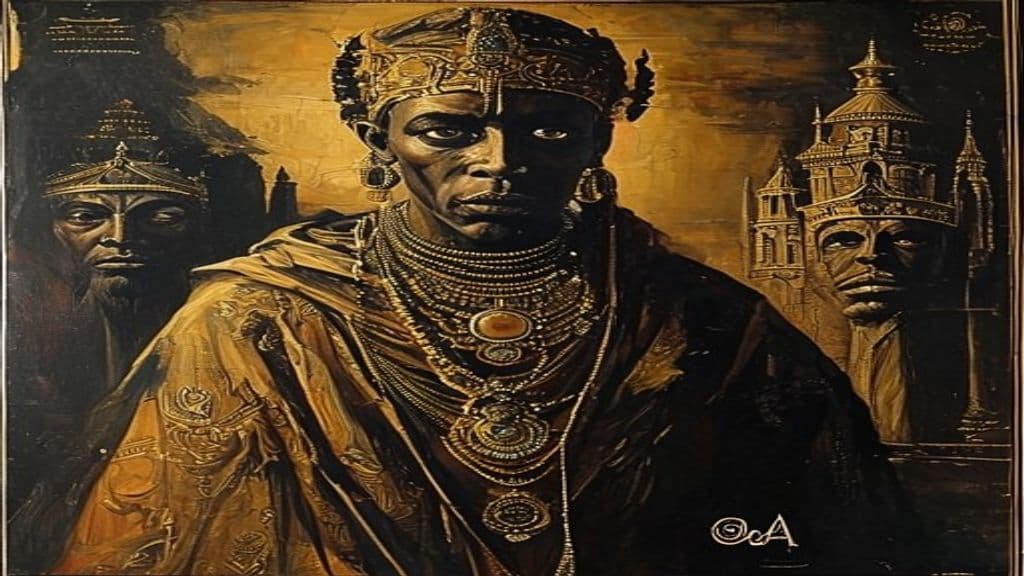
Oba
Oba is principally attested in the provided sources as a West African royal title (Yoruba and Bini) meaning 'ruler' and as a widespread modern proper name and toponym. The corpus contains no sustained folkloric account of an independent supernatural being called 'Oba'; references to ritual or religious function concern human office-holders rather than a nonhuman spirit.

Ògún
Ògún (also Ogum, Gu, Egu) is a major West African and diaspora deity (orisha/vodun) associated with iron, metalworking, hunting, war and the crafts that use iron. In Yoruba cosmology he is described in some traditions as an Irunmọlẹ (primordial orisha) who cleared a path for other orisha and functions as patron and protector for blacksmiths, hunters, warriors, drivers and related occupations.
A ƭat Roog
A term attested in the vocabulary surrounding Roog within the Serer religious system; the provided sources do not supply a clear definitional account of an entity by this exact name. Material available situates the term in the wider context of Serer cosmology in which Roog is the universal supreme deity and ancestor cult (pangool) and priestly mediation (o yaal pangool) structure ritual life.
Abena Mansa
A name attested in a single contemporary Ghanaian blog anecdote as a 'mysterious being'; available sources do not establish Abena Mansa as a coherent, traditional supernatural figure or provide corroborating ethnographic detail.
Abiku
In Yoruba tradition, the Abiku is a Primordial entity representing the spirits of children who die young. (Note: - Power tier: Primordial seems plausible but should be supported by additional source material confirming its cosmic or deity-level abilities. - Appearance: While the draft mentions spirits often appe)
Abonsam
Abonsam is a malevolent spirit name used in accounts from the Gold Coast (modern Ghana) to explain community-level misfortune such as accidents and disease. When local ritual specialists diagnose Abonsam as the cause, communities perform a prolonged communal expulsion ritual intended to drive the spirit into the sea.
Adjassou-Linguetor
Adjassou-Linguetor is a loa in Haitian Vodou associated with spring water. The limited cited sources describe her as having protruding eyes and a bad temper; beyond these points, the available documentation (Wikipedia and Wikidata) is minimal.
Adze
A vampiric firefly of the Ewe people of West Africa — a spirit that takes the form of a firefly by night and a malicious possessing being by day, drinking the blood of sleeping children and spreading disease.
Adze (Folklore)
Vampiric being in Ewe folklore, transforming into human shape upon capture. (Note: 1. Power tier should be Greater, as "deity-level" powers are implied by the ability to possess humans. 2. Add sensory cues (e.g., glowing lights) based on its firefly form. 3. Add weaknesses and wards)
Aganjú
Primordial Orisha associated with the sun, fire, and the untamed wilderness in Yoruba tradition. (Note: - Remove "untamed wilderness" from Power tier description as it's a trait associated with Lesser entities, not Primordial. - Add Appearance section based on source material (e.g., no specific descript)
Agbọghọ Mmụọ Masquerade
An Igbo masquerade category—literally 'Maiden Spirits'—in which masked (traditionally male) dancers embody the spirits of deceased unmarried girls, performing idealized adolescent feminine comportment and beauty in annual dry‑season civic ceremonies and at funerals and initiation rites in the Nri–Awka region.
Agwé
Agwé is a high-ranking lwa in Haitian Vodou associated with the sea, navigation, fishing, and certain funerary conveyances. He is portrayed as a naval officer who lives in a palace beneath the sea, commands attendant spirits, and is propitiated with maritime offerings and ceremonies.
Aje (Iyami Aje)
Aje appears in the supplied sources only as part of the compound term "Iyami Aje," which the referenced Wikipedia disambiguation entry labels as a Yoruba concept of feminine power. No further details about its nature, practices, appearance, or rituals are present in the provided materials.
Ajogun
Ajogun are a class of malevolent spiritual forces in the Yoruba religious worldview that regularly interfere with human lives, responsible for death, disease, curses, loss, conflict and related misfortunes. They are described as the polar opposite of the benevolent Oriṣa, led by Iku (Death), and can be warded off or appeased through intercession by Eṣu and by observing Ifá divinatory counsel.
Community Record
- [1]Ogun - Wikipedia. Wikipedia contributors. "Ogun." Wikipedia, The Free Encyclopedia.wiki
- [2]Ogum / Ogun (Marvunapp: Black Panther character and African god entries). Marvunapp appendix entry on Ogun (African vodu god) summarizing traditions and diaspora forms.other
- [3]Ogum (Black Panther character appendix) — Marvunapp. Marvunapp entry noting popular-media portrayals and Vodū-account summaries.other
- [4]Wikidata: Ogun. Wikidata entry for Ogun (name/identifier record).other
- [5]Candomblé / Ogum summary (from compiled notes). Summary material within the Wikipedia Ogun article notes Candomblé names and syncretism (Ogum, Gu) and diaspora associations.wiki