
Pyrgo is attested in the genealogical and narrative material surrounding the Pelopid house and Alcathous: she is named as the first wife of Alcathous, son of Pelops and Hippodamia, in several traditions of the local heroic genealogies of Pisa/Arcadia. In a different strand of mythic onomastics preserved in Romanizing sources, a woman named Pyrgo is recorded as the nurse of Priam's children who follows Aeneas into exile and reaches Sicily. The sources do not establish a single unified biography and allow that multiple women bearing the name Pyrgo occur in Greek and Roman mythic lists.
No physical description of Pyrgo is provided in the cited material. She is attested only by role and genealogical connections (wife, possible mother, nurse); the sources supply no details about her age, dress, features, or other visible traits.
The supplied sources do not attribute supernatural powers or magical abilities to Pyrgo. Her recorded roles are social and familial: named as Alcathous's first wife and as a possible mother of some of his children in Pelops-cycle genealogies, and separately as a nurse of Priam's children in Trojan/Aeneid-related tradition. No malefic behaviour, spirit action, or extraordinary capacities are recorded in the provided materials.
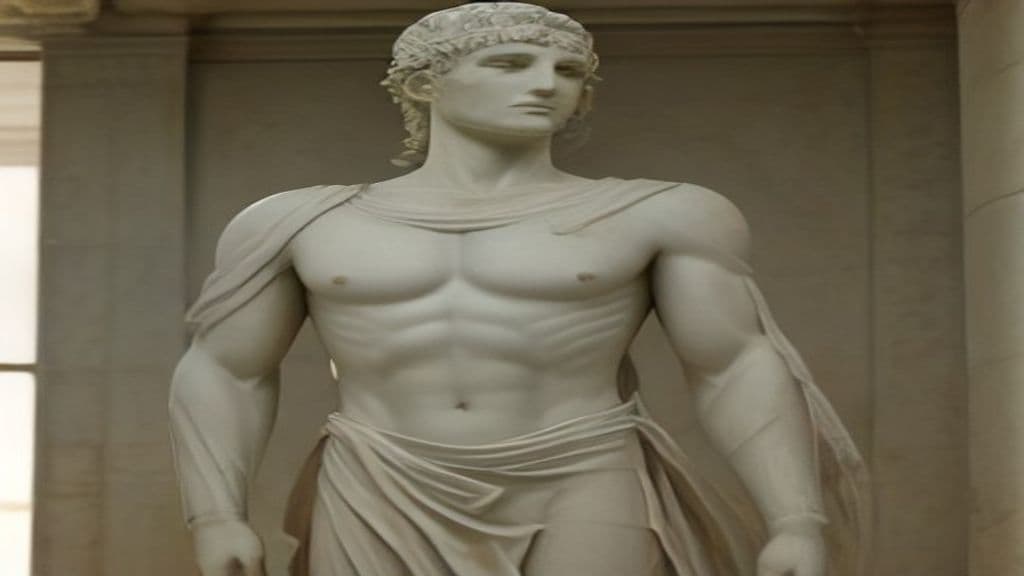
Pelops
Pelops is a mythic heroic-royal figure of ancient Greek tradition, an eponymous founder-ancestor of the Peloponnesus, ruler of Pisa/Olympia, and progenitor of dynasties (notably the House of Atreus). He is both a cult hero venerated at Olympia with chthonic libations and a narrative focal point whose deeds generate a long-lasting familial curse.

Priam
Priam is the legendary king of Troy in Greek and Roman epic tradition, an aged sovereign and father figure whose grief, supplication, and death are central episodes in the narratives of the Trojan War. He is portrayed as a mortal ruler embedded in a cosmos of gods and fate rather than as a supernatural being.
*Péh₂usōn (reconstructed)
Péh₂usōn is a hypothetical Proto‑Indo‑European pastoral guardian reconstructed by comparative scholars from parallels in Greek and Vedic traditions. Proposed as a Graeco‑Aryan ancestor‑figure, the reconstruction describes a protector of flocks, roads, and travellers rather than an attested historical cultic personality.
Aba (disambiguation / name-form)
Aba is a polyvalent name-form attested across many unrelated contexts (place names, personal names, animal names, and brief mythological listings). The provided sources do not support a single, coherent supernatural entity called "Aba" and offer no descriptive or ritual material for such a being.
Abandinus
Abandinus is a locally attested Romano‑Celtic theonym known from a single inscribed bronze feather (votive object) dedicated at Godmanchester (the Roman fort Durovigutum) in Cambridgeshire. Scholars interpret him as a local god or male spirit tied to a specific place and possibly associated with a nearby spring or stream; this association is tentative and based on etymological readings of the name.
Abarbarea
Abarbarea is a name attested in classical Greek and Roman sources for freshwater nymphs (naiads). The name appears for at least two individual mythic figures — a naiad wife of Bucolion and a naiad counted among ancestors of the Tyrians — and Hesychius records plural forms that may indicate the name was also used as a class-name (Abarbareai / Abarbalaiai).
Abas
Abas (Ancient Greek: Ἄβας, gen.: Ἄβαντος) is not a single mythic being but a recurring personal name borne by multiple mortals and minor mythic figures in Greek epic and genealogical traditions — kings, founders, seers, warriors, attendants, a centaur, and a youth transformed by a goddess. The name is glossed in the sources as 'guileless' or 'good-hearted' and appears across Argive, Theban, Trojan, Euboean, and other local cycles.
Abderus
Abderus (Ancient Greek: Ἄβδηρος, romanized Ábdēros) is a mortal heroic figure in Greek myth closely associated with Heracles, remembered as the youth left in charge of the Mares of Diomedes who was killed by them. He functions as an eponymous local/divine-hero ancestor for the city of Abdera and received funerary commemoration and athletic agones at his tomb.
Abellio
Abellio is a theonym attested in Roman‑period inscriptions from the Comminges area of the Pyrenees and reported as worshipped in the Garonne Valley of ancient Gallia Aquitania. Surviving evidence is limited to a small number of inscriptions; scholars have variously hypothesized solar or arboreal associations and compared the name to forms of Apollo or to Celtic Belenus, but the deity's precise role in local cosmology remains uncertain.
Abnoba
Abnoba is a Gaulish theonym and toponym attested in Roman-era sources and inscriptions: a localized deity associated with woods, springs and the sources of rivers (notably the Danube) and simultaneously the name applied to a mountain or mountain range in the Black Forest/Baar/Odenwald region. Roman altars equate her with Diana, reflecting syncretic cult practice in frontier provinces.
Abomination of Desolation
An apocalyptic prophetic phrase originating in the Book of Daniel designating a profaning thing or act that renders the Jerusalem Temple cult desolate; later reused in the Synoptic Gospels as an eschatological sign prompting urgent flight. The term denotes ritual/cultic impurity (Hebrew shiqquts) and is variously interpreted as pagan offerings or altar, a foreign cult statue, or (in some New Testament readings) an acting agent.
Aborigines (mythology)
A mytho-historical label used in Roman and general reference sources to denote the oldest inhabitants of a region (specifically central Italy in the cited Roman context). The term functions as an identity/category for original human populations rather than as a characterized supernatural being in the provided sources.
Absyrtus
Absyrtus (Ancient Greek: Ἄψυρτος) is a Colchian prince in the Greek Argonautic cycle, son of King Aeëtes and brother or half-brother of Medea. He appears in variant traditions either as a companion taken by Medea during her flight with Jason and murdered/dismembered to delay pursuit, or as a pursuer sent by Aeëtes who is overtaken and slain by Jason; his death functions as a key narrative device in the escape from Colchis.
Abundantia
Abundantia is the Roman divine personification of abundance and material plenty, used primarily in imperial propaganda and public iconography to signify secure grain supplies, wealth, and the promise of a 'Golden Age' under the emperor. She also appears in later medieval European folklore as Domina Abundia / Dame Habonde, a household benefactor in accounts condemned by ecclesiastical writers.
Community Record
- [1]Pyrgo (mythology) - Wikipedia. Wikipedia, 'Pyrgo (mythology)'wiki
- [2]Alcathous in Greek Mythology - Greek Legends and Myths. GreekLegendsAndMyths, 'Alcathous'other
- [3]Pyrgo | Facts, Information, and Mythology - Pantheon. Pantheon.org, 'Pyrgo. The nurse of Priam's children.'other
- [4]Megara - Greek Mythology Link (maicar GML). maicar GML, genealogical material (Alcathous entries)other
- [5]Pelops 1 - Greek Mythology Link (maicar GML). maicar GML, 'Pelops 1' genealogiesother
- [6]Pyrgo - Behind the Name (submitted names summary). Behind the Name, 'Pyrgo is the name of multiple women in Greek and Roman mythology...'other
- [7]Alcathous | Facts, Information, and Mythology - Pantheon. Pantheon.org, 'Alcathous' (notes Pyrgo as previous wife)other