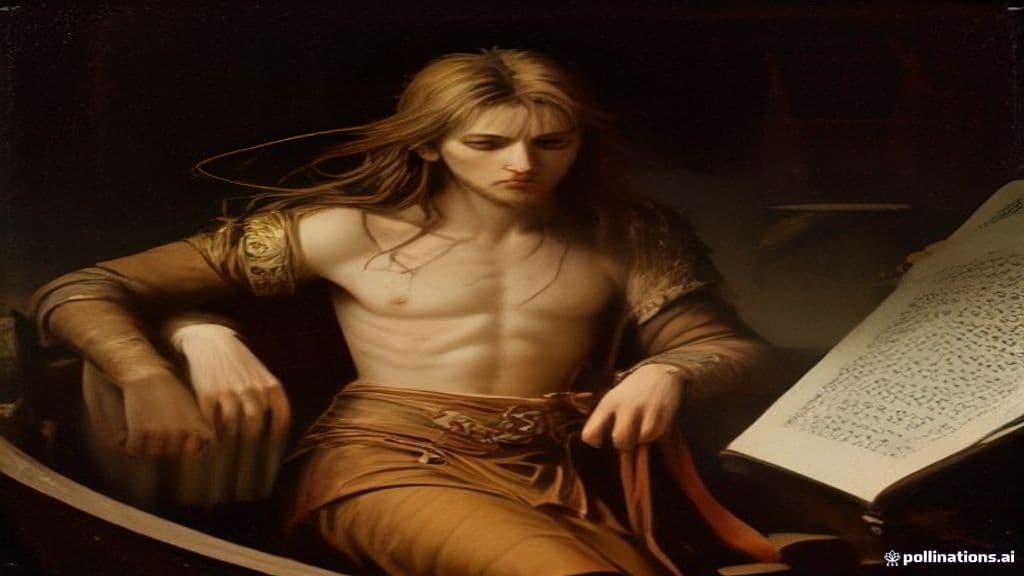
In Roman epic tradition as preserved by Virgil's Aeneid, Sergestus is a Trojan who survived the fall of Troy and joined Aeneas's company during the voyage that precedes the eventual foundation events in Italy. He appears notably in Aeneid Book V at the funeral games staged by Aeneas for Anchises, where he competes in the boat race, suffers an accident, and is nevertheless rewarded by Aeneas. Later writers and dramatists (for example Christopher Marlowe's Dido, Queen of Carthage) include Sergestus as a minor member of Aeneas's entourage. Roman social memory and gens tradition identify Sergestus as the ancestral figure claimed by the gens Sergia.
Primary Virgilian texts and the provided translations give no sustained physical description of Sergestus; descriptions focus on his actions. The most distinctive identifying narrative details are his participation in the boat race at Anchises' funeral games, the accident in which his ship strikes a projecting rock and is driven aground, and the subsequent reward he receives from Aeneas (the Cretan slave-woman Pholoe, described in some translations as with twin boys at her breast).
Sergestus is portrayed as a skilled mariner and loyal companion within Aeneas's retinue: he steers his vessel in the fleet's boat-race and shows concern for saving ship and crew after the accident. The sources present no supernatural powers; his attributes are human: seamanship, endurance as a retinue-member, and loyalty. He also exemplifies the vulnerability of human participants in epic contests—his navigational error (running aground) and the ensuing rescue and reward illustrate his fallibility and social protection under Aeneas.
Weaknesses
- conditionprone to navigational error (ran aground on a projecting rock during the boat race)
- otherno supernatural resilience (human vulnerabilities only; no powers attested)
Wards
None recorded.

Mnestheus
Mnestheus is a legendary Trojan captain and lieutenant of Aeneas in Virgil's Aeneid, presented as the ancestral hero of the Roman gens Memmia and linked to the house of Assaracus. He appears in the epic's funeral-games (Book V) as a naval competitor and in military leadership scenes in Book IX, where he assumes command in Aeneas's absence.

Gyas
Gyas is a named mortal captain in Virgil's Aeneid, portrayed as one of Aeneas's seafaring leaders and a competitor in the funeral‑games boat race (Book 5). He is remembered for ordering his helmsman Menoetes to steer tightly and then casting him overboard when the order was not followed; later he is briefly reported to have beheaded Ufens (Book 12.460).

Ascanius
Ascanius is a legendary Trojan prince in Greco‑Roman mytho-historical tradition, presented as the son of Aeneas and a dynastic founder who links the Trojan past to Italic and Roman genealogies (notably the Julian gens). He appears in literary and historiographical sources as a youthful warrior in Virgil's Aeneid and as a founder-king of Lavinium and Alba Longa in Roman tradition.
Abandinus
Abandinus is a locally attested Romano‑Celtic theonym known from a single inscribed bronze feather (votive object) dedicated at Godmanchester (the Roman fort Durovigutum) in Cambridgeshire. Scholars interpret him as a local god or male spirit tied to a specific place and possibly associated with a nearby spring or stream; this association is tentative and based on etymological readings of the name.
Abarbarea
Abarbarea is a name attested in classical Greek and Roman sources for freshwater nymphs (naiads). The name appears for at least two individual mythic figures — a naiad wife of Bucolion and a naiad counted among ancestors of the Tyrians — and Hesychius records plural forms that may indicate the name was also used as a class-name (Abarbareai / Abarbalaiai).
Abas
Abas (Ancient Greek: Ἄβας, gen.: Ἄβαντος) is not a single mythic being but a recurring personal name borne by multiple mortals and minor mythic figures in Greek epic and genealogical traditions — kings, founders, seers, warriors, attendants, a centaur, and a youth transformed by a goddess. The name is glossed in the sources as 'guileless' or 'good-hearted' and appears across Argive, Theban, Trojan, Euboean, and other local cycles.
Abdiel
Abdiel (Hebrew עֲבְדִּיאֵל) is primarily a theophoric Hebrew personal name meaning "servant of El/servant of God," attested once in the Hebrew Bible (1 Chronicles 5:15). In later literature—most notably John Milton's Paradise Lost—Abdiel is reimagined as a faithful seraph who opposes Satan's revolt. The provided sources do not treat Abdiel as an autonomous folkloric spirit type or record rituals or wards associated with the name.
Abellio
Abellio is a theonym attested in Roman‑period inscriptions from the Comminges area of the Pyrenees and reported as worshipped in the Garonne Valley of ancient Gallia Aquitania. Surviving evidence is limited to a small number of inscriptions; scholars have variously hypothesized solar or arboreal associations and compared the name to forms of Apollo or to Celtic Belenus, but the deity's precise role in local cosmology remains uncertain.
Abiel
Abiel is attested in the supplied sources only as a male given name — borne by several historical American individuals and listed as two minor biblical figures. The provided materials contain no evidence presenting Abiel as a supernatural, mythological, or folkloric entity.
Abigail
Abigail is a female figure in the Hebrew Bible portrayed in 1 Samuel 25 as the intelligent and beautiful wife of Nabal who intervenes to prevent David from committing violence; later tradition regards her as one of the Tanakh's seven female prophets and as a model of beauty and wisdom.
Abnoba
Abnoba is a Gaulish theonym and toponym attested in Roman-era sources and inscriptions: a localized deity associated with woods, springs and the sources of rivers (notably the Danube) and simultaneously the name applied to a mountain or mountain range in the Black Forest/Baar/Odenwald region. Roman altars equate her with Diana, reflecting syncretic cult practice in frontier provinces.
Aborigines (mythology)
A mytho-historical label used in Roman and general reference sources to denote the oldest inhabitants of a region (specifically central Italy in the cited Roman context). The term functions as an identity/category for original human populations rather than as a characterized supernatural being in the provided sources.
Abundantia
Abundantia is the Roman divine personification of abundance and material plenty, used primarily in imperial propaganda and public iconography to signify secure grain supplies, wealth, and the promise of a 'Golden Age' under the emperor. She also appears in later medieval European folklore as Domina Abundia / Dame Habonde, a household benefactor in accounts condemned by ecclesiastical writers.
Acamas
Acamas (Ancient Greek: Ἀκάμας) is a personal name recurrent in ancient Greek narrative traditions applied to multiple human characters (warriors, princes, suitors), once to a Cyclops, and once as a hound's name. Rather than a single supernatural entity, bearers of the name appear episodically across the Trojan War, Theseid, and Theban cycles as mortal actors whose deeds intersect with gods and fate.
Acantha
Acantha (Ancient Greek: Ἀκάνθα, 'thorn') is a late or secondary mythological figure known from modern retellings as a nymph transformed into the acanthus plant. The tale that she scratched Apollo and was changed into a spiny-leaved plant is not attested in surviving classical corpora and appears to be a modern compilation or invention rather than a firmly documented ancient myth.
Community Record
- [1]Sergestus — Wikipedia. Wikipedia: 'Sergestus' entry summarizing Virgil and later traditionwiki
- [2]Wikidata: 4829 Sergestus. Wikidata item Q154722 (Sergestus)other
- [3]Dido, Queen of Carthage — LibriVox (Marlowe). Christopher Marlowe, Dido, Queen of Carthage (audiobook/archive listing) featuring Sergestus as a minor characterliterary
- [4]Dido, Queen Of Carthage — BBC/archive. Recording/archival listing of Marlowe's play containing Sergestusliterary
- [5]Aeneid: Synopsis (Book V) — Bibliomania. Synopsis of Aeneid Book V describing Sergestus's boat-race accident and rewardliterary
- [6]Aeneid V: 'The Games of the Fleet' (classical translation). J. W. Mackail translation of Virgil's Aeneid Book V (describes Pholoe the Cretan given to Sergestus)literary
- [7]Aeneid V — Tom Sienkewicz translation/page. Translation/teaching text summarizing the naval contest and Sergestus's mishapliterary
- [8]Sergius | The amazing name Sergius: meaning and etymology (discussion). Discussion noting uncertainty of deeper etymology of Sergius/Sergestusother
- [9]Nova Roma — Category: Gens Sergia. NovaRoma entry noting that the gens Sergia regarded Sergestus as their ancestorother
- [10]Aeneid 4-6 Study Questions (character lists). Study material listing Sergestus among Aeneid charactersother