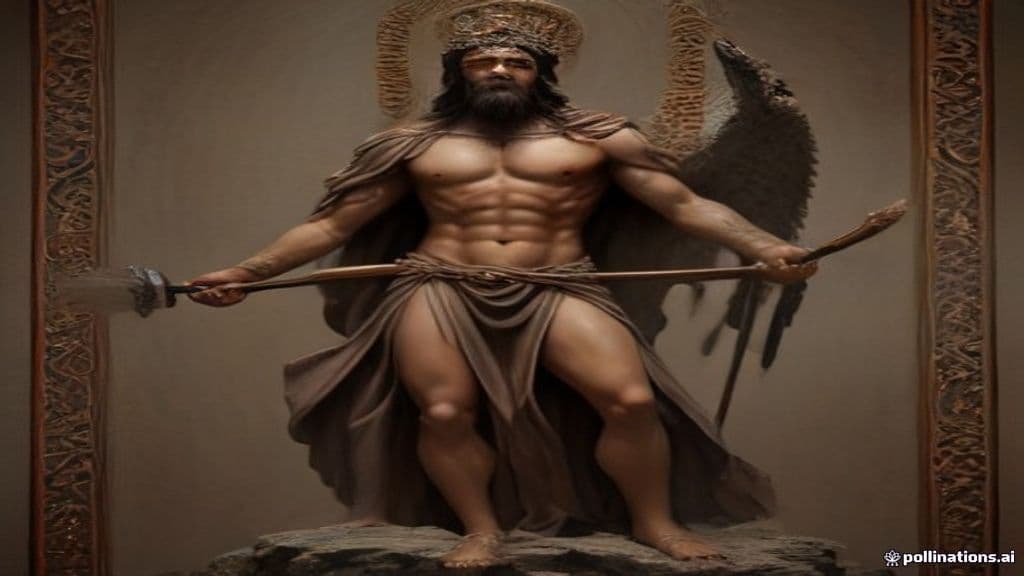
Sources preserve a legend reported by Servius: after sacrificial portions were stolen by wolves and shepherds pursued them into a cave on Mount Soracte where suffocating fumes killed them, a pestilence followed. An oracle replied that the plague would cease when the inhabitants, like wolves, began to lead a robber life; the people then took the name Hirpi Sorani and devoted themselves to the cult of Soranus. Linguistically, the theonym derives from Etruscan śur (𐌑𐌖𐌛) meaning 'black' or 'from the black [place]', a term that marks the god's liminal connection to both the underworld and volcanic/fiery phenomena, but the etymology is a linguistic explanation rather than a separate mythic genealogy.
Attested iconographies vary: a crowned young man wielding a spear or bow; an enthroned black-bearded man wearing a wolf-skin cap or with a wolf-like aspect; and a winged humanoid monster often shown wielding a sledgehammer or sword. Wolves and goats are recorded as animals associated with Śuri and appear in his ritual and visual entourage.
Śuri is presented as an infernal, volcanic, and solar-fire god associated with volcanic fire and volcanic lightning, and with the sun and the Manes/underworld. He is connected to communal health and plague dynamics and functions as an oracular deity; he is also counted among thunder-associated deities (Novensiles). Ritual specialists (Hirpi Sorani) perform fire-related rites and ornithomancy in his cult.
Weaknesses
- conditionMaintained by cult performance and priestly institutions
Wards
- ritualInstitutional cult observance and priestly rites (Hirpi Sorani ceremonies)
- ritualAnnual festivals honoring Apollo Soranus / Feronia

Vetala
A spirit that inhabits and reanimates corpses, possessing supernatural knowledge and the power to prophesy. One of the most feared beings in Shaiva tradition.
Calu
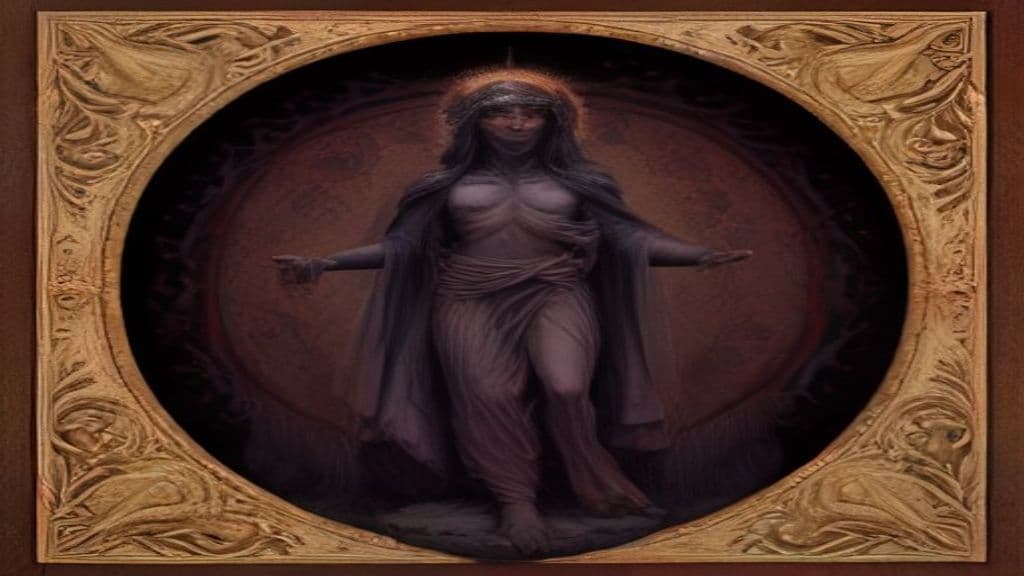
Calu is an Etruscan theonym/epithet denoting the chthonic, dark aspect of the fire-underworld god Śuri; the name was also used as a synonym for the underworld itself. Iconography and cultic language associate Calu with darkness and lupine (wolf) attributes and link the epithet to central-Italian wolf-ritual phenomena.
Abandinus
Abandinus is a locally attested Romano‑Celtic theonym known from a single inscribed bronze feather (votive object) dedicated at Godmanchester (the Roman fort Durovigutum) in Cambridgeshire. Scholars interpret him as a local god or male spirit tied to a specific place and possibly associated with a nearby spring or stream; this association is tentative and based on etymological readings of the name.
Abarbarea
Abarbarea is a name attested in classical Greek and Roman sources for freshwater nymphs (naiads). The name appears for at least two individual mythic figures — a naiad wife of Bucolion and a naiad counted among ancestors of the Tyrians — and Hesychius records plural forms that may indicate the name was also used as a class-name (Abarbareai / Abarbalaiai).
Abas
Abas (Ancient Greek: Ἄβας, gen.: Ἄβαντος) is not a single mythic being but a recurring personal name borne by multiple mortals and minor mythic figures in Greek epic and genealogical traditions — kings, founders, seers, warriors, attendants, a centaur, and a youth transformed by a goddess. The name is glossed in the sources as 'guileless' or 'good-hearted' and appears across Argive, Theban, Trojan, Euboean, and other local cycles.
Abellio
Abellio is a theonym attested in Roman‑period inscriptions from the Comminges area of the Pyrenees and reported as worshipped in the Garonne Valley of ancient Gallia Aquitania. Surviving evidence is limited to a small number of inscriptions; scholars have variously hypothesized solar or arboreal associations and compared the name to forms of Apollo or to Celtic Belenus, but the deity's precise role in local cosmology remains uncertain.
Abnoba
Abnoba is a Gaulish theonym and toponym attested in Roman-era sources and inscriptions: a localized deity associated with woods, springs and the sources of rivers (notably the Danube) and simultaneously the name applied to a mountain or mountain range in the Black Forest/Baar/Odenwald region. Roman altars equate her with Diana, reflecting syncretic cult practice in frontier provinces.
Aborigines (mythology)
A mytho-historical label used in Roman and general reference sources to denote the oldest inhabitants of a region (specifically central Italy in the cited Roman context). The term functions as an identity/category for original human populations rather than as a characterized supernatural being in the provided sources.
Abundantia
Abundantia is the Roman divine personification of abundance and material plenty, used primarily in imperial propaganda and public iconography to signify secure grain supplies, wealth, and the promise of a 'Golden Age' under the emperor. She also appears in later medieval European folklore as Domina Abundia / Dame Habonde, a household benefactor in accounts condemned by ecclesiastical writers.
Acamas
Acamas (Ancient Greek: Ἀκάμας) is a personal name recurrent in ancient Greek narrative traditions applied to multiple human characters (warriors, princes, suitors), once to a Cyclops, and once as a hound's name. Rather than a single supernatural entity, bearers of the name appear episodically across the Trojan War, Theseid, and Theban cycles as mortal actors whose deeds intersect with gods and fate.
Acantha
Acantha (Ancient Greek: Ἀκάνθα, 'thorn') is a late or secondary mythological figure known from modern retellings as a nymph transformed into the acanthus plant. The tale that she scratched Apollo and was changed into a spiny-leaved plant is not attested in surviving classical corpora and appears to be a modern compilation or invention rather than a firmly documented ancient myth.
Acerbas
Acerbas (also recorded as Sychaeus, Sycharbas, Zacherbas) is a figure in classical Greco‑Roman accounts of Phoenician/Tyrian tradition: a wealthy priest of Melqart (the Tyrian Hercules) whose concealed riches and murder by King Pygmalion precipitate Elissa/Dido's flight from Tyre and the foundation of Carthage. He is presented as a human priestly figure of high social rank rather than as a supernatural being.
Acestes
Acestes is a Roman/Greek founder-hero associated with the Sicilian city Segesta (Aegesta/Acesta). Presented as son of a Trojan woman and, in one tradition, the Sicilian river-god Crinisus (in animal form), he hospitably receives Aeneas and the Trojans, participates in the funeral games in Virgil's Aeneid (Book V), and functions as an eponymous culture-founder and local ruler.
Achaemenides
Achaemenides is a literary mortal figure introduced into Virgil's Aeneid as a marooned member of Odysseus' crew whom Aeneas rescues on Sicily. In Roman epic he functions as a chance survivor and eyewitness who helps link the Homeric tradition to the Trojan refugees and to illustrate Aeneas' magnanimity.
Community Record
- [1]Śuri. Wikipedia, article 'Śuri'wiki
- [2]Wikidata entry Q858. Wikidata Q858wiki