Varuṇa is a deity in Hindu folklore, from Indian subcontinent. Varuṇa is a principal Vedic and later Hindu deity described in the Rigveda as a sovereign upholder of ṛta (cosmic and moral order), a watchful judge, and a power associated with waters; in later tradition he becomes a specialized lord of the oceans and a western directional guardian (dikpāla).
In the earliest Vedic layer Varuṇa is portrayed as a universal sovereign and divine king who presides from a thousand-gated palace in the celestial firmament and enforces ṛta, the cosmic and moral order. Over time, in the Itihāsa–Purāṇa period and regional literatures, his role shifts from this apex cosmic judge toward lordship over waters: he is described as dwelling in an underwater palace and listed among the Adityas and as the dikpāla (guardian) of the west. Comparative scholarship has sometimes linked his archaic functions to wider Indo-European motifs, but such identifications are treated cautiously in the sources provided.
Vedic hymns emphasize Varuṇa's throne, palace, and omnipresence rather than precise bodily detail; he is described as majestic, seated on a golden throne in a vast, many-gated palace. In later iconography and Purāṇic descriptions he is depicted as a youthful man mounted on a makara (an aquatic crocodile-like beast), commonly holding a pāśa (noose) and a water-pitcher, and residing in a magnificent underwater palace.
Rigvedic hymns ascribe to Varuṇa watchfulness and near-omniscience — he observes deeds, upholds and enforces ṛta, binds the wicked, and judges transgressions while also granting forgiveness and remedies to the penitent. He is associated with waters (celestial and terrestrial), credited in hymnic material with ordering certain cosmic functions (creating or directing the sun's path and regulating constellations and moon movements), and is described in texts as a healer bearing 'a thousand remedies.' Vedic imagery includes bird-associated messengers (e.g., Hiraṇyapakṣa) linked to his surveillance.
Weaknesses
- conditionpenitence and propitiation (ritual confession/adhere to ṛta)
Wards
- ritualHymnic invocation and petitionary rites seeking forgiveness and protection
- conditionObservance of ṛta, vrata, and dharman (ethical and ritual correctness) to avoid incurring judgment
Mitra
Mitra (Proto‑Indo‑Iranian *mitrás) is an Indo‑Iranian deity historically associated with covenants, treaties, friendship, and the maintenance of cosmic and social order. In Vedic sources he is an Aditya patroning honesty and meetings and is paired with Varuna; in Avestan/Zoroastrian tradition Mithra is an ahura who preserves covenants, judges promise‑breakers, and upholds asha/arta.
Ādityas
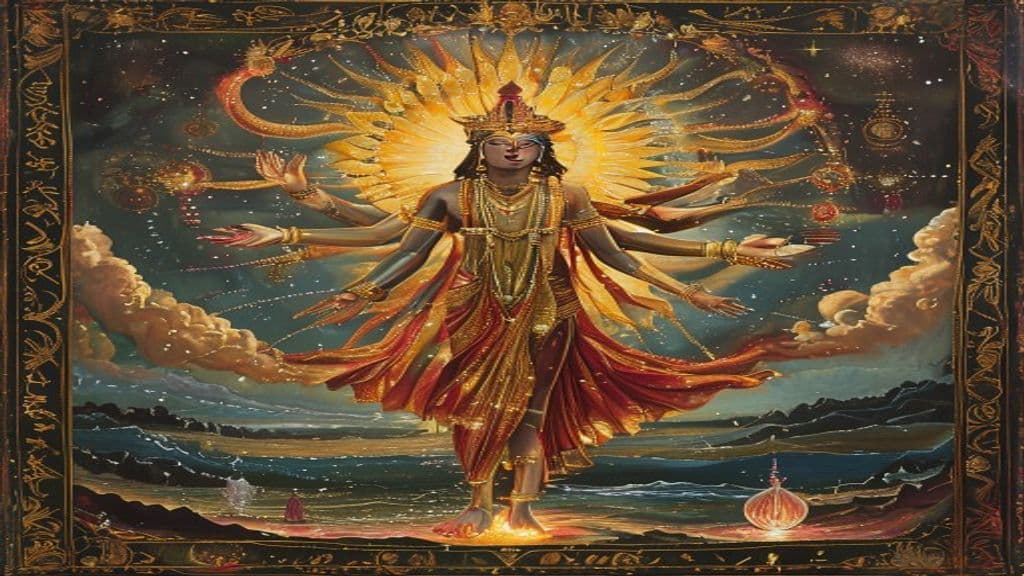
The Ādityas are a Vedic/Hindu class of solar deities, described as offspring of the goddess Aditi (and in later lists of Aditi and the sage Kaśyapa) who function collectively as manifestations/aspects of the Sun and as guardians who uphold Dharma. Their number and individual names vary by textual period — from six–eight in the Rigveda to a canonical twelve in later Brāhmaṇas and Purāṇas — and in later usage many individual Ādityas are assimilated into the single sun-god Sūrya.
Apsara
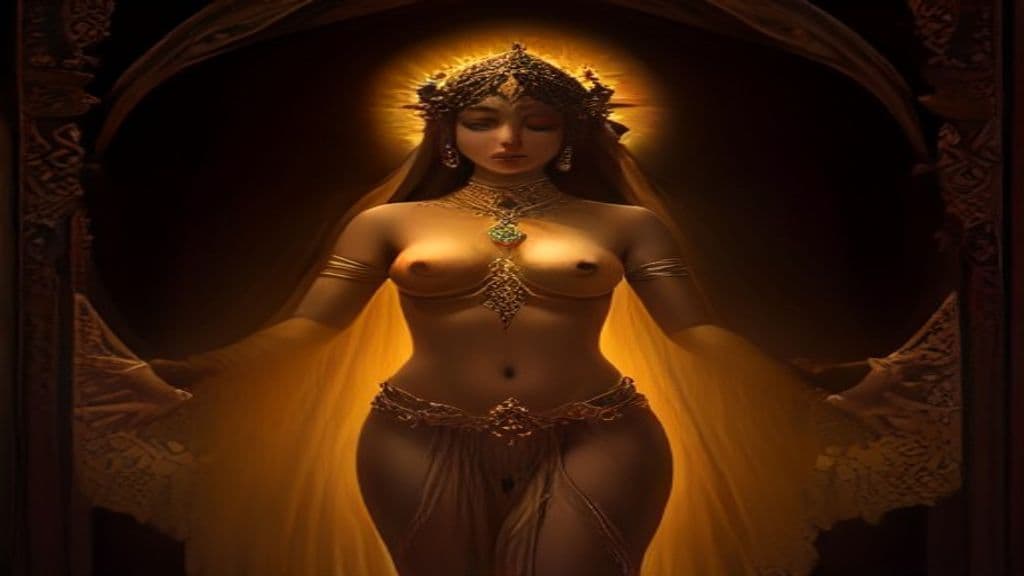
Celestial dancers and water nymphs of Hindu cosmology — beautiful semi-divine beings who dance at the court of Indra and, by his command, descend to earth to distract sages from excessive asceticism.
*Péh₂usōn (reconstructed)
Péh₂usōn is a hypothetical Proto‑Indo‑European pastoral guardian reconstructed by comparative scholars from parallels in Greek and Vedic traditions. Proposed as a Graeco‑Aryan ancestor‑figure, the reconstruction describes a protector of flocks, roads, and travellers rather than an attested historical cultic personality.
Abhimanyu
Abhimanyu is a youthful Kuru/Pandava warrior-hero in the Sanskrit epic Mahābhārata. Son of Arjuna and Subhadra, he is famed for entering the Chakravyuha battle formation on the thirteenth day of the Kurukshetra War and dying at age sixteen; his posthumous son Parikshit continues the Kuru line.
Achyuta
Achyuta (Sanskrit: अच्युत, acyuta) is primarily an epithet/theonym in Vaishnava Hindu tradition applied to Vishnu and Krishna, signifying the divine quality of being 'not fallen' — immutable, infallible, and imperishable. It functions as a devotional name in scripture, liturgy, and Pancharatra lists of divine emanations rather than as an autonomous folkloric spirit.
Acintya
Acintya is an Indonesian Hindu theological-symbolic representation of the ineffable supreme divine principle. In Balinese and Javanese practice it functions as a way to make ultimate reality present in ritual and art—often aniconically as an empty throne (padmasana) or anthropomorphically as a naked, flame-surrounded figure—rather than as a narrative, intervening deity.
Adi (asura)
Adi is attested in modern reference works as the name of an Asura who 'appears in the Matsya Purāṇa.' Beyond this single-line citation in secondary sources, no descriptive material about the figure is provided in the supplied research notes.
Adi Shakti
Adi Shakti (also Adi Parashakti, Mahadevi, Adya Shakti) is the primordial feminine power in Hindu/Shakta theology, regarded as the ultimate reality (Para Brahman) and the source from which all goddesses and gods manifest. She is both an impersonal cosmic principle (Mulaprakriti) and a focus of devotional invocation in temples, mantras, and pilgrimage sites such as Shakti Peethas.
Adi Vinayaka
Adi Vinayaka (Ādi Vināyaka; also called Nara Mukha Vinayaka) is a named iconographic and devotional form of the Hindu god Ganesha portraying the deity with a human head, described in sources as the form before the episode of decapitation by Shiva. It is rarely worshipped and appears in a small number of South Indian shrines and in devotional/musical repertoires.
Aditi
Aditi is a major Vedic goddess in Hindu tradition who personifies the boundless, infinite cosmic principle and functions as the maternal matrix from which many celestial deities (the Ādityas and other groups) are born. In the Vedic hymns she is invoked as a protective liberator who guards petitioners, provides wealth and safety, and frees devotees from hindrances such as sin and sickness.
Agastya
Agastya (also Agathiyar/Agasti) is a revered Vedic and later-period Indian rishi (sage) figure credited in textual traditions as an inspired seer, ascetic, teacher, culture-founder, and attributed author of Vedic, Puranic and Tamil works; in South Indian tradition he is associated with origins of Tamil grammar and Siddha medicine and is identified astronomically with the star Canopus.
Aghasura
Aghasura is an asura from the Vaishnava/Hindu narrative tradition (notably the Srimad‑Bhāgavatam) who, at the command of Kamsa, assumed the form of a vast serpent to ambush Kṛṣṇa and the cowherd boys in Vṛndāvana. The episode demonstrates Kṛṣṇa’s protective, divine power as he enters and destroys the demon from within.
Agiya Baital
The fire-form of the Vetala — a cremation ground spirit of UP and Bihar that manifests as a wandering flame rather than a corpse-inhabitor, leading night travellers off roads and into marshland or flames with a dancing fire that seems always just ahead.
Agneya / Āgneyī
Āgneyī (feminine) or Āgneya (masculine adjective) is a Vedic–Puranic divine figure and ritual principle tied to the fire-god Agni and the southeastern direction. In textual traditions she appears both as a personified daughter/shakti of Agni and as an adjectival/technical term applied to fire-consecrated things (direction, astra, etc.). She also occurs as the name Agneya (or Anala) among items revealed in a Shaiva-Agamic list associated with the Aghora face of Sadashiva.
Community Record
- [1]Varuna - Wikipedia. Wikipedia: Varunawiki
- [2]Śrīmad Bhāgavatam, Chapter: 'Kṛṣṇa Rescues Nanda Maharāja from the Abode of Varuṇa' (reference). Śrīmad Bhāgavatam, chapter reference noted in supplied research notesliterary
- [3]Wikidata: Varuna (Q18588320). Wikidata entry for Varunaother