South Asian Folk Supernatural Beings

260 documented South Asian Folk supernatural beings from the Evil Eye grimoire, including 87 lesser and 75 greater in power tier.

page 1 of 5

Adi Vinayaka
Greater

Adi Vinayaka

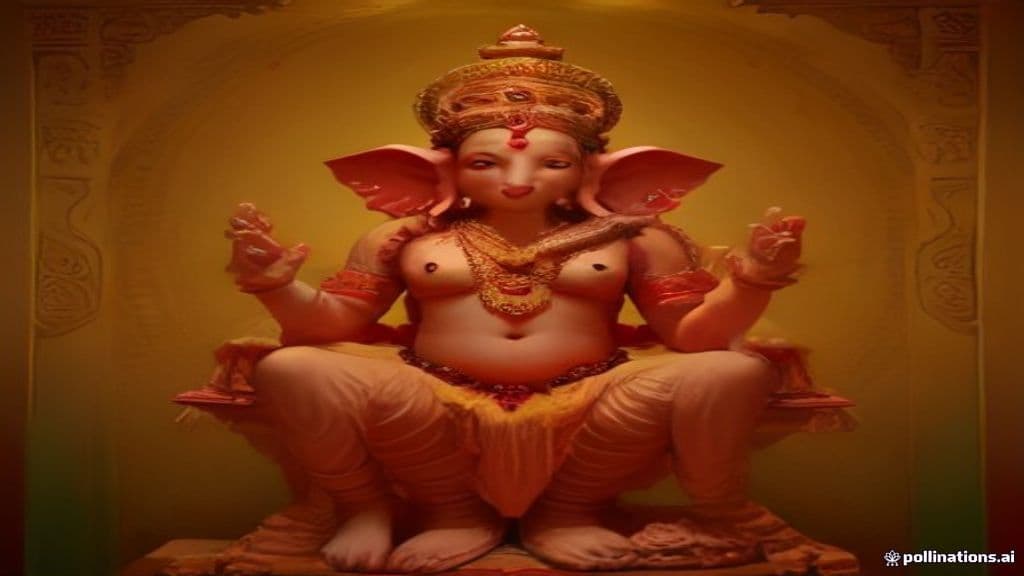
Adi Vinayaka (Ādi Vināyaka; also called Nara Mukha Vinayaka) is a named iconographic and devotional form of the Hindu god Ganesha portraying the deity with a human head, described in sources as the form before the episode of decapitation by Shiva. It is rarely worshipped and appears in a small number of South Indian shrines and in devotional/musical repertoires.

Agastya
Ancient

Agastya

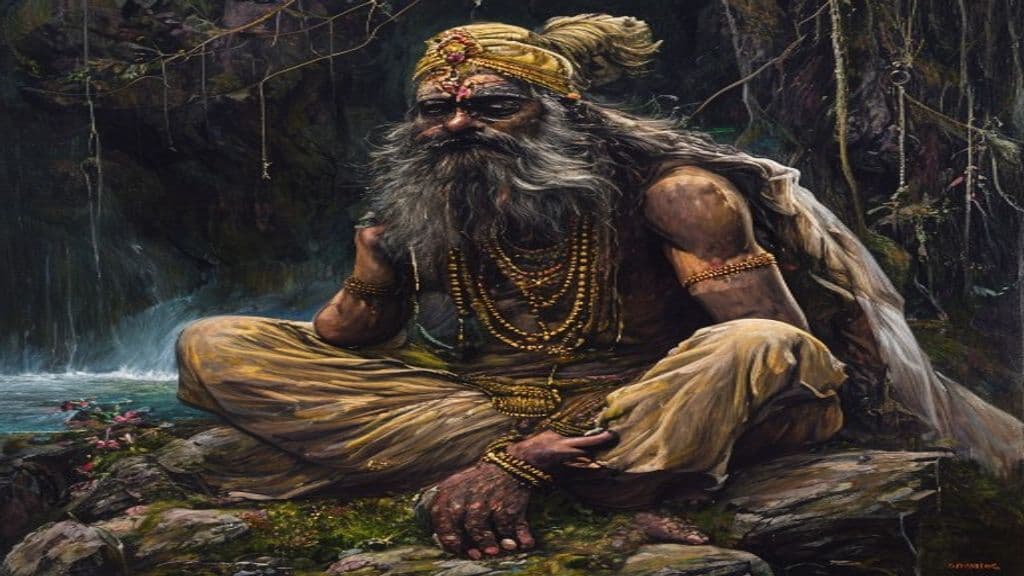
Agastya (also Agathiyar/Agasti) is a revered Vedic and later-period Indian rishi (sage) figure credited in textual traditions as an inspired seer, ascetic, teacher, culture-founder, and attributed author of Vedic, Puranic and Tamil works; in South Indian tradition he is associated with origins of Tamil grammar and Siddha medicine and is identified astronomically with the star Canopus.

Agiya Baital
Lesser

Agiya Baital

The fire-form of the Vetala — a cremation ground spirit of UP and Bihar that manifests as a wandering flame rather than a corpse-inhabitor, leading night travellers off roads and into marshland or flames with a dancing fire that seems always just ahead.

Agniveśa
Greater

Agniveśa

Agniveśa is a legendary rṣi (sage) in the Ayurvedic textual tradition, traditionally credited as the pupil of Punarvasu Atreya and as the attributed author of the lost Agniveśa Saṃhitā / Agniveśatantra. Later Ayurvedic compilers, notably Charaka, are described in the sources as having compiled, edited, and modified material attributed to Agniveśa into texts such as the Charaka Saṃhitā.

Ahiravan (Mahiravan)
Greater

Ahiravan (Mahiravan)

Ahiravan (also Mahiravan) is a rakshasa-king of Patala in Ramayana-derived narratives who abducts Rama and Lakshmana to sacrifice them to a goddess. Presented as a brother or trusted ally of Ravana in eastern Ramayana recensions, he is defeated and beheaded by Hanuman with divine aid.

Aiyanar
Lesser

Aiyanar

Aiyanar (Aiyaṉār, ஐயனார்) is a Tamil rural tutelary deity venerated chiefly in village contexts of Tamil Nadu and among Tamil communities in Sri Lanka. Portrayed as a martial guardian often mounted on a horse or elephant and accompanied by attendant spirits, he functions primarily to protect village boundaries, people, and livestock and has later been syncretized with the Sanskritic Sastha tradition.

Aiyyanar
Lesser

Aiyyanar

Aiyyanar (also spelled Aiyanar) is a Tamil rural village deity venerated in South India and Sri Lanka, primarily among rural Tamil communities. He is associated in material culture with large, colorful roadside and temple statues often shown with companions and mounted on horses or elephants, and functions as a local protective/patronal figure within village devotional practice.
Akṣayakumāra
Lesser

Akṣayakumāra

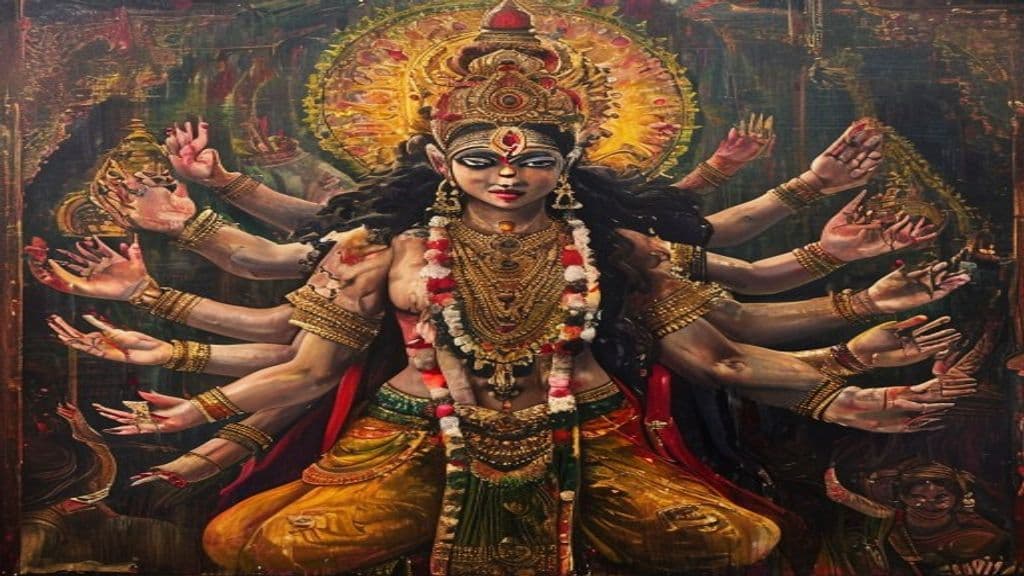
Akṣayakumāra appears in the Ramayana as the youngest son of Rāvaṇa and a warrior sent to oppose Hanuman in the Ashoka Vatika episode; described as about sixteen, he fights bravely from a chariot and is killed by Hanuman.

Alakh Niranjan
Ancient

Alakh Niranjan

A doctrinal and devotional formula in the Nath-yogi tradition denoting the unseen, unblemished ultimate reality (Nirguna Brahman/Atman). Used as a salutational invocation, theological name, and signifier of realised Self rather than a personified supernatural being.

Alakshmi
Greater

Alakshmi

Alakshmi is an inauspicious female supernatural figure in Hindu tradition, presented as the negation or shadow-counterpart of the prosperity-goddess Lakshmi. She personifies poverty, grief, jealousy and social discord and is managed in domestic ritual and festival practice.

Alamelu
Ancient

Alamelu

Alamelu (also Alamelu Manga / Alarmel Mangai) is a South Indian devotional name for the goddess Padmavati, identified in sources as an avatar of Lakshmi and the consort of Venkateswara; the name is also used widely as a female personal name and in titles of cultural works in Tamil and Telugu contexts.

Aleya
Minor Spirit

Aleya

Ghost lights of the Sundarbans delta — flickering flames over swamp water said to be the souls of dead fishermen, luring the living off safe paths into drowning waters.

Almaqah
Ancient

Almaqah

Almaqah was the principal national deity of the ancient Sabaean kingdom (Saba') in southwestern Arabia, venerated as a celestial tutelary god with strong dynastic, oracular, and vegetative associations. His main cultic center was the Awwam Temple near Marib; his worship extended into the northern Horn of Africa (Dʿmt, Aksum). Scholarly treatments debate whether his primary identification is lunar, solar, or syncretic.

Althaea
Minor Spirit

Althaea

Althaea is attested in the provided sources as (1) the Latinized form of the Greek name Ἀλθαία (Althaia), a mythological human figure recorded as daughter of Thestius and mother of Meleager, and (2) a botanical genus (Malvaceae) of perennial herbs including the marshmallow plant; the name may be etymologically linked to Greek ἀλθος (althos) 'healing'. The supplied material contains no evidence that Althaea is a supernatural being.

Ambika (Jainism)
Lesser

Ambika (Jainism)

Ambika is the yakṣiṇī (Śāsana Devī, protector-goddess) and tutelary attendant of the 22nd Tīrthaṅkara Neminatha in Jain tradition. Venerated both as an attendant spirit and an independent goddess (kuladevi) she features in devotional, temple and tantric ritual contexts, and is associated with fertility, prosperity and protection.

Ammāvaru
Primordial

Ammāvaru

Ammāvaru is a reverential designation for a mother-goddess figure in Hindu, especially Telugu/South Indian, contexts. In some accounts she is presented as a primordial maternal principle who preceded time and is said to have laid the egg from which Brahma, Shiva and Vishnu emerged; in practice the name functions as an honorific attached to multiple regional mother-goddess cults and temple images in Andhra Pradesh and nearby areas.

Andhaka
Greater

Andhaka

Andhaka is a Puranic asura (demon) figure in Hindu literature who, born in an episode of darkness, attains great power through tapas and a boon from Brahmā, contests the gods and Shiva, and is ultimately defeated or transformed—sometimes repenting and becoming a Gaṇa chief. His story appears across multiple Puranas and Skandapurāṇa material.

Ankalamma (Angala Paramesvari)
Lesser

Ankalamma (Angala Paramesvari)

Ankalamma (also Angala Paramesvari) is a village mother‑goddess and guardian deity (kaval deivam) of South India, venerated in Andhra Pradesh, Karnataka, and Tamil Nadu. She is associated with territorial protection, sacred groves, and liminal mortuary spaces (graves and cremation), and is often syncretized with Parvati, Kali, or counted among the Matrikas.

Anzar
Minor Spirit

Anzar

Anzar is a lexical item attested in the provided sources as a personal name, Iranian toponym element, and as a single machine-readable entry labeling it an "Amazigh (Berber) deity" on Wikidata. The supplied materials do not contain corroborated folkloric, ethnographic, or mythic descriptions of Anzar as a supernatural being.

Ashtavakra
Ancient

Ashtavakra

Ashtavakra (Sanskrit: Aṣṭāvakraḥ, lit. 'eight deformities') is a Hindu rishi/revered sage appearing in Itihasa and Purāṇic narratives and credited in tradition with a short non-dual scripture, the Ashtavakra Gita. In legend he is a prodigious Vedic scholar from the womb, renowned for extempore verse, philosophical teaching, and interventions in royal sacrificial assemblies rather than a hostile supernatural being.

Asiatic black bear
Minor Spirit

Asiatic black bear

The Asiatic black bear (Ursus thibetanus), also called the Asian black bear, moon bear, or white-chested bear, is a medium-sized, largely arboreal bear species native to much of Asia. Sources present it as a biological species of conservation concern, listed as Vulnerable on the IUCN Red List and threatened by habitat loss and poaching for body parts used in traditional medicine.

Asvins
Ancient

Asvins

The Asvins (Ashvini Kumaras; Nāsatya and Daśra) are Vedic divine twin horsemen associated with dawn and twilight, invoked as youthful rescuers, healers, and ritual helpers who bring timely restoration and renewal.

Aupamanyava
Minor Spirit

Aupamanyava

Aupamanyava is a Vedic patronymic and teacher-name cited in Vedic literature (not a supernatural being). Appearing in the Vamsa Brahmana and other Vedic and philological texts, the name marks a sage or lineage (descendant of Upamanyu) associated with teaching the Sama Veda and with lexical/grammatical work cited by later commentators such as Yaska.

Aurva
Greater

Aurva

Aurva (Sanskrit: और्व) is a Vedic/Purāṇic rishi of the Bhargava (Bhrigu) line remembered for a miraculous birth from his mother's thigh, a birth-radiance that blinded attackers, and for austere tapas that produced the submarine fire Vadavagni. He functions as a canonical sage, ancestor (father of Richika and grandfather of Vatsa), and a figure whose ascetic power threatened cosmic destruction until persuaded otherwise by the Pitrs.

Avatsara
Greater

Avatsara

Avatsara (Sanskrit: अवत्सार, Avatsāra) is a Vedic rṣi (seer) attested as the author of multiple hymns of the Rigveda and as a priestly figure in Brāhmaṇa passages. He is placed in Kashyapa sage lineages and is cited in Rigvedic, Sāmavedic, Yajurvedic, and Brāhmaṇa texts where his hymns and ritual actions are invoked.

Ayyappan
Greater

Ayyappan

Ayyappan is a Hindu deity venerated as a youthful warrior-yogi and protector of dharma, prominent in Malayalam folklore and centered on the Sabarimala pilgrimage. He is traditionally described as born of Shiva and Mohini (the female avatar of Vishnu) and functions as a reconciliatory figure between Shaiva and Vaishnava traditions.

Añjanā
Lesser

Añjanā

Añjanā (Sanskrit: अञ्जना; also Anjani, Anjali) is a semi-divine figure of the Ramayana cycle, described as an apsara reborn among the vanaras and the mother of the hero Hanuman. She figures both in pan-Indian epic narratives (as wife of Kesari and devotee of Vayu) and in regional cultic practice (notably a temple tradition in Himachal Pradesh) and is adapted in Javanese wayang as Dewi Anjani.

Aṅgulimāla
Lesser

Aṅgulimāla

Aṅgulimāla is a figure from early Buddhist literature: a notorious human brigand who wore a 'finger necklace' and, after an encounter with the Buddha at Sāvatthī, renounced violence, ordained as a monk, and is presented in the tradition as attaining liberation. In later South and Southeast Asian popular religion he is also invoked as a protector in childbirth and associated with fertility.

Bagh Bhoot
Minor Spirit

Bagh Bhoot

No folkloric information about an entity called 'Bagh Bhoot' is available in the provided source. The only occurrence in the source is the film title Bhooth Bangla (2026), which does not supply ethnographic, descriptive, or ritual data about a supernatural being by this name.

Bahucarā Mātā
Greater

Bahucarā Mātā

Bahucarā Mātā is a regional Hindu goddess venerated principally at Becharaji in Gujarat, India. She is associated in the sources with chastity and fertility (in a maiden aspect), with granting favours especially of male children, with curing diseases, and with being patroness of the hijra community.

Banjara / Banjari (wandering-gypsy spirits)
Minor Spirit

Banjara / Banjari (wandering-gypsy spirits)

No primary or secondary evidence for a distinct supernatural entity explicitly called 'Banjara' or 'Banjari' (wandering gypsy spirits) is present in the supplied sources. The materials document the Banjara (Lambadi/Sugali) as a nomadic tribal community and their ethnobotanical knowledge, but they do not record descriptions, powers, appearances, or rituals directed at a spirit entity by this name.

Banjhākri and Banjhākrini
Greater

Banjhākri and Banjhākrini

Forest-dwelling shamanic supernatural beings of the Kirati and related Himalayan traditions, presented as a male wilderness shaman (Banjhākri) who trains human shamans and a complementary female shamaness (Banjhākrini) who functions as an initiatory threat.

Barmanou
Greater

Barmanou

A bipedal, humanoid primate-like being reported in the mountainous regions of northern Pakistan (notably Chitral and the Karakoram). Described in local reports and modern cryptozoological literature as a 'wild man' comparable to the Yeti, Almas, or Bigfoot; accounts present it as a corporeal unknown hominid rather than a spirit.

Bathalà
Ancient

Bathalà

In pre‑colonial Tagalog religion Bathalà (also Maykapál) functions as the transcendent supreme creator-preserver — the originator and ruler of the universe. The lexeme also served as an honorific applied to lesser tutelary spirits and portentous phenomena, and was later syncretized with the Christian Dios after Spanish contact.

Berberoka
Lesser

Berberoka

A water-associated swamp spirit or creature from northern Luzon (Philippines) said to prey on people at ponds, lakes, rivers, and swamps by manipulating water—draining and reflooding sites to drown victims. Described in summaries as a 'swamp creature' or 'water ogre'; some modern adaptations portray it as a scaled ogre.

Betal (Vetoba / Vetāla)
Greater

Betal (Vetoba / Vetāla)

Betal (also Vetal, Vetoba, Vetāla) is a Konkan coastal grāmadevatā and kshetrapāla identified with a Bhairava form of Śiva, venerated in small village shrines across Goa, Sindhudurg, Kolhapur and Karwar. His cult combines popular village guardian functions with assimilation into Puranic Śaiva networks.

Bhadra (भद्र)
Lesser

Bhadra (भद्र)

Bhadra is a Sanskrit word meaning 'good', 'fortunate', or 'auspicious' that functions in Hindu literature as a personal name and epithet applied to multiple distinct mythic persons and forms (queens, yaksha, goddess-forms, kings, and others) rather than a single unified supernatural being.

Bhadrakali
Ancient

Bhadrakali

Bhadrakali is a fierce form of the Hindu supreme goddess Adi Shakti worshipped especially in South India. She functions as a martial and protective divine person who destroys wickedness in mythic narratives, protects women and lineages, and is integrated into Shaiva, Vaishnava, and Shakta registers.

Bharadvaja
Ancient

Bharadvaja

Bharadvaja is a canonical Vedic maharṣi (sage) and eponymous progenitor of a lineage and multiple textual corpora in ancient Indian tradition. Treated as an authoritative seer, teacher, and recipient/attributor of ritual, technical, and ethical knowledge, his name appears across Vedic, epic, Purāṇic, and Buddhist literature as an individual sage and as a clan/author label.

Bharata (Mahābhārata)
Ancient

Bharata (Mahābhārata)

Bharata (Sanskrit: भरत) is a legendary human emperor and ancestral king in the Indic epic tradition. Portrayed as a cakravartin‑type sovereign and progenitor, his deeds, rituals, and lineage provide an eponymous foundation for the name Bhārata and for later dynastic identity.

Bhardwaja (Bharadvaja)
Minor Spirit

Bhardwaja (Bharadvaja)

Bhardwaja (Sanskrit Bharadvaja) is an ancient Vedic rishi and eponymous ancestor of a pastoralist gotra whose members contributed many hymns to the Rigveda and served as sacrificial officiants and ritual specialists for early Vedic pastoral communities.

Bhartṛhari
Minor Spirit

Bhartṛhari

Bhartṛhari was a classical Indian grammarian, philosopher of language, and poet associated with the Vākyapadīya exposition of Śabdādvaita and the theory of sphoṭa. He is traditionally credited with the Vākyapadīya and with three collections of short poems (Śatakatraya), though modern scholarship often distinguishes the grammarian from the poet.

Bhavānī
Ancient

Bhavānī

Bhavānī (भवानी) is an aspect/epithet of the Hindu Mother Goddess (Devī/Shakti) revered as a giver of life and a warrior who defeats demons; she is both a cultic tutelary deity (notably at Tulja Bhavani, Tuljapur) and a pan-Indian manifestation identified with forms such as Durgā, Katyayani and Mahalakshmi in the cited sources.

Bheru (Bhairu)
Minor Spirit

Bheru (Bhairu)

No supplied sources describe Bheru/Bhairu as a supernatural being in Rajasthani folk belief. The element "Bheru" appears only in personal names and place-name materials in the provided documents; there is no ethnographic or folkloric description of an entity by this name in the source set.

Bheruji (Bheru / Bhairu)
Greater

Bheruji (Bheru / Bhairu)

Bheruji is a Rajasthani folk-spiritual figure recorded in oral-performing traditions; archival descriptions link him as a localized manifestation originating from the fearsome Puranic Bhairava and describe him as 'considered to be the commissioner of Lord Shiva.' He appears in recorded folk-spiritual songs performed by Naik, Manganiyar, and Jogi artistes.

Bhoot (bhoota)
Lesser

Bhoot (bhoota)

A bhoot (also bhoota, bhoot, bhut) is the culturally specific term across parts of the Indian subcontinent for a perturbed, restless spirit generally understood to be the ghost of a deceased person. Sources describe bhoots as arising when a person's death or post-death circumstances prevent them from moving on — for example violent death, unresolved affairs, or failures in funerary rites — and the term appears frequently in modern South Asian media and discussions.

Bhoota (ghost)
Lesser

Bhoota (ghost)

A bhoota (Sanskrit: भूत, bhūta) is a class of supernatural beings in South Asian traditions most commonly identified as the restless ghost of a deceased person. Depending on region and context a bhoota may be feared as a harmful, perturbing spirit or worshipped and integrated as a local protective spirit or demigod (notably in Tulu Nadu practices).

Bhramari
Greater

Bhramari

Bhramari is a theomorphic form of the supreme goddess (Mahādevī) in Hindu/Shakta Purāṇic literature associated with bees and similar stinging/biting insects; she manifests to command swarms that defeat a demon (Arunasura) and is also the name given to a humming breathing practice in yoga traditions.

Bhrikuti
Ancient

Bhrikuti

Bhrikuti is a historic-legendary 7th-century Nepali princess of the Licchavi line who became queen-consort to the Tibetan king Songtsen Gampo and, in Tibetan religious imagination, is represented iconographically and devotionally as an emanation or incarnation of Green Tara. Sources credit her with bringing sacred Buddhist images, skilled Newar craftsmen, and patronage that aided the establishment of Buddhism in Tibet; she is not presented in the sources as a harmful folk spirit.

Bhunni
Minor Spirit

Bhunni

The female guardian-spirit of agricultural fields in Bihar and eastern UP — her presence ensures fertile soil and good harvest, but she is territorial and punishes those who plough without permission, steal crops, or use chemical methods that poison the soil she inhabits.

Bhuta (Bhoot)
Lesser

Bhuta (Bhoot)

Bhuta (also rendered Bhoot or Bhoota) is a South Asian lexical term with at least two related senses in the cited source: a 'bhoota' as the ghost or spirit of a deceased person (a disembodied spirit), and 'mahābhūta' as the term for the classical elements or primordial states of matter (and related Bhuta-Shakti). The supplied source treats the term primarily as a lexical/definitional entry rather than an ethnographic account of regional cults.

Bhutesvara Yakshis
Minor Spirit

Bhutesvara Yakshis

A set of carved yakshi reliefs on stone railing pillars from the Bhuteshwar (Bhutesvara/Bhutesar) mound near Mathura, dated to the 2nd century CE and associated with a Buddhist stupa. The figures are art-historical representations of female yakshis incorporated into the decorative program of a sacred Buddhist enclosure; backs of the same pillars bear Buddha-life and Jataka narrative reliefs.

Bhārat Mātā
Minor Spirit

Bhārat Mātā

Bhārat Mātā (Bharat Mata, "Mother India") is the national personification of India represented as a sacralized maternal figure. She functions as an emblem of Indian nationalism and patriotic reverence in visual art, slogans, and public discourse rather than as a theistic deity with documented supernatural agency.

Bhīma
Greater

Bhīma

Bhīma (Bhīmasena) is one of the principal heroes of the Hindu epic Mahābhārata: the second of the five Pāṇḍava brothers, a semi‑divine warrior famed for prodigious physical strength, mastery of the gada (mace), and ferocious devotion to family and vows. He is presented as the mythic son of the wind god Vāyu, whose divine paternity explains his extraordinary attributes and role in the Kurukṣetra War, where he slays the hundred Kaurava brothers among other foes.

Bhīṣma (Devavrata / Pitāmaha)
Ancient

Bhīṣma (Devavrata / Pitāmaha)

Bhīṣma is a central heroic prince and commander in the Sanskrit epic Mahābhārata: son of King Śantanu and the river‑goddess Gaṅgā, famed for a severe lifelong vow (Bhīṣma‑pratigya) and the boon of icchā‑mṛtyu (choice of moment of death). He functions as martial exemplar, regent, and moral counsellor whose fall and long deathbed of arrows structure the Bhīṣma Parva.

Bhīṣmagarjitasvararāja
Ancient

Bhīṣmagarjitasvararāja

Bhīṣmagarjitasvararāja is attested in the provided sources as an ancient buddha named in the Lotus Sūtra. The Sanskrit compound of the name emphasizes majestic or imposing sound and sovereignty.

Bidhi Nongdamba
Primordial

Bidhi Nongdamba

A classical Meitei language literary work that explores themes of human destiny and divine intervention. (Note: - Power tier: Lesser (Bidhi Nongdamba is a literary work, not a supernatural being with cosmic or deity-level powers) - Appearance: Remove as there is no physical description of Bidhi Nongdamba - Abil)

Bila
Minor Spirit

Bila

The provided source set does not contain substantive folkloric information about a Punjabi supernatural entity named Bila. The available materials present Bila only as a disambiguation or name entry and do not describe it as a spirit, revenant, or churel variant.

Boba / Booboo (Bengali folk tradition) — absence of evidence
Lesser

Boba / Booboo (Bengali folk tradition) — absence of evidence

The provided source set contains no ethnographic, folkloric, or scholarly documentation of a Bengali supernatural entity called Boba or Booboo. Mentions of the string "boba" in the supplied materials refer to unrelated modern usages (a Hungarian place name, tapioca pearls/bubble tea, media titles) or uploader/metadata handles, not to a Bengali spirit or creature.

Bonbibi
Greater

Bonbibi

Bonbibi is the Lady of the Forest venerated across Hindu and Muslim communities of the Sundarbans as a local guardian figure for people who work the mangrove (honey-collectors, woodcutters). Her cult functions pragmatically to regulate forest conduct, mediate encounters with tiger-associated spirits, and provide communal protection and meaning during crises.