Lesser
Stree
A vengeful female spirit from Chanderi who abducts men during festival nights. Warded off by the inscription 'O Stree, kal aana' — her legend, still practised on walls across Madhya Pradesh, inspired the 2018 Bollywood horror-comedy.
260 documented South Asian Folk supernatural beings from the Evil Eye grimoire, including 87 lesser and 75 greater in power tier.
page 5 of 5
A vengeful female spirit from Chanderi who abducts men during festival nights. Warded off by the inscription 'O Stree, kal aana' — her legend, still practised on walls across Madhya Pradesh, inspired the 2018 Bollywood horror-comedy.

A collection of folklore and traditions from the Dravidian pantheon, syncretized with mainstream Hinduism. (Note: - Power tier: Incorrect; primordial implies cosmic powers beyond mortal comprehension, whereas Tamil Mythology describes a collection of folklore and traditions, not an entity with supernatural abilit)

Rakshasa (Sanskrit: rākṣasa) in the supplied materials appears as a class of malevolent non‑human beings — rendered in English as “demons” or “ogres” — known from South Asian epic literature and referenced in Himalayan/Tibetan geographic and popular materials. The sources do not provide a single, systematic Tibetan doctrinal account; instead rakshasas appear across epic narrative (e.g., Ravana) and place‑names (e.g., Lake Rākṣasatāla / Rakshastal), suggesting their presence in a shared South Asian–Himalayan imagination as antagonistic beings associated with danger and certain locales.

A Philippine nature spirit/phantom associated with wild, liminal places; often depicted in later accounts as a tall, lanky half-horse, half-human trickster that can mislead travelers, guard trees or territories, and in some versions be tamed or domesticated by humans.

The tiyanak is a malevolent Philippine supernatural being typically depicted as an infant‑shaped spirit that lures people by imitating a baby’s cry and then attacks or abducts them. It is variously understood as the restless soul of an infant who died unnamed or unbaptized and, in older Spanish‑era accounts, as an obstetric spirit (patianac) that obstructs childbirth.

Uddālaka Āruṇi (often rendered Uddalaka Aruni) is a revered Vedic rishi and teacher whose dialogues and sayings appear centrally in the Brihadaranyaka and Chandogya Upanishads. Presented in the sources as an authoritative guru, he instructs pupils such as his son Śvetaketu and participates in early Upanishadic exposition of Brahman and Vedic knowledge.

Uṣās is the Vedic personification and divine presence of dawn in early Vedic Hinduism; in the Rigveda she is portrayed as the life-giving, order-restoring arrival of morning light who dispels darkness, rouses living beings, and ushers the daily renewal of Ṛta.

Vadhusur is a vengeful immortal spirit presented in the narrated legend of the film Bhooth Bangla. In the film’s diegesis he haunts the Acharya Palace, targets newly married women, can possess a living person as a vessel, and his full resurrection in the story requires a thirteenth sacrifice while he can only be killed by his own hand or bloodline.

Valmiki is a legendary maharṣi (great sage) and poet in the Hindu textual and cultural tradition, traditionally credited as the author of the Rāmāyaṇa and revered as Ādi Kavi ('first poet'). He is a canonical literary-religious figure and cultic exemplar rather than an adversarial supernatural being.

Vashistha (also Vasishtha) is a principal Vedic rishi (sage) traditionally credited as the chief author of Mandala 7 of the Rigveda and counted among the Saptarishis; he is invoked in Vedic verse and later received as an authoritative founding figure for strands of Vedanta.
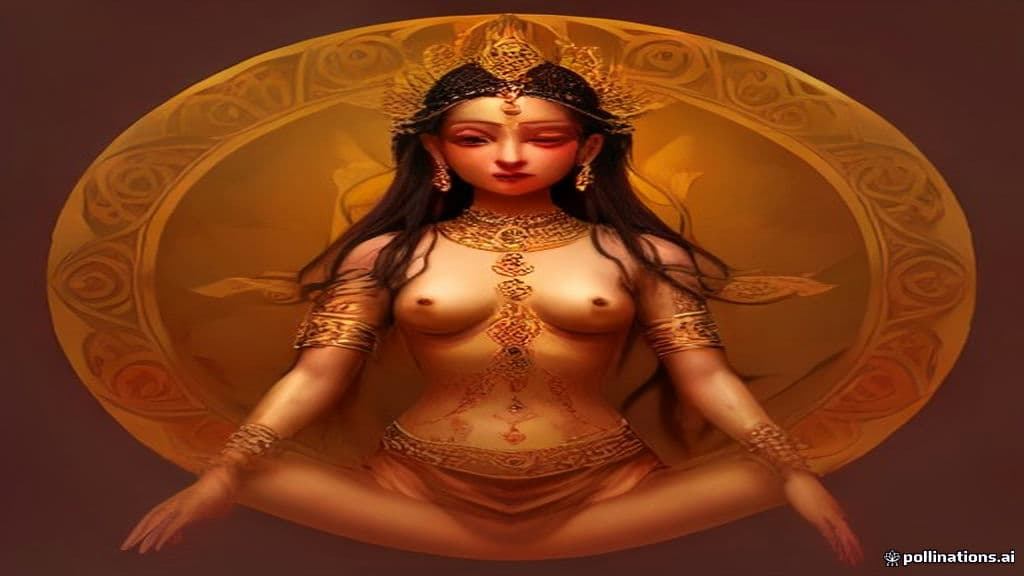
Vasudhārā is a Buddhist goddess/bodhisattva associated with wealth, prosperity, and abundance, particularly venerated in Newar Buddhism of the Kathmandu Valley. Her name means "stream of gems" in Sanskrit and she is sometimes called "Gold Tara."

The supplied source (a general article on ghosts in Bengali culture) does not mention or describe Vetala/Vetal. No information about a Vetala's nature, appearance, powers, rituals, or Maharashtrian variants is present in the provided material, so a Vetala entry cannot be reconstructed from that source alone.

A research-note entry indicating that the label "Vettaiyadu/Manadi (spirit of the hunter)" was provided in a brief, but that the supplied documentary sources do not contain folkloric or ethnographic evidence for a named hunter-spirit. The corpus instead shows modern Tamil media uses of the lexical root vettai / vettaiyadu ("hunt").
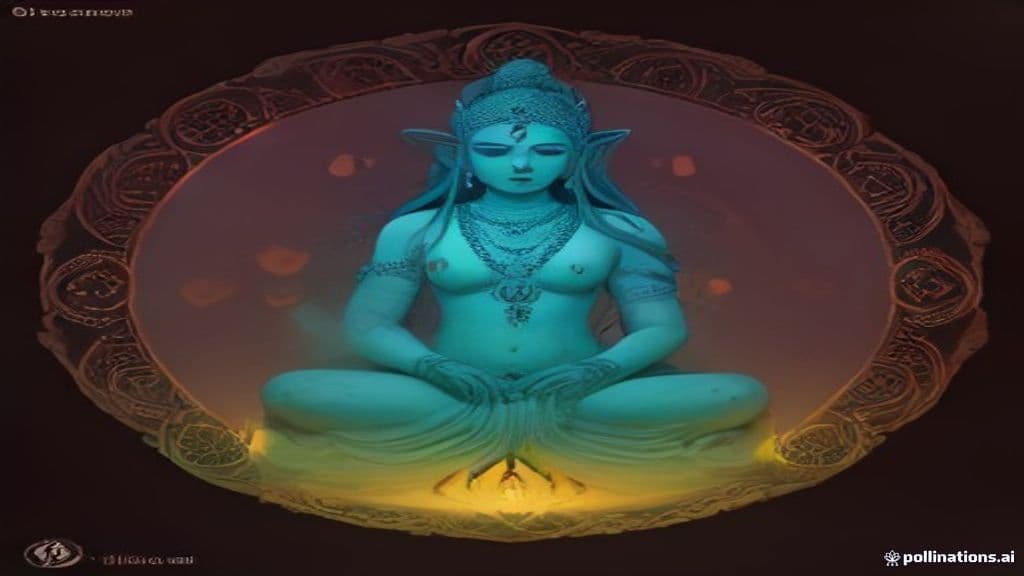
Vāmadeva is a Vedic rṣi (seer) attested as the author of Mandala 4 of the Rigveda and later as a teacher, priest, and moral-ritual authority in Upanishadic, epic, and Purāṇic narratives. Texts record him composing hymns, advising kings, issuing curses and boons, and acting within hermitage and court settings.

Waghya is remembered in Marathi popular memory as the loyal mixed-breed dog of Maratha king Chhatrapati Shivaji Maharaj, traditionally said to have leapt into his master's funeral pyre. The figure functions in monument culture and regional storytelling as an emblem of fidelity and has been commemorated by a statue beside Shivaji's samadhi at Raigad Fort.

A class of female nature-spirits in South Asian religious and folk traditions associated with sacred groves, fertility, and the liminal boundaries of sacred enclosures. Represented in Hindu, Buddhist, and Jain contexts and in regional folklore, with archaeological and artistic attestations dating to antiquity.

A Himalayan legendary apelike humanoid—large, hairy, bipedal—embedded in pre‑Buddhist and local Himalayan folklore and later incorporated into Tibetan Buddhist classificatory schemes; it is variably described in local terms as a 'man‑bear' or 'wild man' and has been reinterpreted in modern popular culture as the 'Abominable Snowman.'

Śāntinātha (Śānti) is the sixteenth tīrthaṅkara of Jainism in the present age, revered as a spiritual exemplar who attains omniscience and establishes the tirtha (ford) enabling liberation. Tradition also presents him in some accounts as having held the worldly statuses of a Chakravartin and a Kamadeva in the same lifetime, and he is traditionally invoked by devotees as a deity of peace to avert calamities and epidemics.

ʿAmm (Sabaean: 𐩲𐩣, romanized ʿm; Arabic: عمّ) is attested in the Old South Arabian record as a moon god worshipped in the kingdom of Qataban (ancient Yemen) who also bears weather attributes, notably lightning. He figures in Qatabanite cult life with a named consort, Asherah, and an associated oracle-judge, Anbay; the population identified itself as the Banu ʿAmm (“Children of ʿAmm”).

Ṣaṣṭhī is identified in a modern database entry as a Hindu folk goddess, but the supplied sources do not provide any primary description, rituals, or narrative about her. Other supplied materials show the lexical form 'Saṣṭhi/Sasthi' used as a calendrical day-name and as a plant folk-name, which are distinct from the deity label in the database.