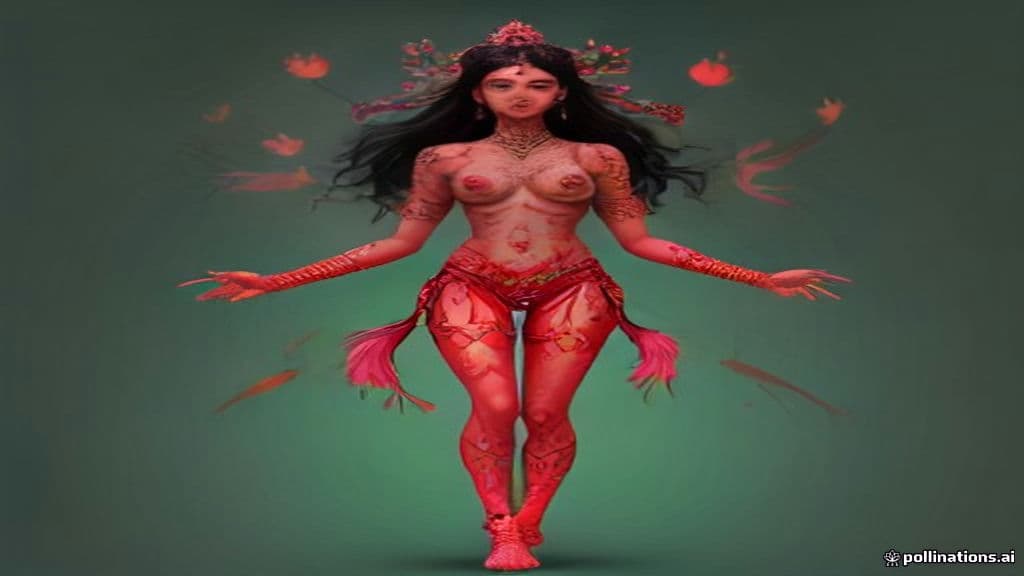
South Asian Folk Supernatural Beings

260 documented South Asian Folk supernatural beings from the Evil Eye grimoire, including 87 lesser and 75 greater in power tier.

page 3 of 5

Jaṭāyu
Lesser

Jaṭāyu

Jaṭāyu is a demigod in the Hindu epic the Rāmāyaṇa who takes the form of a vulture. He is presented as the younger son of Aruṇa and Shyeni, brother of Sampati, and fought Rāvaṇa in an attempt to rescue Sītā before dying of wounds; Rāma performs his final funeral rites.

Jhagru / Jinn (onomastic occurrence in Punjabi legal records)
Minor Spirit

Jhagru / Jinn (onomastic occurrence in Punjabi legal records)

The string 'Jhagru' appears in the supplied sources only as an element of personal names in Indian legal documents; no folkloric description of a supernatural entity called 'Jhagru' or of jinn integrated into Punjabi folk belief is provided in these materials. The documents are court filings and contain only onomastic occurrences without cosmological, ritual, or descriptive folklore content.

Jhakar / Phansigar (no attestation as supernatural being)
Lesser

Jhakar / Phansigar (no attestation as supernatural being)

The names 'Jhakar' (and variants like 'Jhakari') appear in available sources as toponyms and a personal/surname in Indian records; the supplied materials contain no folkloric or ethnographic attestation of a forest or guardian spirit called Jhakar or Phansigar. This entry documents what the sources do and notes the absence of any supernatural description.

Jhākri
Lesser

Jhākri

Jhākri is the Nepali term for a shamanic practitioner or diviner found among several Himalayan ethnic groups (notably Tamang, Gurung, Magar) and in adjacent Indian regions (Sikkim, West Bengal). In the documented sources Jhākri are human ritual specialists who may act as channels or mediums (dhaamee) for Hindu gods or goddesses to provide answers and solutions to devotees.

Jnana Palam

Jnana Palam

A divine fruit in Hindu mythology that embodies the elixir of wisdom, granting its possessor knowledge and insight. (Note: 1. Power tier: Not specified in source material; should be listed as "Primordial" since it grants divine-level abilities. 2. Sensory cues: None mentioned; add note stating that no information availabl)

Jokhini
Lesser

Jokhini

A female supernatural predator of Assamese folklore — the Jokhini appears as a beautiful woman to lure men, but also as a hideous crone to devour them. She is associated with the dense forests of the Brahmaputra valley and is one of the most feared night entities in Assamese village belief.

Kaal Bhairav
Ancient

Kaal Bhairav

Kaal Bhairav (Kāla Bhairava, Kalabhairava) is a fierce Shaivite manifestation of Shiva associated with Time (kāla), death, guardianship, and punitive justice. Worshipped in Hindu and some Vajrayāna Buddhist tantric contexts, he functions as a guardian, enforcer and protector who is propitiated by devotees through mantras, puja and yantra practice.

Kachcha Kalwa
Minor Spirit

Kachcha Kalwa

North Indian spirit of those who died 'raw' — violently, accidentally, or before their destined time. Unable to rest, the Kachcha Kalwa attaches to survivors and causes a trail of accidents, illness, and misfortune until properly appeased through rites at the site of death.

Kadam Rao (literary attestation)
Lesser

Kadam Rao (literary attestation)

The name 'Kadam Rao' appears as part of the title of a 15th-century Deccani Urdu masnavi, Kadam Rao Padam Rao, composed by Fakhruddin Nizami of Bidar. The supplied sources do not document Kadam Rao as a supernatural being in Bengali folk tradition; instead the attestation is literary and historical (Source 1).

Kaikeyī
Lesser

Kaikeyī

Kaikeyī is a human royal figure in the Sanskrit epic Rāmāyaṇa: a princess of Kekeya who becomes queen consort of Kosala by marrying King Daśaratha. She is politically powerful among Daśaratha's wives; her invocation of two boons precipitates Rama's fourteen-year exile, Daśaratha's death, and the ensuing dynastic crisis, after which she repents and is forgiven.

Kalaviṅka
Lesser

Kalaviṅka

A Buddhist fantastical creature described as a human-headed, bird-bodied being famed for its exquisite, Dharma-preaching voice; represented across South, East, and Southeast Asian Buddhist art and liturgical contexts with regional iconographic variation.

Kali Amman
Ancient

Kali Amman

Kali Amman is a major South Indian (Tamil) goddess figure who combines terrifying aspects of time, death, and destruction with maternal and salvific functions. She appears both in pan‑Hindu tantric registers as Kalika/Kali (one of the Mahavidyas) and in Dravidian village‑goddess (Amman/grama devata) contexts where she functions as protector, punisher, and recipient of local ritual cult.

Kalki
Ancient

Kalki

Kalki (Sanskrit: कल्कि), also Kalkin, is the prophesied tenth and final avatāra of the Hindu god Viṣṇu who is foretold to appear at the end of the Kali Yuga to destroy unrighteousness (adharma) and inaugurate a renewed Satya Yuga. Described across Purāṇic texts and in an adapted form in Buddhist Kalacakra literature, Kalki is a future-oriented martial divine figure who ends a degenerate cosmic age and restores dharma.

Kalladi
Minor Spirit

Kalladi

Kalladi is primarily attested in the provided documentary record as a social and geographic name (a sub‑caste in Kerala and place‑names in Sri Lanka), not as a clearly documented supernatural entity in Tamil folk belief. A single blog source mentions a related place‑linked spirit name 'Kalladikode Neeli', but the supplied official and archival sources do not describe a distinct folkloric being called 'Kalladi'.

Kallana
Lesser

Kallana

In Kaani (Kani) tribal accounts from the Western Ghats of southern India, kallana is reported as a distinct, small or 'dwarf' variety of elephant associated with rocky, higher‑altitude terrain. The lexical form 'Kallana' also appears in unrelated contexts (a planet name in fiction, a plant common name, and as a personal name in scholarly literature), but those uses are separate from the Kaani folk‑biological referent.

Kamalā / Kamalātmikā
Ancient

Kamalā / Kamalātmikā

Kamalā (Kamalātmikā, Kamalālayā) is the lotus-form Mahāvidyā — the Tantric/Shakta characterization of Lakṣmī — depicted as a golden-complexioned, four-armed goddess seated on a lotus who bestows prosperity, delight, fertility and spiritual abundance and is engaged by Tantric sadhana, stotra and Upaniṣadic genres.

Kanjirottu Yakshi
Lesser

Kanjirottu Yakshi

A South Indian yakshi figure from Travancore/Kerala folklore: a formerly human courtesan who, after a violent death, became a blood-drinking seductive spirit and who in some tellings was later constrained by oath and incorporated into temple ritual life associated with Sree Padmanabhaswamy Temple.

Karna
Greater

Karna

Karna (Sanskrit: Karṇa) is a principal human hero of the Indian epic Mahābhārata: a warrior of extraordinary skill, born to the solar deity Surya and the princess Kunti, raised by a sūta (charioteer) family, famed for his generosity, loyalty to Duryodhana, and tragic fate in the Kurukṣetra War.

Kartikeya
Ancient

Kartikeya

Kartikeya (IAST: Kārttikeya), also known as Skanda, Subrahmanya, Shanmukha and Muruga among other names, is a major Hindu war‑deity—the son of Shiva and Parvati—who functions as commander of the devas' armies, a tutelary protector in regional cults (notably Kaumaram/Muruga traditions), and a teacher in some Shaiva contexts. Sources document his cult from early historic eras through medieval traditions and strong regional devotional developments, especially in Tamil Nadu and Sri Lanka.

Karumariamman
Ancient

Karumariamman

Karumariamman (Tamil: கருமாரியம்மன், Karumāriamman), also called Karumari, is a South Indian village mother-goddess associated with rain, smallpox, skin diseases, health and cure. Treated as a local manifestation of the Great Goddess (Parvati/Kali/Adishakti/Mariamman), she is principal at Thiruverkadu and is venerated in village cults and diasporic South Indian communities.

Karuppannaswamy
Lesser

Karuppannaswamy

Karuppannaswamy is a Tamil folk guardian deity (kāval deivam) revered as a fierce protector, local enforcer of justice and communal guardian in rural and diasporic Tamil communities. He is typically venerated at village-boundary shrines and through oral, festival and shrine practices rather than Sanskritic temple liturgy.

Karuppu Sami
Greater

Karuppu Sami

Karuppu Sami (also Karuppannaswamy, Karuppasamy, Karupparayan) is a principal Tamil village guardian deity (grama devata) venerated chiefly in rural Tamil Nadu and Kerala and among Tamil diasporas. He functions as a fierce protector, Kaaval Deivam (guardian deity), and upholder of justice and dharma, and is the focus of temple and shrine cults represented in statues and images.

Kaumari
Ancient

Kaumari

Kaumari is one of the mother-goddess figures (Matrikas) in Hindu tradition, described in the provided sources as the shakti (feminine power/energy) of the war-god Kartikeya and enumerated among the cluster of maternal deities venerated together as the Matrikas.

Kausalyā
Lesser

Kausalyā

Kausalyā is a human royal figure in the Ramayana tradition: the senior queen consort of King Daśaratha of Kosala and the mother of Rāma. In the Ayodhyā Kāṇḍa episodes cited she appears as a ritual participant and as a mother whose emotional speech and lamentation shape courtly responses to calamity.

Kaval Deivam
Lesser

Kaval Deivam

Kaval Deivam (Tamil: guardian deity/spirit) is a category of village guardian spirits in Tamil folk religion charged with protecting village boundaries, people, cattle, fields and communal order. They are indigenous, non‑Agamic figures whose cults include fierce iconography, community festivals and offerings to secure protection and avert misfortune.

Kechaikhati
Ancient

Kechaikhati

Kechaikhati (also spelled Kecaikhati) is described in the source as a powerful tribal goddess venerated at the Tamreswari temple near Sadiya in Assam. Her cult was maintained by non‑Brahmin Deori priests and is reported in the source to have been identified locally with the category Pishasi and sometimes paralleled with the Buddhist deity Tara among Bodo‑Kachari groups.

Keshi (demon)
Lesser

Keshi (demon)

Keshi is attested in the supplied sources only as an entry on a disambiguation/listing page that reads 'Keshin, also known as Keshi, a horse-demon in Hindu mythology.' Beyond that single list mention the supplied material contains no sustained myth, narrative, or ethnographic information about the figure.

Khandoba’s attendants
Lesser

Khandoba’s attendants

A referred category for attendant figures associated with the regional Hindu deity Khandoba in Maharashtrian tradition. The supplied sources discuss Khandoba himself but do not describe attendants such as Kaatoba; therefore no specific attendant identities, roles, or practices are attested in the provided material.

Khara
Greater

Khara

Khara is a rakshasa (forest-dwelling non-human) commander in the Ramayana tradition, presented as the brother of Shurpanakha who leads an expedition of rakshasas from the Dandaka forest against Rama during the Aranya Kanda. He is defeated and killed by Rama in the narrative episodes of Sargas 22–23.

Kharchi
Greater

Kharchi

The 14 tribal deities of Tripura — Kharchi are the ancestral guardian spirits of the Tripuri royal lineage, propitiated every year at the ancient Chaturdasha Devata temple in Agartala in one of Northeast India's most distinctive surviving tribal-Hindu syncretic festivals.

Khetor
Lesser

Khetor

Khetor (also rendered Khetra; compound Mota Khetor) is a named spirit/ghost-figure attested in ethnographic and health-care sources from Assam. It appears in inventories of locally significant supernatural agents among Bodo and Karbi groups and, in a Tai Khamyang ethnomedical account, a fierce form (Mota Khetor) is implicated specifically in miscarriage and female sterility.

Kroni
Primordial

Kroni

In Ayyavazhi scripture Kroni (Tamil: குறோணி) is the primordial manifestation of evil: a first-born, cosmic antagonist who is fragmented into six pieces that reappear across successive yukams (ages) as principal evils opposed by the god Mayon (Vishnu) and his avatars.

Kshetrapala
Greater

Kshetrapala

Fierce guardian deity of fields, village boundaries, and agricultural territory — an aspect of Shiva or Bhairava who punishes trespass with epidemic illness and crop failure. Every North Indian village once had a Kshetrapala shrine at its boundary stone; his is the first rite performed before plowing season.

Kubjikā
Ancient

Kubjikā

Kubjikā is the primary goddess of the Kaula Paścimāmnāya (Western transmission) within Kaula/Kaulism tantra, regarded as an aspect of the supreme feminine principle (Devi/Adi Paraśakti/Durga) and the lineage-tutelary śakti of a specific tantric current historically centered in medieval Kashmir and later preserved in secret Newar transmissions in the Kathmandu Valley.

Kundalini
Greater

Kundalini

Kundalini (Sanskrit: kuṇḍalinī, lit. 'coiled snake') is a form of innate divine feminine energy (Shakti) conceived in Hindu tantric and yogic systems as a latent, coiled power located at the base of the spine (Muladhara). When cultivated or transmitted through authorized practices it is said to rise through the central channel (sushumna) activating successive chakras and producing progressive transformations of consciousness, culminating in liberation or mystical realization.

Kusha
Greater

Kusha

Kusha (Sanskrit: कुश, IAST: Kuśa) is the elder of the twin sons of Rama and Sita in the Hindu epic the Ramayana. Presented in canonical Uttara Kāṇḍa material as a human prince raised at Valmiki's ashram, he functions as an heir and founder-king who preserves dynastic continuity and helps transmit the Ramayana as a cultural text; a small number of later or regional variants give alternate birth legends or expanded territorial claims.

Kushmanda
Greater

Kushmanda

Kūṣmāṇḍā (Kushmanda) is the fourth form in the Navadurga sequence of the Divine Mother (Durga), worshipped on the fourth day of Navaratri. In devotional accounts she is the creative theophany whose smile produces the cosmic egg and is associated with the solar sphere and offerings of the kūṣmāṇḍa (pumpkin/gourd).

Kuttichathan
Lesser

Kuttichathan

Kuttichathan is a Malabari (Kerala) folk-deity/kshetrapala figure presented in local Hindu and theyyam contexts as a juvenile, ambivalent spirit who can both bless households and harass them with trickery. In parts of northern Malabar he is identified with or represented by Vishnumaya Chathan and is invoked in theyyam ritual-performance and small-scale household propitiation.

Kuttichathan (Chathan)
Lesser

Kuttichathan (Chathan)

Kuttichathan (also written Chathan) is presented in the supplied sources as a supernatural figure depicted in Malayalam popular cinema. In the cited film My Dear Kuttichathan (1984) the being is described as a "mystical indigenous goblin" who is placed under a sorcerer's spell, later released by three children, and then befriends them.

Kuśadhvaja
Lesser

Kuśadhvaja

Kuśadhvaja is a human royal figure in the Ramayana tradition, described as the younger brother of King Janaka of Mithila, husband of Chandrabhaga, and father of Mandavi and Shrutakirti. He is named as King of Samkasya after Janaka defeats Sudhanvan and appears in the narrative context of the Sita–Rama marriage.

Lava (Ramayana)
Lesser

Lava (Ramayana)

Lava is the younger of the twin sons born to Rama and Sita in the Ramayana tradition. Raised at the hermitage of the sage Valmiki alongside his brother Kusha, he is taught the epic, recites it publicly, takes part in the ashvamedha yajna episode, and in later traditions is credited with rulership or city-founding in northern Kosala/Lavapuri.

Luit Xuri
Greater

Luit Xuri

The spirit of the Brahmaputra river itself — 'Luit' being the Assamese name for the Brahmaputra and 'Xuri' meaning spirit or essence. One of the few major rivers in Hindu tradition that is male (Brahma's son), his spirit in Assamese folk belief is unpredictable, powerful, and must be addressed before any seasonal beginning.

Lākhe
Lesser

Lākhe

Lākhe (Nepal Bhasa: लाखे, lā-khé) is a type of demon in Newar (Kathmandu Valley) folklore. Lākhe appear as ferocious masked figures in public festival performances; some named Lākhe, notably Majipa Lakhey, are ritually worshipped and function as civic protectors during festivals such as Yenya (Indra Jatra) and Gunla.

Maara
Minor Spirit

Maara

Maara is attested in the provided materials not as a traditional supernatural being but as a contemporary proper name: the title and central character of a 2021 Tamil film and its soundtrack, and as a modern personal/artist/place name in several publications. No folkloric cosmology, rituals, or mythic origin are documented for Maara in the supplied sources.

Madurai Veeran
Lesser

Madurai Veeran

Madurai Veeran is presented in the supplied material as a local heroic figure situated within the broader milieu of Tamil/Dravidian village‑deity practice. In the context of Dravidian folk religion he is best understood as a place‑linked guardian figure whose cult participates in the kaaval deivam (village guardian) ecosystem, though the provided sources do not supply detailed primary narratives or ritual texts specific to him.

Mahapreta
Greater

Mahapreta

The 'great ghost' — in Bihar and UP folk classification, a Mahapreta is a preta of exceptional power, born from a death involving multiple injustices simultaneously: wrongful killing, incomplete rites, and unresolved family debt combined. It commands lesser spirits and can cause harm across an entire lineage.

Maheshvari
Ancient

Maheshvari

Maheshvari is one of the Matrikas (mother-goddesses) in classical Hindu imagination and is identified as the śakti (feminine power-aspect) of the god Śiva (Maheshvara). She appears as a member of the Saptamatrika/Ashtamatrika grouping and is attested in both temple cult contexts and tantric/mantric fragments in the sources provided.

Mahishasura
Greater

Mahishasura

Mahishasura (Sanskrit: महिषासुर, IAST: Mahiṣāsura) is a bovine asura in Hindu tradition, commonly described as a shape‑shifting buffalo‑demon who wages war against the devas and is ultimately slain by a manifested goddess (Durga/Mahishasuramardini). The episode is narrated in the Devi Mahatmya (part of the Markandeya Purana) and is commemorated in festival cycles such as Navaratri and Durga Puja.

Mahsuri
Lesser

Mahsuri

Mahsuri binti Pandak Mayah is a historical‑legendary woman from Pulau Langkawi, Kedah, Malaysia, traditionally said to have been wrongfully executed in the late 18th century; with her dying breath she is said to have cursed Langkawi with seven generations of bad luck. Her tomb, Makam Mahsuri, remains a local memorial and tourist site.

Mahāgaurī
Greater

Mahāgaurī

Mahāgaurī is the eighth form of the Navadurga in Hindu tradition, a radiant white aspect of the Great Goddess (Mahadevi) associated with purity, serenity, ritual purification and renewal. She is ritually venerated on the eighth day (Ashtami) of Navaratri and appears in mythic narratives as the fair form of Parvati after bathing in the Ganges.

Mahāgaṇapati
Ancient

Mahāgaṇapati

Mahāgaṇapati is a grand, tantric and sectarian form of the Hindu god Gaṇeśa venerated in Ganapatya traditions as a supreme manifestation (Mahā‑Gaṇapati) and incorporated into tantric ritual corpora that include mantra, yantra, kavaca, a stotra and a thousand‑name litany. Tantric texts associate this form with six abhichāra rites used for coercive ends, and Ganapatya doctrine regards him as a pre‑creational and post‑dissolution supreme being who brings forth Brahmā.

Makara
Lesser

Makara

A legendary aquatic hybrid creature in South Asian (primarily Hindu) tradition, the makara functions as the vehicle (vahana) of water deities, an emblem of Kamadeva, and a pervasive guardian motif in Hindu and Buddhist temple architecture.

Makaradhwaja
Lesser

Makaradhwaja

Makaradhwaja is a figure in regional South Asian Ramayana-derived folk traditions described as an offspring produced when a drop of Hanuman's sweat entered a Makara; he is raised in Patala by the underworld-king Ahiravana and serves as a gatekeeper who confronts Hanuman during a rescue episode. The name is also used independently in Ayurvedic/rasashastra literature for a Kupipakwa herbo‑mineral preparation.

Mamdo Bhoot
Lesser

Mamdo Bhoot

The ghost of a Muslim person in Bengali Hindu folk belief — 'Mamdo' deriving from 'Mahmood.' The Mamdo Bhoot occupies a unique place in Bengal's supernatural taxonomy: a cross-religious ghost in a deeply syncretic tradition, with its own distinctive characteristics and ward practices that follow the ghost's religious tradition rather than the observer's.

Mami Wata
Greater

Mami Wata

Mami Wata is a class of water-associated female supernatural beings and deities found across parts of West, Central, East and Southern Africa and in the African Atlantic diaspora. Associated with wealth, fertility, healing, beauty and possession phenomena, Mami Wata figures combine mermaid-like and snake- or crocodile-linked imagery and have absorbed foreign visual forms through historical contact.

Manasā
Lesser

Manasā

Manasā is a Hindu goddess associated primarily with snakes, widely worshipped across large parts of India as a protector against snakebite and as a source of fertility and prosperity. In mythic genealogies she is a daughter of the sage Kaśyapa, sister of the nāga king Vasuki, wife of the sage Jaratkaru, and mother of the sage Aṣṭaka/Astika.

Mandodari
Lesser

Mandodari

Mandodari is the principal queen-consort of Rāvaṇa in the Rāmāyaṇa tradition: a beautiful, pious, and morally clear-sighted royal woman of mixed supernatural parentage who functions as a counselor, protector, and ritual exemplar (one of the Pancha-kanyā). Her story appears in multiple regional retellings with variant origin accounts.

Manthara
Greater

Manthara

A Dayan witch of approximately 400 years — named for the scheming Manthara of the Ramayana, her power has shifted from seduction to manipulation, able to bend the fates of entire families through whispered influence.

Mariamman
Greater

Mariamman

Mariamman is a South Indian village mother-goddess venerated chiefly as a bringer of rain and as a protector against epidemic pustular fevers (historically smallpox, chicken pox, cholera). Rooted in Dravidian folk religion, she is often identified with pan-Indian Shakti figures (Parvati, Durga, Kali) and functions as a kaval deivam (village guardian deity).

Masaan
Greater

Masaan

Cremation ground spirit of North India — born from improperly conducted last rites, the Masaan haunts funeral pyres and can possess the living, causing wasting illness. Referenced in classical Ayurvedic texts and the subject of the acclaimed 2015 film.