South Asian Folk Supernatural Beings

260 documented South Asian Folk supernatural beings from the Evil Eye grimoire, including 87 lesser and 75 greater in power tier.

page 4 of 5

Matangi
Greater

Matangi

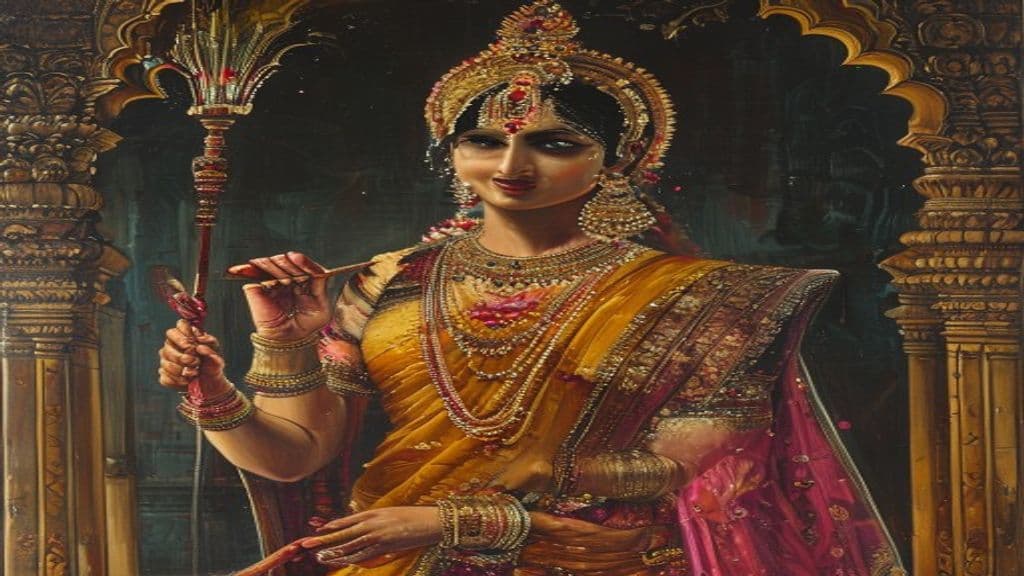
Matangi (Sanskrit: मातङ्गी, Mātaṅgī) is a Hindu Tantric goddess, one of the ten Mahavidyas. She is an esoteric form of the Divine Mother associated with speech, music, learning and the arts and—within Tantric contexts—invoked for worldly and occult powers such as mastery of the arts, attraction of people and control over enemies.

Mayasura
Greater

Mayasura

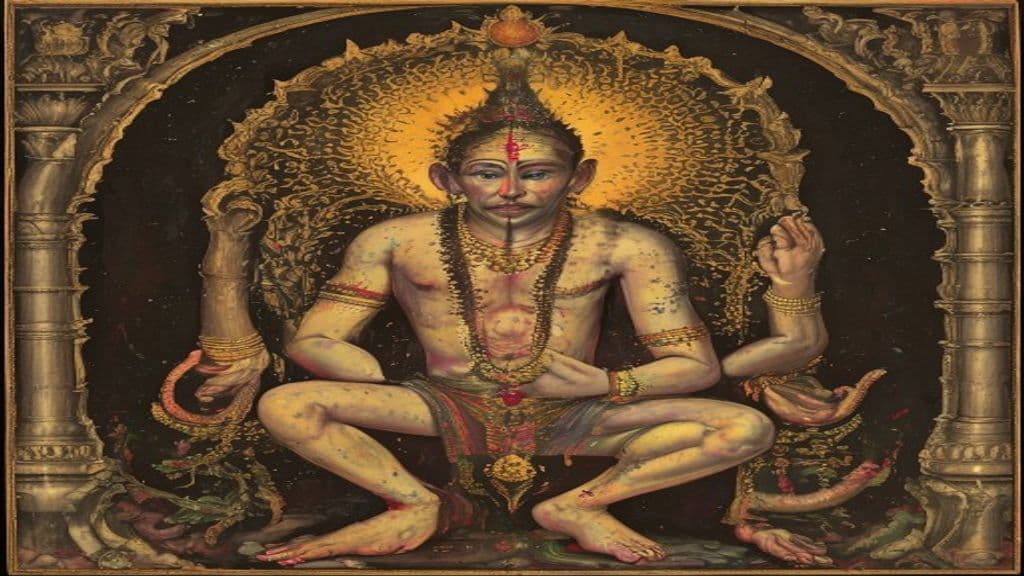
Mayasura (Maya, Mayāsura, Maya Danava) is a legendary master‑builder and king among non‑Vedic supernatural lineages in Hindu narrative tradition, famed as the architect of the Mayasabha (Hall of Illusions) and the three cities Tripura, and as a transmitter/possessor of specialised astronomical knowledge in late mythic accounts.

Mayūrabhaṭṭa
Minor Spirit

Mayūrabhaṭṭa

Mayūrabhaṭṭa (Sanskrit: मयूरभट्ट) is a 7th‑century Sanskrit poet and Hindu scholar traditionally credited with composing the Sūryaśataka, a one‑hundred‑verse hymn to the Sun (Sūrya). In the narrative preserved in later tradition he performed a vowlike penance at the Sūrya temple in Deo, tied one hundred threads to a peepal tree and composed one verse per day; according to the account, this devotional composition is said to have cured his leprosy and liberated a Brahmarākṣasa that haunted the tree.

Mechho Bhoot
Minor Spirit

Mechho Bhoot

The fish-eating ghost of Bengal — the spirit of a fisherman or a person obsessively fond of fish in life, condemned to haunt river banks and fishing boats, stealing the catch and causing boats to capsize. Distinctly Bengali: a ghost shaped by the culture of a river civilization.

Menka
Lesser

Menka

A Dayan witch who has survived approximately 200 years — the first named threshold, when her glamour is at its most potent and her seductive powers allow her to pass freely among the living.

Mishing Bura
Minor Spirit

Mishing Bura

The ancestor-spirit of the Mishing (Mising) people of Assam — a riverine tribal community whose spiritual world is centred on the Brahmaputra. The Mishing Bura are the elder-spirits who guard the river routes, bless the boats, and must be propitiated before any significant water journey.

Modheshwari
Greater

Modheshwari

Modheshwari (Gujarati: મોઢેશ્વરી) is a localized tutelary form of the Great Goddess worshipped as the clan deity (kuldevi) of the Modh communities of Gujarat. Described in source materials as a martial incarnation of the Goddess (linked variably to Parvati/Adi Parashakti and to the devi Matangi), she is credited in tradition with slaying a local demon and promising protection to her devotees.

Mohini
Lesser

Mohini

South Indian spirit of a beautiful woman who died of a broken heart or by betrayal — she appears on roadsides at night, enchants men into following her, and leads them to ruin or death.

Monkey-man of Delhi
Lesser

Monkey-man of Delhi

A modern Indian urban‑legend and mass‑panic phenomenon centered on reports of a monkey‑like attacker roaming New Delhi in mid‑2001. Media coverage and eyewitness reports described a frightening, inconsistent figure blamed for nighttime attacks, injuries, and panic; subsequent investigations suggested a mix of hoaxing, copycats and mass hysteria.

Mountain God (Korean tradition)
Greater

Mountain God (Korean tradition)

Tutelary deity associated with mountains in Asian cultures, similar to dizhu shen and City Gods. (Note: 1. Power tier: Reduce to Lesser (Mountain Gods do not necessarily possess deity-level powers) 2. Appearance: Provide specific information about physical appearance or characteristics 3. Abilities: Cla)

Muhnochwa
Minor Spirit

Muhnochwa

The 'face-scratcher' of Uttar Pradesh — in 2002 a mass panic gripped hundreds of villages as people reported waking with facial scratches from an invisible entity, triggering mob violence and one of modern India's most documented supernatural hysteria events.

Muneeswarar
Lesser

Muneeswarar

Muneeswarar is a Tamil folk Hindu rural guardian deity venerated especially in Tamil Nadu and Tamil diaspora communities as protector of plantations, estates, and as an attendant or emanation connected to Shiva and to major folk goddesses such as Mariamman. His cult exists in both orthodox Vedic/Agamic temple modes and in non-Vedic folk modes, and much of his history and attributes are preserved in oral tradition and temple practice rather than in Vedic or Purāṇic texts.

Naale Baa
Lesser

Naale Baa

Naale Baa (Kannada: ನಾಳೆ ಬಾ, Nāḷe Bā, lit. 'Come Tomorrow') is a vernacular Karnataka urban and rural legend about a night-roaming malevolent spirit or witch that approaches houses, often calling at doors in the voices of kin to lure occupants outside. The principal popular preventive measure is to write the phrase "Naale Baa" on doors and walls so the being will allegedly read it and defer its visit.

Naga (serpent)
Ancient

Naga (serpent)

A mythic multiheaded water-serpent figure in South and Southeast Asian (Khmer) art and origin myth, serving as a semi-divine protector, ancestor-emblem, and symbol of water, fertility, and royal legitimacy. The lexical form 'naga' is also reused in modern fiction as a personal epithet (e.g., Slayers' 'Naga the Serpent'), but that use is distinct from the Khmer mythic being.

Nagin
Lesser

Nagin

Nagin refers in the supplied sources to the female form of the South Asian serpent-being (Nāginī / Nagini) and to popular-media uses of that figure (film and television). Sources identify Nāginī as the feminine form of Nāga, note a locally worshipped form (Nagini or Naiṇī Devī) in the Central Himalaya, and link the term to folkloric shape‑shifters called Ichchadhari Nāgas as well as to multiple cinematic and television adaptations.

Nakchhong
Lesser

Nakchhong

Nakchhong (नाक्छोङ) is the shamanic tribal priestly office of the Khambu Rai (Kirat) community. Serving as the main priest of the Sakela (Sakewa) shrine, Nakchhong functions as an intermediary between the living and ancestral/local spirits and leads seasonal rites such as Udhauli and Ubhauli.

Nala (Ramayana)
Greater

Nala (Ramayana)

Nala is a named vanara (monkey-like being) in the Ramayana tradition chiefly credited as the architect-engineer who designed and supervised the construction of the Rama Setu (the bridge from Rameswaram to Lanka). He also participates as a warrior in the Lanka campaign; traditions vary over whether certain miraculous properties (stones floating) belong to Nala alone, to his brother Nila, or to both.

Nale Ba
Lesser

Nale Ba

A Kannada witch-spirit that calls at your door in the voice of a dead relative; answering means death. In 1995 Karnataka, people wrote 'Nale Ba' on their doors in one of India's most documented supernatural mass panics.

Nandni Mata
Greater

Nandni Mata

Nandni Mata is a Hindu goddess name used as an epithet of Durga and worshipped in the Vagad border region of Gujarat and Rajasthan. In local tradition she is associated in epic accounts with being Yashoda's daughter in the Dvapara Yuga who killed Kamsa; her cult center is a hilltop temple near Barodiya, Banswara district.

Narada
Ancient

Narada

Narada is a rishi-like sage-divinity in Hindu tradition: a travelling musician, storyteller, and divine messenger credited with transmitting devotional wisdom, juridical teachings, and news among gods and humans. He appears across epics and Puranas as a devotee-exemplar of Vishnu, a sometimes-mischievous mediator, and the attributed author of devotional and juridical texts.

Nathiya
Minor Spirit

Nathiya

Ghost of a young bride who died before her first Diwali as a wife — still wearing her wedding nose ring (nath), she haunts the marital home she never truly inhabited, causing illness in subsequent brides and making the household unwelcoming to new marriages.

Navadurga
Ancient

Navadurga

Navadurga (Sanskrit: नवदुर्गा, Navadurgā) denotes nine interrelated manifestations or stages of the goddess Durga worshipped together during Navaratri, Durga Puja, and in regional jatras and masked-dance traditions (notably in Nepal). They function as collective aspects of a single divine being tied to the nine-day contest with the demon-king Mahishasura and to communal rites of protection, victory, and renewal.

Nila
Greater

Nila

Nila (Sanskrit: नील, Nīla; also spelled Neela) is a vanara chieftain in the Ramayana epic, described as commander‑in‑chief of the vanara army under Sugriva who leads troops in the war against Ravana and participates in the search for Sita and the building of the Rama Setu in some traditions.

Nimi (King)
Greater

Nimi (King)

In Hindu mythology, Nimi is a king and ancestor of the Janaka lineage of Mithila. He serves as an early ruler of the Videha kingdom and is connected to the Suryavamsha dynasty. (Note: - Power tier should be Primordial (cosmic) given that he's considered an ancestor of the Suryavamsha dynasty and connected to Manu (a primeval deity in Hindu mythology). - Summary needs minor adjustme)

Nishi
Lesser

Nishi

Bengali spirit of the night that calls your name in a loved one's voice — answering three times seals your fate. Its call cannot be refused by those whose time has come.

Nittaewo
Lesser

Nittaewo

A figure of Sri Lankan Veddah and broader folk tradition: a legendary small, bipedal, hairy hominid/cryptid said to have lived in forests and caves of Sri Lanka, described in oral testimony as antagonistic to Veddah people and allegedly exterminated by them in the recent past.

Nuno sa Punso
Lesser

Nuno sa Punso

A Philippine localized nature spirit described as a small, elderly mound-dweller tied to anthills, termite mounds, and other specific landscape features; considered an ancestral/guardian presence that punishes those who disturb its territory and is placated through ritual etiquette, offerings, and traditional healer intervention.

Nāga
Greater

Nāga

Nāgas are a class/race of semi-divine, serpentine beings in South and Southeast Asian religious and folkloric systems. Associated with the underworld (Patala / Naga-loka), water, and hidden treasures, nāgas appear as cobra-like snakes, half-human/half-snake figures, or human figures with serpent hoods; they can be benevolent protectors or dangerous, venomous beings depending on context.

Nāga (Nag/Nagini)
Greater

Nāga (Nag/Nagini)

Nāgas are a class of divine or semi-divine serpent beings in South Asian tradition, occupying a liminal space between human and snake, associated with water and the netherworld (Patala). They appear in varied forms from ordinary snakes to half-human, half-serpent figures and have a long ritual history across South Asia.

Nāgas
Greater

Nāgas

Nāgas are serpent-associated nonhuman beings in South Asian religious literature. In the Mahāvaṃsa and related scholarship they appear as salient 'snake-beings' who act as otherworldly agents, sometimes depicted as devoted worshippers of the Buddha and elsewhere as hoarders of relics.

Pabuji's Ravariya (Phad spirits)
Lesser

Pabuji's Ravariya (Phad spirits)

A class of nonhuman attendant-spirits associated with the Rajasthani Epic of Pabuji and its performance forms (Phad painting and puppetry). They function as theatrical-cosmological agents within the epic’s narrative world, enacted and controlled by specialist performers and painters rather than described in sources as independently catalogued folkloric monsters.

Padmāvatī
Greater

Padmāvatī

Padmāvatī is a polyvalent South Asian female name and identity applied across Hindu, Jain, and literary-legendary contexts — used for a Vaishnava consort (Alamelu Manga), a Jain yakṣiṇī (attendant goddess), and multiple legendary or historical queens and heroines (notably the Rani Padmini/Padmāvati of the Padmavat tradition). The figure functions variously as a devotional goddess, attendant protective figure in Jainism, and as a narrative heroine across classical and modern media.

Pandava
Greater

Pandava

The Pandavas are five legendary royal brothers who are central protagonists of the Indian epic the Mahabharata. They are mortal princes of the Kuru line whose births are supernaturally sanctioned by different gods and whose lives (education, exile, war, and rule) illustrate dilemmas of dharma, kinship, and kingship.

Pandubba
Lesser

Pandubba

The 'water-drowner' of UP and Bihar — a jal pret (water ghost) that lurks in wells, ponds, and river bends, grabbing the ankles of swimmers and washing those who lean over still water. The most feared water-edge presence in Bhojpuri folk belief.

Parīkṣit
Lesser

Parīkṣit

Parīkṣit is a legendary-historical Kuru king of classical north Indian tradition attested in Vedic, epic and Purāṇic materials. He is portrayed as a sacrificial sponsor and righteous ruler whose life intersects with sages, Nāgas, and divine protection; his death by the Nāga Takṣaka and the subsequent snake-sacrifice of his son Janamejaya form central narrative episodes.

Patole / Padara
Minor Spirit

Patole / Padara

No evidence for a female river-spirit named Patole or Padara appears in the supplied sources. The name 'Patole' is attested as a village in Sinnar taluka, Nashik district, Maharashtra, but none of the provided materials describe a supernatural entity by this name.

Petni
Lesser

Petni

The female equivalent of the Bengali bhoot — the ghost of a young woman who died unmarried or before fulfilling her expected life. The Petni is more volatile and less predictable than the Shakchunni (married woman's ghost), driven by the particular bitterness of a life foreclosed rather than interrupted.

Pey (Tamil)
Minor Spirit

Pey (Tamil)

No substantive information about the Tamil term 'pey' as a supernatural entity is present in the supplied source materials. The available documents include an English-language disambiguation page and unrelated archival items; they do not describe pey's nature, appearance, abilities, rituals, or cultural context.

Phani
Minor Spirit

Phani

Phani is attested in the supplied sources only as a lexical term: a Sanskrit word glossed as 'serpent'. The corpus provided contains no ethnographic description or folkloric documentation of a serpent- or dragon-like river spirit called Phani in Assamese tradition.

Phaya Naga
Greater

Phaya Naga

A regional form of the nāga in Lao and Thai Mekong riverine culture: large serpent/dragon-like semi-divine water beings associated with the Mekong, implicated in local ritual calendars and popular explanations for luminous river phenomena (the 'Naga fireballs').

Phi Krasue
Lesser

Phi Krasue

Phi Krasue is a nocturnal female spirit in Thai/Isan popular belief, depicted as a floating disembodied woman's head with trailing internal organs. Situated within Buddhist-syncretic and local animist worldviews, it functions as a visceral, boundary-enforcing specter in village and regional folklore and continues to appear in contemporary media.

Philippine mythical creatures
Lesser

Philippine mythical creatures

A broad, plural category of legendary beasts, monsters, and supernatural beings found across more than 140 ethnic groups in the Philippines; these beings occupy local folkloric cosmologies and are distinct from major deities and heroes. They appear in traditional tales and in contemporary retellings and media, which continue to reinterpret and popularize them.

Phulmati
Minor Spirit

Phulmati

Phulmati appears in the supplied archival court materials only as a proper name referenced in legal case documents; the provided sources contain no folkloric description, rituals, or ethnographic information about a supernatural being called Phulmati. The available materials are legal judgments and do not document any cultural, mythological, or folkloric attributes for this name.

Pichal Peri
Lesser

Pichal Peri

Shared across North Indian and Pakistani folklore — a female spirit with reversed feet who lures lone travellers off roads at night. One of the most cross-cultural supernatural figures in the subcontinent, appearing in Hindu, Muslim, and Sikh communities alike.

Pichhal Pairi
Lesser

Pichhal Pairi

Pichhal Pairi (also pichal peri) is a regional name for a female ghostly figure in northwestern South Asia and parts of Central Asia, identified in the sources as a form of the churel. It is portrayed in popular ghost stories by distinctive visual markers — long hair covering the face and feet pointing backward — and in some variants is said to attack men.

Pishachini
Greater

Pishachini

Pishachini is attested in the provided sources both as the central antagonist in a contemporary Hindi television drama (a formerly human woman cursed after death into a malign supernatural female being) and as an indexed term in a corpus of tantric/vedic sadhana listings (Pankaj Oudhia archival entries) where Pishach‑related sadhana and herbal ingredients are named. The materials do not provide a classical canonical account, so description remains provisional across a fictional and an indexical ritual register.

Pothi Amma (unattested in supplied sources)
Minor Spirit

Pothi Amma (unattested in supplied sources)

The supplied source set does not contain a folkloric, ethnographic, or lexical attestation of a supernatural figure named 'Pothi Amma' or 'Poṟi Amman'. The available excerpts only record occurrences of the lexical element 'pothi' in Tamil song texts and commentary on rural musical repertoire; no information about a spirit or goddess by this name is present.

Prahasta
Greater

Prahasta

Prahasta (Sanskrit: प्रहस्त, IAST: prahasta, lit. "he who has extended hands") is a powerful rakshasa warrior in the Ramayana tradition, presented there as Ravana's chief commander who leads Lanka's armies in campaigns against gods, asuras, and the invading forces of Rama. Variants across traditions differ on his precise kinship to Ravana and on ethical portrayal, with some later retellings depicting him as a virtuous figure who counsels restraint.

Preta (Bhūt)
Minor Spirit

Preta (Bhūt)

A bhoota (bhūt) is a supernatural being in Indian popular culture and some ancient texts, typically understood as the restless or perturbed spirit of a deceased person that has not properly moved on after death. Their existence is linked to failures in funerary practice, violent death, or unresolved matters in life.

Procession of the Dead
Lesser

Procession of the Dead

A widely attested folkloric motif (Stith Thompson Motif E491) describing a marching retinue of ghosts, phantoms, or souls that travels through the living world. Local forms (e.g., Santa Compaña, Nightmarchers, panchabhāya) vary in appearance and meaning and are often tied to liminal times, funerary ritual, or moral repercussion.

Pūtanā
Lesser

Pūtanā

Pūtanā is a female rakṣasī (demoness) in the Krishna infancy cycle who, disguised as a beautiful woman, attempts to kill the infant-god Krishna by breastfeeding him poisoned or drugged milk; when Krishna kills her, contact with the divine cleanses her. She functions simultaneously as a child-killing spirit, a symbolic personification of infant disease, and—in some readings and ritual prescriptions—as a figure whose worship or propitiation is invoked protectively for children.

Radha
Ancient

Radha

Radha (Sanskrit: Rādhā; also Rādhikā) is a central goddess-figure in Vaishnavite devotional literature, portrayed as the chief gopi and beloved of Krishna and in many traditions as the supreme feminine principle (an aspect of Lakshmi or the hlādini-śakti). She is a paradigmatic emblem of devotional love (bhakti) whose prominence grows in medieval and early modern Bhakti poetry.

Rudras
Greater

Rudras

A plural class of Vedic divine beings regarded as manifestations or attendants of the god Rudra (later identified with Śiva). They function as atmospheric/wind deities, vital forces within the human body, and ritually important gods occupying an intermediate place among the Vedic divinities.

Rukmini
Ancient

Rukmini

Rukmini is a Hindu goddess and the chief/primary consort of Krishna, revered as an avatar of Lakshmi. She appears in Puranic and epic narratives as a princess of Vidarbha who arranges her marriage to Krishna, later becoming queen of Dvaraka and mother of Pradyumna; she is venerated across multiple Indian devotional traditions and regional cults.

Satyabhāmā
Ancient

Satyabhāmā

Satyabhāmā is a goddess in the Krishna-centered Vaishnava tradition, presented as one of Krishna's chief/third consorts and as an incarnation of Bhūmi (the Earth) and an aspect of Lakshmi; she appears in scriptural episodes (notably the pārijāta episode in Śrīmad-Bhāgavatam) and in living devotional and performative contexts (temples, classical dance).
Shakchunni
Lesser

Shakchunni

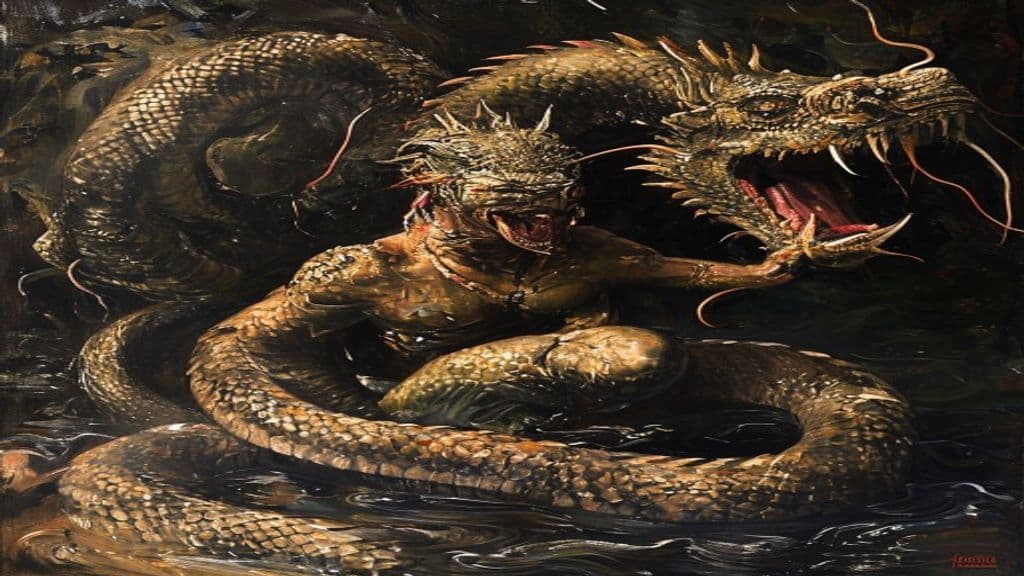
Bengali ghost of a married Brahmin woman who died before her husband — identifiable by her white sari and conch-shell bangles, she possesses living married women and refuses to relinquish domestic life.

Sidaba Mapu
Primordial

Sidaba Mapu

Sidaba Mapu (also cited as Salailel in the supplied source) is the supreme creator and sky god of the Meitei indigenous religion Sanamahism, presented in the sources as the origin-being responsible for creation of the universe. The deity is linked in the sources to Meitei mytho-philosophical frameworks named Leithak Leikharol Nongsemlon and Leisemlon.

Sigdi / Seetla’s Spirits (as referenced in request)
Lesser

Sigdi / Seetla’s Spirits (as referenced in request)

The supplied materials provided for this research task do not contain information about Sigdi, Seetla, or spirits associated with disease-and-healing rituals in Punjabi folk tradition. The available sources instead include an unrelated Hindi film page, a Wikidata language entry, a music archive listing, and a book description about Istanbul; none of these texts mention Sigdi/Seetla or relevant Punjabi ritual material.

Sita
Ancient

Sita

Sita is a central goddess-figure and heroine of the Hindu epic the Ramayana, traditionally regarded as the consort of Rama and an incarnation of the goddess Lakshmi; her narrative links earth/fertility imagery, marital devotion and royal legitimacy.

Skondhokata
Lesser

Skondhokata

The headless ghost of Bengal — spirit of someone who died by decapitation or whose body was not found complete after death. Skondho (shoulder) + kata (cut): it carries its head under its arm, seeking the place where the head was lost and terrifying those who encounter it on rural roads at night.