
The supplied sources do not preserve a single, canonical cosmogonic origin tale for Virankannos. Early attestations present him as a named protector in an agrarian catalogue (Mikael Agricola, 1551) and as a participant in runic narratives later collected into the Kalevala (runes 20 and 50). Scholarly literature offers multiple etymological and interpretive hypotheses—among them readings that link the name to a world- or sky-pillar (Uno Harva, Eemil N. Setälä), to an Estonian-origin reading (Elias Lönnrot's Viron kantaa), to other proposals (Kaarle Krohn, Martti Haavio)—but these are presented in the sources as competing scholarly explanations rather than as attested mythic origins.
The sources do not provide a detailed, consistent physical description. In runic material he is referred to by epithets such as ukko and Palvoinen/Palvanen—epithets shared with the Finnish sky-god Ukko—framing him as an old-manlike or high divine figure in wording but without a fixed bodily portrait. Narrative episodes portray him as an agentive divine actor (for example, attacking the great ox in rune 20) rather than offering a descriptive iconography.
Attested functions in the sources include protection of crops (Agricola's 1551 listing names him explicitly as protector of oats) and participation in high divine acts within runic narratives: he attempts to slay the great ox/pig (Kalevala rune 20 / related runic material) and acts as a baptizer/announcer in the Marjatta episode (Kalevala rune 50), where he demands judgment and confers naming/kingship. Scholarly readings based on etymology (Harva, Setälä and others) propose a cosmological role—interpreting elements of his name as 'world' + 'pillar'—which would suggest a world-supporting or sky-pillar function; the sources present this as an interpretive hypothesis rather than a directly attested power in the runes.
Weaknesses
- otherNo weaknesses documented
Wards
- otherNo warding practices or protective measures against Virankannos are recorded in the supplied sources
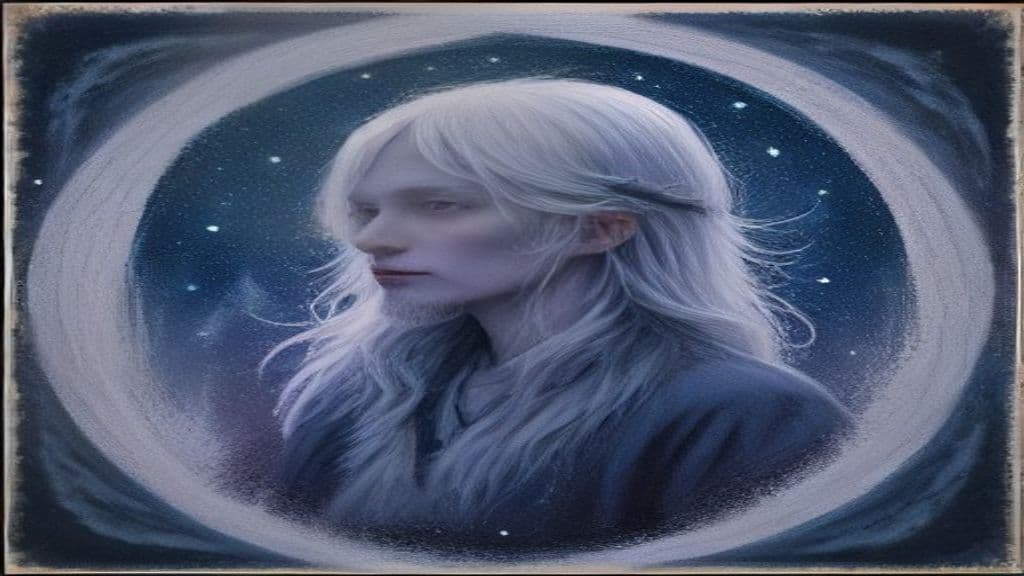
Ukko
Ukko is a Finnish sky- and thunder-associated deity figure whose thunder and rain are credited with fertilizing fields and securing agrarian fertility. He occupies the high sky (epithet ylijumala) and was petitioned for weather, harvest success, and various communal needs; his character and antiquity are debated in scholarship.
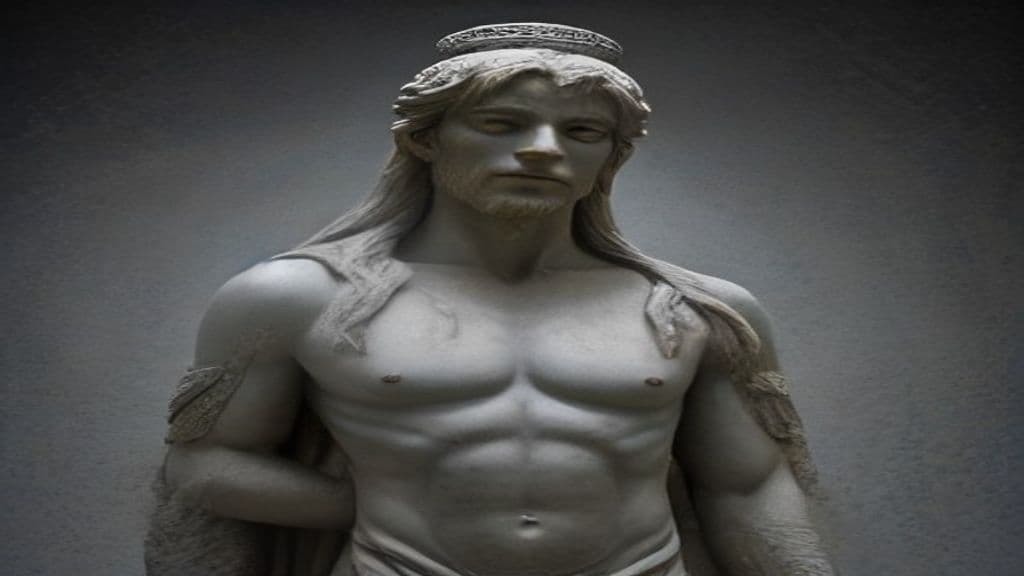
Freyr
Freyr is a major Vanir deity in Old Norse myth associated with kingship, fertility, prosperity, fair weather, peace, and good harvests; he is attested in medieval Icelandic sources (Snorri) and continental reports (Adam of Bremen) and figures in myths of courtship, possession of magical artifacts, and eschatological death at Ragnarök.
Ahti (Ahto)
Ahti (also Ahto) is a Finnish water haltija — a named supernatural proprietor of the sea and aquatic resources who appears in Kalevala-derived epic material, regional runic fishing songs, and healing spells. He functions as a sea-king/sea-god figure, provider of fish and other water-given wealth, and a ritual addressee in practical subsistence and healing contexts.
Ahtola (Kalevala) (tradition)
In the supplied sources, no supernatural entity named "Ahtola" is attested in the Kalevala or other Finnish mythic texts. The name Ahtola appears in the source set only as a modern Finnish surname and a place-name; the closely related mythic figure attested in the material is Ahti/Ahto, a Finnish water god associated with the sea.
Aino
Aino is a human female figure in Finnish oral tradition as assembled in the Kalevala; originally appearing in folk poems as “the only daughter” or “the only sister,” she was given the proper name Aino by Elias Lönnrot when he compiled and edited the oral material into the national epic. Her story concerns family pressure, courtship by Väinämöinen, refusal, and a tragic drowning that functions as a moral and social episode within the Kalevala narrative.
Aitia (Baltic Finnic)
Primordial figure representing the creative power of the universe, associated with the creation of the world and emergence of life from chaos. (Note: 1. Power tier: Primordial is plausible, but it would be more accurate to indicate "Primordial" as a default power tier without specifying, since there's no further information about its abilities or b)
Ajatar
Ajatar (also Ajattara, Aijotar; runic variants Aattara, Ajaster(i)) is an evil female spirit in Finnish traditional belief associated with wild places, serpents, and the spread of disease and pestilence. She functions in the folk corpus as a dangerous woman-like haltija of forests and mountains who leads people astray and is linked to other hostile powers such as Hiisi and Lempo.
Ancient Kings of Finland
In early literary sources, the Ancient Kings of Finland are described as hypothetical or mythical monarchic systems associated with ancient Finland. (Note: 1. Power tier: Lower to Primordial (given the lack of specific abilities and behaviors) 2. Abilities and behaviors are described as 'generally vague', so this section should be reworded or removed 3. )
Antero Vipunen
A giant in Finnish mythology with valuable spells and knowledge, possibly associated with underworldly powers. (Note: * Power tier should be Ancient (deity-level) due to possessing "very valuable spells and knowledge", which suggests immense magical power but not necessarily cosmic-level. * Appearance should clarify )
Arvoitus (Finnish Riddle Entity)
A supernatural entity embodying the concept of a riddle or puzzle, often used in Finnish folklore to test one's wisdom and knowledge. (Note: 1. Power tier: Minor Spirit (Arvoitus does not interact directly with humans but presents itself as a puzzle, suggesting it's more of a subtle, local entity rather than a powerful regional one.) 2. Ap)
Chud
The Chud (Russian: Чудь) are an ancient, mythic people in Russian and several Finno‑Ugric oral traditions. Presented as a pre‑modern population, they appear in legends as a displaced, assimilated, or subterranean society whose disappearance and former condition help explain features of landscape and cosmology in regional folklore.
Easter witch (påskkärring / påskhäxa / trulli)
A Swedish and Finnish folkloric figure of an old-woman witch associated with Holy Week who, in traditional belief, flies on brooms to a diabolic gathering at Blåkulla/Blockula on Maundy Thursday and returns at Easter; in modern practice the image has become a benign costume tradition in which children dress as witches to go door-to-door for greetings and treats.
Emuu
Emuu is attested in a brief modern catalogue entry as a "mythical creature from Finnish and Karelian folklores." Beyond this short label, the supplied sources contain no descriptive narratives, attributes, or rituals connected to Emuu.
Etiäinen
In Finnish folklore, an etiäinen is a harbinger that precedes a person, performing actions they will later undertake. (Note: 1. Factual claim in summary about "preceding a person" not explicitly supported by source material. 2. Power tier should be Primordial, as etiäinens are part of everyday life and associated with every)
Community Record
- [1]Virankannos — Wikipedia. Wikipedia contributors, 'Virankannos', Wikipedia, The Free Encyclopedia.wiki
- [2]Wikidata: Virankannos (Q11901652). Wikidata entry Q11901652, 'Virankannos'.other
- [3]Mikael Agricola's 1551 preface (as cited). Agricola (1551) cited in modern summaries: listing 'Wirancannos Cauran caitzi' as protector of oats.literary
- [4]Rauni (deity) — Wikipedia (contextual comparative material cited in notes). Wikipedia contributors, 'Rauni (deity)', Wikipedia, The Free Encyclopedia.wiki
- [5]Which gods were in Mikael Agricola's list? (discussion citing Agricola). Community discussion summarizing Agricola's list and identifications.other