
Wu Fu is not presented in the supplied sources as having a mythic origin story or personified genesis; rather, it is attested as a lexical and iconographic formula in Chinese culture. The term itself combines the characters wǔ (五, "five") and fú (福, "blessings/fortune") and names a conceptual grouping of auspicious desiderata that was encoded into material culture (porcelain decoration, charms, rebuses and inscriptions). Sources treat the phrase as a long-standing cultural expression used to encapsulate a cluster of good fortunes rather than recounting a narrative origin involving a deity or ancestor.
No source describes Wu Fu as anthropomorphic. Appearance in the provided materials refers to how the concept is rendered visually: as characters and pictorial motifs on objects and charms. Common elements paired with the wu fu formula include bats (a rebus for fú/good fortune), the longevity character shou (壽/寿), peaches (symbols of longevity), vases, and combinations such as the inscription wu fu peng shou (literally "five fortunes surround longevity") often realized as five bats surrounding the shou character. Examples of these motifs appear on porcelain, household wares, and talismanic objects.
The sources do not attribute independent agency or active supernatural behaviors to Wu Fu. Rather, the motif functions performatively in material culture: inscribed words and paired images are intended to signify, advertise, or invite blessings and good fortune for owners and households. Language on charms sometimes frames associated figures (e.g., "The God of Luck brings fortune") but available documentation treats Wu Fu itself as an emblematic formula used to represent and encourage auspicious outcomes, not as an autonomous actor with powers or behaviors.
Weaknesses
None recorded.
Wards
- symbolNot applicable (Wu Fu is an auspicious motif rather than a harmful entity)

Banshee
A female spirit of Irish and Scottish folklore whose wail heralds an impending death in a family of Gaelic descent. Not a cause of death — a witness to it.

Kitsune
Fox spirits of Japanese mythology — intelligent, long-lived beings who gain additional tails (up to nine) as they age and grow in power. They serve as messengers of the god Inari and as powerful tricksters.

Rusalka
Water spirits in Slavic folklore — the spirits of young women who died by drowning or suicide, bound to rivers and lakes. Beautiful and dangerous, they can bewitch men to their deaths.

Naga
Divine serpent beings of Hindu, Buddhist, and Jain cosmology — powerful guardians of water, earth, and underground treasures. Revered as deities in South and Southeast Asia.
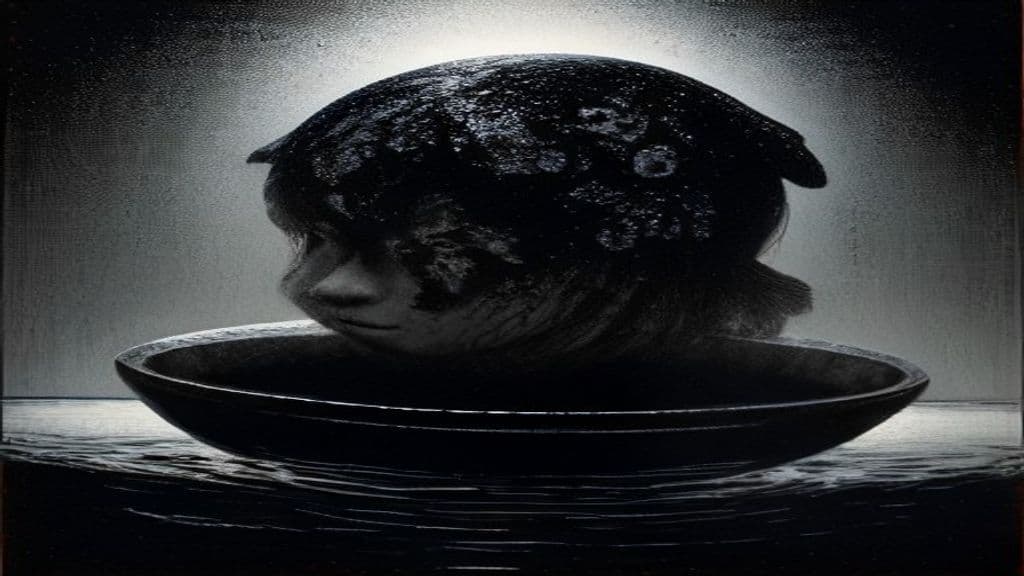
Kappa
A water-dwelling imp of Japanese folklore with a bowl of water on its head. Mischievous but bound by strict codes of politeness; dangerous near rivers.

Anansi
The spider trickster god of Akan folklore — cunning, mischievous, and wise. Keeper of stories and teacher of human beings, brought through the slave trade into Caribbean and African-American tradition.

Domovoi
The house spirit of Slavic tradition — a small, invisible guardian of the home bound to a specific dwelling and its family. Protective when respected; dangerous when insulted or forgotten.
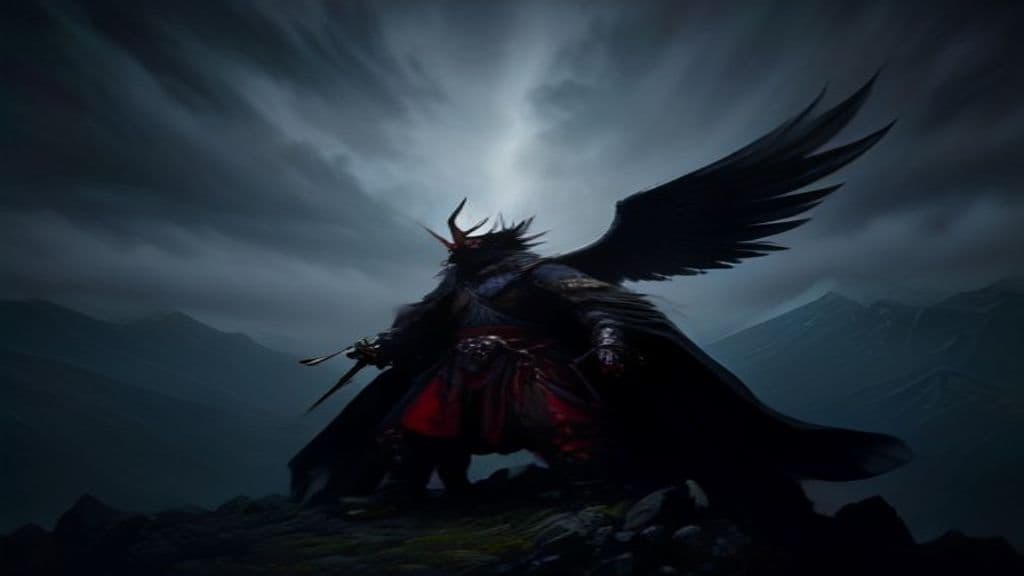
Tengu
Proud, warrior-like mountain spirits of Japan, associated with martial arts, pride, and the wild mountains. Neither fully good nor evil — they test and train warriors and monks, but punish the arrogant.
Kitsune
Fox spirits of Japanese mythology — intelligent, long-lived beings who gain additional tails (up to nine) as they age and grow in power. They serve as messengers of the god Inari and as powerful tricksters.

Yuki-onna
The Snow Woman of Japanese folklore — a spirit born of blizzards who appears to travelers lost in snowstorms. Beautiful and lethal, she can show mercy or bring death depending on her mood.
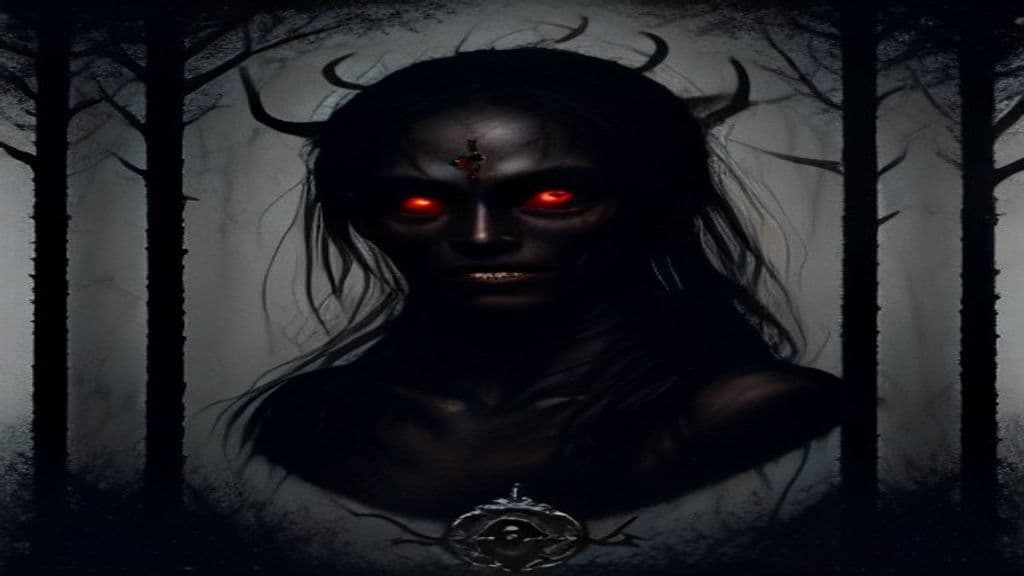
Pishacha
Flesh-eating spirits of Hindu mythology that haunt cremation grounds and are associated with disease, madness, and possession. The lowest class of demon in the Vedic hierarchy.

Yaksha
Nature spirits of Hindu, Buddhist, and Jain cosmology — guardians of forests, treasures, and wilderness. Ambivalent beings, capable of great benevolence to the respectful and terrible harm to the greedy.
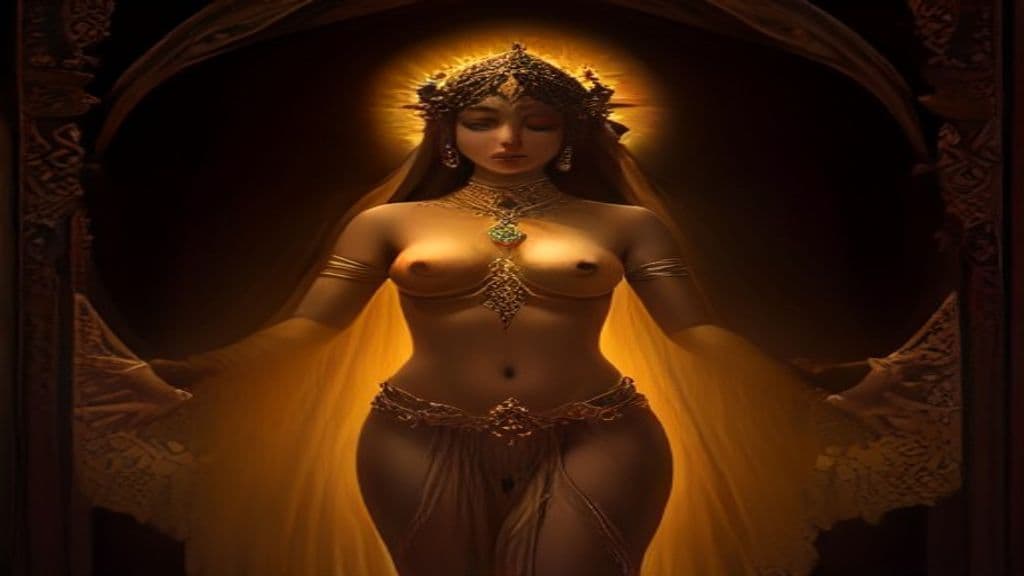
Apsara
Celestial dancers and water nymphs of Hindu cosmology — beautiful semi-divine beings who dance at the court of Indra and, by his command, descend to earth to distract sages from excessive asceticism.
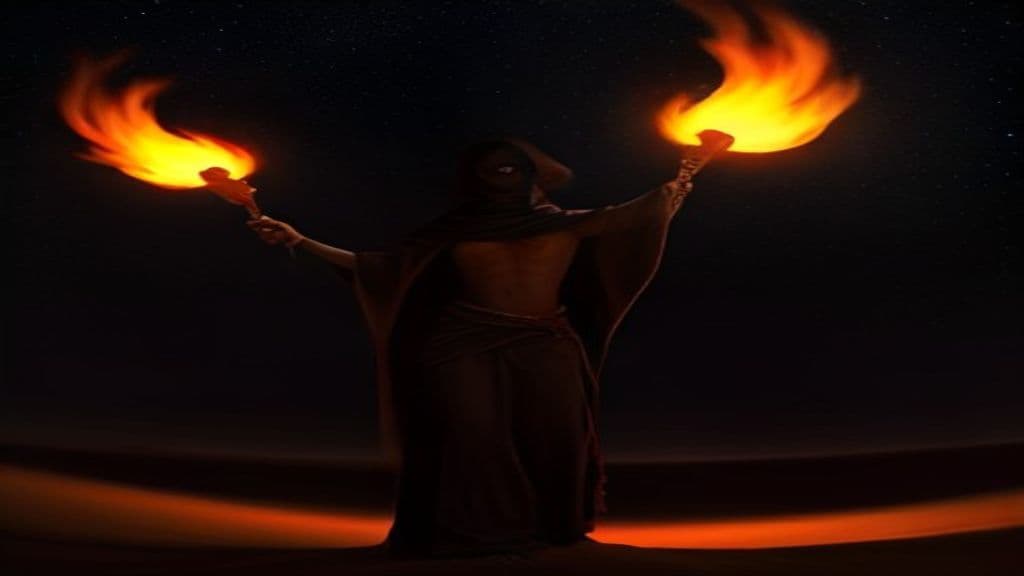
Djinn
The class of supernatural beings created from smokeless fire in Islamic cosmology — a parallel civilization to humanity, capable of belief or unbelief, with their own prophets, society, and judgment before God.

Jann
The weakest class of djinn in Islamic tradition, associated with desert winds and taking the form of snakes or whirlwinds, dwelling in empty wilderness and posing little threat to those who know the proper invocations.
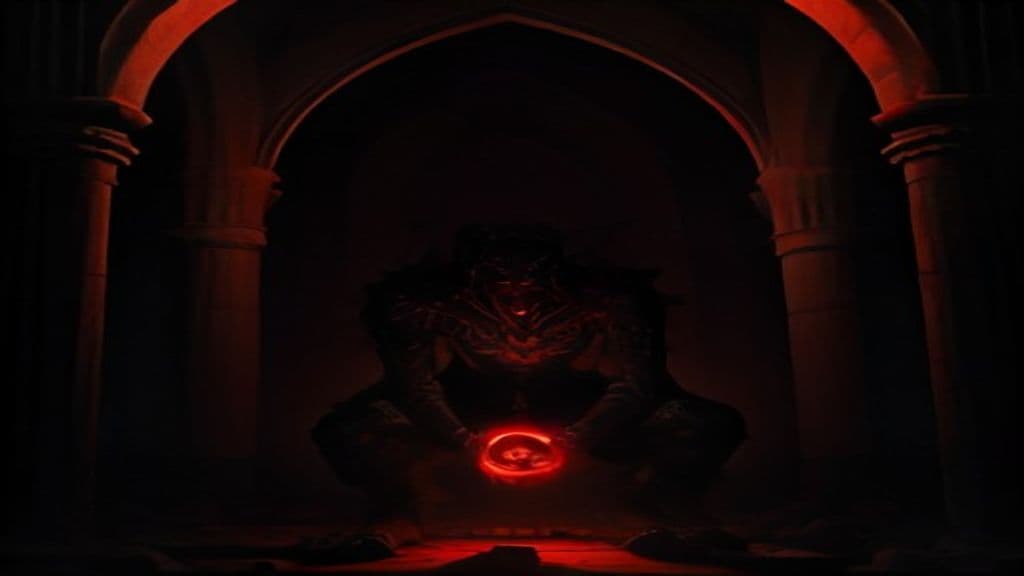
Shaitan
A class of corrupted djinn who follow Iblis and dedicate themselves to leading humans astray — distinct from Iblis himself, the Shayatin are a species of evil djinn who whisper doubts and temptations into the minds of the living.
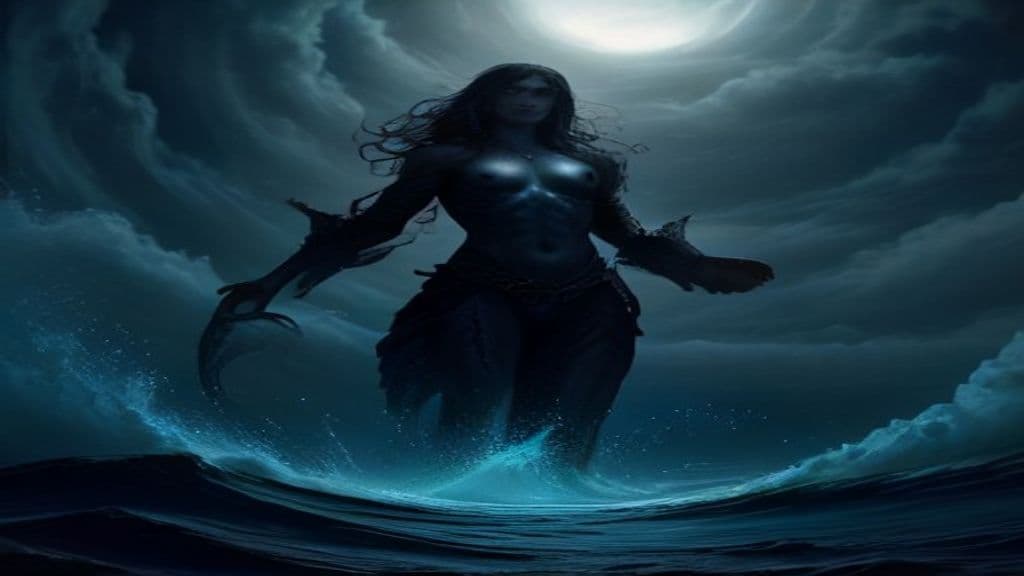
Marid
The most powerful class of jinn in Islamic tradition — beings of the sea, associated with the deep ocean, storms, and the granting of wishes at terrible cost. The classic genie of the Arabian Nights.
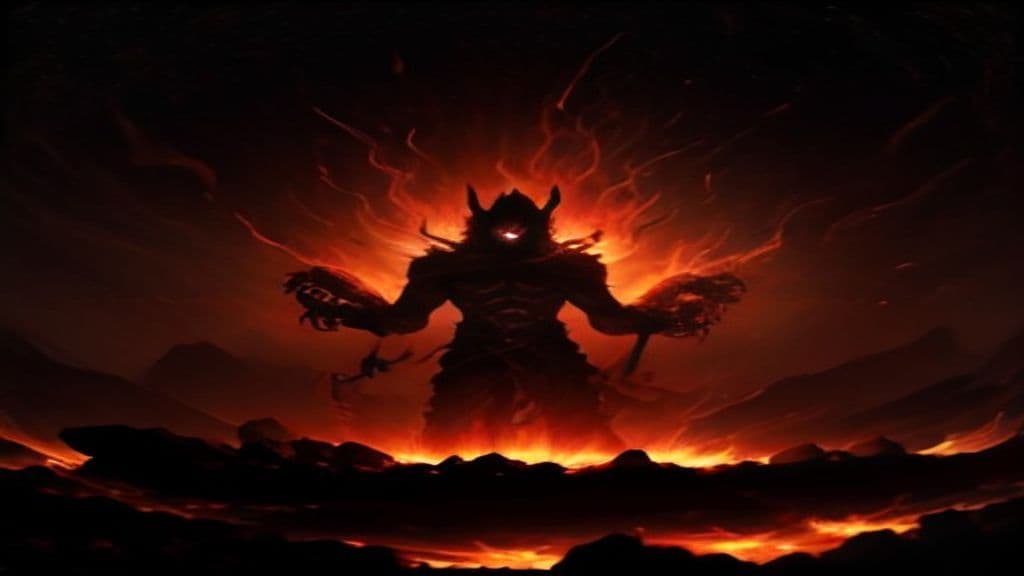
Ifrit
One of the most powerful classes of jinn in Islamic and pre-Islamic Arab tradition — a fire-born being of immense strength and cunning, capable of great works of engineering and terrible violence.

Nuckelavee
The most terrifying creature of Orcadian folklore — a skinless, horse-headed demon of the sea whose breath spreads plague and whose presence causes crops to wither. It cannot cross fresh water.
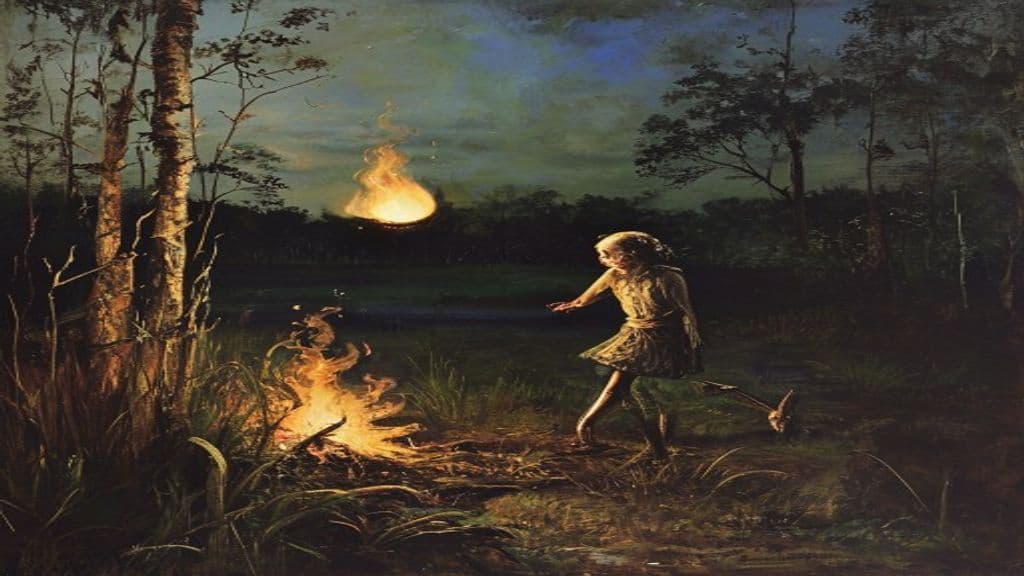
Will-o'-the-wisp
An atmospheric 'ghost light' — a small, mobile, lamp-like light seen at night over marshes, bogs, wet ground, or graveyards. In many cultures the phenomenon is interpreted as a supernatural being or manifestation (wandering nature-spirit, soul of the dead, transformed witch, or treasure-indicator); modern science offers chemiluminescent explanations for some occurrences.
Akshobhya
Akshobhya is a transcendent buddha of Mahāyāna and Vajrayāna Buddhism, one of the Five Wisdom (Dhyāni) Buddhas. He personifies 'mirror knowledge' (ādarśa-jñāna), is conventionally placed in the East, and is lord of the eastern Pure Land Abhirati; in esoteric texts he is associated with the eastern Vajra division and invoked in mantra/mandala ritual contexts.
Amitābha Buddha
Amitābha is a principal Mahayana Buddha who presides over the Western Pure Land (the Land of Ultimate Bliss). Devotional practices—most centrally recitation of his name and chanting of Pure Land sutras—are presented in sources as the means by which Amitābha welcomes practitioners for rebirth in his hindrance-free realm.
Anantacāritra
Anantacāritra (Sanskrit: अनन्तचारित्र) is a bodhisattva figure in the Lotus Sūtra, identified as one of the four great perfected bodhisattvas who attend Gautama Buddha. The name is glossed as "Boundless Practice" and, in Tiantai commentary, is read as representing eternity.
Ao Guang (Dragon King of the East Sea)
Ao Guang is the Dragon King (Dragon God) who presides over the East Sea (Dōng Hǎi) in Chinese mythology, literature, and folk-religion. He is presented in sources as a regional aquatic deity associated with water and weather and appears as a named supernatural figure in classical vernacular novels such as Journey to the West and Fengshen Yanyi.
Ao Kuang
Ao Kuang (also attested as Ao Guang) is the Dragon King of the East Sea in Chinese mythology and folk religion, one of a quartet of sea-dragon sovereigns associated in folklore with the cardinal seas. He appears in classical literature and later popular media as a ruler of maritime waters whose favor or displeasure is connected to tides, rain, floods and storms.
Arhat
An arhat (Sanskrit: arhat; Pāli: arahant) is in Buddhist traditions a human practitioner who has gained insight into the true nature of existence, attained nirvāṇa, and been liberated from the cycle of rebirth. The status and valuation of arhatship vary by school: some traditions equate it with full liberation, while others treat it as distinct from or inferior to the bodhisattva/buddha ideal.
Ashina Buzhen
Ashina Buzhen (Chinese: 阿史那步真) was a 7th-century member of the Ashina ruling house of the Western Turks who acted as a military and political claimant to khaganate authority on the Tang frontier. Recorded in Tang-era sources and modern summaries, he engaged in inter-elite rivalry, participated in Tang military campaigns, received an imperial-bestowed khagan title from Emperor Gaozong, and died in 667.
Ashina Helu
Ashina Helu (阿史那賀魯 / 阿史那贺鲁, āshǐnà hèlǔ) was a mid‑7th century member of the Ashina clan who claimed the title qaγan (khagan) of the Western Turkic polity. Active as a tribal shad and later self‑declared khagan, he contested Tang authority, was defeated by General Su Dingfang in 657, handed over by Chach, spared by Emperor Gaozong, and spent his remaining years in Chang'an.
Ashina Mishe
Ashina Mishe (Chinese: 阿史那彌射; ?–662) was a mid-7th century member of the Ashina clan installed and recognized by the Tang court as a khagan and frontier protector-general over portions of the former Western Turkic territories. His career illustrates Tang imperial practices of using titled Turkic elites as intermediaries to administer and pacify western protectorates; his death in 662 following an intrafamilial rivalry weakened Tang influence in the region.
Ashina Nishufu
Ashina Nishufu was a member of the Ashina clan proclaimed qaghan in a short-lived Göktürk revolt against the Tang dynasty (679–680 CE). Declared by Turkic leaders Ashide Wenfu and Ashide Fengzhi, his uprising was defeated by Tang general Pei Xingjian; he was killed by his own men and the revolt’s leaders and many Göktürks were executed in Chang'an.
Ashina She'er
Ashina She'er (阿史那社爾) is a historical Turkic prince of the Ashina house who became a Tang dynasty general in the 7th century. Chronicle summaries record his roles as claimant to parts of the Western Turkic Khaganate, his submission to Tang in 635, marriage into the imperial family, major western campaigns (including Kucha, 648), and his burial alongside Emperor Taizong.
Ashina Shibobi
Ashina Shibobi (c. 603–631), regnal name Tolis (Töles) Khagan, was a member of the Ashina clan who served as a lesser khagan and military leader of the eastern wing of the Eastern Turkic Khaganate in the early 7th century CE. He held offices such as Nipu shad and Tolis khagan, participated in raids against Tang China, suffered internal punishment after military setbacks, and ultimately submitted to Emperor Taizong of Tang in 629.
Community Record
- [1]Wufu. Wikipedia, 'Wufu' article (accessed via provided sources)wiki
- [2]Wu Fu | ferrebeekeeper. Ferrebeekeeper blog post 'Wu Fu' noting rebuses and pairing with other good-luck symbolsother
- [3]Chinese Charm Inscriptions. PrimalTrek inscriptions list (includes entries such as 'wu fu peng shou — Five fortunes surround longevity' and related charm inscriptions)folk