Entity Index

A record of the unseen, drawn from world folklore.

7631 entities · page 13 of 128

Ammarik
Ancient

Ammarik

Ammarik (also Ammarig, Hammarigu; later Armaruk/‘lord of Armaruk’) is an ancient Eblaite deity most likely representing a deified mountain attested in third-millennium BCE Eblaite texts and later Hurrian and Hittite sources. He appears in Eblaite offering lists and an incantation context allied with weather cults and apotropaic ritual action.

Ammit
Lesser

Ammit

Ammit is an ancient Egyptian funerary guardian-demon of the Duat who stands at the Hall of Two Truths during the weighing of the heart. Feared and not worshipped, she awaits the verdict and consumes hearts judged impure, thereby preventing the deceased from joining the blessed dead.

Ammon (tradition)
Lesser

Ammon (tradition)

In the provided sources, 'Ammon' is primarily attested as the ethnonym and toponym of the ancient kingdom and people known as the Ammonites (centered on Rabbah/Rabbat Ammon, modern Amman) and as a component in later theonyms (e.g., 'Jupiter Ammon'). The corpus supplied contains etymological, geographic, biblical, and modern onomastic information but does not document 'Ammon' as a discrete folkloric spirit or supernatural being with a ritual corpus.

Ammut
Ancient

Ammut

Ammut is an ancient Egyptian chimeric creature associated with the Judgment of the Dead; traditionally described as a composite of lion, hippopotamus, and crocodile, she is said to consume the souls or the symbolic heart of those judged unworthy, preventing admission to the afterlife. Modern artistic and speculative retellings recast Ammut as a large scavenging semi‑aquatic animal whose corpse‑consuming habits inspired funerary beliefs.

Ammāvaru
Primordial

Ammāvaru

Ammāvaru is a reverential designation for a mother-goddess figure in Hindu, especially Telugu/South Indian, contexts. In some accounts she is presented as a primordial maternal principle who preceded time and is said to have laid the egg from which Brahma, Shiva and Vishnu emerged; in practice the name functions as an honorific attached to multiple regional mother-goddess cults and temple images in Andhra Pradesh and nearby areas.

Amnisiades
Lesser

Amnisiades

The Amnisiades (Ancient Greek: Αμνισιαδες / Αμνισιδες) are a group of naiads — freshwater nymphs — associated with the Amnisos river in Crete. They are attested in Hellenistic poetry as members of Artemis's retinue and are linked by scholarship to cult activity at a cave of Eileithyia on the Amnisos.

Amnisos
Lesser

Amnisos

Amnisos is a north-Cretan river, Bronze Age coastal settlement/port for Knossos, and in literary registers the river's divine personification (a river‑god). Attested in Mycenaean Linear B, classical literature, and archaeological remains (including a Late Minoan villa and submerged shorelines), Amnisos functions as hydrological feature, cultic locus (linked to the cave sanctuary of Eileithyia and to nymphs called the Amnisiades), and administrative place in the ritual economy of Knossos.

Amoghapāśa
Lesser

Amoghapāśa

Amoghapāśa is recorded in the supplied sources as a named manifestation or form of the bodhisattva Avalokiteśvara/Lokeśvara attested in Mahāyāna and Vajrayāna contexts. The evidence in the provided material is archival and bibliographic (sūtra/dhāraṇī/maṇḍala filenames and database entries) rather than descriptive narrative or doctrinal exposition.

Amoghasiddhi
Ancient

Amoghasiddhi

Amoghasiddhi is one of the Five Tathāgatas (Five Wisdom Buddhas) in Mahayana and Vajrayana/Esoteric Buddhism, representing the Karma family and the quality of "unfailing accomplishment". He functions as an archetypal, protective, and contemplative buddha-body within tantric mandalas, presiding over the northern quarter and invoked in mantras and ritual iconography.

Amomongo
Lesser

Amomongo

Amomongo is a Visayan term for an ape-like, man-sized, hairy creature in Western Visayas (notably Negros Occidental) folklore and recent local cryptid reports. Sources present it primarily as a wild, non-human animal inhabiting caves and volcanic foothills; modern reportage links a spate of alleged attacks to La Castellana in June 2008.

Amon Sur
Lesser

Amon Sur

Amon Sur is a fictional Ungaran individual in the DC Comics universe who acts as an antagonist to members of the Green Lantern Corps. He is presented as the son of Abin Sur, bears resentment toward the Corps for his father's duty-related death, and in the narratives wields corps power rings (a Sinestro Corps duplicate yellow ring and later a Black Lantern ring after resurrection).

Amor asteroid
Minor Spirit

Amor asteroid

A class of near-Earth asteroids (NEAs) defined by orbital parameters: semi-major axis a > 1.0 AU and perihelion q satisfying 1.017 AU < q < 1.3 AU, placing their perihelia exterior to Earth's aphelion so they do not currently cross Earth's orbit. Named after the prototype object 1221 Amor, the group includes diverse bodies (e.g., 433 Eros) that are part of the dynamically evolving population of Earth-approaching small bodies.

Amorōnagu
Lesser

Amorōnagu

Amorōnagu (Amorōnagu / 天降女子) is a tennyo or celestial maiden figure in the folklore of Amami Ōshima (Kagoshima Prefecture, Japan). Attested sources describe her as a heavenly woman who bathes in pools and waterfalls in ravines on the island.

Amos
Lesser

Amos

Amos is a human prophetic figure in the Hebrew Bible, traditionally counted among the Twelve Minor Prophets. Presented as a rural, non‑professional prophet from Tekoa, he delivers visionary oracles condemning social injustice and ritual hypocrisy and is traditionally credited with the book bearing his name.

Amoz
Minor Spirit

Amoz

Amoz (Hebrew: אָמוֹץ, ʼAmōṣ/Amotz) is a personal name in the Hebrew Bible identified as the father of the prophet Isaiah. In rabbinic tradition the naming of a prophet's father is sometimes read as implying that the father was also a prophet; later rabbis therefore ascribe prophetic status and royal kinship to Amoz in interpretive accounts.

Ampelos
Lesser

Ampelos

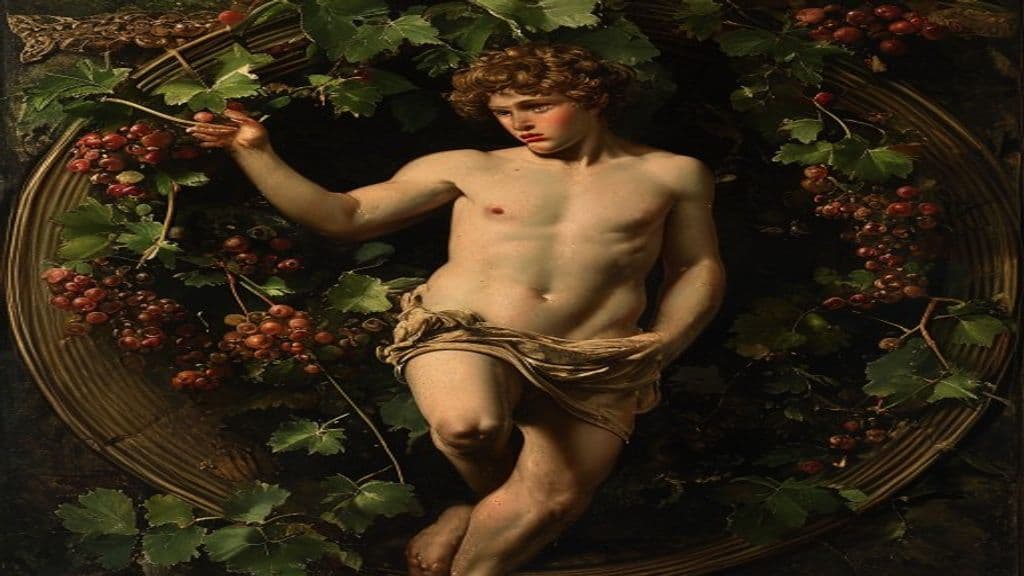
Ampelos (Ancient Greek: Ἂμπελος, lit. 'Vine') is a mythological figure in Greek and Roman literature who functions both as the beautiful youth beloved of Dionysus/Bacchus and as a personification or origin-figure of the grapevine (and, in one account, a star). Surviving literary summaries record two main versions: in Nonnus a satyr youth is gored to death after provoking Selene and is transformed into the first vine by Dionysus; in Ovid a reckless boy falls while picking grapes and is placed among the stars (Vindemitor/Boötes) by Liber/Dionysus.

Ampelus
Minor Spirit

Ampelus

Ampelus is a youthful figure in Greco‑Roman Dionysian myth, presented in Ovid's Fasti as a boy loved by Bacchus/Liber whose death while gathering grapes leads the god to honor him by setting him among the stars and by giving his name to the vine. He functions primarily as an etiological figure linking viticulture and a stellar memorial within Bacchic narrative.

Amphalces
Minor Spirit

Amphalces

Amphalces (Ancient Greek: Ἀμφάλκης) is an Argive prince attested in Greek mythographic and genealogical sources as a son of King Antiphates and Zeuxippe and as brother of Oicles. He appears only in genealogical lists and compendia; no narrative deeds, cult, or iconography are preserved for him in the cited material.

Amphialus (Amphialos)
Minor Spirit

Amphialus (Amphialos)

Amphialus (Ancient Greek: Άμφίαλος, Amphialus/Amphialos, lit. 'of two seas') is a recurring personal name in classical Greek epic, genealogical tradition, and later pastoral/romance literature. The name is applied to several distinct mortal figures — a Phaeacian athlete in the Odyssey, various seafaring companions and suitors in Homeric summaries, a son of Neoptolemus and Andromache in genealogical accounts, and a noble/warrior character in early modern Arcadian romances — rather than to a single supernatural being.

Amphiaraos
Primordial

Amphiaraos

Greek hero and seer associated with the Amphiareion of Oropos sanctuary, known for his ability to foresee the future and connection to oracular responses and healing. (Note: 1. Power tier should be Ancient (not Primordial), as Amphiaraos is a hero and seer, but not a cosmological being. 2. Ability description: The ability to foresee the future is accurate, but the transfo)

Amphiaraus
Ancient

Amphiaraus

Amphiaraus is a legendary Greek seer and chthonic hero, famed as one of the Seven against Thebes. After his death—when the earth opened and swallowed him—he was venerated at the Amphiareion of Oropos as a healing and oracular figure whose sanctuary received petitioners seeking dream-delivered solutions.

Amphibalus
Lesser

Amphibalus

Amphibalus is a medieval hagiographical figure—an early Christian priest said to have sheltered Saint Alban in Roman Britain. The personal name appears in twelfth-century sources and the figure became the focus of relic veneration and a local cult at St Albans Abbey in the later Middle Ages.

Amphicrates
Lesser

Amphicrates

Amphicrates (Ancient Greek Ἀμφικράτης) is a personal name borne by several historical figures in ancient Greek sources, attested as at least an early king of Samos, an Athenian sophist/rhetorician of the Asiatic school, and in prosopographic indexes as an artisan (sculptor) and other minor historical persons. The supplied sources treat Amphicrates as human individuals preserved in fragmentary literary and documentary records rather than as a supernatural being.

Amphictyon
Lesser

Amphictyon

Amphictyon (Greek: Ἀμφικτύων) is a mytho-historical ancestral king in Greek tradition associated with the generation after the great flood and with the foundation/organization of communities that dwelt around sanctuaries (the Amphictyons). He appears in variant genealogies as son of Deucalion and Pyrrha or as son of Hellen, is called king of Thermopylae and in some accounts king of Athens, and is etiologically linked to the Amphictyonic League and early cultic practice.

Amphictyonis
Ancient

Amphictyonis

A local epithet of the goddess Demeter venerated at Anthela in the Thermopylae region of ancient Greece; Amphictyonis functioned as the cultic recipient of sacrifices by the Amphictyonic League and as a tutelary divine figure for the interstate religious assembly that met there.

Amphidamas
Lesser

Amphidamas

Amphidamas (Ancient Greek: Ἀμφιδάμας) is a personal name borne by multiple mortal men in Greek mythic tradition. Various distinct figures called Amphidamas appear in genealogies, epic rosters (Argonauts, companions of Odysseus), and local king-lists rather than forming a single supernatural archetype.

Amphidocus
Lesser

Amphidocus

Amphidocus (Ancient Greek: Ἀμφίδοκος) is attested in classical sources as a son of Orchomenus of Minyan Orchomenus and brother to Clymenus and Aspledon. He appears in genealogical lists tying local eponyms and founders to a royal lineage in Boeotia; beyond this genealogy the sources provide no sustained myths, cult, or ritual around him.

Amphilestes
Minor Spirit

Amphilestes

Amphilestes is a genus of extinct eutriconodont (triconodont-grade) mammal known from Middle Jurassic dental and mandibular remains from the Stonesfield Slate, Oxfordshire, United Kingdom. It was among the earliest Mesozoic mammals discovered and played a role in the nineteenth-century history of paleomammalogy.

Amphillogiai
Minor Spirit

Amphillogiai

Amphillogiai appears in modern compilations as a named feminine personification in the Greek mythological catalog of daimones. The supplied sources do not provide an ancient primary textual attestation, description, or ritual corpus for Amphillogiai; its classification rests on modern reference listings and analogy with other Greek personified abstractions.

Amphilochus
Lesser

Amphilochus

Amphilochus (Amphilochos, Amphílokhos) is a classical Greek personal name attested for multiple mythological figures; in modern usage the name also labels a genus of amphipod crustaceans and a Jovian asteroid. The provided sources do not supply narrative details, supernatural attributes, or ritual material for any specific mythological figure named Amphilochus.

Amphilochus I of Argos
Lesser

Amphilochus I of Argos

An Argive heroic ancestral figure and seer from Greek mythic-historical tradition, counted among the Epigoni, credited in various accounts with founding oracles and settlements (notably Amphilochia and an 'Amphilochian Argos'), and associated in divergent traditions with a death at the hands of Apollo or a lethal contest with the seer Mopsus.

Amphilogiai
Lesser

Amphilogiai

The Amphilogiai (Amphilogiae) are female daimones in Greek myth who personify disputes and altercations. They are listed among the many personified negative conditions produced by the goddess Eris and function mainly as literary explanations for quarrels rather than well-attested cult figures.

Amphimachus
Lesser

Amphimachus

Amphimachus (Ancient Greek Ἀμφίμαχος) is an ancient Greek personal name borne by several mythological mortals — warriors, princes, kings, and suitors — attested across epic and genealogical traditions of the heroic age rather than a single supernatural entity. The name, derived from ἀμφί (amphi) 'around' and μάχη (machē) 'battle', marks a martial character and recurs in Homeric, mythographic, and local genealogical accounts.

Amphimachus I of Elis
Lesser

Amphimachus I of Elis

Amphimachus (Ancient Greek: Ἀμφίμαχος) of Elis is a mortal heroic leader in the Homeric and later mythographic tradition. He is named as one of the Epeian captains who brought ships to the Trojan War and is slain in battle by Hector in the Iliad; his identity is chiefly genealogical and martial, tied to Elis and its local aristocratic networks.

Amphimachus of Caria
Minor Spirit

Amphimachus of Caria

A mortal Homeric leader: son of Nomion and co-captain (with his brother Nastes) of the Carian contingent allied with Troy in the Trojan War tradition. Attested in Homeric catalogue material and later commentary; sources record a variant tradition in which one of Nomion's sons was slain and stripped of gold by Achilles, with disagreement over whether that was Amphimachus or Nastes.

Amphimachus of Mycenae
Lesser

Amphimachus of Mycenae

Amphimachus of Mycenae is a figure in Greek mythic genealogies recorded as a Mycenaean prince, identified in the sources as a son of King Electryon and Anaxo. He appears only as a named member of the Perseid-descended dynastic network and is attested in genealogical lists rather than in independent narrative episodes.

Amphimedon
Minor Spirit

Amphimedon

In Homer's Odyssey, Amphimedon (Ancient Greek: Ἀμφιμέδων) is an Ithacan, son of Melaneus, one of the suitors of Penelope who fights in Odysseus's hall, is killed during the slaughter of the suitors, and (within the Homeric narrative) later appears among the dead in the Underworld to recount the events of that slaughter. The same name is also used in modern biological taxonomy for a genus of sponges; that referent is distinct.

Amphinome
Lesser

Amphinome

Amphinome is an ancient Greek proper name attested for multiple distinct female figures in myth — chiefly a Nereid (sea-nymph) and several mortal women (including a wife of Aeson and one of the Peliades). The name is also reused in modern taxonomic and creative contexts (annelid genus, butterfly species, and contemporary fantasy), but these are later reuses rather than continuations of a single mythic being.

Amphinomus
Minor Spirit

Amphinomus

Amphinomus (Ἀμφίνομος) is a personal name borne by several human figures in Greek tradition, most notably a princely suitor of Penelope in Homer's Odyssey; other bearers appear in local genealogies, a Catanian civic legend, and a later historical record as a geometer. The sources treat Amphinomus as mortal personages rather than a supernatural being.

Amphion
Lesser

Amphion

Amphion is a figure (or set of figures sharing a name) in Greek myth best known as the son of Zeus and Antiope, twin brother of Zethus, husband of Niobe, and famed in some traditions for using music to raise the walls of Thebes. The name also appears for several minor mythic characters (an Argonaut, an Achaean at Troy, a centaur), indicating multiple onomastic uses in the Greek corpus.

Amphion and Zethus
Lesser

Amphion and Zethus

Amphion and Zethus are twin brothers of Greek myth who function as the culture‑founding heroes of Thebes: Amphion the musician and Zethus the hunter/herdsman who together conquer Thebes, build the Cadmea, and rule jointly. Their story links human founders with gods (commonly Zeus as father; Hermes, Apollo and Artemis as intervening deities) and ends in later family tragedy surrounding Niobe and divergent accounts of the brothers' deaths.

Amphiptere
Lesser

Amphiptere

A heraldic creature described in available sources as a winged serpent used in European heraldry; presented as a graphic emblem rather than a living supernatural being in the provided material.

Amphirho
Lesser

Amphirho

Amphirho (Ancient Greek: Amphirho) is attested in the supplied sources as one of the Oceanids — daughters of the Titans Oceanus and Tethys — and is named in a brief mythological taxonomy entry. The name is said in that source to possibly mean "surrounding-river" (from amphi- and rhoos). Modern uses of the form "Amphiro/Amphirho" appear in the provided sources as taxonomic and commercial names (e.g., Wikidata taxon entry, a butterfly species, and a company/product), but those uses are not presented in the supplied materials as folkloric attestations.

Amphisbaena
Lesser

Amphisbaena

A legendary two‑headed serpentine or lizard‑like marvel from Greco‑Roman and medieval bestiary traditions, described with a functional head at each end and noted for moving in either direction without turning. It appears in poetry, natural histories, and folk remedies, and its parts are recorded as materia magica in sources such as Pliny and medieval bestiaries.

Amphithea
Lesser

Amphithea

Amphithea (Ancient Greek Ἀμφιθέα) is a recurring personal name in ancient Greek mythic genealogies, borne by several mortal women who function as wives, mothers, and sisters within Argive, Nemean, Odyssean, and Aeolian family networks. She is not presented in the sources as a supernatural being but as a human figure whose primary narrative role is genealogical linkage among heroic lineages.

Amphithemis
Lesser

Amphithemis

Amphithemis (Ancient Greek: Ἀμφίθεμις) is a name applied in Greek literary tradition to at least two distinct mythic figures: a semi-divine progenitor, son of Apollo and Acacallis connected with Libya and eponymy (also called Garamas), and, in a later poetic treatment by Nonnus, a centaur among Dionysus' retinue. The figure appears in genealogical material (Apollonius/Hyginus tradition) and in Late Antique epic (Nonnus' Dionysiaca).

Amphithoë
Lesser

Amphithoë

Amphithoë is a named Nereid in Greek mythology, listed among the fifty daughters of Nereus and the Oceanid Doris and identified in modern summaries as the Nereid associated with sea currents. She is attested as a member of the collective of sea-nymphs but is not the subject of independent myths in the supplied sources.

Amphitrite
Ancient

Amphitrite

Amphitrite is an ancient Greek sea-divinity, queen of the sea and consort of the sea-god Poseidon; in poetry her name is often used metonymically for the sea itself. She is counted among the daughters of Nereus and Doris in Hesiod and in some accounts is also listed among the Oceanids, and appears chiefly in mythic narrative and iconography rather than as an independent civic cult figure.

Amphitryon
Minor Spirit

Amphitryon

Amphitryon is a mortal nobleman of Greek mythic-historical tradition: son of Alcaeus of Tiryns, husband of Alcmene, and the acknowledged stepfather of Heracles. He appears in heroic-age narratives as a warrior, dynastic actor, and the human whose identity is impersonated by Zeus in literary treatments that explore paternity and identity.

Amphoterus (son of Alcmaeon)
Lesser

Amphoterus (son of Alcmaeon)

Amphoterus (Ancient Greek Amphoteros) is a figure in Greek heroic genealogy, son of Alcmaeon and Callirrhoe. He and his brother Acarnan are reported to have 'suddenly become grown-up' in order to avenge their murdered father and appear in accounts tied to the Epigoni cycle and local traditions around Psophis and Delphi.

Ampycus (Ampyx)
Lesser

Ampycus (Ampyx)

Ampycus (also Ampyx/Ampyce) is a name borne by several related mortal figures in Greek myth: chiefly a father of seers (notably Mopsus), and in variant traditions a local eponym, a priest of Demeter, and a Lapith warrior. He functions as a genealogical marker and occasional ritual or martial actor within heroic-age narratives rather than as an independent supernatural being.

Ampyx
Minor Spirit

Ampyx

Ampyx (Ancient Greek Ἄμπυξ, also Ampycus/Ampykos) is a personal name borne by several distinct mortal figures in Greek myth. The name is attached to seers, a priest, warriors, and ancestral/founder figures across different local traditions rather than to a single supernatural species or class.

Amrak
Minor Spirit

Amrak

Amrak is not attested in the provided sources as a supernatural being. The lexical string "Amrak" appears across unrelated secular contexts — as a historical regnal name (Amrak Khagan / Ashina Anluo), a Turkish place-name (Çamrak / amrak), titles in modern Arabic-language music, an institutional name/acronym (AMRAK Institute), and as a modern brand/typeface/project name. No folkloric, ritual, or mythological descriptions of an entity called "Amrak" are present in the cited material.

Amrita (Buddhist tradition)
Primordial

Amrita (Buddhist tradition)

In the context of Indian religions, particularly within Hinduism and Buddhism, Amrita is a divine elixir that grants immortality and eternal life. (Note: - Power tier should be Ancient (deity-level), not Primordial. - Origin story appears accurate but lacks specificity on when Amrita was first mentioned in the Rigveda; add more detail. - Abilities are )

Amru bin Jabir Al-Jinni
Lesser

Amru bin Jabir Al-Jinni

Named in a single modern catalogue entry as "one of the companions of the jinn," Amru bin Jabir Al-Jinni is recorded only as an individual associated with the jinn class. No further narratives, attributes, or practices are attested in the provided source.

Amset (Imsety)
Ancient

Amset (Imsety)

Amset (Egyptian Imsety) is one of the four sons of Horus in ancient Egyptian mortuary religion, a named funerary guardian commonly associated with protection of the liver and represented as the human-headed canopic-jar lid in mummification and afterlife iconography.

Amu-Aa
Lesser

Amu-Aa

Amu-Aa is an ancient Egyptian funerary deity attested in the Amduat tradition as one of the gods who accompanies Osiris during the second hour of the night. Sources record a consumptive role in which Amu-Aa takes provisions from the nocturnal barque, but provide no extended biography or iconography.

Amun
Ancient

Amun

Amun is a major ancient Egyptian deity whose name (imn) means 'the hidden one.' Originating as a local Theban tutelary god, he rose to national prominence and was syncretized with the sun‑god Ra (Amun‑Ra), becoming a transcendent, self‑created creator and king of the gods closely tied to royal legitimation and personal petitionary religion.

Amun-Re
Ancient

Amun-Re

Amun-Re is a major ancient Egyptian state deity formed by syncretism of Amun with the sun-god Re. Attested from the Old Kingdom and rising to prominence as the patron god of Thebes by the 11th Dynasty, Amun-Re is closely tied to pharaonic kingship, temple cult, and oracular activity (notably at Siwa).

Amunet
Primordial

Amunet

Amunet (jmnt) is a primordial Egyptian goddess originally one of the female members of the Ogdoad of Hermopolis whose name means ‘The Hidden One.’ In later Theban religion she became a localized consort and cult companion of Amun, serving protective and liturgical roles in royal coronation, Sed festivals, temple liturgies, and funerary invocations.