Entity Index

A record of the unseen, drawn from world folklore.

7631 entities · page 11 of 128

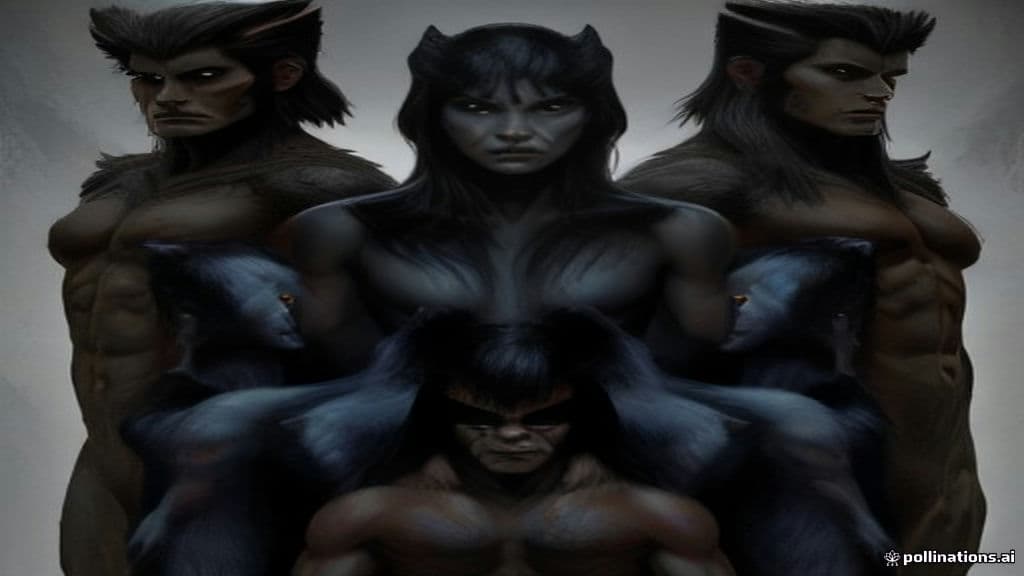
Alpha Flight
Greater

Alpha Flight

A fictional team of Canadian superheroes published by Marvel Comics, organized within the shared Marvel Universe as Canada’s primary superhuman response force under the oversight of a government project called Department H. The roster is composed of individually powered heroes drawn to represent Canadian regional and cultural diversity.
Alpha Primitive
Lesser

Alpha Primitive

A term used within Marvel Comics' Inhumans setting to denote a category of created or subordinate beings associated with Inhuman society. The available provided source (Wikipedia's Inhumans overview) references the Inhumans generally but does not supply detailed canonical information about Alpha Primitives themselves.

Alpha and Omega
Ancient

Alpha and Omega

A titulary formula and visual symbol formed from the first and last letters of the Greek alphabet (Α/α and Ω/ω), used in Christian scripture and art to denote God's or Christ's totality — 'the beginning and the end.' It functions as a theological appellation rather than an independent supernatural being.

Alphesiboea
Lesser

Alphesiboea

Alphesiboea (Ancient Greek Ἀλφεσίβοια, Alphesíboia) is a proper name used for several distinct women in Greek mythic genealogies and narratives. Bearers of the name include mortal princesses and wives tied to dynastic stories (notably a Psophian princess married to Alcmaeon), an attested variant as wife of Pelias, a supposed mother of Adonis in one tradition, and an 'Indian' nymph who appears in a Dionysian episode.

Alpheus
Lesser

Alpheus

Alpheus (Ancient Greek: Ἀλφειός) is the personified river and river-god of the Alpheios in the Peloponnese. He is classed among the river-deities descended from Oceanus and Tethys and appears in myths linking the Arcadian/Elian river to the Sicilian well Arethusa, to Artemis, and to the labors of Heracles.

Alphyn
Minor Spirit

Alphyn

The alphyn is a heraldic composite creature from medieval European heraldry and bestiary traditions, depicted as a chimera-like emblematic beast used on coats of arms, badges, and tapestries. Sources treat it as a stock heraldic motif with variable parts rather than as a folkloric spirit or deity.

Alpos
Lesser

Alpos

Alpos is a monstrous, multi-armed giant of Greek epic poetry, presented by Nonnus in the Dionysiaca as a chthonic son of Earth who terrorizes the Pelorus region of Sicily until slain by the god Dionysus.

Alraune
Lesser

Alraune

Alraune is the German folkloric figure identified with the humanoid-shaped mandrake (Mandragora officinarum) and the eponymous female character in Hanns Heinz Ewers's 1911 novel. In folklore the mandrake/Alraune is associated with love philtres, fertility, and a medieval gallows-origin legend; in literature the name labels a woman artificially conceived from a criminal's semen, whose emotional life and actions dramatize the folk moral about such origins.

Alrek and Eirík
Lesser

Alrek and Eirík

Alrek and Eirík (also rendered Alaric and Eric) are legendary Swedish kings from the Old Norse saga tradition who are presented as joint rulers and as members of the Ynglinga royal genealogies. They appear in saga narratives as sons and heirs of King Agni, famed for martial and athletic prowess, and as hosts who receive the hero Starkaðr after the sacrificial death of Vikar.

Alseid
Lesser

Alseid

An Alseid (Ancient Greek: Ἀλσηΐδες, Alsēïdes) is a class of nymph in classical Greek mythology specifically associated with groves and glens. The term functions as a locality-category within the broader Greek taxonomy of nymphs; later modern sources reuse the label for varied fantasy and game creations.

Altamaha-ha
Lesser

Altamaha-ha

The Altamaha-ha (also called "Altie") is a named legendary creature from coastal Georgia folklore, localized to the mouth of the Altamaha River, nearby marshes, streams, and abandoned rice fields around Darien and McIntosh County. Sources describe it as a place-linked water-associated creature that figures in local storytelling, tourist displays, and contemporary popular culture rather than as a widely attested pan-cultural spirit.

Altes
Lesser

Altes

Altes is a named Lelegian king of Pedasus attested in the Homeric tradition and later mythographic summaries. He functions in the epic genealogical network as the father of Laothoe (one of Priam's wives) and is in some accounts named as father of the Argonaut Ancaeus of Samos; no supernatural attributes are recorded in the supplied sources.

Altgermanische Religionsgeschichte

Altgermanische Religionsgeschichte

A historical survey of Germanic religious history, providing an overview of the pantheon of gods and goddesses. (Note: - Power tier is not applicable to historical surveys - The article should reflect that it's a historical survey, not an entity with abilities or appearance - Consider adding information on the signifi)

Althaea
Minor Spirit

Althaea

Althaea is attested in the provided sources as (1) the Latinized form of the Greek name Ἀλθαία (Althaia), a mythological human figure recorded as daughter of Thestius and mother of Meleager, and (2) a botanical genus (Malvaceae) of perennial herbs including the marshmallow plant; the name may be etymologically linked to Greek ἀλθος (althos) 'healing'. The supplied material contains no evidence that Althaea is a supernatural being.

Althaemenes
Minor Spirit

Althaemenes

Althaemenes is a mythic Cretan prince in Greek tradition, son of King Catreus, whose story centers on an oracle foretelling that he would kill his father. He fled Crete for Rhodes to avoid the fate, established an altar at Mount Atabyrus, accidentally killed his father in a case of mistaken identity, died tragically, and was later honored locally as a hero.

Alticonodon
Minor Spirit

Alticonodon

Alticonodon is a genus of extinct eutriconodont mammal known from the Early Campanian (Late Cretaceous) Milk River Formation of Alberta, Canada; it is represented by dental remains and interpreted as a late-surviving, hypercarnivorous member of a relic triconodont-grade lineage.

Alucard (Castlevania)
Greater

Alucard (Castlevania)

Alucard is a recurring fictional character in the Castlevania franchise whose name is the anadrome of 'Dracula'. Across games and adaptations he appears variably as a playable protagonist, an adversary/boss, or an ally to human protagonists, reflecting a liminal relation to Dracula and themes of inversion and familial ambivalence.

Alukah
Primordial

Alukah

In Jewish tradition, Alukah is a blood-lusting monster or vampire described in the Hebrew Bible's Proverbs 30:15. (Note: 1. Power tier should be Minor Spirit (or possibly Lesser) since it feeds on animals and doesn't match the Primordial description. 2. Abilities don't accurately reflect "blood-lusting monster" or vampi)

Alulim
Ancient

Alulim

Alulim is the legendary antediluvian 'first king' of Eridu in Mesopotamian tradition, presented in king lists and mythic compositions as the initial ruler appointed by the gods. He functions etiologically to explain the origin of kingship and, in late ritual texts, is invoked in agricultural incantations associated with driving off field pests.

Alusi
Lesser

Alusi

Alusi (also spelled arusi) are spirit-agents or divinities in the traditional religion of the Igbo people, each responsible for specific domains such as health, agriculture, rivers, justice, and the sky. They are worshipped and served through localized cults with priests and devotees and are distinct from clan ancestors (Ndichie).

Alux (aluxoʼob)
Lesser

Alux (aluxoʼob)

The alux (plural aluxoʼob or aluxob) is a small, place-bound sprite or spirit in Maya tradition of the Yucatán Peninsula, Belize, and Guatemala, conceived as knee-high, miniature, traditionally dressed Maya-like beings created by ancient gods and normally unseen but able to assume physical form to communicate or frighten humans.

Alvaldi
Lesser

Alvaldi

Alvaldi (Old Norse: Alvaldi / Ölvaldi) is a jötunn in Norse mythic genealogies, attested chiefly as the father of the notable jötunn Þjazi and described in one source as exceedingly rich in gold. He survives in the record mainly as a familial antecedent and an etiological figure rather than as an active participant in preserved narratives.

Alvíss
Lesser

Alvíss

Alvíss (Old Norse: 'All‑Wise') is a dwarf in Norse mythology who appears in the Poetic Edda poem Alvíssmál as a prospective husband for Thor's daughter Þrúðr. In the surviving narrative Thor tests Alvíss's wisdom through a lengthy question-and-answer session that lasts until sunrise, whereupon the dwarf is petrified by exposure to sunlight.

Alyosha Popovich
Lesser

Alyosha Popovich

Alyosha Popovich (Алёша Попович / Олешко Попович) is a named human hero (bogatyr) of the East Slavic byliny tradition, remembered as the youngest member of the canonical trio of Kievan Rus' warriors. He is chiefly characterized by slyness, mockery, and trickery, and defeats foes by craft often aided by pious petition rather than mere brute strength.

Alyoshenka
Lesser

Alyoshenka

Alyoshenka (Russian: Алёшенька) is the local name given to a small mummified body found in mid-1996 near Kyshtym, Chelyabinsk Oblast, Russia. Sources treat the find ambiguously — medical investigators concluded preserved tissue samples indicated a severely malformed premature human infant, while other observers and popular commentators proposed animal, non‑human, or extraterrestrial explanations. The original corpse disappeared after passing through local custody, and subsequent DNA testing (2004) was performed on preserved tissue samples rather than the lost original.

Alû (Alu)
Minor Spirit

Alû (Alu)

A named lemma attested in modern reference lists as 'ALU / Alu', but for which the supplied research corpus contains no substantive primary- or secondary-source information about nature, appearance, powers, or rituals in Mesopotamian tradition.

Al‑Ahmar
Lesser

Al‑Ahmar

Al‑Ahmar is an attested name in Arabic-language lists of notable jinn. Literally 'the Red', the name appears in compilations and occult rosters alongside other named jinn, but surviving sources provide no detailed independent folklore, powers, or rituals specific to this figure.

Al‑Kawthar
Minor Spirit

Al‑Kawthar

Al‑Kawthar (الكوثر) is a Qur'anic term and described heavenly bounty granted to the Prophet Muhammad, rendered in tradition both as 'abundant good' and as a river/pond/fount in Paradise. It functions as an eschatological topographical feature and theological gift rather than an autonomous supernatural agent.

Al‑Masih ad‑Dajjal
Greater

Al‑Masih ad‑Dajjal

An Islamic eschatological antagonist described in hadith and later apocalyptic literature as a false Messiah who will deceive many before the Day of Judgment. He is depicted variously as an individual man or as a devil in human form, performs counterfeit miracles, and is ultimately defeated by the return of ʿĪsā (Jesus).

Al‑Mu'min (The Believing Man from the People of the Pharaoh)
Lesser

Al‑Mu'min (The Believing Man from the People of the Pharaoh)

An anonymous human figure in the Qur'anic account of Moses (Sūra Ghāfir 40:28–30), described as 'a believing man from the people of the Pharaoh' who concealed his faith and intervened verbally to defend Moses before the Pharaoh. He is presented as a righteous insider who used social standing to argue against killing the prophet.

Al‑Qaum
Ancient

Al‑Qaum

Al‑Qaum (Arabic: القوم) is a major Nabataean deity associated with war, the night, and the protection of caravans and clans. Attested in numerous inscriptions and later compared by commentators to Greek/Roman war gods, he functioned as a protector of travelers and as a guardian of souls during nocturnal journeys.

Al‑Yasa (Elisha)
Ancient

Al‑Yasa (Elisha)

Al‑Yasa (Elisha) is a prophetic figure attested in Abrahamic scriptural traditions. In the Hebrew Bible he is described as an Israelite prophet and 'wonder‑worker'; later traditions in Christianity and Islam also recognize him among the line of prophets.

Am Fear Liath Mòr
Lesser

Am Fear Liath Mòr

A place-bound uncanny presence associated with the summit and passes of Ben Macdui in the Cairngorms, traditionally reported as a mist-cloaked figure or overwhelming oppressive presence that causes intense fear and the sensation of large footsteps following climbers.

Am-heh
Lesser

Am-heh

Am-heh is an Egyptian underworld deity described in modern summaries as a terrifying devourer who dwells in a lake of fire and threatens beings in the netherworld. He is portrayed in sources as a minor underworld god sometimes correlated with the devourer-figure Ammit and is said in one account to be repelled only by the god Atum.

Ama (Mother of Waters)
Minor Spirit

Ama (Mother of Waters)

No documentation for a Siberian supernatural figure called 'Ama' or 'Mother of Waters' was found in the supplied sources. The reviewed materials either list unrelated senses of the string 'Ama' or are unrelated recordings titled 'AMA.'

Ama no Fuchigoma
Lesser

Ama no Fuchigoma

Ama no Fuchigoma (天乃斑駒, "heavenly spotted foal") is a named mythical horse attested in the Nihon Shoki (Chronicles of Japan). In the surviving summaries it is recorded as the spotted mount ridden by the storm/sea god Susanoo; no further powers or rituals are supplied in the cited modern summaries.

Ama-arḫuš
Lesser

Ama-arḫuš

Ama-arḫuš is attested in Mesopotamian sources as a divine figure associated with compassion and healing. She is presented both as an independent goddess and as an epithet applied to other goddesses (notably as a title designating them compassionate, for example in association with Gula).

Amabie
Lesser

Amabie

Amabie is a mid-19th-century Japanese yogenjū-type wondrous creature attested in kawaraban and related pamphlet culture that emerges from the sea (in canonical accounts) to prophesy about harvests and epidemics and prescribes that its image be drawn and shown to the sick as a protective measure.

Amadeus Cho
Greater

Amadeus Cho

A fictional Korean American human superhero from Marvel Comics characterized foremost as a super-genius ('hero of the mind') who later assumes a Hulk-like superhuman identity (the Totally Awesome Hulk) and subsequently the mantle Brawn. He operates in modern Marvel continuity, interacting with gods, heroes, and mythic locations.

Amaethon
Lesser

Amaethon

Amaethon is a figure from medieval Welsh mythology, son of Dôn and a member of the Children of Dôn, identified as a mythic ploughman whose actions (notably a theft from Arawn) figure in the Cad Goddeu ('Battle of Trees'). He is primarily attested in medieval prose and later poetic tradition as an agricultural specialist and participant in otherworld conflict.

Amaguq
Lesser

Amaguq

Amaguq is an Iñupiaq term for 'wolf' that in modern summaries and secondary sources is presented as a wolf spirit or trickster capable of shapeshifting between wolf and humanlike modes. Available sources are brief popular or tertiary accounts; detailed traditional narratives and rituals are not documented in the provided material.

Amahuaca
Minor Spirit

Amahuaca

Amahuaca refers to an Indigenous people of the southeastern Amazon Basin (Peru and Brazil) and their Panoan language. The provided sources treat Amahuaca as a human ethnolinguistic group with documented history, language materials, and shamanic practices; there is no evidence in these sources that Amahuaca denotes a supernatural entity.

Amalanhig
Lesser

Amalanhig

Amalanhig are Visayan undead beings in Philippine folk belief, described as aswang who failed to transfer their monstrosity or power before death and who rise from graves to attack living humans. Accounts portray them as externally human in appearance with enlarged upper canines and as predators that bite, feed with a pointed tongue in some tellings, or — in an alternative variant — tickle victims to death.

Amalek
Minor Spirit

Amalek

Amalek (Heb. עֲמָלֵק, ʿĂmālēq) is presented in the supplied sources as an eponymous ancestor and the nation/tribe of the Amalekites in the Hebrew Bible — a recurring human enemy of Israel whose ambushes and raids become the paradigm for a legal-theological injunction to eradicate their memory.

Amalekites
Ancient

Amalekites

The Amalekites are a people-group in the Hebrew Bible and later tradition portrayed as Israel's archetypal hostile enemy. Presented as a tribal/national antagonist descended from Amalek (a grandson of Esau), they appear in narratives of raids and battles and later as a theological symbol of implacable enmity that some texts treat as warranting eradication.

Amalthea
Minor Spirit

Amalthea

Amalthea (Ancient Greek Ἀμάλθεια) is a figure of Greek myth most commonly identified as the nurse of the infant Zeus. Traditions variously portray her as a nymph who tended a goat that fed Zeus or, in later Hellenistic treatments, as the goat itself; she is also associated with the "horn of Amalthea" (cornucopia), a horn reputed to yield inexhaustible food and drink.

Amamikyu
Ancient

Amamikyu

Amamikyu is the female creator deity of the indigenous Ryukyuan religion who, by command of the Heavenly Emperor and aided by the spirit Shinerikyu, fashions the Ryukyu Islands, founds sacred sites and castles, and whose descendants institute kingship and the noro priesthood. She is the focal ancestor of Ryukyuan political-religious order and was ritually venerated at key utaki such as Sefa-utaki.

Amamit
Lesser

Amamit

Amamit is a female planetary figure in Mandaean cosmology associated with the planet Venus (Libat/Ishtar) and counted among the entourage of Ruha in the World of Darkness; she is attested in Mandaean texts with a role in eschatological decline.

Amanasy
Lesser

Amanasy

Amanasy is a name referenced in modern compilations as associated with the category of water deities, but the single provided source does not supply any direct attestation, description, or cultural context for Amanasy itself. The available material only explains the general concept of water deities.

Amanda Belle Waller
Lesser

Amanda Belle Waller

Amanda Belle Waller is a fictional human bureaucrat in DC Comics who operates as a high-level government organizer of covert operations, most notably directing Task Force X / the Suicide Squad. She is depicted as non-powered, politically ruthless, and an expert tactician who manages and weaponizes extranormal actors within the DC Universe.

Amano Jyaku
Lesser

Amano Jyaku

Amano Jyaku is a fictional half‑man, half‑beast Juujinkai warrior from the Urotsukidōji franchise who searches for and seeks to protect the cyclical supreme being called the Choujin (Overfiend) on Earth, and who opposes the Makai (a demon race) in that mission.

Amanojaku
Minor Spirit

Amanojaku

Amanojaku (天邪鬼 / あまのじゃく) is a Japanese yōkai-type being portrayed as a contrarian, heart-reading trickster. Treated in different contexts as a small ogre (ko-oni), a wicked demon (jaki) in Buddhist iconography, and a folkloric spirit that provokes human vice, it appears across regional tales with variable roles from malicious kidnapper to household oddity.

Amanozako
Greater

Amanozako

Amanozako is a Japanese divine/monstrous figure described in classical summaries as a furious, contrarian kami produced from the ferocious aspect (ara-mitama) of the storm-god Susanoo; later glosses present her as an ancestor-figure for ill-tempered yōkai such as tengu and amanojaku.

Amaracus
Minor Spirit

Amaracus

In Greek myth, Amaracus (Ancient Greek Ἀμάρακος, Amarakos) is a young Cypriot prince and royal perfumer who is transformed into the marjoram plant (amarakon). The tale is an etiological metamorphosis that links the aromatic herb Origanum majorana to Aphrodite and to Cypriot cultic and utilitarian uses such as bridal wreaths, aphrodisiac lore, and folk medicine.

Amarillodon
Lesser

Amarillodon

No folkloric or supernatural entity named "Amarillodon" is documented in the supplied sources. The name components that resemble "Amarillodon" occur in paleontological and geological contexts (e.g., the Mata Amarilla Formation and the taxonomic suffix -don), and the available materials treat these as scientific labels rather than names for beings in a belief tradition.

Amarok
Greater

Amarok

In Greenlandic Inuit tradition the Amarok (also Amaroq) is a singular, gigantic wolf-like spirit said to hunt alone and to interact powerfully with humans: stalking and devouring lone nocturnal hunters, wresting with humans to bestow strength in Rink's tales, and — in another tale — dragging a humanoid from the water and taking a mourner's soul. The term in some dialects is reserved for this legendary wolf, while other Arctic peoples may use the word for ordinary wolves.

Amaru (Inca mythology)
Primordial

Amaru (Inca mythology)

In Inca tradition, Amaru is a double-headed serpent representing infinity, knowledge, and cosmic renewal, with the ability to traverse worlds. (Note: - Power tier should be Ancient (Amaru's abilities suggest a deity-level power) - Origin story is missing - Wards and weaknesses are not mentioned in the source material, so they should be removed or r)

Amarynceus
Minor Spirit

Amarynceus

Amarynceus is a mortal chieftain of Elis in the Greek mythic-historical tradition, presented as a regional leader of the Eleans connected to the heroic age. He appears in variant genealogies and in narratives linking Elis to the Trojan expedition, funeral games, and the dynastic politics involving Augeas and Heracles.

Amasagnudi
Minor Spirit

Amasagnudi

Amasagnudi is a late-attested Mesopotamian divine attendant (nin-sukkal) associated with the sky-god Anu. She appears primarily in lexical and god-list texts and was integrated into the Seleucid-period reorganization of Uruk's pantheon, where she is paired with the male attendant Papsukkal.

Amata
Lesser

Amata

Amata is a legendary early-Roman queen in Virgil's Aeneid: wife of Latinus and mother of Lavinia. In the epic she opposes Aeneas' claim on Lavinia, hides her daughter, rallies Latin women against the Trojans, and ultimately commits suicide when she believes Turnus has died. Dante later cites her in Purgatorio (Canto 17) as an exemplum of the vice of wrath.