Entity Index

A record of the unseen, drawn from world folklore.

7631 entities · page 12 of 128

Amaterasu Ōmikami
Ancient

Amaterasu Ōmikami

Amaterasu Ōmikami is the sun deity and a principal kami in Shinto tradition, presented in classical Japanese sources as ruler of Takamagahara (the High Celestial Plain) and the mythic ancestress of the Imperial House through her grandson Ninigi. She is central to shrine cult at Ise and to ritual nomenclature and practice within institutional Shinto.

Amatheia
Minor Spirit

Amatheia

Amatheia is a minor sea-nymph (Nereid) in Greek mythology, named among the fifty daughters of the sea-god Nereus and the Oceanid Doris. She is attested in name-lists and brief mythographic summaries and is described chiefly by aesthetic epithets (not by individual myths or deeds).

Amathes
Minor Spirit

Amathes

Amathes (Ancient Greek: Ἀμάθης) is a mythic eponymic ancestor in Greek tradition, described as a son of Heracles from whom the Cypriot town Amathus was said to derive its name. Some traditions alternatively attribute the town-name to a female eponym, Amathusa, mother of Cinyras.

Amatsu-Mikaboshi
Lesser

Amatsu-Mikaboshi

A star-associated kami attested in the Nihon Shoki with ambivalent placement: in one account a rebellious star-god (Hoshi‑no‑Kami Kagaseo) who refused submission and was subdued, in another an "Evil Deity" the heavenly deities asked to be executed. The name and later commentary link the figure to stellar/planetary phenomena and to specialized star shrines (Hoshi‑jinja/Hoshimiya‑jinja).

Amatsuhikone
Ancient

Amatsuhikone

Amatsuhikone (天津日子根命 / 天津彥根命) is a kami in Japanese mythology described as a son of the sun goddess Amaterasu. He functions primarily as a member of the heavenly genealogy used to legitimize clan lineages and is later identified as the shintai (sacred body) of Mount Mikami, where Mikami Shrine stands to venerate him.

Amatsukami
Ancient

Amatsukami

Amatsukami (天津神, 天つ神), often glossed 'kami of heaven,' is a classical Shinto category grouping deities native to or resident in the heavenly plain Takamagahara. In foundational myths they constitute the heavenly lineage that descends in the kuni-yuzuri narratives to pacify the land and establish heavenly authority over the terrestrial realm.

Amatsumara
Ancient

Amatsumara

Amatsumara (天津麻羅), also called Amenomahitotsu, is a Shinto kami presented in sources as the divine smith of Takamagahara who is said to have aided in making the mirror used in the Amaterasu cave episode and who serves as a patron of earthly blacksmiths.

Amaunet (Amunet)
Primordial

Amaunet (Amunet)

Amaunet (also spelled Amunet, Amonet) is a primordial female deity of ancient Egyptian religion, attested from early religious texts and represented as the feminine counterpart and consort of the god Amun. She is presented in sources as a pre-creation or primeval principle associated with hiddenness; Thebes is recorded as a principal center of her cult into the late dynastic and Ptolemaic periods.

Amautalik
Lesser

Amautalik

Amautalik is a child‑stealing ogress from Inuit folktale collections and modern retellings. Presented in story collections, illustrated books, graphic novels, and short films, she functions as a monstrous threat who carries away children and haunts communities, and whom protagonists overcome through luck, courage, and ancestral knowledge.

Amaymon
Greater

Amaymon

Amaymon is a high-ranking infernal spirit—called a prince or king—named in Renaissance and later European grimoires as a cardinal or territorial ruler who exercises authority over other demons. Sources disagree whether he is king of the east (Pseudomonarchia Daemonum, Lesser Key of Solomon) or king of the south (Liber Officiorum Spirituum, Clavis Inferni, Book of Abramelin); he is credited with a deadly/poisonous breath, the capacity to deceive lax exorcists, and figures in ritual schemes that restrain or regulate spirits.

Amazake-babaa
Lesser

Amazake-babaa

Amazake-babaa (甘酒婆, 'amazake old woman') is a Japanese yōkai figure from northern Honshū traditions associated with contagious illness. She is said to call at house doors at night asking for amazake and, if answered, brings smallpox or the common cold; local variants include a door-to-door seller (amazake-banbā/banbaa) and a Kohinata, Bunkyō account that treats her as a deified former amazake seller.

Amazo
Greater

Amazo

Amazo is a fictional android from DC Comics, created by Professor Anthony Ivo as an artificial intelligence weapon capable of mimicking the abilities of superheroes. Debuting in 1960, Amazo recurs as an adversary to the Justice League and appears in multiple incarnations, including a techno-organic virus in later reboots.

Amazons
Lesser

Amazons

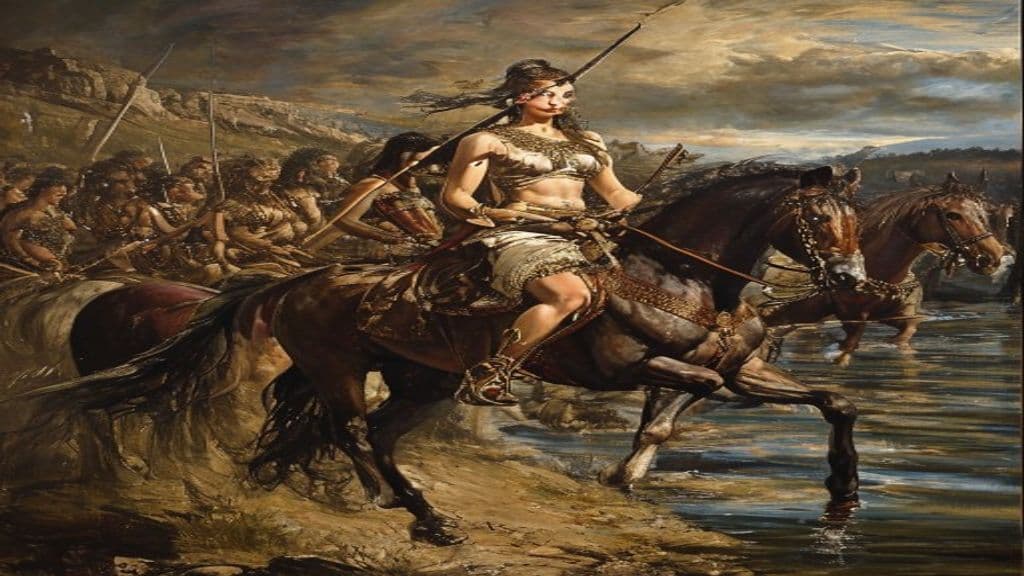
A society of women-warriors in ancient Greek myth and legend, depicted as skilled horsemen and archers who inhabit the periphery of the Greek world and act as recurring opponents and counterparts to Greek heroes. Treated by ancient authors as a past people and by modern scholars as a mythic construct possibly inspired by Eurasian female warrior burials.

Ambika (Jainism)
Lesser

Ambika (Jainism)

Ambika is the yakṣiṇī (Śāsana Devī, protector-goddess) and tutelary attendant of the 22nd Tīrthaṅkara Neminatha in Jain tradition. Venerated both as an attendant spirit and an independent goddess (kuladevi) she features in devotional, temple and tantric ritual contexts, and is associated with fertility, prosperity and protection.

Ambisagrus
Lesser

Ambisagrus

Ambisagrus is a local Gaulish deity attested in Gallo‑Roman religion, worshipped at Aquileia in Cisalpine Gaul and identified there with Jupiter Optimus Maximus under Roman interpretatio. The name is tentatively analyzed from Proto‑Celtic elements *ambi‑ + *sagro‑.

Ambondro mahabo
Minor Spirit

Ambondro mahabo

Ambondro mahabo is an extinct Middle Jurassic mammal known from a fragmentary right lower jaw (UA 10602) with three teeth from the Isalo III Formation of northwestern Madagascar. Described in 1999, it has been central to debates about the early evolution and homology of tribosphenic-like molar architecture.

Ambrose of Alexandria
Lesser

Ambrose of Alexandria

Ambrose of Alexandria (before 212 – c. 250) was a wealthy, educated layman of Alexandria who became a close disciple, patron, and ordained deacon in the circle of the theologian Origen. He is remembered in Christian sources as a convert from earlier heterodox affiliations, a supporter who provided books and scribes, a stimulus to Origen's writings, and a confessor who suffered persecution under Maximinus Thrax.

Ambrosia (Hyades)
Lesser

Ambrosia (Hyades)

Ambrosia is named in classical sources as one of the Hyades, a small group of nurse-nymphs who tended the infant Dionysus/Liber and who are variously said to have been transformed into a vine (in one revenge motif) or placed among the Hyades stars. Her story is preserved in mythographic accounts (notably Hyginus citing Pherecydes) and later summaries.

Ambrosius Aurelianus
Minor Spirit

Ambrosius Aurelianus

Ambrosius Aurelianus is presented in British late‑antique and medieval literary sources as a Romano‑British leader who rallied survivors against Anglo‑Saxon incursions in the 5th century. He is attested earliest in Gildas's De Excidio (6th century) as a Christian aristocratic war leader and is later expanded into prophetic and dynastic roles in the Historia Brittonum (9th century) and Geoffrey of Monmouth (12th century).

Ambush Bug
Lesser

Ambush Bug

Ambush Bug is a fictional comic-book character published by DC Comics, created as a deliberately silly, self-referential figure who parodies superhero conventions and continuity. First appearing in DC Comics Presents #52 (Dec. 1982), he has been portrayed variably as an incompetent villain, a nuisance anti-hero, and a metafictional comic foil who frequently breaks the fourth wall.

Amduscias (Amdusias)
Lesser

Amduscias (Amdusias)

Amduscias (also spelled Amdusias) is a named entity appearing in lists of demons from the goetic tradition, most notably cited in modern compilations that draw from the Ars Goetia and related demonological works. The provided sources do not include a full primary grimoire entry for the name but show the term's reuse in contemporary music and gaming as an evocative cultural label.

Amdusias
Lesser

Amdusias

Amdusias is a named spirit listed in the goetic corpus (the Ars Goetia / Lesser Key of Solomon) described as the sixty-seventh spirit who commands twenty-nine legions; sources note his true form as a unicorn and that his arrival is accompanied by trumpets and musical sounds, and that he may assume human shape when evoked.

Ame no Mahitotsu no Kami
Lesser

Ame no Mahitotsu no Kami

A named heavenly artisan deity attested in modern secondary sources as a smithing kami; in limited modern folklore he is also locally identified with one-eyed yōkai imagery. Sources are fragmentary and combine encyclopedic labels with localized folk claims.

Ame-no-Koyane-no-mikoto
Greater

Ame-no-Koyane-no-mikoto

Ame-no-Koyane-no-mikoto is a male Amatsukami (heavenly kami) in classical Shinto myth, presented as the ritual-official ancestor of the Nakatomi clan and linked genealogically to the Fujiwara. He functions as a divine ritual specialist—performing divination and liturgical speech in foundational myths (notably the Ama-no-Iwato episode) and as guardian of the sacred mirror—and is venerated at major shrines such as Kasuga Taisha and Hiraoka Shrine.

Ame-no-Minakanushi
Primordial

Ame-no-Minakanushi

Ame-no-Minakanushi (天之御中主) is a primordial kami named in Japan's classical creation texts as one of the very first deities to come into being in Takamanohara (High Heaven). Presented in the Kojiki and Nihon Shoki as a solitary, hidden first god, he functions primarily as a mythic point of cosmic origin rather than an actively intervening deity in surviving narratives.

Ame-no-Ohabari
Ancient

Ame-no-Ohabari

Ame-no-Ohabari (also attested originally as Itsu-no-Ohabari) is a named sword in the Kojiki that is also treated in later passages and commentaries as a kami (divine spirit). In the mythic cycle the sword is wielded by Izanagi to slay the fire-deity Kagu-tsuchi, and the same name is later presented as a candidate kami proposed to descend from Takamagahara to Ashihara no Nakatsukuni.

Ame-no-Tajikarao
Greater

Ame-no-Tajikarao

Ame-no-Tajikarao is a kami in Japanese Shinto myth notable for exceptional physical strength. He appears in the Ama-no-Iwato narrative as the deity who pulls Amaterasu from the heavenly rock cave, and he is venerated at numerous shrines across Japan with associations to physical power and local lineage claims.

Ame-no-Tokotachi
Primordial

Ame-no-Tokotachi

Ame-no-Tokotachi is a primordial kami in classical Shinto cosmology attested in summaries of the Kojiki and Nihon Shoki tradition. Sources identify a very early solitary or among-the-first deity who manifests at the creation of heaven and earth; supplied materials also reference a closely related name, Ame-no-Minakanushi, in English summaries of those chronicles.

Ame-no-Uzume-no-Mikoto
Ancient

Ame-no-Uzume-no-Mikoto

Ame-no-Uzume-no-Mikoto is a Shinto kami of dawn, mirth, revelry and the performing arts whose comic and erotic dance at the entrance of Amano‑Iwato lures the sun goddess Amaterasu from hiding, restoring light; her action is cited as the mythic origin of kagura and of certain ritual/performance lineages.

Ame-no-hohi
Lesser

Ame-no-hohi

Ame-no-hohi (also rendered Ame no Fuhi) is a male kami in Japanese mythology identified in sources as the second son of the sun goddess Amaterasu. He is principally attested as an ancestral figure: historical rulers of Izumo and the modern heads of Izumo Taisha and Izumo-taishakyo claim descent from him.

Ame-no-oshihomimi
Ancient

Ame-no-oshihomimi

Ame-no-oshihomimi (天忍穗耳尊), often shortened Oshihomimi, is a kami in Shintō mythology described as the first son of the sun goddess Amaterasu and an ancestral figure for the Japanese Imperial family. In some versions of the myths he is offered rulership of the earth but declines; he is also father (through Takuhadachiji-hime) of Ninigi-no-Mikoto, linking heavenly descent to terrestrial rule.

Ame-no-wakahiko
Minor Spirit

Ame-no-wakahiko

Ame-no-wakahiko is presented in the provided sources as a kami in Japanese mythology, described specifically as a god of grains and counted among the Amatsukami (heavenly deities). The sources identify him as a son of Amatsukunitama and note a medieval prose narrative, the Ame no Wakahiko Monogatari, exists about him.

Amechania
Minor Spirit

Amechania

Amechania (Ancient Greek: Αμηχανία / Αμηχανίην; also Amekhania, Amakhania; Latin: Amechania) is a personified spirit (daimona) of helplessness, want, or impossibility attested in ancient Greek literary and lexicographic sources. She is cited as a close companion or sister of Penia and Ptocheia and is described in some modern references as virtually identical to Aporia. No cultic practice or iconography is attested in the supplied sources.

Amefurikozō
Lesser

Amefurikozō

Amefurikozō (雨降小僧 or 雨降り小僧) is an Edo-period yōkai figure depicted in classical illustrated and popular print culture as a youthful attendant associated with rain. Classical sources (notably Sekien Toriyama's Konjaku Gazu Zoku Hyakki) present it as a kozō-type servant linked by captional wordplay to a rain deity; later popular literature elaborates its rain-producing role and playful mischief on rainy nights.

Amelius (Gentilianus)
Minor Spirit

Amelius (Gentilianus)

Amelius (Gentilianus) was a 3rd-century Neoplatonic philosopher and one of Plotinus's chief disciples, known for prolific writings, memorization of Numenius, and for promoting the preservation of Plotinus's doctrines. The name also recurs later as a personal name in medieval and modern contexts.

Amemasu
Ancient

Amemasu

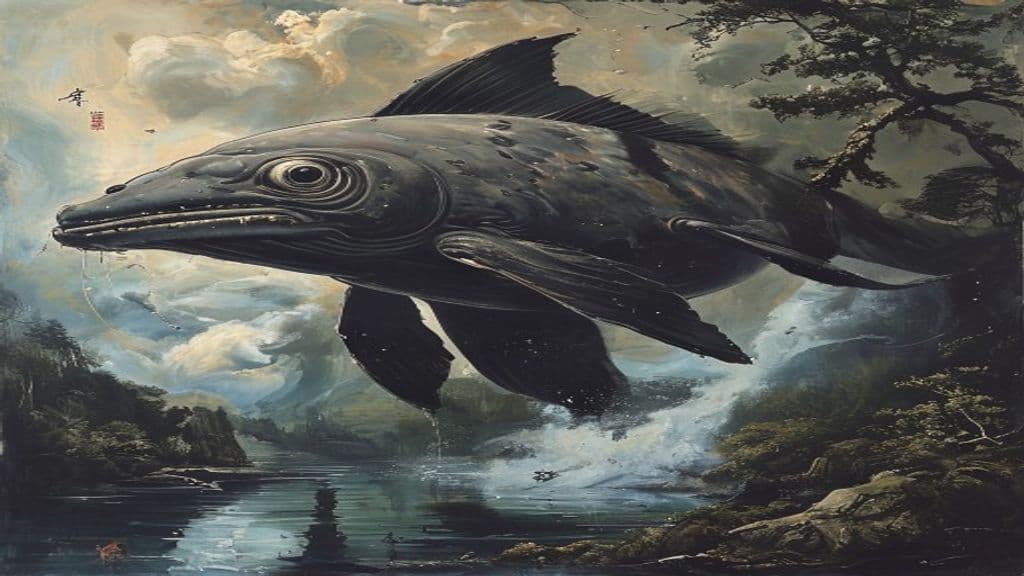
Amemasu (雨鱒, アメマス), sometimes Ō-amemasu (大アメマス), is a giant fish- or whale-like lake-being in Ainu-related and regional Japanese folklore. Tales attribute to it dangerous behaviors (capsizing boats, drowning people), landscape-changing effects (blocking lakes, causing floods), and a cosmological role in which very large individuals can affect earthquakes by 'holding up' the earth.

Amenhotep I (tradition)
Greater

Amenhotep I (tradition)

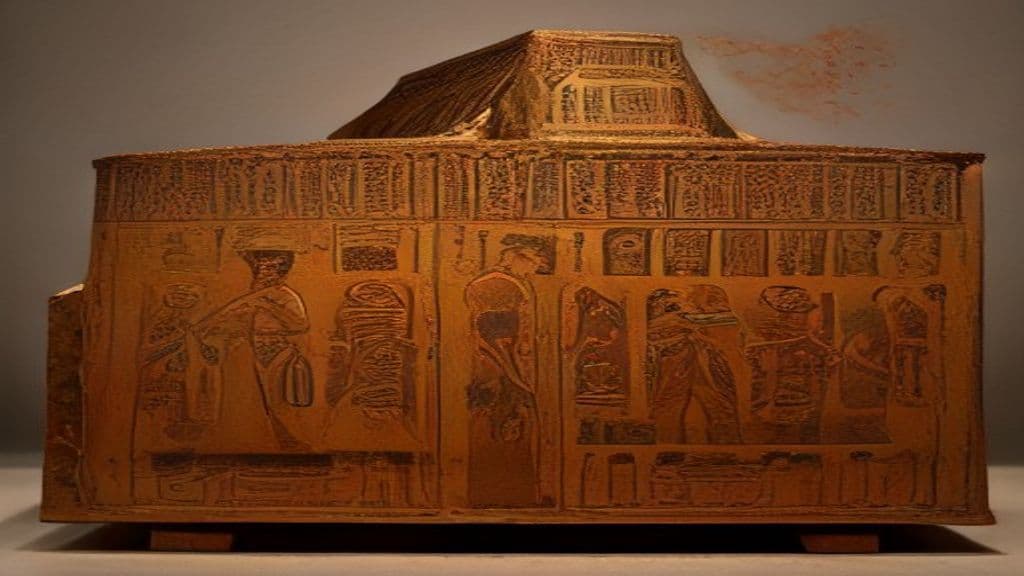
Amenhotep I was a historical pharaoh of Egypt's Eighteenth Dynasty who, after his death, was deified and venerated locally as a patron figure of the Theban necropolis and the artisan community of Deir el-Medina. In later funerary contexts his image appears among protective iconography on coffins and in temple decoration, functioning as a local funerary patron rather than a volatile supernatural aggressor.

Amenhotep, son of Hapu
Lesser

Amenhotep, son of Hapu

Amenhotep, son of Hapu was a historically attested 18th‑Dynasty official who was posthumously venerated and integrated into Egyptian temple cult as a deified, local healing intercessor. His cult appears in Thebes and resurges in the Ptolemaic period, represented in votive reliefs, chapels, and statues.

Amenohoakari
Greater

Amenohoakari

Amenohoakari (天火明) is a Japanese kami associated with sunlight, heat, and the ripening of grain; he functions as an agricultural deity and a divine ancestor claimed by multiple clans and hereditary priestly lineages. Textual sources place him within heavenly genealogy (tensonzoku) while other records give alternate parentage, producing divergent traditions about his origins and relationships to other kami.

Ameonna
Lesser

Ameonna

Ameonna (雨女, "rain woman") is a figure in Japanese folklore treated as a yōkai associated with rain. Sources depict her both as a rain-calling supernatural being (sometimes helpful in drought) and as a folk label for an unlucky person whom rain seems to follow; a key pictorial source is Toriyama Sekien's Konjaku Hyakki Shūi.

Amergin Glúingel
Greater

Amergin Glúingel

Amergin Glúingel is a human bard and judge of the Milesian leaders in the Irish Mythological Cycle. Presented as a son of Míl Espáine and later Chief Ollam of Ireland, he is attributed with a powerful invocation known as the Song of Amergin that clears a storm to permit the Milesian landing and with acting as an impartial arbiter in the Milesian–Tuatha Dé Danann encounter.

Amergin mac Eccit
Greater

Amergin mac Eccit

Amergin mac Eccit is a semi-legendary human poet-warrior of the Ulster Cycle who serves as chief poet (bard) of the Ulaid in the court of Conchobar mac Nessa. Noted for a sudden prophetic/poetic utterance at age fourteen, he becomes Athirne's foster-son and later performs heroic deeds including slaying the three-headed Ellén Trechend and stalling the Connachta by hurling enormous stones during the Táin Bó Cúailnge.

America Chavez
Greater

America Chavez

A fictional superhero published by Marvel Comics, America Chavez is a Latina, lesbian character whose signature ability is creating star-shaped portals that allow travel across space and time. Introduced in 2011, she has been depicted as originating from the extra-temporal "Utopian Parallel" in early stories and later retconned as the product of human experimentation; she has headlined solo series and appeared in team books and the MCU film Doctor Strange in the Multiverse of Madness (2022).

American Crusader
Greater

American Crusader

A Golden Age American costumed superhero, Professor Archibald "Archie" Masters gains flight, super-strength, bullet-invulnerability, and electromagnetic-pulse abilities after an 'atom smasher' accident and operates as a patriotic champion in serialized comics; later revivals rework him as a legacy figure subject to suspended animation, cloning, imprisonment, and resurrection for plot purposes.

Amesemi
Ancient

Amesemi

Amesemi is a Kushite (Meroitic/Nubian) protective goddess, attested in temple reliefs and inscriptions from sites such as Musawwarat es Sufra, Naqa, and Amara from the late 3rd century BCE onward. She functions as the consort of the lion/war god Apedemak and appears in royal and state cult contexts where she is petitioned for life and receives offerings.

Amesha Spenta
Ancient

Amesha Spenta

Amesha Spenta (Avestan Aməša Spəṇta) are a canonical heptad of divine, bounteous principles in Zoroastrian thought, described as the first emanations of Ahura Mazda and later functioning as moral ideals and protectors or guardians of portions of creation.

Amestris
Minor Spirit

Amestris

Amestris is primarily a proper name attested for Achaemenid royal women in classical sources and reused in modern fiction as a toponym (not a supernatural being). Historically it denotes at least one queen consort of Xerxes I and a daughter of Artaxerxes II; in modern culture it is best known as the nation-state named Amestris in the manga/anime Fullmetal Alchemist and as an evocative proper name in various creative works.

Amethyst, Princess of Gemworld (tradition)
Minor Spirit

Amethyst, Princess of Gemworld (tradition)

No supplied sources document a supernatural entity called 'Amethyst, Princess of Gemworld.' The available materials instead discuss the mineral amethyst (etymology, physical properties, and historical beliefs), the use of 'Amethyst' as a given name, and an incidental modern music credit containing the word 'Amethyst.' Therefore this entry reports only what is attested in those sources and explicitly notes the absence of any attested folkloric figure by that name.

Amethyste (Amethystos)
Minor Spirit

Amethyste (Amethystos)

Amethyste (Ancient Greek: Amethystos) appears in later European literary tradition as a beautiful maiden or nymph transformed into the amethyst gemstone; the story is a post-classical etiological invention explaining the stone's purple color and linking the gem to an ancient belief that it prevented drunkenness.

Amida Nyorai
Ancient

Amida Nyorai

Amida Nyorai (Amitābha / Amitāyus) is a principal Mahayana Buddha venerated across East Asia as the embodiment of Infinite Light and Infinite Life who presides over a Western Pure Land and is invoked as the savior who receives the dying into rebirth there.

Amihan
Greater

Amihan

Amihan is a figure in Tagalog/Philippine tradition presented both as a bird-deity in origin narratives and as the name for the northeast monsoon season (a cool trade wind). In mythic accounts Amihan appears in the Malakas and Maganda creation story as the bird who frees or rescues the first humans from a bamboo; in cultural usage the same term denotes the recurring amihan season across the Philippines.

Amikiri
Minor Spirit

Amikiri

An illustrated yōkai first attested in Toriyama Sekien's Gazu Hyakki Yagyō (1776), later described in modern writings as a small creature that cuts nets, mosquito curtains, and bamboo blinds. Scholarly commentary treats it as primarily an iconographic invention or pun by Sekien rather than a well‑attested folkloric agent.

Amikuk
Greater

Amikuk

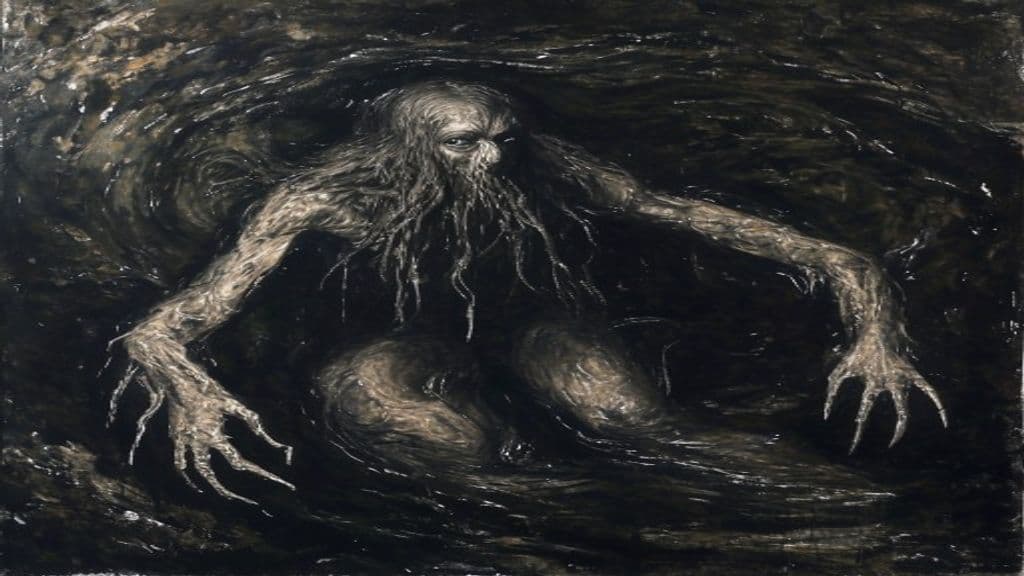
Amikuk is a Yup'ik / Alaskan Inuit spirit-creature associated with the ground and coastal waters; sources describe it as a shapeshifter that lives within the earth, can swim through earth and water, may take human form, and is dangerous to hunters and travelers.

Amimitl (Opochtli)
Lesser

Amimitl (Opochtli)

A Mexica/Aztec deity associated with fishing, hunting, and water-related technologies; identified in sources with the better-documented figure Opochtli, "The Left," who functions as a specialized patron of implements and as a representative or attendant of the rain god Tlaloc. A temple in the Tira de la Peregrinación has been interpreted by a scholar as possibly belonging to a figure labeled Amimitl, but that identification is uncertain.

Amir Arsalan-e Namdar (The Exalted Prince Arsalan)
Greater

Amir Arsalan-e Namdar (The Exalted Prince Arsalan)

A powerful, potentially benevolent figure in Persian mythology with magical abilities. (Note: 1. Power tier needs to be adjusted based on abilities described (as benevolent figure with magical abilities), could be Lesser or Minor Spirit instead of Greater. 2. Summary should mention specific my)

Amirani
Primordial

Amirani

In the Georgian tradition, Amirani is a Demiurge figure who defied God by introducing metalworking to humanity. (Note: - Power tier: Greater (not Primordial), as Amirani's abilities are more focused on introducing metalworking and defying God than cosmic-scale powers. - Weaknesses: not just "by God", but specifically )

Amisodarus (Chimera)
Greater

Amisodarus (Chimera)

A composite monstrous creature from Greek myth, traditionally described as a lion with a goat's head on its back and a serpent for a tail, sometimes winged and noted for breathing fire. It is genealogically placed among the chthonic offspring of Typhon and Echidna and is best known from the heroic-age episode in which Bellerophon defeats it.

Amitābha
Ancient

Amitābha

Amitābha is a central celestial Buddha of Mahayana Buddhism who presides over the western Pure Land called Sukhāvatī. Devotional practices invoking his 'measureless' light and life (nianfo/nembutsu) are presented in Pure Land traditions as a path by which beings may be reborn in his buddhafield and quickly attain Buddhahood.

Amitābha Buddha
Ancient

Amitābha Buddha

Amitābha is a principal Mahayana Buddha who presides over the Western Pure Land (the Land of Ultimate Bliss). Devotional practices—most centrally recitation of his name and chanting of Pure Land sutras—are presented in sources as the means by which Amitābha welcomes practitioners for rebirth in his hindrance-free realm.

Amleth
Minor Spirit

Amleth

Amleth (Old Norse: Amlóði; Latinized Amlethus) is a legendary medieval Scandinavian prince and saga-hero best known from Saxo Grammaticus' Gesta Danorum. He is a human protagonist whose story centers on feigned madness, cunning survival, exile to Britain, marriage, wealth-gathering, and eventual vengeance against his father's murderer; the tale later inspired the character of Shakespeare's Hamlet and numerous adaptations.