French Supernatural Beings

113 documented French supernatural beings from the Evil Eye grimoire, including 72 lesser and 21 minor spirit in power tier.

page 2 of 2

Elyan the White
Lesser

Elyan the White

Elyan the White is a human knight of Arthurian legend attested in the medieval prose romances of the Lancelot‑Grail (Vulgate) and Post‑Vulgate cycles (and in the Prose Tristan). He is presented as the son of Bors the Younger, a member of the Round Table, a loyal kinsman of Lancelot, and a martial participant in episodes such as the rescue of Guinevere and Lancelot's exile; one Vulgate strand prophesies he will become Emperor of Constantinople.

Enide (Enid)
Lesser

Enide (Enid)

Enide (Welsh: Enid) is a human literary character from medieval Arthurian romance, depicted as the wife of the heroes Erec (in Chrétien de Troyes' Erec and Enide) and Geraint (in the Welsh romance Geraint and Enid). She functions as a courtly lady whose love, loyalty, and speech catalyze the hero's testing, restoration of honor, and reconciliation of domestic affection with knightly duty.

Erec
Lesser

Erec

Erec is a human knight of the Round Table in the Arthurian literary tradition, best known as the protagonist of Chrétien de Troyes' romance Erec and Enide. He appears across medieval redactions (Old French, German, Norse, Middle English, and prose cycles) as a heroic figure whose narratives examine knighthood, love, reputation, and encounters with enchantment.

Eudaf Hen
Lesser

Eudaf Hen

Eudaf Hen (Eudaf "the Old") is a legendary dynastic figure in medieval Welsh and Breton literature, remembered as a king of the Britons and an ancestral founder used in royal and saintly genealogies. He appears in narrative sources (notably The Dream of Macsen Wledig and Geoffrey of Monmouth's Historia) and in various pedigrees where his identity organizes claims to rulership, descent, and regional foundation (including links to Brittany).

Ewiger Jäger
Lesser

Ewiger Jäger

A spectral huntsman from German, Belgian and Pennsylvania Dutch folklore condemned to an unending hunt. Usually portrayed as a formerly human hunter bound by oath, curse, sacrilege, or a dying injunction to pursue quarry ceaselessly, the figure is a local variant of the European wild hunt motif.

Fairy Godmother
Greater

Fairy Godmother

A literary supernatural patron figure—literally a 'fairy godmother' (French: fée marraine; Spanish: hada madrina)—that acts as a mentor or surrogate godparent in fairy tales, using magic to influence a protagonist's fortunes and to decree or modify destiny.

Fairy Queen
Greater

Fairy Queen

A female sovereign figure who rules over fairies or fairy courts across diverse folkloric and literary traditions. Depictions range from benevolent and gift-giving to ambivalent or dangerous; she appears both as a local hill-associated ruler in Celtic traditions and as a literary sovereign in Continental and English writings.

Fisher King
Greater

Fisher King

A figure in the Arthurian Grail cycle who serves as the hereditary guardian of the Holy Grail and whose bodily wound is symbolically linked to the barrenness of his realm. He is often depicted as incapacitated and 'fishing' while awaiting a questing hero whose question or deed will heal him and restore the land.

Frédégonde
Lesser

Frédégonde

Frédégonde (also Fredegonde, Fredegund, Fredegundis) is a historical and legendary Merovingian queen of the 6th century, remembered in later French historiography and literature as a ruthless court figure associated with intrigue and alleged crimes. She functions in cultural memory as an archetype of royal female ambition and has been adapted repeatedly in novels, plays, operettas and opera from the 18th century through modern revivals.

Gaheris
Lesser

Gaheris

Gaheris is a literary figure of the Arthurian romance tradition: a Knight of the Round Table, son of King Lot and Queen Morgause, and a brother of Gawain. Presented in continental French poetry, the Vulgate/Lancelot-Grail cycle, and Thomas Malory's Le Morte d'Arthur, his martial deeds, a notorious act of matricide in Malory, and his death during Lancelot's rescue of Guinevere are depicted as contributing to the political unraveling of Arthur's court.

Gareth
Minor Spirit

Gareth

Gareth is a literary knight of King Arthur's Round Table, traditionally presented as a younger son of King Lot and nephew of King Arthur. In medieval Arthurian romances (notably Thomas Malory's Le Morte d'Arthur and continental Vulgate/Post-Vulgate material) he functions as an exemplar of chivalric virtues—humility, martial skill, generosity—and as a narrative figure whose death helps precipitate the collapse of Arthur's realm.

Gawain
Minor Spirit

Gawain

Gawain is a human heroic figure of the Arthurian legendary cycle: a knight of King Arthur's Round Table, variously portrayed across medieval Welsh, French, Latin, and English traditions as an exemplar of courtesy and loyalty or, in later cycles, as a morally ambiguous or culpable noble. He functions within courtly, kinship, and martial narrative networks rather than as a supernatural spirit.

Geraint son of Erbin
Lesser

Geraint son of Erbin

Geraint son of Erbin (Middle Welsh: Geraint uab Erbin / Geraint mab Erbin) is a medieval Welsh legendary hero celebrated in early Middle Welsh englynion for his deeds at the Battle of Llongborth and later as the protagonist of the prose romance "Geraint and Enid," an adaptation of Chrétien de Troyes' Erec and Enide. He functions in the Welsh literary tradition as a martial exemplar situated in the heroic past rather than as a supernatural being.
Giselher of Burgundy
Lesser

Giselher of Burgundy

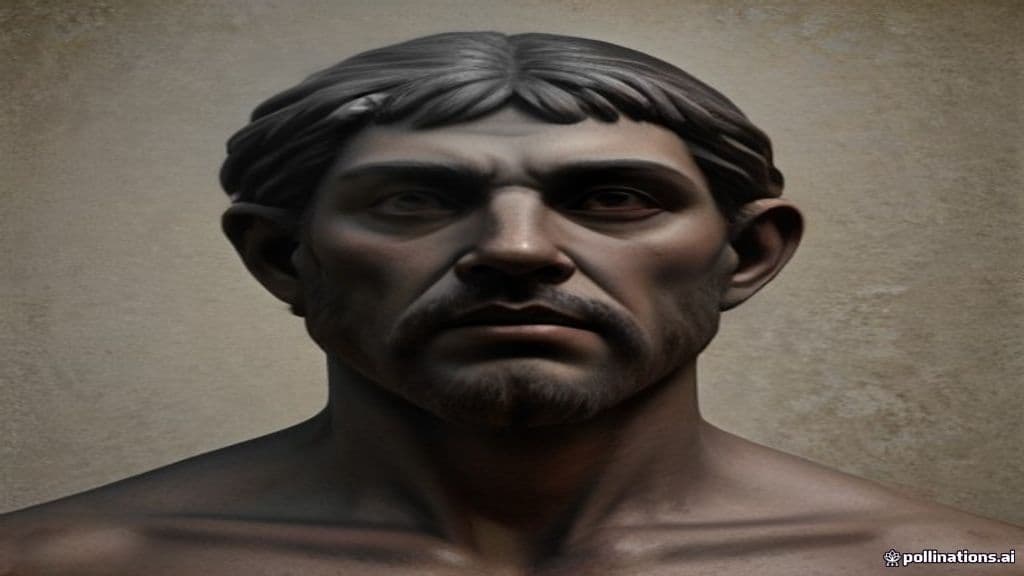
Giselher of Burgundy (also Gislaharius) is a historical and literary Burgundian prince attested in early medieval genealogies and as a character in the Middle High German epic the Nibelungenlied. He is presented as a son of King Gebicca and brother to Gundomar/Gernot and Gundaharius/Gunther; in the Nibelungenlied he is betrothed to Dietlind of Bechelaren. Historical sources place him among Burgundian rulers of the 410s and note that he died before 436.

Glewlwyd Gafaelfawr
Lesser

Glewlwyd Gafaelfawr

Glewlwyd Gafaelfawr is a figure in medieval Welsh and Arthurian tradition presented as the chief porter (gatekeeper) of Arthur’s court and a renowned warrior. Sources portray him as a liminal institutional officer who enforces court protocol and as a veteran hero famed for prodigious size, strength, and ferocity rather than as a supernatural being.

Goblin
Lesser

Goblin

A class of small, often grotesque humanoid beings in European folk belief that range from household helpers to tricksters and violent figures. Goblins occupy liminal spaces—hearths, cellars, ruins and wild places—and their behavior toward humans depends on region, story, and reciprocal treatment.

Green Knight
Greater

Green Knight

A late-medieval Arthurian figure who functions as a supernatural challenger and tester of knightly virtue. In key narratives he appears at King Arthur’s court to issue a beheading challenge and is revealed in some versions to be the enchanted lord Bertilak de Hautdesert (or Bredbeddle in other variants).

Griflet
Lesser

Griflet

Griflet is a human narrative figure of the Arthurian literary tradition, appearing across medieval romances and later retellings as a loyal young squire who rises to become a knight of the Round Table. He is a recurring martial attendant of King Arthur, notable in sources for battlefield service, frequent captures and rescues, and variant fates at the end of the cycle.

Guinevere
Lesser

Guinevere

Guinevere is a named human royal figure in the Arthurian literary tradition: an early-medieval princess who becomes Queen of Britain as the wife of King Arthur. In medieval and later romance she functions as a central human agent whose relationships (notably with Arthur, Lancelot, and Mordred) and narrative experiences (abduction, adultery, rescue) drive major plot consequences for the kingdom.

Guiron le Courtois
Minor Spirit

Guiron le Courtois

Guiron le Courtois is a literary knight-errant from the Old French Arthurian prose-romance tradition, central to the Palamedes/Guiron compilation of the 13th century and later manuscript and printed continuations. He functions in the narrative cosmos as an exemplar of courtly conduct whose adventures, loyalties, and lineage are narrated within the wider Round Table milieu.

Gunther
Minor Spirit

Gunther

Gunther is a historical early 5th-century king of the Burgundians (Gundaharius/Gundahar) who was later absorbed into medieval Germanic heroic tradition as a legendary king (Middle High German Gunther, Old Norse Gunnarr). He functions in literature as a royal leader whose historical downfall and role in courtly-martial narratives link him to cycles involving Siegfried/Sigurd, Brunhild, Hagen, and Attila/Etzel.

Géant (REJECT — not attested as a discrete supernatural entity)
Minor Spirit

Géant (REJECT — not attested as a discrete supernatural entity)

The term 'Géant' in the provided sources is a French common noun meaning 'giant' and is attested chiefly as a descriptor used in place-names, festival puppets, commercial brands, and technical acronyms. The supplied materials do not document a cohesive folkloric supernatural being named 'Géant' with defined mythic origin, appearance, powers, or ritual practices; therefore this entry records the absence of evidence for a discrete legendary entity under this name in the provided sources.

Harlequin
Lesser

Harlequin

Harlequin is primarily a theatrical stock character (Italian Arlecchino) in commedia dell'arte: a nimble, comic servant and trickster. The theatrical persona derives its name, motifs, and some iconography from medieval Old French folkloric figures called herlequin/hellequin, a masked leader associated with nocturnal processions (the Mesnée d'Hellequin or Wild Hunt).

Hector de Maris
Lesser

Hector de Maris

Hector de Maris is a human knight of the Round Table in the medieval Arthurian prose cycles (Vulgate and Post-Vulgate) and in later retellings. Presented as an illegitimate son of King Ban of Benoic and the half-brother of Lancelot, he is a prominent martial figure: a tournament champion, leader of Lancelot's faction during the court scandal, and a participant in the Grail Quest and subsequent wars.

Hippomedon
Lesser

Hippomedon

Hippomedon (Ancient Greek: Ἰππομέδων) is a personal name borne by multiple mortal figures in Greek myth and epic cycles, including one of the Seven against Thebes and several minor warriors associated with the Trojan War; the name is also transmitted in medieval romance under forms such as Ipomedon/Ipomadon.

Hypermnestre
Lesser

Hypermnestre

Hypermnestre (Hypermnestra; Italian Ipermestra) is a classical Greek mythic heroine — one of the Danaïdes — who is represented in 18th- and early-19th-century French and European operatic and theatrical repertoires. The provided sources treat her as a human tragic protagonist and stage character (not a supernatural being), notably as the central figure in Charles-Hubert Gervais's 1716 tragédie en musique Hypermnestre and in operatic treatments grouped under Les Danaïdes.

Icaunis
Lesser

Icaunis

Icaunis (Dea Icaunis) is the localized Gallo‑Roman goddess of the river Yonne (ancient Icauna), known from a single inscription found at Auxerre in Burgundy. She exemplifies the widespread Roman‑era practice in Gaul of venerating rivers and other natural features as female divine figures.

Jean le Messager
Minor Spirit

Jean le Messager

Not an attested supernatural being; rather, a recurring French-language phrase attested across bibliographic, artistic, musical, operatic and sigillographic sources. The corpus shows usages of 'Le Messager' as a title (newspaper, artwork), a role-label in opera, and as part of archival cataloguing ('Jean // le Messager'), with no evidence supporting a folkloric or cosmological entity named Jean le Messager.

Kludde
Lesser

Kludde

Kludde is a Flemish legendary tormenting spirit (kwelgeest) presented in modern sources as a shapeshifting, malign presence associated in contemporary accounts with woodlands around the Dender. Source material is fragmentary: descriptions emphasize its role in local storytelling and its capacity to frighten people who seek it out rather than a full traditional taxonomy.

La Chasse-galerie (The Flying Canoe)
Lesser

La Chasse-galerie (The Flying Canoe)

A French-Canadian folktale about a bewitched or enchanted bark canoe that flies through the night after men make a pact with a malign supernatural agent (often identified as the Devil). The story functions as a Wild Hunt–type narrative fused with Indigenous legends of a flying canoe and serves as a moral test about taboos, sobriety, and bargaining with otherworldly powers.

Loucetios
Primordial

Loucetios

Gallic god associated with Mars, lightning, and war; worshipped in the Rhine-Moselle region. (Note: 1. Power tier: Primordial is unlikely, given the lack of information about his abilities or behaviors; a more plausible tier would be Greater (powerful regional). 2. Abilities: No direct information a)

Loup garou
Greater

Loup garou

A loup garou is a human afflicted with or capable of transforming into a wolf or a wolf–human hybrid (a werewolf). Sources treat it as a folkloric condition or being tied to specific persons rather than a separate species; modern fiction often depicts transformations tied to the full moon and transmissible by bite or scratch.

Margot la fée
Greater

Margot la fée

A vernacular class-name in Breton and Mayenne folklore for a type of powerful, territorial earthly fairy associated with the land, subterranean riches, megalithic monuments, and ambivalent dealings with humans. The category is traditionally linked in local imagination to Morgana (Morgan le Fay) and, more distantly and tentatively, to an aspect of the Earth Mother.

Melion
Lesser

Melion

Melion is the named protagonist of a late twelfth–early thirteenth‑century Breton lai who is a knight in King Arthur's service and who, by means of a magical ring, is transformed into a wolf, lives among wolves and at Arthur's court in lupine form, and is ultimately restored to human shape.

Mettekoe
Lesser

Mettekoe

Mettekoe is a contemporary processional giant created in Petit-Enghien, Belgium in 2022 that functions as a civic mascot for a charitable association concerned with orangutan conservation and as a participant in gatherings of giants and contemporary art events.

Mélusine
Greater

Mélusine

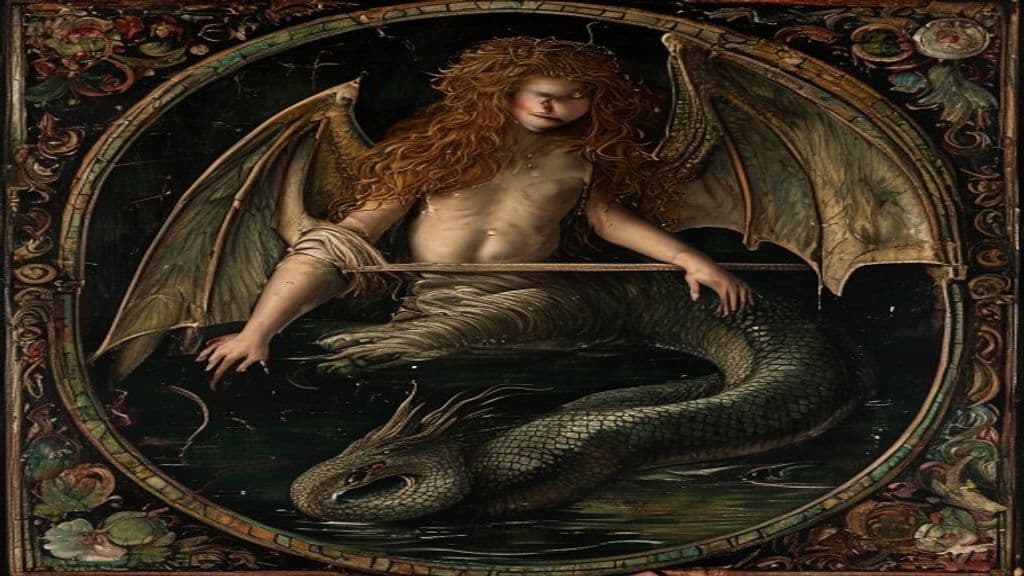
Mélusine is a European folkloric female freshwater spirit and locus guardian often depicted human above the waist and serpentine or fish‑tailed below. In medieval French romance she marries a human lord under a conditional taboo (commonly Saturday) and is associated with wealth, castle‑building, and as an ancestral figure for certain noble houses.

Peird van Appels
Minor Spirit

Peird van Appels

Peird van Appels is attested in available sources as the name of a folkloristic horse associated with the town of Appels in East Flanders, Belgium. The extant references supply the name and classification only; no narrative, descriptive, or ritual details are recorded in the provided sources.

Peird van Sint-Gillis (Bayard)
Lesser

Peird van Sint-Gillis (Bayard)

A single legendary magical bay horse originating in the medieval chansons de geste and preserved in regional folkloric tradition (notably Belgian). Described as an intelligent, strong mount with the supernatural ability to adjust its size to its riders, serving as a wondrous companion to human heroes.

Persinette
Lesser

Persinette

Persinette is the human heroine of a 1698 French literary fairy tale by Charlotte-Rose de Caumont de La Force. In the story she is given to a fairy as recompense for stolen parsley, raised and then confined in a tower, and later reunited with a prince; elements of magic surround her fate but she herself is portrayed as mortal.

Polypheme (Polyphemus)
Lesser

Polypheme (Polyphemus)

Polypheme (Polyphemus) is a name applied in Greek mythic and later artistic traditions primarily to a cyclops figure tied to the Acis and Galatea narrative and secondly as a variant personal name in heroic genealogies (including as a female name-form associated with Jason's mother). Sources show the name used variably across monstrous, mortal, and artistic contexts rather than as a single unified theological being.

Procession of the Dead
Lesser

Procession of the Dead

A widely attested folkloric motif (Stith Thompson Motif E491) describing a marching retinue of ghosts, phantoms, or souls that travels through the living world. Local forms (e.g., Santa Compaña, Nightmarchers, panchabhāya) vary in appearance and meaning and are often tied to liminal times, funerary ritual, or moral repercussion.

Processional giant
Minor Spirit

Processional giant

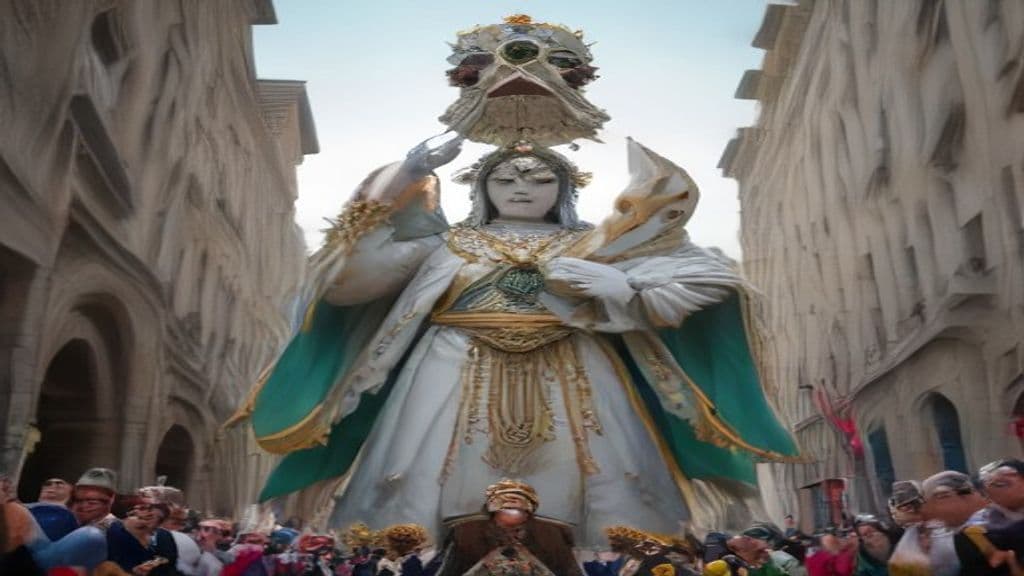
Large hollow costumed figures carried and animated by people in civic and liturgical processions across parts of Europe (notably Belgium, France, Spain, Portugal, Italy and England). Rooted in medieval rites, they function as performative embodiments of town archetypes, biblical and legendary characters and are part of festival pageantry rather than autonomous supernatural beings.

Púca (Pooka / Puca)
Minor Spirit

Púca (Pooka / Puca)

A long-standing folkloric spirit from Irish and related Celtic traditions, the púca is a shape‑shifting, ambivalent supernatural being commonly associated with rural and maritime communities and said to bring both good and ill fortune.

Reus Vaantjesboer
Lesser

Reus Vaantjesboer

Reus Vaantjesboer is a processional giant — a constructed, anthropomorphic effigy — recorded from Halle, Belgium. The single source presents it as a civic festival figure used in processions rather than as a supernatural being.

Rigobert
Minor Spirit

Rigobert

Rigobert (d. c. 750) was a Benedictine monk, abbot of the Abbey Saint-Pierre of Orbais, and bishop of Reims (succeeding Saint Rieul in 698) who is venerated as a saint in the Catholic Church. He is remembered for his monastic leadership, episcopal ministry (including the baptism of Charles Martel), his forced removal from the see, penitential retirement, and a medieval cult centred on the translation and enshrinement of his relics. His feast day is observed on 4 January.

Ritona
Lesser

Ritona

Ritona (also attested as Pritona) is a named local goddess of Roman‑period Gaul, chiefly attested among the Treveri of the Moselle valley. She is understood from inscriptions and temple remains as a divine patron of fords, river crossings, springs and associated sanctuary spaces, worshipped in formal civic cult contexts at sites such as Augusta Treverorum (Trier) and Contiomagus (Pachten).

Ros Beiaard
Lesser

Ros Beiaard

Ros Beiaard is a legendary horse figure central to the civic Ommegang festival of Dendermonde, Belgium. In that local tradition it is embodied as an enormous wooden horse effigy paraded through the town on a roughly decennial cycle and is locally understood as the Dutch/Flemish form of the wider Bayard (magical horse) legend.

Scalfort
Minor Spirit

Scalfort

Scalfort is attested in the supplied sources only as a family name token and not as a supernatural or folkloric being. The available documents are historical and military in nature and do not attribute mythic features, powers, or rituals to the name.

Sir Balin
Lesser

Sir Balin

Sir Balin is a mortal knight of the Arthurian cycle, portrayed as an archetypal tragic and impetuous warrior whose actions — notably drawing a cursed sword sent by a damsel from Lile (Lily) of Avalon and later striking the Dolorous Stroke with the Holy Lance — set in motion grievous consequences for Arthur's court, including the initiation of the Grail quest in Post‑Vulgate tradition.

Sleeping Beauty (folktale motif)
Minor Spirit

Sleeping Beauty (folktale motif)

A widespread fairy-tale narrative figure (Aarne–Thompson Type 410): a royal young woman who falls into a prolonged enchanted sleep caused by a curse or a magical/physical agent and is later awakened by reversal of that causation. The story functions as a folkloric motif across Italian, French, and German literary traditions and many later adaptations.

Thomas le Mousquetaire
Lesser

Thomas le Mousquetaire

The available sources do not attest Thomas le Mousquetaire as a folkloric or supernatural being. The term mousquetaire (musketeer) is documented as a literary/military archetype in Alexandre Dumas's The Three Musketeers and as an adapted helper/props-provider labelled "le Mousquetaire" in French-language episodes of La Maison de Mickey; no source supplied identifies a distinct supernatural entity named Thomas.

Weiße Frauen
Lesser

Weiße Frauen

A class of elf-like luminous female spirits in German folklore associated with sunlight, nature, and particular locales (brooks, castles). Scholars (notably Jacob Grimm) interpret them as survivals or localizations of older Germanic light-elves and goddess-figures.

Woltje
Lesser

Woltje

Woltje is a stock puppet character and popular stage hero in Brussels puppet theatre. The name derives from Waaltje, meaning "small Walloon," and is said to honor the workers who came to build Brussels’ battlements around 1600.