Greek Supernatural Beings

1796 documented Greek supernatural beings from the Evil Eye grimoire, including 1106 lesser and 335 minor spirit in power tier.

page 29 of 30

Sterope
Lesser

Sterope

Sterope (Ancient Greek: Στερόπη) is a personal name borne by multiple figures in Greek mythology — including mortal princesses, a daughter of Helios, a Maenad, one of Helios’s horses, and a star of the Pleiades — rather than a single, unified supernatural species.

Sterope of Tegea
Lesser

Sterope of Tegea

Sterope of Tegea (Ancient Greek: Στερόπη) is a mortal princess in Greek myth, daughter of Cepheus, king of Tegea in Arcadia. In the cited account she is the recipient and custodian of a lock of the Gorgon Medusa's hair, given by Heracles to secure the protection of Tegea.

Stesimbrotus of Thasos
Minor Spirit

Stesimbrotus of Thasos

Stesimbrotus of Thasos was a 5th-century BCE Greek sophist, rhapsode, and logographer cited by later ancient authors for his interpretations of Homer and for anecdotal, often scandalous, accounts of Athenian political figures. He is attested in sources such as Plato, Plutarch, and Tatian, and has been suggested by a modern scholar as a possible author of the Derveni papyrus.

Stheneboea
Lesser

Stheneboea

Stheneboea (Ancient Greek Σθενέβοια; Homeric Antea) is a mortal royal woman in the Bellerophon cycle of Greek myth whose rejected advances and subsequent false accusation of Bellerophon initiate the hero's trials. Her story functions as a narrative motif exploring xenia, sexual politics, and divine retribution rather than as an account of a supernatural being.

Sthenele
Lesser

Sthenele

Sthenele (Ancient Greek Σθενέλη, 'strong one') is a personal name attested in Greek mythographic genealogies for at least two mortal women: a daughter of Danaus and Memphis (one of the Danaids) and a daughter of Acastus, named as mother of Patroclus by Menoetius of Opus. The name functions as an onomastic link within genealogical traditions rather than as an independent supernatural entity.

Sthenelus
Lesser

Sthenelus

Sthenelus (Ancient Greek: Σθένελος, Sthénelos) is a personal name borne by multiple mortal figures in Greek mythic genealogies and epic tradition. The name recurs for several princes, kings, and warrior-companions whose actions matter for succession, warfare, and the chains of events around better-known heroes such as Perseus, Heracles, and participants in the Trojan cycle.

Stheno and Euryale
Greater

Stheno and Euryale

Stheno and Euryale are two immortal sister Gorgons from Greek myth, members of a three‑sister triad with Medusa. In the surviving classical record they are monstrous, snake‑haired figures able to petrify with their gaze and are chiefly attested as pursuing Perseus after Medusa's beheading.

Stilbe
Minor Spirit

Stilbe

Stilbe (Ancient Greek: Στίλβη, Stílbē, 'glittering, gleaming') is a named female figure in Greek myth, usually presented as a nymph or mortal woman whose primary role in surviving accounts is genealogical: mother of eponymous ancestors and notable offspring by gods (principally Apollo, and in some traditions by Hermes or mortals). Sources preserve variant parentages and progeny but do not ascribe cult, powers, or iconography to her.

Stratichus (Stratius)
Lesser

Stratichus (Stratius)

Stratichus (Ancient Greek: Στράτιχος), also called Stratius, is a minor mythological figure — a prince of Pylos and one of the sons of King Nestor. He is named among Nestor's children in Homeric and mythographic listings (notably in contexts summarizing The Odyssey and in genealogical compilations such as Apollodorus) but is not the subject of independent myths in the provided sources.

Stratobates
Lesser

Stratobates

Stratobates (Ancient Greek: Στρατοβάτην) is a Mycenaean prince in Greek genealogical tradition, recorded as one of the sons of King Electryon and Anaxo. He is primarily attested in lists of Electryon's children and is reported to have been killed, along with his brothers, by the sons of Pterelaus during a dynastic dispute that frames the ancestry of Alcmena and the later story of Heracles.

Strix
Greater

Strix

A nocturnal, ill-omened bird-monster of classical antiquity that also functions as a lexical label for harmful, often female, practitioners of witchcraft; implicated in infant predation, corpse-deforming acts, and magical practice.

Strophius
Lesser

Strophius

Strophius (Ancient Greek: Στρόφιος, Strophios) is a recurring personal name in Greek literary and mythographic traditions. It denotes several mortal figures—kings, fathers, companions, and crewmen—who appear across the Atreid cycle, Trojan War narratives, and later epic such as Nonnus’s Dionysiaca.

Strymon
Lesser

Strymon

Strymon is the personified river-god (potamos) of the ancient Strymon/Struma River in Thrace/Edonia. In classical Greek tradition he functions as a local natural deity, a genealogical ancestor in foundation myths, and a civic emblem known from literary summaries and local coinage references.

Stymphalian birds
Greater

Stymphalian birds

A swarm of dangerous, man‑eating birds of Greek myth associated with the marsh/lake of Stymphalia in Arcadia. They ravage crops and people, are said to have beaks of bronze or exceptionally powerful beaks and sharp metallic feathers that can be launched as darts, and are best known from Heracles’ sixth labour in which Athena provides a rattle to flush them and Heracles shoots many down.

Stymphalus (son of Elatus)
Lesser

Stymphalus (son of Elatus)

Stymphalus (Greek: Στύμφαλος) is a mythic, eponymous founder and heroic-age ancestor in Arcadian local tradition. In surviving sources he is presented as a son of Elatus (sometimes by Laodice), a grandson of Arcas, and the name-giver of a spring, a lake/region, and a city in Arcadia; he is treated as a mortal genealogical figure rather than a supernatural creature in the cited material.

Styx
Ancient

Styx

In Greek myth Styx is both a divine river-goddess and the underworld river she embodies; her waters form an ontological and ritual boundary of Hades and serve as the medium for the most solemn divine oaths, with specified punitive consequences for perjury.

Suitors of Penelope
Lesser

Suitors of Penelope

A collective of mortal young men in Homer's Odyssey who occupy Odysseus' household during his long absence, pressuring Penelope to remarry, consuming the oikos' resources, and plotting against Odysseus' family until Odysseus and his allies kill them to restore order.

Syrictæ
Greater

Syrictæ

In Greek mythology and Medieval bestiaries, the Syrictæ are described as an Indian tribe with snake-like nostrils and serpentine legs. (Note: Power tier should be Minor Spirit, as the description doesn't imply deity-level or regional power; Abilities are missing, need to add source-based information; Sensory cues, wards, and weaknesses )

Syrinx
Lesser

Syrinx

Syrinx is an Arcadian wood-nymph of classical Greek myth, a devotee of Artemis famed for her chastity who, pursued by the god Pan, is transformed into hollow reeds that Pan fashions into the first panpipes (syrinx). The story variously frames the metamorphosis as an answered plea to river-nymphs or as disappearance into marsh reeds.

Taenarum

Taenarum

A geographical term referring to Cape Matapan or Cape Tenaro, a cape located at the end of the Mani Peninsula in ancient Greece. There is no associated supernatural entity. (Note: - The entity article claims there is no associated supernatural entity with Taenarum, but since we're creating an entry for a specific entity, this statement should be revised or removed. - Power tier)

Talaus
Lesser

Talaus

Talaus (Ancient Greek: Ταλαός) is a mortal figure in Greek mythic-genealogical tradition, presented as a king of Argos in some accounts and named among the crew of the Argonauts. He appears in lineage lists and heroic inventories rather than as a deity or supernatural being.

Tantalus
Lesser

Tantalus

Tantalus is a figure of ancient Greek myth: a once-mortal king punished eternally in Hades/Tartarus as an exemplar of hubris and the consequences of violating divine law. His canonical image—standing in water beneath fruit that recedes or branches that elude him, or beneath a suspended rock—functions proverbially to signify unreachable gratification.

Taphians
Lesser

Taphians

A mytho-historical island people of the Ionian Sea in Homeric and later Greek tradition, the Taphians are portrayed as seafaring, piratical islanders who engage in raiding, slave-trading, and metal commerce and who appear in heroic-age genealogies and episodic narratives (not as supernatural beings).

Taphius
Ancient

Taphius

Taphius (Ancient Greek: Τάφιος) is a mythic founder-king and eponymous ancestor in Greek genealogical tradition, credited with founding the city of Taphos and giving his name to the Taphians (also called Teleboans). He appears in variant genealogies that link local island polities to either Poseidon and the Perseid line or to Lelexian/autochtthonous ancestry.

Tarand
Lesser

Tarand

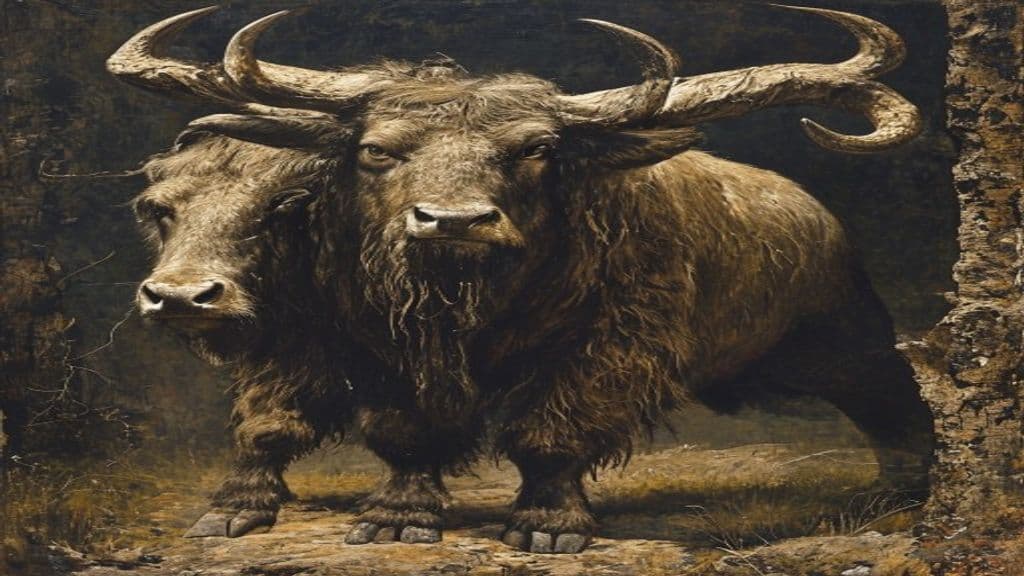
The tarand (also tarandos, tarandus, parandrus/parandros) is a wondrous large ungulate attested in classical and later European literature, described as ox-sized with branched horns, long bear-like hair, a very tough hide, and a remarkable capacity to change its external colour (and in some accounts hair) to match its surroundings.

Taygete
Lesser

Taygete

Taygete is a Pleiad nymph in Classical Greek myth, a companion of Artemis and an eponymous figure of Mount Taygetos in Laconia. She is represented in narrative cycles as a woman, a sacred doe with golden horns, and as one of the seven stars of the Pleiades, and figures in genealogical/foundation myths connected to Sparta.

Teiresias
Lesser

Teiresias

Teiresias is a blind mortal seer of the Theban cycle in Greek myth who serves as a prophetic advisor associated with Apollo and who figures across multiple generations of Theban narrative, including roles advising Cadmus and appearing in tragedy.

Telamon
Lesser

Telamon

Telamon (Ancient Greek: Τελαμών) is a mortal heroic king and warrior from archaic Greek myth, son of Aeacus and the nymph Endeïs in many accounts, father of Ajax and Teucer, and a participant in pan‑Hellenic episodes (Argonauts, Calydonian Boar hunt, allied actions with Heracles). He functions primarily as an ancestor‑hero who links civic lineages (Aegina, Salamis, Megara) into the epic heroic world.

Telecleia
Lesser

Telecleia

Telecleia (Ancient Greek: Τηλέκλεια, 'glory from afar') is a mortal mythological figure recorded in Greek genealogical tradition as a Trojan princess, daughter of King Ilus, wife of Cisseus of Thrace, and mother of Theano; some sources list her as a possible mother of Hecuba. She is attested only within lineage lists and has no independent cult or narrative of deeds in the supplied sources.

Teledice
Lesser

Teledice

Teledice (Ancient Greek: Τηλεδικη, Tēledikē) is an Argive Naiad nymph in Greek mythology, named as a consort of the culture-hero Phoroneus and mother of early descendants such as Apis and Niobe in genealogical accounts. Her name is glossed as "Far-Reaching Justice," and she functions primarily as a mythic ancestress linking local nature-divinity to royal lineage in Argos/Peloponnese.

Telemachus
Ancient

Telemachus

Telemachus (Ancient Greek: Τηλέμαχος) is a human figure of Greek epic tradition, the son of Odysseus and Penelope and a central character in Homer's Odyssey. He undertakes a coming-of-age quest to discover news of his missing father, is guided by the goddess Athena, and later assists Odysseus in reclaiming their household; later, post‑Homeric tradition (the lost Telegony) attaches further episodes to his life, including a marriage to Circe.

Teleon
Lesser

Teleon

Teleon (Ancient Greek: Τελέων) is the name of two distinct mortal figures in Classical Greek mythic genealogies: an Athenian son of Ion, eponym of a tribe (Teleontes/Teleonites), and a Locrian father of the Argonaut Eribotes. Sources present Teleon as a human ancestral/progenitorial figure rather than a supernatural being.

Telephassa
Lesser

Telephassa

Telephassa (Greek Τηλέφασσα, also Telephe/Telephaassa) is a mythic maternal figure in Greek genealogies, commonly named as the wife of Agenor and mother of Europa, Cadmus, Cilix, and Phoenix. She accompanies her children in the search for Europa and is variously localized in Phoenicia, island stops (Rhodes, Thera) and in Thrace or Samothrace, where some accounts report she fell ill and died.

Telephus
Lesser

Telephus

Telephus is a mortal heroic prince and later king of mythic tradition who links Arcadian Greek origins with a Mysian Anatolian kingship; son of Heracles and Auge, he is wounded by Achilles during the Achaean fleet's mistaken landing and later healed, and is father of Eurypylus who fights at Troy.

Telesto
Minor Spirit

Telesto

Telesto is attested in modern reference sources as a Greek mythological water-linked personification, described as a water-being or nymph who embodies divine blessing or success. Primary ancient narratives, iconography, and ritual evidence are not provided in the supplied materials; much of the attestation appears in modern encyclopedic and disambiguation entries.

Temenus
Lesser

Temenus

Temenus (Greek: Τήμενος, Tḗmenos) is a mytho-historical figure in Greek tradition: a Heraclid leader who took part in the Return of the Heracleidae, received Argos as his allotment, and served as an ancestral/kingly founder for later dynasties. Sources present variant local traditions about his acts (including foundation of sanctuaries and familial tragedy) rather than any supernatural ontology.

Tenerus
Lesser

Tenerus

Tenerus is a Theban hero in ancient Greek tradition identified as the son and prophet of the god Apollo by the Oceanid nymph Melia. He functions in the sources as a local prophetic/heroic figure tied to Thebes' religious landscape rather than as a broader mythic category or cosmological spirit.

Tenes
Lesser

Tenes

Tenes (Ancient Greek: Τέννης) is an eponymous heroic founder and cult-hero of the island Tenedos in Greek tradition. His myth explains a local sanctuary, ritual taboos (notably exclusion of aulos-players and prohibition on uttering Achilles' name), a founding-law involving a man with an axe, and the place-name Tenea in post-Trojan War tradition.

Tereis
Minor Spirit

Tereis

Tereis (Ancient Greek: Τηρηίς, Tērēís) is a personal name recorded in Greek mythographic tradition as the slave- or concubine-mother, by Menelaus, of the illegitimate son Megapenthes. She is attested only in later mythographic compilations and functions as an ancillary human figure within heroic-household genealogies rather than as a supernatural being.

Terpsichore
Ancient

Terpsichore

Terpsichore is one of the nine Muses in ancient Greek tradition, the divine personification and patron of dance and choral song. She is named from Greek roots meaning "delight in dancing" and is conventionally depicted seated with a lyre, accompanying dancers and choruses.

Tethys
Ancient

Tethys

Tethys is attested in the provided materials primarily as a Titaness of Greek mythic tradition who in a modern children's retelling is presented as an elderly storyteller and mediator among gods. The name is also widely reused in scientific and cultural contexts (a Saturnian moon, a gastropod genus, the ancient Tethys Ocean, and various institutions), usages which are naming transfers rather than continuations of the mythic figure.

Teucer
Lesser

Teucer

Teucer (Greek: Τεῦκρος, Latinized Teucer/Teucrus) is a mythic human hero of the Homeric age: an accomplished archer, son of King Telamon and Hesione, half‑brother of Ajax, a participant in the Trojan War and later an eponymous founder (most commonly credited with founding Salamis on Cyprus). He appears in epic (Homer) and tragic (Sophocles, Euripides) traditions and functions as a legendary warrior‑founder in Greek mythic genealogies.

Teutamides
Lesser

Teutamides

Teutamides (Ancient Greek: Τευταμίδης), also attested as Teutamus (Τεύταμος), is a mytho-historical king of Larissa in Thessaly known from classical genealogical accounts. He appears in Greek mythographic traditions as son of Amyntor, father of Nanas and Lethus, and as a great-grandson of Pelasgus, linking autochthonous ancestry to later heroic generations.

Teuthras
Lesser

Teuthras

Teuthras (Ancient Greek: Τεύθρας) is a legendary king of Mysia in the Greek mythic-historical tradition, eponymous for the district or town Teuthrania/Teuthraea. He appears in genealogical and epic-cycle narratives as a local ruler who hosts Auge and provides refuge and succession to the hero Telephus, with variant accounts of familial relations across sources.

Thalassa
Primordial

Thalassa

Thalassa (Ancient Greek: θάλασσα, 'sea') is the divine female personification of the sea in Greek mythographic, poetic, and visual traditions. Treated variably as a primordial sea-principle, a mother of certain sea-beings, and as an emblematic figure in Roman-era mosaics, she functions more as the sea made person than as a narrowly characterized cult-deity.

Thalia
Lesser

Thalia

Thalia is not a single supernatural being in the supplied sources but a personal name applied to multiple distinct figures in Greek myth (a Muse, a Grace, a Nereid, and a nymph/minor vegetation goddess) and to various modern secular persons, places, and institutions. The provided materials are disambiguation and archival records and do not present a unified cosmology or ritual system for a single entity named Thalia.

Thalpius
Minor Spirit

Thalpius

Thalpius is a human heroic figure of Greek myth, an Epeian leader from Elis and son of Eurytus of the Molionid line. He is listed among the leaders who sailed to Troy in the Catalogue of Ships and appears in later mythographical and local genealogical tradition as part of the ruling network of Elis.

Thanatos
Ancient

Thanatos

Thanatos (Greek: Θάνατος) is the personified figure of Death in ancient Greek myth — a divine, chthonic agent who escorts or takes the dead. He appears across literature and art as an operative presence of mortality, frequently paired with his twin Hypnos (Sleep) and counted among the children of Night (Nyx).

The Ferryman (Greek Tradition)
Primordial

The Ferryman (Greek Tradition)

A supernatural being in Greek tradition tasked with ferrying souls across a body of water after death, associated with Aesop's fables. (Note: - Power tier should be Greater, as ferrying souls across a body of water doesn't imply cosmic-level abilities. - The origin story is unclear; consider rephrasing or adding that no specific origin stor)

The Gaze of Orpheus
Primordial

The Gaze of Orpheus

A primordial force resulting from Orpheus' actions in the underworld, enforcing conditions set by Hades and Persephone. (Note: 1. The origin story doesn't specifically mention Hades and Persephone setting conditions; it was a consequence of Orpheus' actions. 2. Power tier correction: As the Gaze is more of a force or conseque)

The Love of the Nightingale (Philomela)
Primordial

The Love of the Nightingale (Philomela)

Adaptation of ancient Greek mythology, associated with transformation into a nightingale. Featured in the opera 'The Love of the Nightingale', reflecting the cultural values and worldview of ancient Greece. (Note: 1. The power tier should be Ancient (deity-level), as Philomela's transformation is a mythological event tied to divine intervention. 2. No source material mentions sensory_cues ("melancholic singing")

Theandrios
Lesser

Theandrios

Arabian deity worshipped by North Arabian tribes in pre-Islamic Arabia, similar to Greek 'God-man' deities. (Note: - Power tier should be Primordial or Ancient, not Lesser, given the entity's association with a Greek deity and being worshipped by North Arabian tribes. - Sensory cues, wards, and weaknesses are miss)

Thebe
Minor Spirit

Thebe

Thebe is a feminine proper name in Greek myth attached to multiple mythic women (including a nymph daughter of the river-god Asopus) and toponyms derived from them; the name also appears in modern usages (e.g., a moon of Jupiter). The supplied material does not present a single coherent supernatural being with stable powers, appearance, or rituals.

Theia
Primordial

Theia

Theia is a primordial Titaness in Greek myth, daughter of Uranus and Gaia and mother (by Hyperion) of Helios (Sun), Selene (Moon), and Eos (Dawn). Her identity is chiefly genealogical and poetic: she is associated with sight, brilliance, and the radiant quality of gold rather than with an extensive independent mythic narrative or widespread, detailed cult practice in the surviving record.

Thelxiepea
Greater

Thelxiepea

Thelxiepea is attested as one of the Sirens in Greek mythology, a class of female, humanlike beings whose alluring voices pose a mortal danger to seafarers and who are traditionally fixed to rocky islets or coastal cliffs in Mediterranean mythic geography.

Thelxinoë
Minor Spirit

Thelxinoë

Thelxinoë (Greek: Θελξινόη, "mind-charming") is a personal name occurring for several distinct figures in Greek myth: a named siren, one of an alternate early quartet of Muses, an attendant of Semele, and a daughter among the Praxidicae of Boeotia. The usages share an etymological theme of 'mind-charming' but do not present a single unified supernatural entity.

Themis
Ancient

Themis

Themis is the ancient Greek Titaness who personifies themis — the divinely instituted ordering of custom, law, and proper procedure. She functions as an oracular figure, a presider over assemblies and oaths, a counselor in divine councils, and a maternal source of personified moral and cosmic forces.

Theobule
Minor Spirit

Theobule

Theobule (Ancient Greek Θεοβούλη) is a named mortal woman in Greek mythographic and epic genealogies, attested as the mother of certain mythic figures (e.g., Myrtilus by Hermes; Arcesilaus and Prothoenor by Areilycus). The name literally means "divine will" or "divine counsel," but in the surviving sources she functions primarily as a maternal, genealogical connector rather than a cultic or prophetic figure.

Theognete
Minor Spirit

Theognete

Theognete (Ancient Greek: Θεογνήτης) is a mortal woman attested in Greek mythographic genealogies as a daughter of Laodicus and in at least one account as the mother of the hero Jason by Aeson of Iolcus. The name also appears in modern taxonomic records as a genus of insects; the biological usage is separate from the mythological figure.

Theraephone
Lesser

Theraephone

Theraephone (Ancient Greek: Θηραιφόνη, Thēraiphónē, lit. 'slayer of beasts') is an Olenian princess in Greek mythic genealogy, daughter of King Dexamenus of Olenus, twin sister of Theronice, wife of Eurytus (one of the Molionides), and mother of Thalpius, an Achaean leader. She is attested only in genealogical accounts and classical summaries of heroic-age lineages.