Greek Supernatural Beings

1796 documented Greek supernatural beings from the Evil Eye grimoire, including 1106 lesser and 335 minor spirit in power tier.

page 30 of 30

Theronice
Lesser

Theronice

Theronice (Ancient Greek: Θηρονίκη) is an Olenian princess in Greek mythic genealogies, daughter of King Dexamenus, twin sister of Theraephone, wife (in some traditions) of one of the Molionides and mother of Amphimachus. She is presented in sources as a mortal genealogical figure whose primary function is to link families and heroic lineages in the Peloponnese.

Thersander (Epigoni)
Lesser

Thersander (Epigoni)

Thersander is a mortal heroic prince of the Theban cycle, son of Polynices and counted among the Epigoni who led the successful second attack on Thebes; several accounts make him king of Thebes and state he intended to join the Greeks at Troy but was killed before the expedition.

Theseus
Greater

Theseus

Theseus is a legendary hero of Greek myth credited with clearing dangers from Attic roads, slaying the Minotaur, and performing foundational civic acts for Athens (including synoikismos and establishing cult practice). He is portrayed as of mixed mortal and divine parentage and functions as a culture-hero and exemplar in later authors' moralizing biographies.

Theseus Ring
Minor Spirit

Theseus Ring

A gold signet ring from the Mycenaean period, depicting a bull-leaping scene, and associated with Theseus' myth. (Note: - Power tier: Remove "Minor Spirit" as there are no reported abilities or behaviors associated with this entity. - Appearance: Add that it's a historical artifact and not a supernatural entity, to ref)

Thespius
Minor Spirit

Thespius

Thespius (Ancient Greek: Θέσπιος, variant Θέστιος) is a legendary founder and king of Thespiae in Boeotia in Greek mythic-historical genealogies. He is chiefly remembered for arranging that his fifty daughters consort with the hero Heracles, thus becoming progenitor of a line of Heracleidae tied to the city's prestige.

Thesprotus
Lesser

Thesprotus

Thesprotus is the name of two distinct mortal figures in Greek mythic tradition: an Arcadian prince, one of the sons of Lycaon and eponymous ancestor of Thesprotia; and a later mythic king associated in some accounts with the region of Lake Avernus or Sicyon who appears in narratives connected to Atreus, Thyestes, and Pelopia. Both roles are genealogical and narrative rather than supernatural.

Thessalus
Minor Spirit

Thessalus

Thessalus is an ancient Greek personal name applied to multiple mythic and historical men who function as eponyms, local founders, or notable professionals (actor, physician). The name (Ancient Greek Θεσσαλός, 'Thessalian man') appears across genealogical traditions tying figures to Thessaly, in classical theatrical records, and in histories of medicine referring to the Methodic school.

Thestius
Lesser

Thestius

Thestius (Ancient Greek: Θέστιος) is a mythic, mortal king of Pleuron in Aetolia appearing in Greek genealogical and local‑hero traditions. He functions primarily as a dynastic ancestor and regional ruler whose family and political actions connect several better‑known heroic cycles, and some variants link him etiologically to a river‑name and a tragic domestic death.

Thetis
Greater

Thetis

Thetis is a figure from ancient Greek myth: a sea-nymph (one of the fifty Nereids) and a semi-divine water-goddess. She is mother of Achilles, a shapeshifter and protector who intervenes for gods and heroes, and a liminal figure tied to older sea-divinities and questions of mortality and divine succession.

Thoas (multiple figures in Greek myth)
Lesser

Thoas (multiple figures in Greek myth)

Thoas (Greek: Θόας) is a recurring personal name attached to several distinct mortal/heroic figures in ancient Greek myth and legend — variously kings of Lemnos, the Taurians, Aetolia, and Corinth, and an offspring of Jason — appearing across genealogical and epic cycles rather than representing a single supernatural species.

Thoe
Lesser

Thoe

Thoe (Greek: Θόη, Thoê) is a personal name borne by multiple female figures in ancient Greek mythographic name-lists. The name appears as an Oceanid, a Nereid, and as an Amazon; these are distinct bearers rather than a single coherently defined supernatural class.

Thoth
Ancient

Thoth

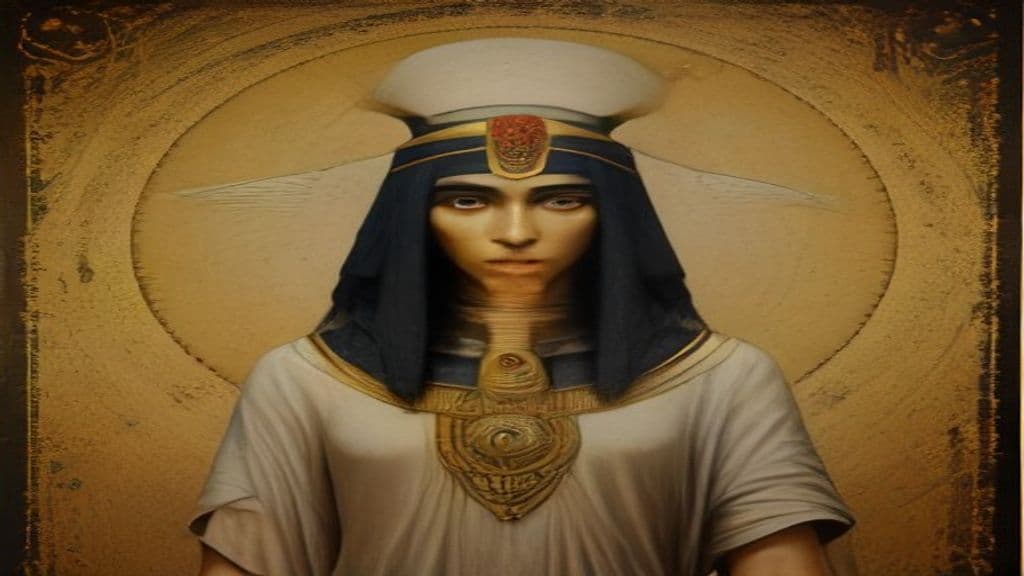
Thoth is an ancient Egyptian deity of the Moon, wisdom, writing, measurement, and magic, functioning as divine scribe, counsellor, and maintainer of Ma'at; he appears in myth as inventor/author of knowledge and as a recorder in funerary judgment and cosmic calculation.

Thyestes
Lesser

Thyestes

Thyestes is a mythic human king of the Pelopid/Atreid cycle in ancient Greek and Roman tradition, central to a notorious family curse and a sequence of intra-familial crimes (adultery, fratricide, incest, and a cannibalistic banquet). His story is recounted in classical summaries and dramatized in Roman tragedy (notably Seneca) and later adaptations, and functions as a paradigmatic tale of inherited pollution and revenge.

Thyia
Lesser

Thyia

Thyia (Ancient Greek Θυία) is attested in Greek mythic-cultic tradition as a naiad — a freshwater nymph of a spring on Mount Parnassos in Phokis — and as a local female figure connected with cult activity. Her name is derived from the verb θύω ('to sacrifice'), and some sources connect the name-form with Thyiad/’Bacchic’ terminology, suggesting a possible link to cultic or ecstatic contexts.

Thyia of Thessaly
Lesser

Thyia of Thessaly

Thyia (Greek: Θυία) is a mythic female ancestress in Greek genealogical tradition, named as a daughter of Deucalion and as the mother by Zeus of Magnes and Makednos (Makedon). She appears in Hesiodic catalogue material and later citations as an eponymic progenitor rather than as a cultic or supernatural agent.

Thyraeus
Lesser

Thyraeus

Thyraeus is a figure from Greek mythic genealogy described as an Arcadian prince, one of the fifty sons of King Lycaon, and an eponymous founder credited in ancient tradition with giving his name to the Arcadian city Thyraeum and (per Arcadian belief) to Thyrea in Argolis and the Thyrean Gulf.

Thyreus
Minor Spirit

Thyreus

Thyreus is a minor figure in Greek mythographic tradition, named as a son of King Oeneus and Althaea of Calydon and listed among the royal siblings of Meleager. Separately, Thyreus is the name of an Old World genus of kleptoparasitic bees; the mythological and biological usages are unrelated in the provided sources.

Timalcus
Lesser

Timalcus

Timalcus (Ancient Greek: Τίμαλκον) is presented in Greek mythic genealogies as a Megarian prince, son of Megareus and Iphinoe, known primarily as a member of that royal house and as being killed by Theseus during a campaign with the Dioscuri against Aphidnae. Sources are brief and genealogical, and a competing tradition noted by Alcman casts doubt on Theseus' presence in the episode.

Tiphys
Lesser

Tiphys

Tiphys (Greek: Τῖφυς) is the appointed helmsman of the Argo in the Argonautic tradition. Portrayed across ancient sources as a skilled, practical navigator whose reading of winds, waves, sun and stars is vital to the voyage, he is a mortal specialist whose death during the expedition requires a successor.

Tiresias
Greater

Tiresias

Tiresias is the canonical Theban seer of Greek myth: a human prophet granted divinatory gifts by the gods, famed for longevity, episodes of gender transformation, physical blindness paired with supernatural sight, and continued prophetic authority even after death.

Tisamenus
Minor Spirit

Tisamenus

Tisamenus is a name attested in classical Greek myth and history for multiple human figures (notably mythic kings of Argos and Thebes and an historical seer of Elis) and is also the modern scientific name of a genus of Philippine stick insects (family Heteropterygidae). The classical attestations place Tisamenus within dynastic genealogies and as a divinatory specialist; the taxonomic usage names an endemic insect genus redescribed in modern entomology.

Tisander
Minor Spirit

Tisander

Tisander (Ancient Greek: Τίσανδρος / Τίσανδρον) is a Greek personal name attested in myth, athletic records, and civic genealogy. In surviving sources it refers to distinct mortal figures: a mythic son of Jason and Medea, an ancient boxer from Naxos credited in modern commentary with multiple Olympic victories, and a patronymic ancestor (father of Isagoras) in Athenian political genealogy.

Titans
Primordial

Titans

A generation of powerful primordial divine beings in Greek myth who preceded and were overthrown by the Olympian gods. They function as progenitors of many cosmic forces and later become chthonic powers confined beneath the earth (Tartarus) though some traditions allow certain Titans to remain free.

Tlepolemus
Lesser

Tlepolemus

Tlepolemus (Ancient Greek: Τληπόλεμος, Tlēpólemos, 'enduring war') is a mortal hero of Greek myth, a son of Heracles who leads the Rhodian contingent at Troy, wounds and is slain by Sarpedon, and—after killing Licymnius—founds the three Rhodian cities Cameirus, Ialysus, and Lindus.

Tlesimenes
Minor Spirit

Tlesimenes

Tlesimenes is a poorly attested mythic figure recorded in a modern database as related to the Greek figure Parthenopaeus. No primary literary or ritual material for Tlesimenes is provided in the available sources; any identification with the class of nymphs is tentative and inferred from database placement and general descriptions of nymphs in secondary reference material.

Toxeus (Τοξεύς)
Lesser

Toxeus (Τοξεύς)

Toxeus (Ancient Greek Τοξεύς, lit. 'bowman') is a personal name borne by multiple human figures in Greek myth — chiefly princely/hunter figures tied to the Calydonian hunt and to Oechalian royal genealogies — and later reused as a modern taxonomic and toponymic label. In the classical material assembled in the provided sources, Toxeus denotes mortal mythic humans (princes, hunters, an inventor attestation) rather than a recurring supernatural creature.

Trambelus
Lesser

Trambelus

Trambelus (Greek: Τράμβηλος) is a mortal heroic figure in Greek mythic tradition, described as a son of the Achaean hero Telamon and a local ruler or notable associated with Lesbos, Miletus, or the Leleges. Sources relate a narrative in which he pursues a woman named Apriate, is involved in her death, and later dies after being mortally wounded by Achilles; local topography (a tomb and an "Achilles' Well") is said to commemorate these events.

Triptolemus
Lesser

Triptolemus

Triptolemus is a mythic culture-hero of Eleusis in Greek tradition, portrayed as the principal human recipient and promulgator of Demeter's gift of agriculture. He functions as an early priest/initiand of the Eleusinian Mysteries and a legendary teacher who spreads sowing, ploughing and the use of oxen across regions, while also being associated with the cultic promise of a favorable afterlife.

Triton
Lesser

Triton

Triton is a minor Greek sea-god, identified in the sources as the son of Poseidon and Amphitrite; he resides with his parents in an underwater golden palace and is later commonly depicted bearing a conch shell.

Tritonis
Lesser

Tritonis

Tritonis is primarily a classical toponym for a large inland lake or marsh in ancient North Africa (variously located in Libya, Tunisia, or Algeria) that functions in myth as the locus of local cult and legendary history, including a local Triton deity and the settlement of Libyan Amazons.

Tros
Lesser

Tros

Tros is a mythological mortal king in Greek tradition presented as the eponymous ancestor and founder-figure of the Trojans (Troas/Troy). He functions chiefly in genealogical and etiological narratives and is best known as the father of Ganymede, whose abduction by Zeus links Tros's house to the gods.

Turnus
Lesser

Turnus

Turnus is the legendary mortal King of the Rutuli and chief martial antagonist to Aeneas in Roman epic tradition (most prominently Virgil's Aeneid). Presented as a brave, hot‑headed warrior and suitor of Lavinia, his resistance to the Trojan settlement and eventual slaying by Aeneas form a key episode in Rome's mythic origins.

Tutelary Deities
Lesser

Tutelary Deities

Tutelary deities are guardians or patrons bound to a particular place, community, office, lineage, or social role. The category spans single local gods, local epithets of major gods, groups of protective deities incorporated into institutional religions, and localized spirits enshrined in temples or shrines.

Tutelary deity (tradition)
Lesser

Tutelary deity (tradition)

A tutelary is a divine or spirit figure regarded as a guardian, patron, or protector tied to a specific domain (place, household, person, lineage, occupation, or polity). Across cultures the term names a functional role—embodied by gods, spirits, ancestors, or meditational deities—rather than a single ontological type.

Twelve Olympians
Ancient

Twelve Olympians

A cultic grouping of the principal deities of the ancient Greek pantheon, traditionally reckoned as twelve gods residing on Mount Olympus and honoured in communal cult. Membership varies by locality and source; the formula of a dōdekátheon (twelve-gods) appears in cult and poetic evidence from the late sixth century BC onward.

Tyche
Ancient

Tyche

Tyche (Greek Τύχη, Túkhē) is the personified deity of luck, fortune, and the collective prosperity or destiny of a polis. Originating in Classical Greek religion, she becomes especially prominent in the Hellenistic period as an explanatory and civic principle for unpredictable events and continues to appear in Roman iconography (often parallel to Fortuna).

Tydeus
Greater

Tydeus

Tydeus (Ancient Greek: Τυδεύς) is an Aetolian heroic figure of archaic Greek myth, counted among the Seven against Thebes and known as the father of Diomedes (Tydides). He appears in narratives of exile, single combat, and the Theban campaign; in some traditions his extreme violence — notably a reported episode of consuming the brains of his killer — leads the goddess Athena to withdraw a promised immortality.

Tyndareus
Lesser

Tyndareus

Tyndareus is a legendary mortal king of Sparta in Greek mythic-historical tradition, remembered as the patriarch of a household that includes Helen, Clytemnestra, Castor and Pollux (in variant genealogies), and as the ruler whose administration of a solemn oath among Helen's suitors precipitated later political-military obligations. He appears across epic, tragic, and genealogical sources with variant accounts of exile, restoration, and his fate after the Trojan War.

Typhon
Ancient

Typhon

The last great monster of Greek mythology — a vast, fire-breathing giant whose shoulders sprouted a hundred serpent heads, nearly toppling Zeus from Olympus.

Tyro
Lesser

Tyro

Tyro (Ancient Greek: Τυρώ, Tyrō) is a mortal woman in Greek myth, an Elean princess who becomes Queen of Iolcus. Her unions with mortal and divine partners and the actions she takes (including exposure of infants and, in some accounts, killing children to avert prophecy) make her a key genealogical figure in the ancestry of heroes such as Jason.

Urania
Ancient

Urania

Urania is the Greek Muse presiding over astronomy and astrology, daughter of Zeus and Mnemosyne, traditionally portrayed as a heavenly inspirer who elevates human thought toward the cosmos and is depicted with a celestial globe and staff.

Ursa Minor
Minor Spirit

Ursa Minor

Ursa Minor is a northern constellation (the 'Lesser Bear' or Little Dipper) historically used as a north marker because its brightest star, Polaris, currently marks the north celestial pole. It appears in multiple cultural star-systems (Greek, Babylonian, Chinese, Inuit) with varying asterism identities and has been included in classical and modern astronomical catalogues.

Vajrapāṇi
Greater

Vajrapāṇi

Vajrapāṇi is a bodhisattva in Buddhist textual and iconographic traditions who personifies and protects the Buddha’s power. Appearing in early Mahāyāna and some Theravāda texts and in wide-ranging artistic forms (including Greco-Buddhist Gandhāran renderings), he functions as a Dharmapāla, a companion to the historical Buddha, and a tantric yidam associated with the vajra and the seed syllable hūṃ.

Velchanos
Ancient

Velchanos

Ancient Minoan god associated with vegetation, fertility, and agriculture. (Note: 1. Power tier should be Primordial (as Velchanos is associated with vegetation and has a key role in the Minoan pantheon, suggesting a cosmic or fundamental connection). 2. Abilities should mention hi)

Vrykolakas
Greater

Vrykolakas

A harmful undead revenant in Greek folklore that returns from the grave to harm the living. Described as a reanimated corpse associated with poltergeist activity, epidemics, nocturnal roaming, and cannibalistic eating of flesh (especially livers); practices to prevent or destroy it are tied to burial rites and community action.

Werewolf
Lesser

Werewolf

A figure of European folklore of a human who can change into a wolf or wolf–human hybrid, variously portrayed as voluntary shapeshifter, cursed afflicted person, or clinical delusion (lycanthropy). Belief in werewolves was entwined with medieval and early modern witchcraft accusations and persisted into Gothic and popular fiction.

Wonder Woman
Greater

Wonder Woman

A long-running American comic-book superheroine portrayed as an Amazon-Olympian princess and warrior from the island nation of Themyscira. She functions as a leading superhero in the DC Comics universe and a cultural archetype of a powerful, liberated woman; origins and certain attributes vary across comic-book continuities.

Xanthe
Lesser

Xanthe

Xanthe (Greek: Ξανθή, Xanthē) is primarily a Greek-derived personal name meaning "blond-haired" attested across mythological, toponymic, astronomical, and modern personal-name usages. In the supplied sources it appears as the name borne by multiple distinct figures in Greek myth (an Oceanid, an Amazon, and as an alternate name applied to Epione) and as a modern given name and place/asteroid name, rather than as a single unified supernatural entity with its own cult or powers.

Xanthippe
Lesser

Xanthippe

Xanthippe (Ancient Greek: Ξανθίππη) is a historical and literary woman of 5th–4th century BCE Athens, best known as the wife of the philosopher Socrates. In ancient and later Western literature her name became a proverbial exemplar of a 'difficult' or 'shrewish' wife and was reused as a female given name and literary figure in subsequent receptions.

Xanthus (Ξάνθος)
Lesser

Xanthus (Ξάνθος)

Xanthus (Ancient Greek: Ξάνθος) is a recurring proper name in Greek myth and geography applied to multiple distinct beings and places: a river-personification (the divine name for the Scamander at Troy), one of Achilles' pair of immortal horses, several mortal figures (e.g., a Theban king), and the Lycian city and river Xanthus/Xanthos. The name literally means "yellow" or "blond" and functions as a descriptive epithet transferred across persons, animals, and places.

Xoanon (Greek)
Ancient

Xoanon (Greek)

A wooden cult image used in Archaic Greece, often associated with deities or legendary figures. (Note: - Power tier should be Primordial (since Xoana are described as having spiritual significance and being associated with legendary figures/deities, implying they may have had more fundamental or univer)

Zephyr (West Wind)

Zephyr (West Wind)

The West wind, in Greek tradition, is a natural phenomenon and not a sentient being or supernatural entity. (Note: * Power tier: Should be "Primordial" since Zephyr, as a natural phenomenon, has no supernatural abilities. * Summary: Is inaccurate, as it states that Zephyr is not a sentient being or supernatural en)

Zeus
Ancient

Zeus

Zeus (Ancient Greek: Ζεύς) is the supreme deity of the classical Greek pantheon, a sky-and-thunder god who rules as king of the gods on Mount Olympus and functions as a sky‑father who assigns roles among the immortals.

Zeus Ammon
Ancient

Zeus Ammon

A Greco-Roman syncretic identification of the Egyptian deity Amun/Ammon with the Greek chief god Zeus, centered on Amun's oracle at the Siwa Oasis and used in Hellenistic and Roman contexts for religious, political, and iconographic purposes.

Zeuxippe
Lesser

Zeuxippe

Zeuxippe (Greek: Ζευξίππη) is a feminine personal name borne by multiple figures in ancient Greek genealogies. In Athenian traditions one Zeuxippe functions as a naiad (a freshwater nymph, often cited as a daughter of the river-god Eridanos) and as mother of important ancestral figures; other occurrences of the name appear as mortal or royal women in regional genealogies (Sicyon, Troy, daughters of Hippocoon or Athamas). The name is thus a recurrent mythic personal-name type rather than a single coherent supernatural persona.

Zeuxo
Minor Spirit

Zeuxo

Zeuxo is recorded in modern reference works as the name of a nymph in Greek mythology but no ancient narratives, genealogy, cult, or iconography are preserved in the cited sources. The name also appears in scientific nomenclature as an asteroid (438 Zeuxo) and as a crustacean genus in family Tanaididae.