Mesopotamian Supernatural Beings

302 documented Mesopotamian supernatural beings from the Evil Eye grimoire, including 117 lesser and 111 ancient in power tier.

page 2 of 6

Baalat Gebal
Ancient

Baalat Gebal

Baalat Gebal (Phoenician bʿlt gbl, "Lady of Byblos") is the tutelary goddess and principal civic deity of the ancient Phoenician city of Byblos. Her long-lived temple at the city's center and attestations in Egyptian, Akkadian (Amarna), and later Greek sources show her role as city-protector, focal point of royal veneration, and an object of cross-cultural identification with foreign goddesses.

Babum (of Kish)
Minor Spirit

Babum (of Kish)

Babum is the regnal name listed as the fifth king of the First Dynasty of Kish in the Sumerian King List. Modern scholarship treats the entry as of doubtful historicity because the name lacks contemporary attestation; the name is an Akkadian word bābum meaning "gate."

Balih (of Kish)
Minor Spirit

Balih (of Kish)

Balih is a named ruler listed in the Sumerian King List as the fourteenth king of the First Dynasty of Kish, recorded as the son and successor of Etana. He appears as a dynastic/ancestral name within the early, largely non-historical portion of the SKL; no independent historical, biographical, or mythic deeds are attested in the provided sources.

Balulu
Minor Spirit

Balulu

Balulu (Sumerian ba-lu-lu, 𒁀𒇻𒇻) is attested in the Sumerian King List as the final king of the First Dynasty of Ur, recorded as ruling 36 years; his reign is given as ending when Ur was defeated and the kingship carried off to Awan.

Barsal-nuna
Lesser

Barsal-nuna

Barsal-nuna is a named entry in the Sumerian King List (First Dynasty of Kish). Presented as a kingly figure—son of En-me-nuna and father of Zamug—he appears in the SKL manuscript tradition with legendary long reign lengths (one variant: 1,200 years) but is unattested in Early Dynastic administrative or monumental records and is treated by modern catalogues as likely non-historical.

Bau
Ancient

Bau

Bau is a deity attested in Sumerian and Akkadian ritual-literary texts. In the supplied hymnic excerpts she is addressed as 'child of holy An' and invoked as one who 'decide[s] the fate of all the countries' and 'renders verdicts and decrees judgments.'

Bazi
Lesser

Bazi

Bazi (cuneiform 𒀭𒁀𒍣, dBa-zi) is a figure in Mesopotamian king-list and literary traditions associated with Mari and the western lands; in the Tell Leilan recension of the Sumerian King List he appears as a legendary 'king of Mari', while an Old Babylonian composition, the Song of Bazi, treats him as a deity linked to exorcistic practice and ascribed filial relation to the god Ea.

Bašmu
Greater

Bašmu

An ancient Mesopotamian monstrous serpent (literally 'Venomous Snake') appearing in mythic lists of primeval foes of the gods and as the Akkadian name of a Babylonian constellation (MUL.DINGIR.MUŠ, equated with the Greek Hydra). It is portrayed in fragmentary texts and art as a huge, horned, venomous snake defeated by divine champions.

Bel (Mesopotamian Tradition)
Primordial

Bel (Mesopotamian Tradition)

Title signifying 'lord' or 'master', applied to various high gods in Akkadian, Assyrian, and Babylonian traditions. (Note: * Power tier should be Ancient (deity-level) instead of Primordial (cosmic). * Origin story is accurate. * Appearance and Abilities sections are missing relevant information from source material, whic)

Belet Nagar
Ancient

Belet Nagar

Belet Nagar is the tutelary goddess of the ancient Syrian city Nagar (Tell Brak). She functions as the city's divine patron in political and cultic contexts, connected to kingship, treaty-witnessing, and the ritual movement of her statue in civic festivals; many details of her character and identification with other goddesses remain uncertain in the sources.

Belet-Seri
Lesser

Belet-Seri

Belet-Seri is a Mesopotamian underworld divine official chiefly attested as the scribe or record-keeper in the court of the dead. She is invoked in literary texts and in incantation corpora to read or hold lists of the dead and to be petitioned in rituals that bind demons and prevent their egress from the netherworld.

Belet-ekalli (Ninegal)
Lesser

Belet-ekalli (Ninegal)

Belet-ekalli, also rendered Ninegal, is a Mesopotamian palace tutelary deity whose name means 'lady of the palace.' She appears in canonical god lists and in interstate treaty enumerations, indicating a recognized role in palace cult and state-level ritual contexts.

Belet-ili
Ancient

Belet-ili

Belet-ili is a Mesopotamian divine womb-mistress invoked in cosmogonic texts as the artisan who forms humanity at the gods' commission. She functions as a female creator-midwife within the council of gods, shaping the first humans and receiving contributions of attributes from other deities.

Belet-Šuḫnir and Belet-Terraban
Lesser

Belet-Šuḫnir and Belet-Terraban

A paired set of Mesopotamian goddesses attested chiefly in Ur III administrative and ritual archives. Treated as two distinct but habitually paired 'ladies' of toponyms (Šuḫnir and Terraban), they were incorporated into the royal cult of Shulgi and appear in god lists, offering lists, seals, and festival contexts whose tone has been described as lugubrious.

Belili
Ancient

Belili

Belili is a Mesopotamian divine figure attested in Sumerian and Akkadian literature in two principal guises: a sister and mourner of the dying god Dumuzi, and a primeval/ancestral deity listed among the forebears of the sky-god Anu. She is associated with lamentation and with cultic seats and temple names but is not presented in the sources as a hostile supernatural menace.

Bethel (House of El)
Ancient

Bethel (House of El)

Bethel (Hebrew: Bēṯ ʾĒl, "House of El" or "House of God") is primarily a sacred place-name in the Hebrew Bible denoting a sanctuary, an anointed cult-stone (baetyl), and—in some interpretive traditions—a localized manifestation or hypostasis of the divine associated with that site.

Bilulu
Lesser

Bilulu

Bilulu is a Mesopotamian divine personification linked to rain clouds and aspects of water; in the Sumerian myth Inanna and Bilulu she raids Dumuzi, is punished by Inanna, and is transformed and reassigned a liminal tutelary role connected to the desert and to reporting libations to the deceased Dumuzi. Theonymic relations to Ninbilulu and Enbilulu are discussed in scholarship but remain uncertain.

Bitu (Bidu)
Lesser

Bitu (Bidu)

Bitu (also spelled Bidu) is an underworld functionary in Mesopotamian literature who serves as the doorkeeper of the land of the dead. He appears in mythic narratives (notably Inanna's Descent) and in ritual/incipatory texts where his authority over the gates is invoked to restrict or return hostile spirits to the netherworld.

Bull (mythology)
Greater

Bull (mythology)

A recurring sacred animal in multiple mythologies, the bull often functions as a divine sign, an emblem of kingship and fertility, and a bridge between celestial and terrestrial order. In the Cretan tradition a bull appears from the sea to Minos as a sign tied to his claim to rule and an obligation of sacrifice; in broader comparative accounts bulls are associated with major deities and celestial symbolism.

Bull of Heaven
Greater

Bull of Heaven

A colossal mythic bull in ancient Mesopotamian literature, released by the goddess Inanna/Ishtar as an instrument of divine wrath and identified with the constellation Taurus. It appears in epic narratives (notably the Epic of Gilgamesh) as a world‑ravaging beast whose slaying carries grave divine consequences.

Bunene
Lesser

Bunene

Bunene is an attendant deity (sukkal) of the Mesopotamian sun-god Šamaš (Utu), described as the charioteer who conveyed the sun from the eastern horizon to the western doorway of heaven and as a cultic intercessor included in offerings and temple inventories, especially at Sippar.

Capella
Minor Spirit

Capella

Capella (α Aurigae) is the brightest star in the northern constellation Auriga, historically named for a goat (Latin Capella, Greek Aix) and treated across cultures as a calendrical and weather sign as well as an architectural orientation marker. Astronomically it is a quadruple star system composed of two close yellow-giant primaries and a distant pair of red dwarfs and is one of the sky's brightest X-ray sources.

Cherubim
Ancient

Cherubim

Cherubim are a class of non-human, winged supernatural beings in the Abrahamic religious corpus and related traditions. They function primarily as guardians and attendants of a divine presence—appearing around thrones, the Ark, sacred trees, and in liturgical representation—and the term has been adopted in various devotional and modern cultural contexts.

Dagan (Dagon)
Ancient

Dagan (Dagon)

Dagan (also rendered Dagon) is listed in the supplied sources as the name of a Semitic fertility god and as a homograph used for people and places; the materials provided are a disambiguation-style collection and do not include mythological narratives, iconography, or ritual detail for the deity beyond the label "Semitic fertility god."

Dagon (Dagan)
Ancient

Dagon (Dagan)

Dagon (also Dagan) is an ancient Near Eastern deity attested across inland Syria and the middle Euphrates, with principal temples at Tuttul and Terqa. In inland contexts he functions as a senior, paternal god — a source of prosperity and royal legitimacy — and was syncretized with Mesopotamian and Hurrian senior gods in later theological lists. Later Biblical and medieval receptions reinterpreted the name (including an incorrect fish-association) and the theonym has been reused in modern literature and media.

Damgalnuna (Damkina)
Lesser

Damgalnuna (Damkina)

Damgalnuna, commonly called Damkina, is a Mesopotamian goddess attested as the consort of the god Enki/Ea. She is associated in surviving summaries with ritual purification and with interceding on behalf of human supplicants; she appears in multiple myths and had cult centers such as Eridu and Malgium.

Damu
Greater

Damu

Damu is a Mesopotamian deity attested from the Ur III period onward whose character shifts over time from an early 'dying/vegetation' figure to a later, better-documented role as a healing god associated with medicine-goddesses and cult centers such as Isin.

Dingir
Minor Spirit

Dingir

Dingir (Sumerian DIĜIR, 𒀭) is a Sumerian cuneiform sign and word that functions as an ideogram for sky/heaven and as a logogram/determinative for divinity (god/goddess). It is a written/symbolic category in Sumerian and later Mesopotamian orthographies rather than an agentive supernatural being.

Dragon (Long)
Greater

Dragon (Long)

Long (龍, "dragon") is a pervasive cultural and artistic motif that appears in Taoist sacred-geographical contexts, Chinese literature, and modern exhibitions; the provided sources treat it as part of the broader mythic imagery present around Taoist sites and ritual scenes rather than as a single, consistently described doctrinal entity.

Dumuzi
Ancient

Dumuzi

Dumuzi (Dumuzid; Tammuz/Adon/Adonis in Levantine reception) is an ancient Mesopotamian pastoral and fertility deity, shepherd and consort of the goddess Inanna/Ishtar, whose death/abduction and seasonal absence are tied to vegetation cycles and annual cultic mourning and renewal.

Dumuzi-abzu
Lesser

Dumuzi-abzu

Dumuzi-abzu is a Mesopotamian city tutelary deity worshiped in the state of Lagash, attested as the patron goddess of the city Kinunir. She appears in offering lists connected to the Nanshe cultic circle, is associated with temples and sanga priests, and is listed among deities thought to confer virtue on rulers in Lagash texts.

Dumuzid (Tammuz)
Ancient

Dumuzid (Tammuz)

Dumuzid (Sumerian Dumuzi; Akkadian Duʾūzu/Dûzu; later Tammuz) is an ancient Mesopotamian deity associated with shepherding, plant fertility, and seasonal renewal. He functions as the primary consort of the goddess Inanna/Ishtar, an etiological figure for summer barrenness and autumnal return, and appears in king lists as an antediluvian/early ruler.

Duttur
Lesser

Duttur

Duttur is a Mesopotamian goddess primarily attested as the mourning mother of the god Dumuzid. She appears in Sumerian and Akkadian lament literature and in god lists, where she is associated by placement or function with other mourning and underworld figures and with pastoral imagery (logogram U8, 'ewe').

Ea (Enki)
Ancient

Ea (Enki)

Enki (Akkadian Ea) is a major Mesopotamian deity associated with wisdom, crafts, fresh subterranean waters (the Abzû/Apsu), magic, and incantations. He functions as a benefactor of humankind and rulers, a source of ritual and healing authority, and the divine ruler of the subterranean freshwater domain called the Abzû.

Earth goddess
Ancient

Earth goddess

A deity or personification of the Earth associated with chthonic, fertility, and terrestrial attributes. Earth goddesses function across cultures as sources of life and material sustenance and are often linked to underworld or maternal roles within cosmologies.

Edimmu
Lesser

Edimmu

In Mesopotamian religious tradition the edimmu are a type of utukku — restless, wind-like spirits of the improperly buried who can be vengeful, possessive, and life-draining; later popular media reinterprets them as vampire- or undead-styled monsters in games and fiction.

Enbilulu
Lesser

Enbilulu

Mesopotamian deity responsible for the regulation and distribution of freshwater for irrigation, canals, and rivers. Attested both as an originally independent agricultural specialist (Enbilulu/Bilulu/Ninbilulu forms) and later assimilated as one of the names/aspects of Marduk in Babylonian syncretic theology.

Enki (Ea)
Ancient

Enki (Ea)

Enki, also known by the Akkadian form Ea, is a major Mesopotamian deity associated with wisdom, crafts, magic and incantations, and the freshwater deep called the Abzû. Centered at the cult-city Eridu (temple E‑Abzû), he functions in myths as a crafty counsellor, culture‑hero and creator figure who aids humans and orders aspects of the world.

Enkidu
Lesser

Enkidu

Enkidu is a legendary Mesopotamian 'wild man' figure from Sumerian and Akkadian Gilgamesh-cycle compositions, created to oppose Gilgamesh and later becoming his companion; his death and subsequent role as a shade shape Gilgamesh's reflections on mortality.

Enkimdu
Lesser

Enkimdu

Enkimdu is a Sumerian/Akkadian deity who personifies and presides over irrigation engineering — embankments, ditches, canals and the practical arts of cultivation. He appears in god lists and multiple literary texts where he is entrusted with preparing agricultural constructions and participates as the agricultural counterpart in disputation poems.

Enlil
Ancient

Enlil

Enlil is a principal deity of ancient Mesopotamia, originally preeminent in the Sumerian pantheon as a supreme lord who orders the world by separating heaven (An) from earth (Ki). His principal cult center was the E-kur temple at Nippur, and his cult practices focused on daily offerings and priestly care of his cult statue; mythic traditions portray him as both benefactor and punisher in the administration of cosmic and social order.

Enmerkar
Ancient

Enmerkar

Enmerkar is a Sumerian legendary king and culture-hero of Uruk (Unug), presented in the king-lists and in the Matter of Aratta poems as a ritual-priest king (en) and founder-figure who secures Inanna's favor, contests the distant city of Aratta, and is credited in narrative with instituting writing on clay tablets.

Enmesharra
Ancient

Enmesharra

Enmesharra is a Mesopotamian theogonic and ancestral deity, presented in texts as a member of an older generation of gods associated with the underworld and with earlier or superseded divine prerogatives summed up by the Sumerian term me.

Ennugi
Lesser

Ennugi

Ennugi is a Mesopotamian divine official of the Enlil court whose principal functions concern canals, dikes, fields and irrigation; in some late lists his name is given an underworld gloss. He appears in god lists, the Atrahasis tradition (divine council casting lots), temple records (a shrine at Nippur built by Shulgi), and in ritual/incantation contexts such as the Šurpu series where he is implored to bind the hostile spirit Asakku.

Ereshkigal
Ancient

Ereshkigal

Ereshkigal is the Mesopotamian goddess-queen of the netherworld (Kur/Irkalla), portrayed in literary myths as sovereign of the Land of the Dead who judges and controls access to the underworld. She appears prominently in narrative texts (notably the Descent of Inanna and the Nergal marriage myth) though archaeological cult evidence for widespread popular worship is limited.

Erra
Ancient

Erra

Erra (also Irra) is an Akkadian/Babylonian deity associated with mayhem, pestilence and episodes of political upheaval. Centerpiece of the first-millennium BCE Erra epic, he is attended by the advisor Išum and the destructive group called the Seven (Sibitti/Sebetti), and in tradition is sometimes assimilated to the god Nergal.

Erragal
Lesser

Erragal

Erragal (also Errakal, Errakalkal, Errakar, Erkal) is a Mesopotamian deity attested from the Isin‑Larsa through Neo‑Babylonian periods. He is polyvalent in function: identified with a star in the MUL.APIN tradition and invoked apotropaically in incantation series, associated in some texts with storm/destructive power and, in some contexts, linked to the underworld; scholarly opinion differs on whether he is distinct from, derived from, or an epithet of Erra.

Etana
Ancient

Etana

Etana is a legendary early king of Kish in Mesopotamian tradition who, according to epic texts and the Sumerian King List, aided an eagle and was conveyed to the heaven of the god Anu to seek a 'plant of birth' enabling him to sire an heir. He functions as a culture-hero whose narrative situates kingship, divine favor, and animal intermediaries within Mesopotamian cosmology.

Ezina (Ashnan)
Ancient

Ezina (Ashnan)

Ezina, also attested as Ashnan, is the Mesopotamian goddess who personifies cereal grain (especially barley). She is attested from the Uruk period and in third-millennium BCE Sumerian literature, where she is invoked as the divine agent who causes seeds and barley to grow.

Galla demons
Lesser

Galla demons

Galla are presented in the supplied sources as members of the broader Mesopotamian conception of non-divine, nonhuman spirits associated with the unseen world and the underworld; the provided materials do not contain a dedicated primary text about Galla, so specific attributes remain uncertain and must be inferred from related Mesopotamian spirit categories (e.g., udug/utukku, Pazuzu).

Gallû (gallu)
Lesser

Gallû (gallu)

In the supplied sources, gallû (gallu) are identified as underworld spirit‑beings of Sumerian and ancient Mesopotamian religion, commonly labeled in English as demons or devils of the Mesopotamian Underworld. The name has been reused in modern fantasy role‑playing material, which adapts the term with additional fictional traits.

Gatumdug
Ancient

Gatumdug

Gatumdug (also rendered Gatumdag in some queries) is a Mesopotamian tutelary goddess of the city of Lagash, closely associated with that city's kings. She is attested in temple-building activity and in literary compositions tied to Lagash and Girsu in the period of classical Sumerian royal inscriptions.

Geshtinanna
Lesser

Geshtinanna

Geshtinanna is a Sumerian goddess functioning as the underworld's chief scribe and a specialist in scribal arts and dream interpretation; mythically she is the sister of Dumuzi and participates in his death‑and‑return cycle, once residing in the netherworld for part of the year in his stead.

Gibil (Girra)
Greater

Gibil (Girra)

Gibil (Akkadian Girra) is a Mesopotamian deity personifying fire in its constructive (furnaces, metallurgy, ritual purification) and destructive (lightning-set conflagrations, burning fields) aspects. He is attested in city cults (Shuruppak, Eridu, Nippur) and invoked in ritual and incantation literature (Maqlû, Šurpu, namburbi) for purification and counter-magic purposes.

Gidim / Eṭemmu (Mesopotamian ghost)
Lesser

Gidim / Eṭemmu (Mesopotamian ghost)

The gidim (Sumerian) or eṭemmu (Akkadian) is the shade or continuing personal spirit of a deceased person in Mesopotamian religion. Created at death and received into the ordered netherworld (Irkalla) by the Anunnaki court, these spirits depend on funerary offerings and are implicated in a Mesopotamian causal world where neglect can produce illness and misfortune among the living.

Gilgamesh
Ancient

Gilgamesh

Gilgamesh is a semi-divine legendary king of the Sumerian city of Uruk who features as the protagonist of a pan‑Mesopotamian epic tradition. Portrayed in literary sources as a demigod of superhuman strength, he is both a historical monarch recorded in king lists and a later object of cultic veneration.

Girra (Gibil)
Ancient

Girra (Gibil)

Girra (Sumerian Gibil) is the Mesopotamian god/personification of fire, attested in offering lists and temple contexts from the Early Dynastic period through the Kassite period and later Assyrian and Uruk sources. He embodies both the purificatory and destructive aspects of fire and functions within temple ritual and purification practice; his emblem is a torch.
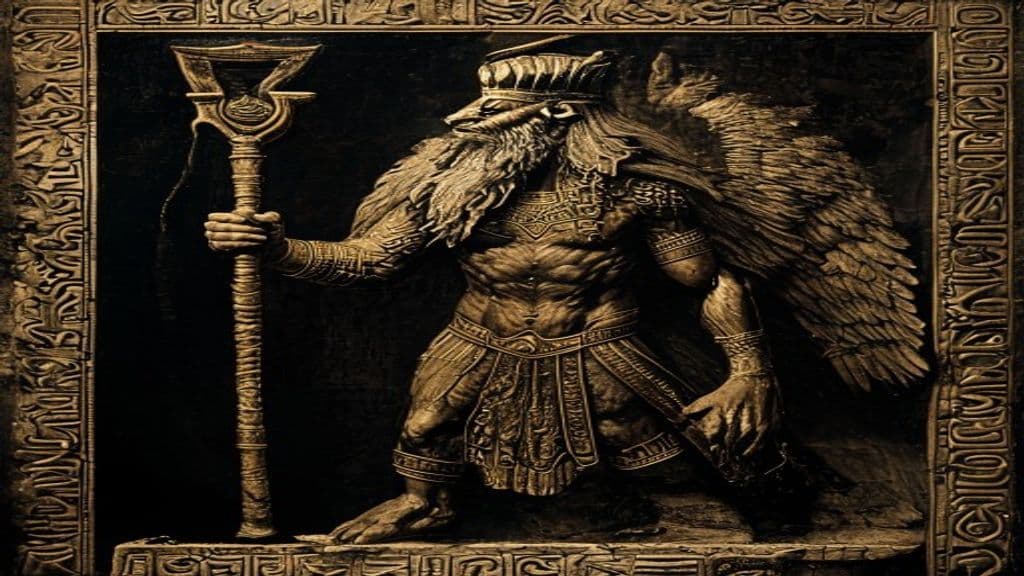
Girtablilu (Scorpion-man)
Lesser

Girtablilu (Scorpion-man)

A hybrid human–scorpion figure attested in Akkadian-language mythic texts; the supplied source states that scorpion-men feature in several ancient Mesopotamian myths, including the Enûma Elish and the Standard Babylonian Epic of Gilgamesh.

Girtablullu
Lesser

Girtablullu

Girtablullu is an Akkadian-era hybrid monster described in secondary sources as a 'scorpion-man' (human head and arms with a scorpion body). It is attested in modern summaries of Mesopotamian mythic lists and is noted in secondary material as both one of the hybrid monstrous personages in Akkadian literature and as an apotropaic creature associated with the sun/justice god Utu/Shamash.

Girtablî (Girtablîlu)
Lesser

Girtablî (Girtablîlu)

An entity name attested in modern metadata as an Akkadian mythological figure associated in modern references with scorpion-men; the provided source is a single Wikidata entry and supplies no further attested details about the being's nature, appearance, powers, or cult.