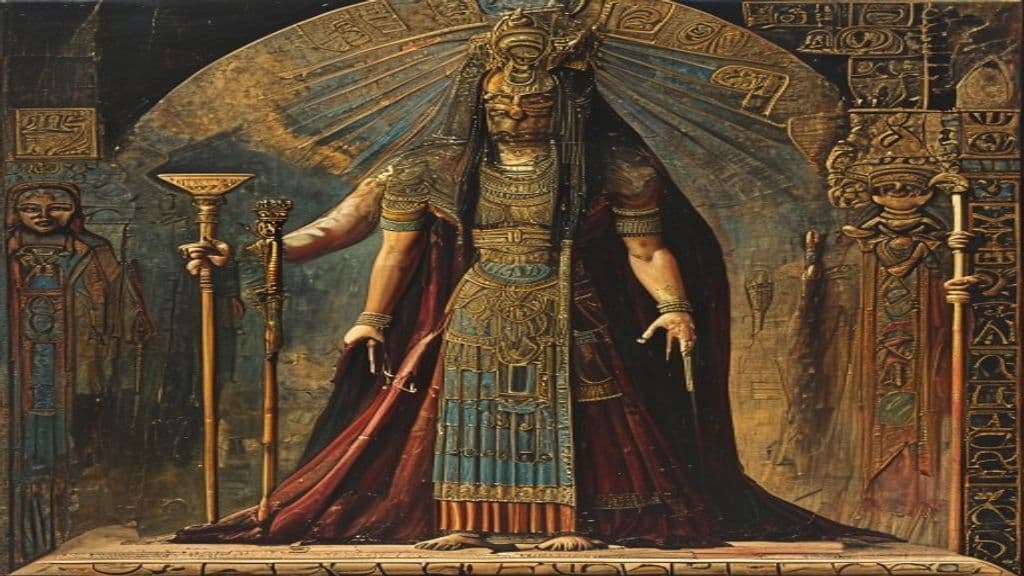
Mesopotamian Supernatural Beings

302 documented Mesopotamian supernatural beings from the Evil Eye grimoire, including 117 lesser and 111 ancient in power tier.

page 4 of 6

Lillu (Akkadian)
Minor Spirit

Lillu (Akkadian)

A name attested in modern indices as a Mesopotamian supernatural figure but not supported by direct attestations in the supplied source set; may be related in scholarship and popular literature to the Lilitu/Lilith family of Mesopotamian night- and wind-spirits, though the provided materials do not document the form lillu in primary Akkadian texts.

Lilu (lilû) / Lilītu / Ardat-lilî
Lesser

Lilu (lilû) / Lilītu / Ardat-lilî

A class of Mesopotamian nocturnal spirits or demons (lilû, lilītu, ardat-lilî) thought to arise from the unfulfilled spirits of those who died before marriage or conceiving children; attested in Akkadian magical-medical texts and in Sumerian-Akkadian literature (e.g., the ki-sikil-lil-la-ke of the Gilgamesh cycle).

Lisin
Greater

Lisin

Lisin is a Mesopotamian deity attested across hymn, lament, incantation, lexical, and astronomical texts. Initially addressed as a mother-goddess in early hymnic material, Lisin later appears in incantation corpora and is reinterpreted in esoteric texts with associations to fire; in the first millennium BCE the name is used for the star Antares.

Lugal-Marada
Lesser

Lugal-Marada

Lugal-Marada is the tutelary city god of Marad (Sumerian Marda) in Mesopotamian tradition, attested as a martial patron invoked in temple-building inscriptions and Old Babylonian oath formulas and subject to syncretic identification with other deities in scribal/theological lists.

Lugala'abba
Lesser

Lugala'abba

Lugala'abba (dlugal-a-ab-ba) is a Mesopotamian theonym attested in god lists, an Akkadian incantation (Šurpu), an Old Babylonian seal, and a possible temple entry from Nippur. He is associated with the sea and in some textual contexts with the underworld, while in an incantation he is called "the exorcist of the gods, the pure god" and implored to "cast a spell of life."

Lugalbanda
Lesser

Lugalbanda

Lugalbanda is a deified Sumerian royal-hero from the Uruk cycle who appears as a soldier and adventurer in early epic narratives and later as a holy ancestor-god invoked by kings and cults in Mesopotamia.

Lugal‑irra and Meslamta‑ea
Greater

Lugal‑irra and Meslamta‑ea

A paired divine duo in Mesopotamian religion, Lugal‑irra and Meslamta‑ea function as warrior guardian gods of thresholds and gates—especially gates of the underworld—and are identified in astronomical tradition with the 'Great Twins' (Alpha and Beta Geminorum). They were cultically paired (Maštabba, "the divine twins") and honored in temple and apotropaic contexts across multiple Mesopotamian cities.

Lulal
Minor Spirit

Lulal

Lulal is a Sumerian-origin divine figure attested as a minor god and as an anthropomorphized protective being in Mesopotamian ritual practice. He functions mythically as an attendant or bodyguard of Inanna and pragmatically as an apotropaic presence deployed on amulets, bells, reliefs and clay statues to guard thresholds, baths, and courtyards.

Lumma
Lesser

Lumma

Lumma is a minor Mesopotamian deity attested in temple lists and incantations, functioning as a warrior-farmer and a guardian of the Ekur (Enlil’s temple) often invoked to seize or restrain harmful supernatural beings.

Magilum Boat
Primordial

Magilum Boat

Supernatural vessel in Mesopotamian tradition associated with the god Ninurta, representing a transitional space between life and death. (Note: * Power tier should be Lesser, as the boat's abilities don't match those of a Primordial entity. * Sensory cues: The sinking of the boat is an implicit cue indicating death has occurred; add this to t)

Mamitu
Lesser

Mamitu

Mamitu (variants Mammitum, Mammitu, Mammi) is a Mesopotamian goddess associated with the underworld, attested in god lists, theophoric names, and cultic contexts, most likely worshiped primarily in Kutha. Her importance in the broader Mesopotamian pantheon was minor and localized; she is recorded as consort to underworld gods such as Nergal, Erra, or Meslamtaea in different textual traditions.

Mandanu
Lesser

Mandanu

Mandanu (also Madanu) is a Mesopotamian deity primarily attested after the Old Babylonian period who functions as a divine judge and court official in the entourage of the god Marduk. He is associated with judicial functions, temple-topography in Babylon (notably the temple E-rabriri), and appears in god lists and ritual/topographical texts.

Manzat
Ancient

Manzat

Manzat is a Mesopotamian and Elamite goddess personifying the rainbow, attested in Mesopotamian god-lists and Elamite royal and temple inscriptions; she is associated with heavenly phenomena and the prosperity of cities and had cultic standing in Middle Elamite temple contexts.

Marduk
Ancient

Marduk

Marduk is the chief deity of Babylon in Mesopotamian religion who, in canonical texts such as the Enūma Eliš and hymns, is elevated to a supreme god-king associated with creation, justice, water, agriculture, magic and medicine. Historically his prominence grew alongside Babylonian political power from sparse early attestations to a leading position in the second millennium BCE and later astral association with Jupiter.

Me (Mesopotamian Tradition)
Primordial

Me (Mesopotamian Tradition)

A Mesopotamian ritual or practice that embodies the divine, representing a sacred and transcendent aspect of the deity itself. (Note: - Power tier: Primordial is plausible given the described abilities (incarnation of deity). - Appearance: needs to be filled in with source material. - Origin story: needs to be filled in with source )

Meme (Memesaga)
Lesser

Meme (Memesaga)

Meme, also called Memesaga in modern summaries, is a named Mesopotamian goddess attested in secondary literature as a local caregiver/healing figure who was later assimilated with the major medicine goddess Gula. She is counted among a network of Mesopotamian medicine goddesses alongside Gula, Ninisina, Ninkarrak, Nintinugga and Bau.

Meskilak
Greater

Meskilak

Meskilak is the principal local goddess of the Dilmun polity attested in both local and Mesopotamian sources. She is regularly paired with the Dilmun god Inzak, named as cultic patron in a temple called the Ekarra, appears in Mesopotamian myths and ritual lists, and functions in texts as a protector or provider rather than a malign force.

Mesopotamian deity
Ancient

Mesopotamian deity

In ancient Mesopotamian traditions, deities are anthropomorphic supernatural persons who possess extraordinary powers and are central to cosmology, creation, and social order. They are frequently represented in material culture (idols, stelae, cylinder seals) and are associated with a numinous quality called melam that produces intense bodily and emotional reactions in humans.

Mesopotamian god
Ancient

Mesopotamian god

A class of anthropomorphic divine beings from ancient Sumerian, Akkadian, Babylonian, and Assyrian religious traditions who personify cosmic forces, city-patronage, and specialized roles within a hierarchical pantheon. They appear in mythic narratives (e.g., Enûma Eliš), cultic practice, and civic ideology and may be syncretized or reinterpreted across periods.

Moon god (lunar deity)
Ancient

Moon god (lunar deity)

A lunar deity is a divine figure representing the Moon or aspects of it; across cultures such deities personify the Moon, its phases, and its governance of the night and may perform varied functions depending on local tradition.

Mullissu
Greater

Mullissu

Assyrian goddess and consort of Asshur, associated with fertility, marriage, and family. (Note: 1. Power tier: Based on her association with a major deity (Asshur) and potential identity with Ninlil, a goddess on par with Enlil, Mullissu's power tier should be Primordial or Ancient, not Greater.)

Mumudu (Mamu)
Lesser

Mumudu (Mamu)

Mumudu (more commonly Mamu) is a Mesopotamian deity associated with dreams, attested both as described in god lists as one of the seven Šassūrātu/assuratu and in other texts as a daughter of the sun god Shamash/Utu who could be called the 'Utu of dreams'. Surviving excerpts provide no iconography or ritual prescriptions tied specifically to her.

Mušḫuššu
Lesser

Mušḫuššu

The Mušḫuššu (Sumerian MUŠ.ḪUŠ; Akkadian mušḫuššu) is a named Mesopotamian hybrid creature — a composite serpentine monster — attested in Sumerian and later Babylonian art and myth. It functions primarily as a sacred emblem and mythic adversary-turned-attendant of major gods (notably Marduk) and appears in cultic, monumental, and astral contexts (e.g., the Ishtar Gate and the Bašmu/Hydra constellation).

Mīšaru
Lesser

Mīšaru

Mīšaru is the Mesopotamian divine hypostasis of justice and rectitude. Named from the Akkadian root ešēru, he functions both as the abstract concept of correct rulings and as an active cultic deity invoked in temple worship, divination, and state ritual lists across Mesopotamia.

Nabu
Ancient

Nabu

Nabu is the Mesopotamian deity of writing, scribes, wisdom, and the rational arts; a divine scribe and announcer who records destinies, serves as an oracle, and is identified with the planet Mercury in Babylonian astrological tradition.

Nahhunte
Ancient

Nahhunte

Nahhunte is the Elamite sun god attested in Elamite and Mesopotamian texts; sources report that his name could function as a metonym for the sun in curse formulas and that the logogram dUTU is sometimes read as Nahhunte in multilingual contexts, creating uncertainty about some occurrences. He appears in royal theophoric names and in inscriptions and dedications from western Elam (near Susa) from the 3rd/2nd millennium BCE through the Neo-Elamite period.

Nammu
Primordial

Nammu

Nammu is a Mesopotamian primeval mother-goddess associated with the origin of the world and with watery depths in local theology (especially Eridu). She functions as a creatrix and as an invoked deity in incantations and apotropaic rites for purification, consecration, and protection against demons, illness, and scorpions.

Namtar
Greater

Namtar

The Sumerian god-demon of fate and disease, vizier of the Underworld who carries sixty diseases and acts as herald of death — he who determines the day of dying.

Nanaya
Greater

Nanaya

Nanaya is an ancient Mesopotamian goddess chiefly associated with erotic love, sensuality, and protection of lovers. She was worshipped from the Third Dynasty of Ur through the first millennium BCE, centered in Uruk and attested in hymns, tigi and royal inscriptions; in some local traditions she developed martial aspects and functioned as an apotropaic deity alongside deities such as Inanna/Ishtar.

Nanna
Ancient

Nanna

Nanna is the Sumerian moon-god of ancient Mesopotamia, later known in Akkadian as Sîn (Su'en, Sîn). A principal heavenly deity, Nanna occupies a place in the high divine genealogy and is associated with the lunar sphere, calendrical and celestial functions within Sumerian and broader Mesopotamian religion.

Nanshe
Ancient

Nanshe

Nanshe is a Sumerian/Mesopotamian goddess associated with marshes and the sea, the fishes and water‑birds of those biomes, and with divination (notably dream interpretation), social justice, and civic welfare. Her primary cult center was the city Nina (Tell Zurghul); she appears across a long Mesopotamian chronology from the Uruk period into the first millennium BCE.

Napirisha
Ancient

Napirisha

Napirisha is a principal Elamite deity originating in Anshan and later integrated into Susa and wider Elamite royal ideology; he is often associated with subterranean or sweet waters and appears in syncretic identifications with Mesopotamian deities such as Ea, Anu, and occasionally Shamash.

Narundi
Ancient

Narundi

Narundi (also Narunde) is an Elamite goddess originally worshiped at Susa (attested ca. 2250–1800 BCE) who appears in inscriptions as a named cultic deity invoked in statue dedications, votive objects, temple foundations and curse formulas; in later Mesopotamian sources she is preserved in apotropaic ritual contexts and treated as a sister-figure to the group known as the Sebitti.

Nergal
Ancient

Nergal

Nergal is a major Mesopotamian deity associated with war, disease, inflicted death, and rulership of the underworld. Principal cult center at Kutha (temple E‑Meslam), he appears in hymns and myths (e.g., the Epic of Erra, "Nergal and Ereshkigal") and is sometimes equated with or called Erra or Meslamtaea.

Nikkal
Ancient

Nikkal

Nikkal is a Near Eastern goddess attested in Hurrian, Hittite and Ugaritic sources as the consort of local lunar deities (Kušuḫ/Umbu/Yarikh). She appears in Hurro‑Hittite offering lists and cultic processions and is derived from the Mesopotamian goddess Ningal.

Nimintabba
Lesser

Nimintabba

Nimintabba is a Sumerian local goddess attested at the city of Ur, known primarily from a temple founded by king Shulgi circa 2100 BCE and from associated foundation deposits and a dedicatory inscription.

Ninagal
Minor Spirit

Ninagal

Ninagal (also spelled Ninagala) is a Mesopotamian deity regarded as a divine smith. He functions as the craftsman-god responsible for the fabrication and ritual preparation of cult statues and other temple paraphernalia and was associated with the artisan deities of the Mesopotamian pantheon.

Ninazu
Ancient

Ninazu

Ninazu is a Mesopotamian chthonic deity associated with the underworld, healing, snakes, and vegetation; his cult originated in Enegi and Eshnunna and appears in hymns, god lists, and incantations from the Early Dynastic through first-millennium traditions.

Nindara
Lesser

Nindara

Nindara is a localized Mesopotamian deity chiefly attested in the Lagash state and closely associated with the goddess Nanshe as her husband. He appears across administrative, hymn, and royal inscriptional contexts (Early Dynastic through Ur III/Neo-Sumerian) with cultic ties to Ki'esa, Girsu/Lagash and the site called Niĝun (Tell Zurghul). His character in the surviving record is modest and fragmentary, indicated mainly by epithets and offerings rather than extended mythology.

Nindub
Greater

Nindub

Nindub is a Mesopotamian deity attested in Early Dynastic and Ur III sources from Lagash/Girsu associated with ritual purification, lustration, and the preparation and consecration of temples. In literary texts (notably the Gudea cylinders) he functions as a divine ritual specialist who provides incense, performs lustration, and supplies a temple plan inscribed on lapis lazuli.

Ninduluma
Lesser

Ninduluma

Ninduluma (also attested as Ninildu in some sources) is a Mesopotamian deity associated with carpentry and the carpenters' craft, attested in offering lists and literary texts and primarily worshiped in or near the city of Zabalam.

Ninegal
Lesser

Ninegal

Ninegal (Sumerian Ninegalla; Akkadian Belet Ekalli / Belet-Ekallim) is a Mesopotamian tutelary goddess whose domain is the palace. Attested from the Early Dynastic period through the first millennium BCE, she functioned in cult as the divine guarantor of palace integrity and the sovereignty of rulers, and in some literary contexts appears as an epithet or manifestation of Inanna.

Ningal
Ancient

Ningal

Ningal (Sumerian dNIN.GAL, "Great Queen") is a Mesopotamian goddess, chiefly known as the consort of the moon god Nanna/Sin and the tutelary goddess of the city of Ur. She appears across Mesopotamian periods in god-lists, hymns and laments where she functions as wife, mother (commonly attested as mother of Inanna and Utu), mourner of the city, and local protective presence.

Ningikuga
Minor Spirit

Ningikuga

Ningikuga is a Mesopotamian goddess attested in god-lists and hymnic texts. Her name is glossed as “lady of the pure reed,” and textual traditions treat her variously as an independent divine name, as a spouse of Enki in one list, as the mother of Ningal in poetic compositions, and as a manifestation-name applied to other major goddesses in isolated hymnic contexts.

Ningirsu
Greater

Ningirsu

A divine being worshipped by the ancient Sumerians as the patron deity of Lagash, associated with fertility, prosperity, and warfare. (Note: * Power tier should be Ancient (deity-level) considering Ningirsu's association with Gudea and the temple Eninnu. * Appearance is not addressed, but it can be noted that no physical description exists)

Ningishzida
Ancient

Ningishzida

Ningishzida is an ancient Mesopotamian deity associated with vegetation (especially grass), snakes, and the underworld, attested from the Early Dynastic III period through later Mesopotamian eras. He appears in temple cults, hymns, mythic texts (including underworld contexts), and royal building inscriptions, and in some traditions has a martial/victory aspect.

Ningublaga
Lesser

Ningublaga

Ningublaga is a Mesopotamian deity associated primarily with cattle and with the moon god Nanna/Sin. He functions as a temple-lord and pastoral overseer, an apotropaic figure invoked in incantations, and an astral deity forming one half of the ‘Little Twins’ constellation with Alammuš.

Ninhursag
Ancient

Ninhursag

Ninhursag is a principal Sumerian mother/earth/mountain goddess—literally 'lady of the sacred mountain'—associated with fertility, birth, creation, and the living earth; she appears across multiple Sumerian myths and served cultic and tutelary roles in Early Mesopotamian religion.

Ninimma
Lesser

Ninimma

Ninimma is a Mesopotamian goddess attested especially at Nippur, functioning within Enlil’s court as a divine scribe/librarian, a court nurse and birth-assistant, and from the Middle Babylonian period also invoked in healing and curse-breaking rites.

Ninisina
Ancient

Ninisina

Ninisina is a Sumerian/Mesopotamian tutelary goddess of the city of Isin, chiefly known as a divine physician and midwife who protects the city, legitimizes its rulers, and is invoked to expel harmful supernatural agents.

Ninkarrak
Ancient

Ninkarrak

Ninkarrak is a Mesopotamian healing goddess attested from the Akkadian Empire through Neo-Babylonian periods, worshiped chiefly in northern Mesopotamia and Syria with important temple evidence at Terqa and Sippar. She functions as a divine physician in the network of Mesopotamian healing deities and is archaeologically and textually associated with votive dog figurines and incantatory contexts.

Ninkasi
Lesser

Ninkasi

Ninkasi is the Mesopotamian divine personification and cultic goddess of beer, associated with the production, consumption and social/ritual effects of beer. She appears in god lists, hymns (notably the Hymn to Ninkasi) and administrative and ritual contexts from the Early Dynastic through later Mesopotamian periods.

Ninkilim
Lesser

Ninkilim

Ninkilim is a Mesopotamian deity associated with wild animals and the teeming creatures of fields, particularly rodents and agricultural pests. Attested from Sumerian through later Babylonian periods, Ninkilim appears in incantations against field pests, almanac material advising farmers, and in civic cult contexts as a patron of the city Diniktum.

Ninkurra
Minor Spirit

Ninkurra

Ninkurra (Sumerian NIN.KUR, vocalized Ninkurra or Ninkur) is a polyvalent Mesopotamian theonym attested for multiple, related divine figures: a female artisan/sculptor deity, a daughter in the Enki and Ninhursag birth-sequence, a member of primordial Enki–Ninki ancestor pairs, and a local temple deity written with the logogram dNIN.KUR in Mari and Emar. Regional and textual contexts produce differing roles and meanings for the name rather than a single, uniform identity.

Ninlil
Ancient

Ninlil

Ninlil is a principal goddess of ancient Mesopotamia, worshipped chiefly at Nippur and Tummal as the consort of Enlil. She shares with Enlil authority in determining fates and in appointing other deities, is portrayed as mother of major gods in some traditions, and is attested from early Sumerian texts through later Akkadian/Assyrian forms.

Ninmada
Lesser

Ninmada

Ninmada is a Mesopotamian theonym applied to deities attested in Sumerian and Akkadian texts. Surviving sources present Ninmada in two principal roles: a female divine 'snake‑charmer' and a male figure called the 'worshiper of An' and brother of Ninazu. The name appears in temple lists, god‑lists, myths (Enki and Ninmah; How Grain Came to Sumer), exorcistic sequences, and theophoric names across early to 2nd‑millennium BCE Mesopotamia.

Ninmah
Ancient

Ninmah

Ninmah (also attested in scholarship as Ninḫursaĝ / Ninhursag / Ninursag / Ninḫarsag) is a principal Sumerian mother and mountain goddess. She is a major deity in the early Sumerian-Akkadian pantheon associated with fertility, birth, the shaping of humans, and the ordering of fate; she appears in foundational myths such as “Enki and Ninmah” and “Enki and the World Order.”

Ninmug
Lesser

Ninmug

Ninmug is a Mesopotamian deity attested from the Early Dynastic period onward, primarily functioning as a divine artisan (often titled tibira kalamma, "metalworker/sculptor of the land") and as one of the named helper goddesses associated with birth and the formation of humans. She had local cult centres (notably Kisiga and Adab), temple personnel, and appears in literary and ritual lists rather than in an individual cosmogonic birth narrative.

Ninshubur
Lesser

Ninshubur

Ninshubur is a Mesopotamian divine attendant (sukkal) chiefly associated as the companion, messenger, and intercessor of the goddess Inanna. Functioning as a cultic office within the pantheon, Ninshubur mediates between petitioners and higher gods and appears in major myth cycles (e.g., Inanna's Descent) and in city cults across ancient Mesopotamia.

Ninsianna
Greater

Ninsianna

Ninsianna is a Mesopotamian astral deity who personifies the planet Venus. Attested from the Ur III period through the Old Babylonian era, the theonym served both as a cultic goddess/god and as the technical name for the observable planet in astronomical and omen texts.