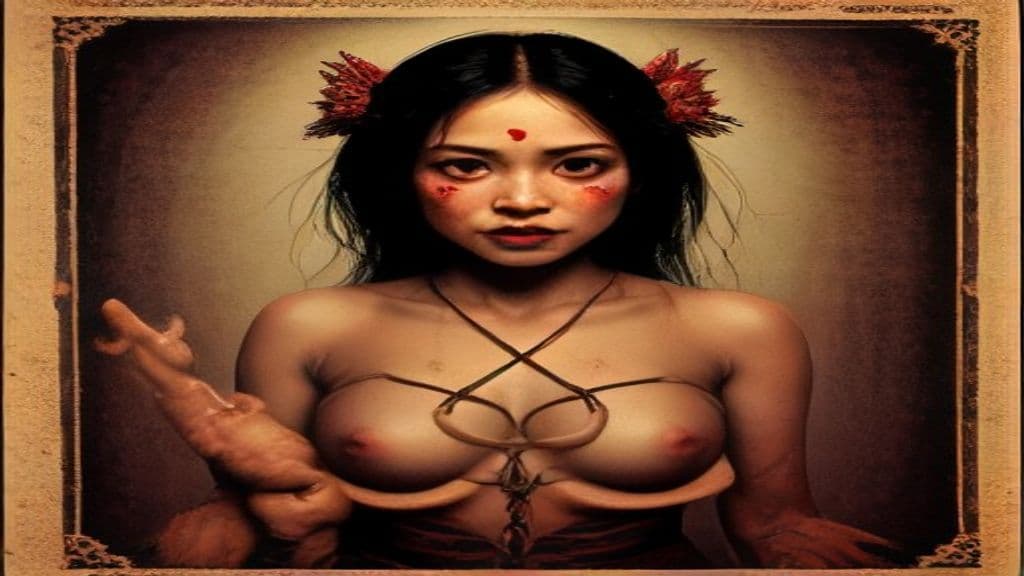
Modern and Internet Supernatural Beings

791 documented Modern and Internet supernatural beings from the Evil Eye grimoire, including 380 lesser and 197 minor spirit in power tier.

page 14 of 14

Wewe Gombel
Lesser

Wewe Gombel

Wewe Gombel is a female spirit or vengeful ghost in Javanese/Sundanese Indonesian folklore associated with the abduction and protective custody of children who are mistreated or left out at night; she is used pedagogically to warn children to stay home and to signal parental responsibility.

Wicked fairy (Sleeping Beauty)
Minor Spirit

Wicked fairy (Sleeping Beauty)

A folkloristic antagonist figure in the Sleeping Beauty tale-cycle, commonly called the Wicked fairy and appearing in adaptations under names such as Carabosse and Maleficent. The figure functions as the malign actor who precipitates the heroine’s central misfortune in the narrative tradition.

Wonder Woman
Greater

Wonder Woman

A long-running American comic-book superheroine portrayed as an Amazon-Olympian princess and warrior from the island nation of Themyscira. She functions as a leading superhero in the DC Comics universe and a cultural archetype of a powerful, liberated woman; origins and certain attributes vary across comic-book continuities.

Xanthe
Lesser

Xanthe

Xanthe (Greek: Ξανθή, Xanthē) is primarily a Greek-derived personal name meaning "blond-haired" attested across mythological, toponymic, astronomical, and modern personal-name usages. In the supplied sources it appears as the name borne by multiple distinct figures in Greek myth (an Oceanid, an Amazon, and as an alternate name applied to Epione) and as a modern given name and place/asteroid name, rather than as a single unified supernatural entity with its own cult or powers.

Xanthippe
Lesser

Xanthippe

Xanthippe (Ancient Greek: Ξανθίππη) is a historical and literary woman of 5th–4th century BCE Athens, best known as the wife of the philosopher Socrates. In ancient and later Western literature her name became a proverbial exemplar of a 'difficult' or 'shrewish' wife and was reused as a female given name and literary figure in subsequent receptions.

Xezbeth
Lesser

Xezbeth

Xezbeth (alt. Shezbeth; Arabic: al‑Kadhāb, "The Liar") is attested in Western demonological reference works and modern creative uses as a named demon associated with lies, invented tales, and the propagation of false legends.

Yowie
Lesser

Yowie

Yowie is an Australian folkloric entity—recorded in some Aboriginal lexical records as a nocturnally roaming spirit and in colonial and modern accounts as a large, bipedal, hairy creature. The figure appears across eastern Australian traditions under many regional names and has been reinterpreted in settler literature and modern cryptozoology.

Zenki and Goki
Lesser

Zenki and Goki

A paired duo in Japanese legend frequently described as oni- or tengu-like figures who appear in tales of En no Ozuno (En no Gyōja) and Shugendō; in many secondary summaries some legends say they were violent bandit Onis subdued in the age of Emperor Tenmu and thereafter attached as attendants to En no Ozuno. The names were later reused in modern manga and anime.

Zetton
Lesser

Zetton

Zetton (ゼットン, stylized ZETTON) is a Japanese hip‑hop record producer who emerged from the underground hip‑hop scene in Fukuoka in 1996 and later founded Studio Lb12 and the label/enterprise Inside‑Muzic (Takaki Shoten). The name also appears as a string in popular‑culture archives referencing tokusatsu/kaiju media, but the supplied sources do not support any folkloric or supernatural identity for Zetton.

knaptand
Lesser

knaptand

A ritual clapper embodied in an animal costume (wolf or dog head) used in an annual civic procession in Dendermonde, Belgium; produces a fearsome jaw‑snapping sound and functions as a performative municipal spectacle rather than an autonomous supernatural being.

Ādi‑Buddha (tradition)
Primordial

Ādi‑Buddha (tradition)

The Ādi‑Buddha is a tantric Mahāyāna concept of the primordial or 'first' Buddha that functions as the dharmakāya or ground of awakened mind. In Tibetan traditions it is variously personified (e.g., Samantabhadra, Vajradhāra, or the Kalachakra figure) and is principally a doctrinal and meditative focus rather than a theistic creator god.