Roman Supernatural Beings

615 documented Roman supernatural beings from the Evil Eye grimoire, including 329 lesser and 100 ancient in power tier.

page 2 of 11

Alcmaeon
Lesser

Alcmaeon

Alcmaeon (Ancient Greek: Ἀλκμαίων, Alkmaíōn) is a heroic human figure in Greek mythic‑historic genealogy, known chiefly as one of the Epigoni who led the Argives to capture Thebes in revenge for the Seven against Thebes and as an eponymous ancestor claimed by the Alcmaeonidae. Multiple distinct personages share the name in different traditions.

Alcmene
Lesser

Alcmene

Alcmene is a mortal heroine of Greek myth, daughter of Electryon and wife of Amphitryon, best known as the mother of Heracles by Zeus. She appears in multiple classical sources as a noble matron whose body becomes the site of divine intervention in the conception and birth of Heracles and who received at least local veneration in antiquity.

Alecto
Ancient

Alecto

Alecto is one of the Erinyes (Furies) of classical Greek and Roman myth, an avenging supernatural figure whose role is to punish moral crimes among humans. Originating as one of the primordial Erinyes associated with the earth, she is later individualized in Roman literature (notably Virgil) and depicted as an agent who can incite madness, possess or influence humans, and foment violent passions.

Aletes (Aeneid)
Lesser

Aletes (Aeneid)

Aletes is an elderly Trojan companion and counselor in Virgil's Aeneid. Described as grandaevus, he appears among Aeneas's followers in passages that place him aboard the fleet during a storm (Book I) and in the siege of the Trojan camp where he is involved in camp life and commends the young warriors Nisus and Euryalus (Book IX).

Alexander Peloplaton
Greater

Alexander Peloplaton

Alexander Peloplaton was a 2nd‑century CE Greek rhetorician and Platonist of the Second Sophistic who served as a Greek imperial secretary (ab epistulis) and participated in the era's rhetorical competitions and prestige economy. He is a historical intellectual figure, not a supernatural being.

Alexis
Minor Spirit

Alexis

Alexis in the supplied materials functions primarily as a personal name used across historical, literary, and modern contexts. The only explicit mythological reference identifies an Alexis as a young man of Ephesus beloved of Meliboea; there is no sustained supernatural or folkloric entity named Alexis in the provided sources.

Alisanos
Lesser

Alisanos

Alisanos is a theonym attested in two Gallo‑Roman votive inscriptions from the Côte-d'Or (near Dijon) and interpreted by Celticists as a localized landscape divinity (possibly 'of the rock' or of certain trees). Separately, the name has been repurposed in modern fantasy literature as a sentient, predatory deepwood; the two usages are distinct in origin and evidence.

Alke
Lesser

Alke

Alke (Ancient Greek: Ἀλκή) is the anthropomorphic personification of prowess, courage, and battle-strength in archaic and classical Greek poetic tradition. She is attested as a named figure depicted on Athena's aegis in Homeric epic and the name also appears in later mythographic lists as a number of distinct proper-name figures.

Almo
Lesser

Almo

Almo is attested in the provided sources as a river-deity named for the ancient River Almone near Rome. The supplied material identifies Almo only by name and by association with that river; no detailed myths, rites, iconography, or powers are recorded in the provided documents.

Amata
Lesser

Amata

Amata is a legendary early-Roman queen in Virgil's Aeneid: wife of Latinus and mother of Lavinia. In the epic she opposes Aeneas' claim on Lavinia, hides her daughter, rallies Latin women against the Trojans, and ultimately commits suicide when she believes Turnus has died. Dante later cites her in Purgatorio (Canto 17) as an exemplum of the vice of wrath.

Ambisagrus
Lesser

Ambisagrus

Ambisagrus is a local Gaulish deity attested in Gallo‑Roman religion, worshipped at Aquileia in Cisalpine Gaul and identified there with Jupiter Optimus Maximus under Roman interpretatio. The name is tentatively analyzed from Proto‑Celtic elements *ambi‑ + *sagro‑.

Ambrosius Aurelianus
Minor Spirit

Ambrosius Aurelianus

Ambrosius Aurelianus is presented in British late‑antique and medieval literary sources as a Romano‑British leader who rallied survivors against Anglo‑Saxon incursions in the 5th century. He is attested earliest in Gildas's De Excidio (6th century) as a Christian aristocratic war leader and is later expanded into prophetic and dynastic roles in the Historia Brittonum (9th century) and Geoffrey of Monmouth (12th century).

Amelius (Gentilianus)
Minor Spirit

Amelius (Gentilianus)

Amelius (Gentilianus) was a 3rd-century Neoplatonic philosopher and one of Plotinus's chief disciples, known for prolific writings, memorization of Numenius, and for promoting the preservation of Plotinus's doctrines. The name also recurs later as a personal name in medieval and modern contexts.

Amethyste (Amethystos)
Minor Spirit

Amethyste (Amethystos)

Amethyste (Ancient Greek: Amethystos) appears in later European literary tradition as a beautiful maiden or nymph transformed into the amethyst gemstone; the story is a post-classical etiological invention explaining the stone's purple color and linking the gem to an ancient belief that it prevented drunkenness.

Ampelos
Lesser

Ampelos

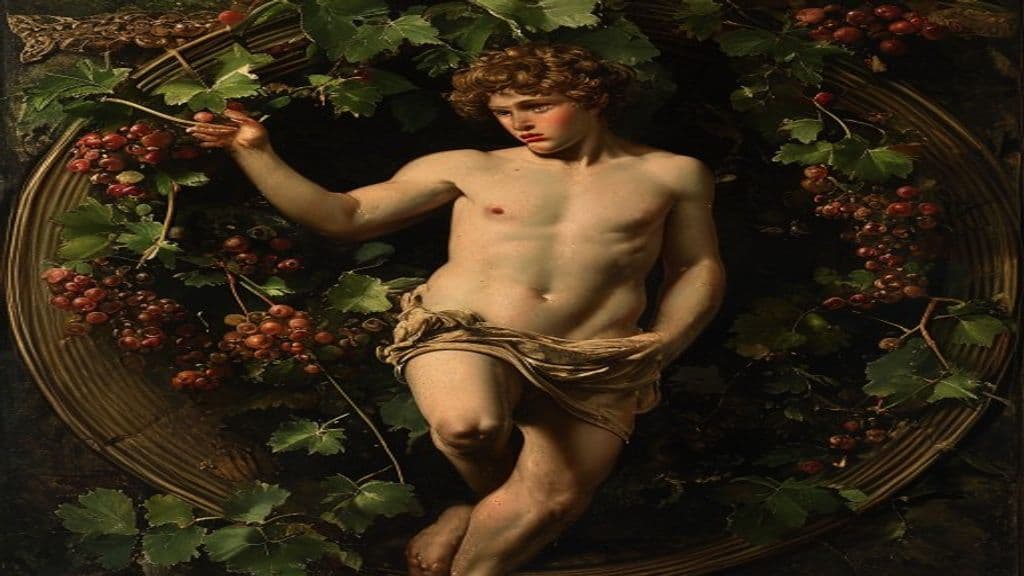
Ampelos (Ancient Greek: Ἂμπελος, lit. 'Vine') is a mythological figure in Greek and Roman literature who functions both as the beautiful youth beloved of Dionysus/Bacchus and as a personification or origin-figure of the grapevine (and, in one account, a star). Surviving literary summaries record two main versions: in Nonnus a satyr youth is gored to death after provoking Selene and is transformed into the first vine by Dionysus; in Ovid a reckless boy falls while picking grapes and is placed among the stars (Vindemitor/Boötes) by Liber/Dionysus.

Ampelus
Minor Spirit

Ampelus

Ampelus is a youthful figure in Greco‑Roman Dionysian myth, presented in Ovid's Fasti as a boy loved by Bacchus/Liber whose death while gathering grapes leads the god to honor him by setting him among the stars and by giving his name to the vine. He functions primarily as an etiological figure linking viticulture and a stellar memorial within Bacchic narrative.

Amphibalus
Lesser

Amphibalus

Amphibalus is a medieval hagiographical figure—an early Christian priest said to have sheltered Saint Alban in Roman Britain. The personal name appears in twelfth-century sources and the figure became the focus of relic veneration and a local cult at St Albans Abbey in the later Middle Ages.

Amphicrates
Lesser

Amphicrates

Amphicrates (Ancient Greek Ἀμφικράτης) is a personal name borne by several historical figures in ancient Greek sources, attested as at least an early king of Samos, an Athenian sophist/rhetorician of the Asiatic school, and in prosopographic indexes as an artisan (sculptor) and other minor historical persons. The supplied sources treat Amphicrates as human individuals preserved in fragmentary literary and documentary records rather than as a supernatural being.

Amphinomus
Minor Spirit

Amphinomus

Amphinomus (Ἀμφίνομος) is a personal name borne by several human figures in Greek tradition, most notably a princely suitor of Penelope in Homer's Odyssey; other bearers appear in local genealogies, a Catanian civic legend, and a later historical record as a geometer. The sources treat Amphinomus as mortal personages rather than a supernatural being.

Amphisbaena
Lesser

Amphisbaena

A legendary two‑headed serpentine or lizard‑like marvel from Greco‑Roman and medieval bestiary traditions, described with a functional head at each end and noted for moving in either direction without turning. It appears in poetry, natural histories, and folk remedies, and its parts are recorded as materia magica in sources such as Pliny and medieval bestiaries.

Amphitryon
Minor Spirit

Amphitryon

Amphitryon is a mortal nobleman of Greek mythic-historical tradition: son of Alcaeus of Tiryns, husband of Alcmene, and the acknowledged stepfather of Heracles. He appears in heroic-age narratives as a warrior, dynastic actor, and the human whose identity is impersonated by Zeus in literary treatments that explore paternity and identity.

Ampycus (Ampyx)
Lesser

Ampycus (Ampyx)

Ampycus (also Ampyx/Ampyce) is a name borne by several related mortal figures in Greek myth: chiefly a father of seers (notably Mopsus), and in variant traditions a local eponym, a priest of Demeter, and a Lapith warrior. He functions as a genealogical marker and occasional ritual or martial actor within heroic-age narratives rather than as an independent supernatural being.

Ampyx
Minor Spirit

Ampyx

Ampyx (Ancient Greek Ἄμπυξ, also Ampycus/Ampykos) is a personal name borne by several distinct mortal figures in Greek myth. The name is attached to seers, a priest, warriors, and ancestral/founder figures across different local traditions rather than to a single supernatural species or class.

Amun
Ancient

Amun

Amun is a major ancient Egyptian deity whose name (imn) means 'the hidden one.' Originating as a local Theban tutelary god, he rose to national prominence and was syncretized with the sun‑god Ra (Amun‑Ra), becoming a transcendent, self‑created creator and king of the gods closely tied to royal legitimation and personal petitionary religion.

Amymone
Lesser

Amymone

Amymone is a figure in Greek mythic genealogies and local sacred geography, counted among the Danaids and also identified with a spring (a naiad-like eponym) at or near Lerna. She appears in literary, visual, and theatrical traditions as a mortal woman whose encounter with Poseidon produces a named freshwater source and links human lineage to divine patronage.

Amyntor
Minor Spirit

Amyntor

Amyntor (Ancient Greek: Ἀμύντωρ, romanized: Amýntor, lit. 'defender') is a personal name attested in Ancient Greek mythic and genealogical registers. The name is borne by several mortal figures—most notably Amyntor son of Ormenus, a king and father of Phoenix (tutor and companion of Achilles); also by an Amyntor son of Aegyptus killed by his wife Damone, and by an Amyntor son of Phrastor who is an ancestor in a genealogical line.

Anaideia
Lesser

Anaideia

Anaideia is the ancient Greek personification of shamelessness, described in sources as a companion of Hybris and opposed to Eleos (mercy). She functions as an abstract moral force within Greek mythopoetic thought rather than as a deity with an attested cult or narrative cycle.

Ananias son of Nedebeus
Lesser

Ananias son of Nedebeus

Ananias son of Nedebeus (Hebrew: חנניה בן נדבאי, Ḥananyá ben Nadváy) is presented in Jewish and early Christian sources as the historical high priest of Jerusalem who served c. 47–58 CE. He appears in the Acts of the Apostles as the presiding official at parts of the legal proceedings against Paul and is discussed in later historical commentary (including Josephus under the variant 'Ananias ben Nebedeus').

Ananus ben Ananus
Lesser

Ananus ben Ananus

Ananus ben Ananus (Ḥānān ben Ḥānān) was a first‑century CE Jewish high priest and political leader in Jerusalem. Presented in the sources as a member of the priestly House of Ananus (Annas) and a Sadducean aristocrat, he exercised judicial authority, ordered the execution of James (per Josephus), led anti‑Zealot forces during the First Jewish–Roman War, and was killed in internecine fighting in 68 CE.

Anaxarete
Minor Spirit

Anaxarete

Anaxarete is a mythic mortal woman in Greco-Roman tradition who, according to Ovid's Metamorphoses, scorned a suitor named Iphis and was transformed by Aphrodite into a stone statue preserved at Salamis. Her story is cited as an exemplum of divine punishment for cruel disregard of love and belongs to the broader corpus of metamorphosis myths.

Ancamna
Lesser

Ancamna

Ancamna is a Gallo‑Roman local goddess attested in the Moselle valley and commemorated as the consort of regional forms of Mars (notably Lenus Mars and Mars Smertulitanus). She appears in civic cult contexts at Trier, Ripsdorf and Möhn where altars and votive offerings link her to tribal protection and to the genii of Treveri pagi; some scholars suggest a possible association with a spring rather than a martial character.

Ancasta
Lesser

Ancasta

Ancasta is a locally attested Celtic goddess known from a single Roman-period votive inscription from Clausentum (modern Bitterne, near Southampton). She appears as a named deity venerated in the context of a fulfilled vow; little else about her cult, appearance, or powers is recorded in the surviving sources.

Anchises
Lesser

Anchises

Anchises is a mortal Trojan noble of myth, famed as the father of Aeneas and as a lover of the goddess Aphrodite/Venus; he appears in Greek and Roman epic traditions as a living elder rescued from Troy and later as an advising shade in the Roman underworld vision.

Ancile
Primordial

Ancile

The Ancile is a sacred shield in Roman tradition, said to have fallen from heaven and perpetuating Rome's sovereignty. (Note: 1. Power tier should be Ancient (deity-level) instead of Primordial. 2. Origin story should note that it is said to have "fallen from heaven" but does not imply direct supernatural or divine origin. )

Ancius
Lesser

Ancius

Ancius (variant Ancus) is attested in the supplied materials as an ancient Roman personal/family name that appears in classical textual indexes, Latin passages, and in modern bibliographic usages (e.g., as part of the name attributed to Boethius). The provided sources do not support treating Ancius as a supernatural being or folkloric creature.

Andarta
Greater

Andarta

Andarta is a local Celtic goddess attested by votive inscriptions in and around the town of Die (modern Drôme) in the territory of the Vocontii during the Roman imperial period. She is recorded in seven dedications as Dea Augusta Andarta (c. 150–200 AD) and appears to have functioned as a tutelary deity associated with civic welfare, victory, and Romanized cultic practice.

Andraste
Lesser

Andraste

Andraste (also attested as Andrasta or Andate in some passages) is a named supernatural figure invoked by the Iceni in the Roman account of Boudica's rebellion (AD 60). Recorded by Dio Cassius as a recipient of Boudica's rallying prayer, Andraste functions in surviving sources as a tutelary war figure associated with victory and the preservation of liberty.

Androgeos
Lesser

Androgeos

Androgeos (Greek Ἀνδρόγεως, Latin Androgeus) is a personal name borne by mortal figures in classical Greek and Roman literary tradition, most notably a son of Minos and Pasiphaë whose death in mythic narratives precipitates Athenian tribute to Crete. A separate, less-detailed bearer of the name is listed as a Greek soldier present at the sack of Troy in some sources.

Androgeus
Lesser

Androgeus

Androgeus is a mythic human name borne by at least two distinct figures in Classical Greek and Roman tradition: a Cretan prince, son of Minos and Pasiphaë, famed for athletic victories and whose death in some accounts is linked to the Marathonian/Cretan bull; and Androgeos, a Greek soldier named by Virgil in the Aeneid who, during the sack of Troy, mistakes Aeneas and his companions for fellow Greeks. Both are mortal figures woven into larger heroic and epic cycles rather than supernatural beings.

Andromache
Minor Spirit

Andromache

Andromache (Ancient Greek Ἀνδρομάχη) is a human figure of ancient Greek literary tradition: the wife of Hector of Troy who exemplifies virtuous fidelity, ritual mourning, and the losses suffered by women in war. She appears in Homeric epic and later classical sources as grieving spouse, captive concubine after Troy's fall, and later queen in post-war narratives.

Andromachus
Minor Spirit

Andromachus

Andromachus (Ancient Greek: Ἀνδρόμαχος, Andromachos) is a personal name borne by multiple historical and mythological figures in classical Greek and later sources — including commanders, rulers, physicians, a grammarian/philologus, and a minor mythic warrior from Knossos. The name literally means "fighting with men" and in the cited traditions denotes human individuals rather than a supernatural being.

Andromeda
Minor Spirit

Andromeda

Andromeda is a mortal princess in ancient Greek myth, daughter of Cepheus and Cassiopeia, who is offered as a sacrificial victim to the sea monster Cetus and rescued by the hero Perseus. Her story links human hubris, divine punishment, heroic rescue, and catasterism—she is later placed among the stars as the constellation Andromeda in some accounts.

Anethus
Minor Spirit

Anethus

Anethus (Ancient Greek Ἄνηθος, Ánēthos) is a fragmentarily attested mythic figure from Greek tradition who is named as a beautiful youth transformed into the dill plant (Anethum graveolens). He functions as an aetiological or name-origin figure preserved only in late-antique grammatical/mythographic commentary.

Anextiomarus
Lesser

Anextiomarus

Anextiomarus (Gaulish Anextlomāros; feminine Anextlomara) is an ancient Celtic theonym or epithet attested in Romano-British and Gallo-Roman inscriptions. In the sources it functions as an epithet of a solar deity syncretized with the Roman god Apollo and is glossed in one source as meaning roughly "Great Protection," indicating a protective, beneficent cult function in votive contexts.

Anextlomarus
Greater

Anextlomarus

Anextlomarus (also Anextiomarus; feminine Anextlomara) is a Romano-Celtic theonym attested in inscriptions from Roman Britain and Gaul. The name, interpreted as 'Great Protector', appears in dedicatory contexts and in one instance is equated with the Roman god Apollo, indicating a locally venerated protective deity integrated into Roman civic-religious practice.

Angerona
Ancient

Angerona

Angerona (also Angeronia; local form Ancharia at Faesulae) is a polyvalent goddess in ancient Roman religion associated with relief from pain and sorrow, protection of Rome (including custody of the city's "sacred name"), and a calendrical role at the year's turning (Angeronalia/Divalia near the winter solstice). She is attested in state cult practice (pontiff-offered sacrifice) and in local altars, and is discussed by modern scholars as a tutelary, healing, and liminal deity.

Anguiped
Lesser

Anguiped

The anguiped is an iconographic/divine motif in the Graeco‑Roman world depicting a human upper body with serpentine lower limbs (literally 'snake‑foot'). It functions as a pictorial property or amuletic emblem—found on magical amulets, gems, and in public art—rather than as a single named personal being.

Anguipede (motif)
Lesser

Anguipede (motif)

The anguipede is a Greco‑Roman visual motif depicting a human torso above serpentine lower limbs, found widely on magical gems, amulets, coins, and architectural reliefs. It functions primarily as an apotropaic or symbolic image in varied contexts rather than as a named mythic personage with a single coherent cult or narrative.

Anna Perenna
Lesser

Anna Perenna

Anna Perenna is a minor Roman deity of the circle/wheel of the year (Perenna, 'per annum'), venerated in popular plebeian cult for the completion and renewal of the year and for longevity. Her festival falls on the Ides of March and was celebrated at a grove by the first milestone of the Via Flaminia and at a fountain (Fons Annae Perennae) in Rome; literary tradition also links her to the sister of Dido transformed into a perennial stream.

Annea Clivana
Lesser

Annea Clivana

Annea Clivana was a goddess or female spirit worshipped in Canale in Veneto within the territory of the Cenomani Celts in Italy. Roman observers or later compilers identified her with the Roman goddess Juno, and she is attested as being portrayed in the company of a genius loci, indicating a localized, place‑centered cult.

Antaeus
Greater

Antaeus

Antaeus (Greek: Ἀνταῖος; Berber: Anti) is a mythic giant of Greek and Berber narrative worlds, son of Poseidon and Gaia, whose invulnerability derives from direct contact with the earth. Found in accounts placing him in the interior of Libya or in local North African memory, he challenges travelers to wrestling matches and is defeated by Heracles when lifted off the ground and crushed.

Antenor
Lesser

Antenor

Antenor is a Trojan elder and counsellor in the epic tradition of the Trojan War. Portrayed in Homeric passages and later literature as a prudent diplomat and host, he advocates negotiation (notably advising the return of Helen) and participates in Trojan public councils and hospitable rites.

Antevorta
Lesser

Antevorta

Antevorta is a minor Roman goddess associated with the future and with protection in childbirth. She appears in classical sources as one of the Carmentae or as a companion/aspect of Carmenta, invoked (with her paired figure Postverta) at altars in Rome by pregnant women to avert dangers in labor.

Anthropophage
Lesser

Anthropophage

A literary-mythical category of peoples described as cannibals in classical, medieval and later European literature and reference works. Originating in ancient ethnographic reports and transformed through compilations of marvels, the Anthropophage functions as an imaginative type marking exotic or monstrous others rather than a documented historical tribe.

Antigone (daughter of Laomedon)
Lesser

Antigone (daughter of Laomedon)

Antigone is a Trojan princess in Latin literary tradition who, according to a small set of ancient sources, incurred Hera's wrath and was transformed by the gods into a stork (or related crane/stork bird). Her tale functions as a metamorphosis aetiology explaining a bird's enmity to snakes and as a moral exemplar of hubris toward the gods. The story survives mainly in Latin authors (notably Ovid) and later scholiasts and mythographers and exists in several variant forms.

Antimache
Minor Spirit

Antimache

Antimache (Ancient Greek: Ἀντιμάχη) is a mortal figure in Greek mythic genealogy—the wife of King Eurystheus of Tiryns (sometimes associated with Mycenae) and mother of his children. She is known from genealogical lists and post-Herculean narratives that link Eurystheus' household to Arcadian lineages and to conflicts following the Labors of Heracles.

Antinoe
Lesser

Antinoe

Antinoe (Ancient Greek: Ἀντινόη) is primarily attested as a proper name in classical and later sources: several mortal women in Greek myth (founding and tragic narratives) and as the place-name Antinopolis/Antinoë in Roman Egypt. The surveyed materials do not present Antinoe as a discrete supernatural being, nor record rituals or wards directed against an entity by this name.

Antinous
Lesser

Antinous

Antinous was a Greek youth from Bithynia who became the favourite of the Roman emperor Hadrian; after his premature death c.130 CE Hadrian ordered his deification and founded an organized cult (including the city Antinoöpolis and commemorative games) that spread across the Roman Empire and was syncretized in some contexts with the Egyptian god Osiris.

Antioche
Minor Spirit

Antioche

Antioche is a variant form of the Greek personal name more commonly rendered as Antiope, attested for several distinct women in Greek myth (including Amazonic and dynastic figures) and reused as a toponym and ecclesiastical/literary name in later traditions. The sources treat Antioche not as a single supernatural class but as a personal name with multiple local and literary usages.

Antiphates
Lesser

Antiphates

Antiphates is an ancient Greek personal name borne by multiple distinct characters in the epic tradition (at least five figures): a king of the Laestrygones (giant cannibals) encountered by Odysseus, a warrior concealed in the wooden horse at Troy, a Trojan warrior slain by Leonteus in Italian/late-epic tradition, and at least two genealogical bearers (son of Melampus; son of Sarpedon). The name functions as a personal name across heroic genealogies and episodic narratives rather than as a single supernatural species.