Roman Supernatural Beings

615 documented Roman supernatural beings from the Evil Eye grimoire, including 329 lesser and 100 ancient in power tier.

page 3 of 11

Anvallus
Lesser

Anvallus

Anvallus is a locally attested Gaulish deity known from two Roman‑period Latin votive altars and a Gaulish limestone cartouche found at Augustodunum (modern Autun). Evidence shows public votive practice (dedications 'in requital of vows'), priestly involvement (gutuatres), and material offerings including a Greek‑style bronze helmet; linguistic scholarship reconstructs the name as an-ualos, roughly 'without a sovereign' or 'inferior to none.'
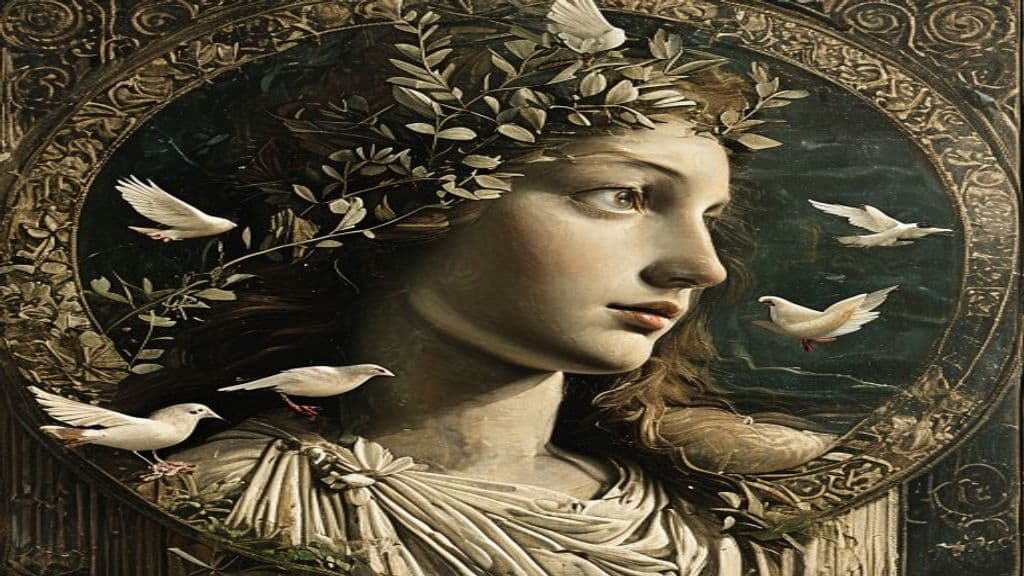
Aphrodite
Ancient

Aphrodite

Aphrodite is a major ancient Greek goddess associated with love, lust, beauty, pleasure, passion, procreation, and related social and cosmic forces. She is counted among the principal Olympian deities with major cult-centers (Cythera, Cyprus, Corinth, Athens), celebrated annually at the Aphrodisia, and syncretized with the Roman Venus.

Arachne
Lesser

Arachne

Arachne is a mortal woman from classical Greco-Roman myth (best known from Ovid's Metamorphoses, Book 6) whose unrivaled weaving skill and challenge to the goddess Athena/Minerva lead to her metamorphosis into a spider; the tale functions as an etiological myth explaining why spiders spin webs and as a cautionary exemplum about hubris toward the gods.

Architeles
Minor Spirit

Architeles

Architeles (Ancient Greek: Ἀρχιτέλης) is a personal name attested for multiple human figures in ancient Greek mythic and historical literature. The name appears in genealogical contexts (son of Achaeus; brother of Archander) and in a Calydonian/Oeneus cycle episode as the father who forgave Heracles for accidentally killing his cupbearer.

Arduinna
Ancient

Arduinna

Arduinna is a local Gallo-Roman tutelary goddess of the Ardennes (Arduenna) — a divine personification of wooded heights — attested in two inscriptions and later equated with the Roman Diana. Iconography associating her with a boar-riding huntress exists in modern literature but the identification is uncertain.

Areilycus (Archilycus)
Lesser

Areilycus (Archilycus)

Areilycus (Ancient Greek Ἀρηίλυκος; also attested Archilycus/Areilykos) is a personal name in Greek epic and later mythography. It appears in two distinct Homeric-era attestations: as a genealogical father of Boeotian leaders (Arcesilaus/Archesilaus and Prothoenor) and as a mortal warrior, son of Menoetius, wounded in the thigh by Patroclus in Iliad Book XVI.

Areius
Minor Spirit

Areius

Areius (Ancient Greek: Ἀρεῖος) is primarily an epithet used in Greek and Roman cultic and literary contexts, most notably applied to Zeus to denote a warlike or propitiatory/atoning aspect; it also appears as a personal or mythic proper name in classical onomastic and historiographic sources.

Ares
Ancient

Ares

Ares (Ancient Greek: Ἄρης) is the ancient Greek Olympian god of war who personifies the physical violence, valor, and bloodlust of combat. Worshiped irregularly across Greece and Asia Minor, he was both honored and ritually restrained by communities that sought to direct his martial power toward protection rather than wanton destruction.

Ares Lusitani
Lesser

Ares Lusitani

Ares Lusitani is a Latinized designation for a Lusitanian/Gallaecian deity identified with horses and knights; the figure is known through Greco‑Roman interpretative labeling and is placed in the cultural area of ancient Lusitania and Gallaecia (modern Portugal and Galicia, Spain). Very little else about worship, appearance, or ritual is recorded in the available sources.

Arethusa
Lesser

Arethusa

Arethusa is a freshwater nymph of Greek myth who, pursued by the river-god Alpheus while serving as a chaste attendant of Artemis/Diana, transforms into a spring and emerges on the island of Ortygia (Syracuse). Her myth explains a subterranean link between distant waters and serves as a civic emblem of Syracuse.

Argeus
Minor Spirit

Argeus

Argeus (Ancient Greek: Ἀργεύς, "the hunter") is a personal and place-name attested across classical, Christian, and modern contexts. The name labels several distinct referents — mythological individuals (including a king of Argos), a historical/legendary pretender, a Christian saint, and a Roman toponym for Mount Erciyes — rather than a single supernatural being.

Argia of Argos
Lesser

Argia of Argos

Argia (Argeia/Argea) is a mortal royal woman of Argos in the Greek epic and mythographic tradition. Daughter of King Adrastus, she is best known as the wife of Polynices of Thebes and mother of his sons, and is associated in poetic sources with the Necklace of Harmonia as an ill-omened heirloom she at times bears.

Argynnus
Lesser

Argynnus

Argynnus (Ἄργυννος) is a youthful mortal from Boeotia in Greek myth whose drowning in the Cephissus river moves Agamemnon to bury and memorialize him; Agamemnon is said to have established or honored a shrine to Aphrodite under the epithet derived from Argynnus. He is presented across sources as a beloved youth (friend, lover, or unreciprocating beloved) whose death serves an etiological role for a local cult epithet.

Arimanius
Ancient

Arimanius

Arimanius is a Greco-Roman rendering of the Iranian adversary Ahriman attested in classical literature (notably Plutarch) as the dark opposing principle to Oromazes/Ahura Mazda, and as a deity-name found on several Roman Mithraic dedications. Literary and inscriptional uses differ: Plutarch presents a morally malign, cosmological figure associated with pestilence and darkness, while Mithraic inscriptions invoke the name in dedicatory contexts with ambiguous or reinterpreted valence.

Aristaeus
Lesser

Aristaeus

Aristaeus (Ancient Greek: Ἀρισταῖος) is a mythic culture-hero and minor godlike figure in Greek tradition, honored as the patron and transmitter of rural arts (notably beekeeping, dairying, olive cultivation, and viticulture). He functions as a liminal figure between mortal heroes and divinities, appearing in local cults across the Greek world and in literary narratives that explain the origin and restoration of pastoral practices.

Aristo of Chios
Minor Spirit

Aristo of Chios

Aristo of Chios (Greek: Ἀρίστων ὁ Χῖος, fl. c. 260 BC) was a Hellenistic Greek philosopher associated with the Stoic tradition who founded a distinct, ethics-focused current often labeled the Aristonians. A pupil of Zeno of Citium who later taught at the Cynosarges gymnasium in Athens, he is remembered for rejecting the Stoic emphasis on logic and physics and for advocating a narrowed, practice-oriented program centered on defining the Supreme Good.

Aristomachus
Lesser

Aristomachus

Aristomachus (Ancient Greek: Ἀριστόμαχος) is a Greek personal name borne by multiple historical and mythological individuals rather than a single supernatural being. Bearers include mythic figures listed in genealogies, two Hellenistic tyrants of Argos, a Crotonian political actor, a writer cited by Pliny on agriculture/domestic economy, a sculptor from the banks of the Strymon, and a Byzantine official in sixth‑century Egypt.

Arne Sithonis
Minor Spirit

Arne Sithonis

A figure from Ovid's Metamorphoses: a princess who accepted Minos' bribe to betray her island and was punished by the gods with metamorphosis into a black-footed, black-winged jackdaw forever attracted to gold and shining objects. The tale is attested only in Ovid (as preserved in modern summaries) and functions as a moral exemplum about greed and betrayal.

Arnemetia
Minor Spirit

Arnemetia

Arnemetia is a local Romano-British goddess attested by a shrine name at Aquae Arnemetiae (modern Buxton, Derbyshire). Her name links her to a sacred grove (nemeton) and to water, suggesting a place-centered divinity associated with spring(s) and grove cults.

Artemis
Ancient

Artemis

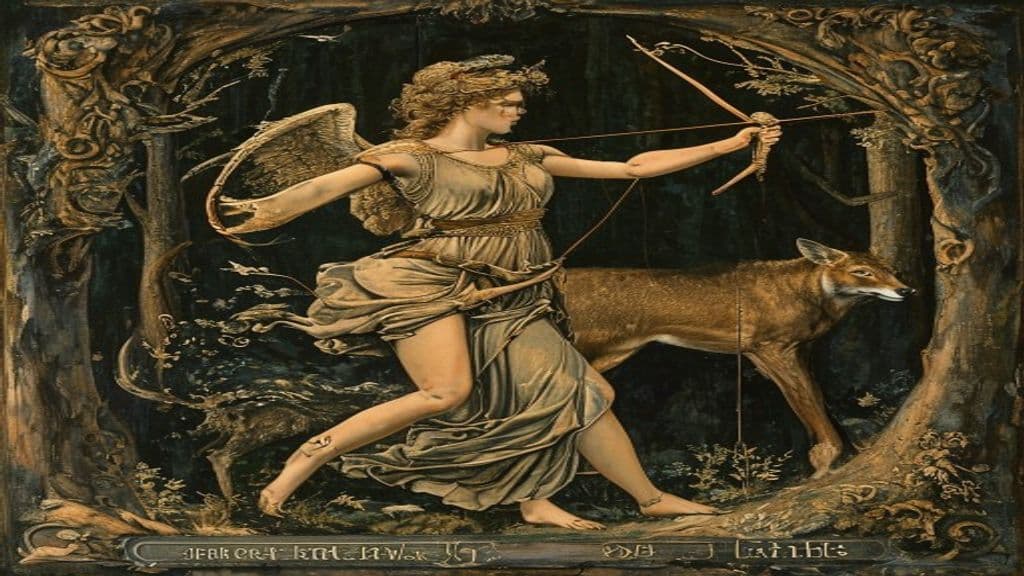
Artemis is an ancient Greek goddess of hunting, the wilderness and wild animals, transitions (especially childbirth and puberty), vegetation, and chastity. Twin sister of Apollo and daughter of Zeus and Leto, she functions as a protector of young children and maidens while also capable of inflicting disease or punishment for transgressions against her sacred laws.

Artio
Lesser

Artio

Artio is a Gaulish/Celtic goddess whose name literally means 'bear' (Gaulish Arti(o)-). She is attested in Roman-period contexts among the Helvetii and the Treveri by two short inscriptions and a Roman-period bronze statuette group (the Muri group). Scholars read her as an animal-associated tutelary deity linked to bears and to mediation between humans and wild animals.

Arvernus
Ancient

Arvernus

Arvernus is a Gallo-Roman theonym attested as a tribal epithet of the Arverni and identified with the Gaulish form of the Roman god Mercury in inscriptional and onomastic sources. The name functions as a localized manifestation of Mercury tying the Roman deity to the Arverni people and their territory (notably the Puy-de-Dôme / Auvergne lexical field).

Ascalabus
Minor Spirit

Ascalabus

Ascalabus is an etiological figure from Greek myth: a son of Misme who, after mocking the thirsty goddess Demeter as she drank a kykeon, is transformed into a gecko (Greek ἀσκάλαβος). The tale appears in accounts tied to Demeter's wanderings searching for Persephone and has a Roman variant in which he is called Stellio.

Ascanius
Lesser

Ascanius

Ascanius is a legendary Trojan prince in Greco‑Roman mytho-historical tradition, presented as the son of Aeneas and a dynastic founder who links the Trojan past to Italic and Roman genealogies (notably the Julian gens). He appears in literary and historiographical sources as a youthful warrior in Virgil's Aeneid and as a founder-king of Lavinium and Alba Longa in Roman tradition.

Asclepius
Ancient

Asclepius

Asclepius is the ancient Greek divine figure and hero of medicine who personifies curing, medical expertise, and sanctuary-based therapeutic practice. Worshipped at major healing centers (notably Epidaurus), he functions as both mythic miracle-worker (including traditions of restoring life) and the patron-model for professional physicians and ritual healing procedures.

Astarte
Ancient

Astarte

Astarte (Ancient Northwest Semitic ʿAṯtart; Hellenized Ἀστάρτη) is a major Bronze–Iron Age Levantine goddess worshipped in Canaanite and Phoenician contexts and widely syncretized across the ancient Mediterranean. Sources portray her with martial, erotic, and civic associations and attest organized cultic worship (temples, shrines, coin iconography) rather than folkloric anti‑spirit traditions.

Astraea
Ancient

Astraea

Astraea (Ancient Greek: Ἀστραία) is the star-linked personification of justice, modesty, and good faith in Greek myth who, according to literary sources, lived among humans during the Golden Age and later withdrew to the heavens, becoming the constellation Virgo. Ancient poets and later writers sometimes identify her with or contrast her to other justice-figures such as Dike.

Astyanax
Minor Spirit

Astyanax

In classical Greek and Roman literature Astyanax is the infant son of Hector and Andromache whose survival or death symbolizes the potential continuity of Troy's royal house. He is depicted as a mortal child whose fate is contested in the immediate aftermath of the sack of Troy; later medieval and Renaissance traditions sometimes recast him as a legendary founder-figure who survives.

Astydameia
Lesser

Astydameia

Astydameia (Ancient Greek Ἀστυδάμεια) is not a single supernatural being but an ancient Greek personal name borne by several mortal women in mythic tradition — queens, wives, and mothers who appear as genealogical and narrative nodes in the heroic age (figures associated with Peleus, Heracles, Acastus, Pelops, etc.). The name literally evokes civic rulership, and the bearers act within social and political roles rather than as spirits or deities.

Astylus
Minor Spirit

Astylus

Astylus is a taxonomic genus of beetles in the family Melyridae (more than 110 described species), and the name also appears in the archaeological record as the appellation of a caupona (inn/shop) excavated at Pompeii. Sources treat Astylus as entomological and archaeological, with no attested folkloric or supernatural identity.

Astynome
Lesser

Astynome

Astynome (Ancient Greek: Ἀστυνόμη) is not a single supernatural being but a personal name attested for several different mortal women in Greek mythic and genealogical traditions — for example, a Niobid, a daughter of Talaus and mother of Capaneus, a captive woman identified with Chryseis in Trojan War material, and a woman transformed into a rock after seeing Artemis naked.

Ataegina
Lesser

Ataegina

Ataegina is a local goddess worshipped in the ancient Iberian Peninsula (Lusitania, Baetica and neighbouring areas). Epigraphic evidence from Roman‑era inscriptions associates her with the Roman Proserpina and presents her as a deity whose functions encompass underworld/night aspects and/or seasonal renewal (rebirth, spring).

Atepomarus
Lesser

Atepomarus

Atepomarus is a named Gaulish deity attested in epigraphic and mythographic sources. He appears primarily as an epithet attached to Graeco‑Roman gods (notably Apollo and sometimes Mercurius) in healing‑sanctuary contexts and also appears as a legendary founder figure paired with Momorus in a foundation myth of Lugdunum.

Athamas
Lesser

Athamas

Athamas is a legendary Boeotian king from Greek myth whose tragic family conflicts, madness induced by a deity, and subsequent exile are used etiologically to explain place-names (e.g., Hellespont), cultic transformations (Ino → Leucothea; Melicertes → Palaemon), and the origin of the Athamanian people and region.

Athena
Ancient

Athena

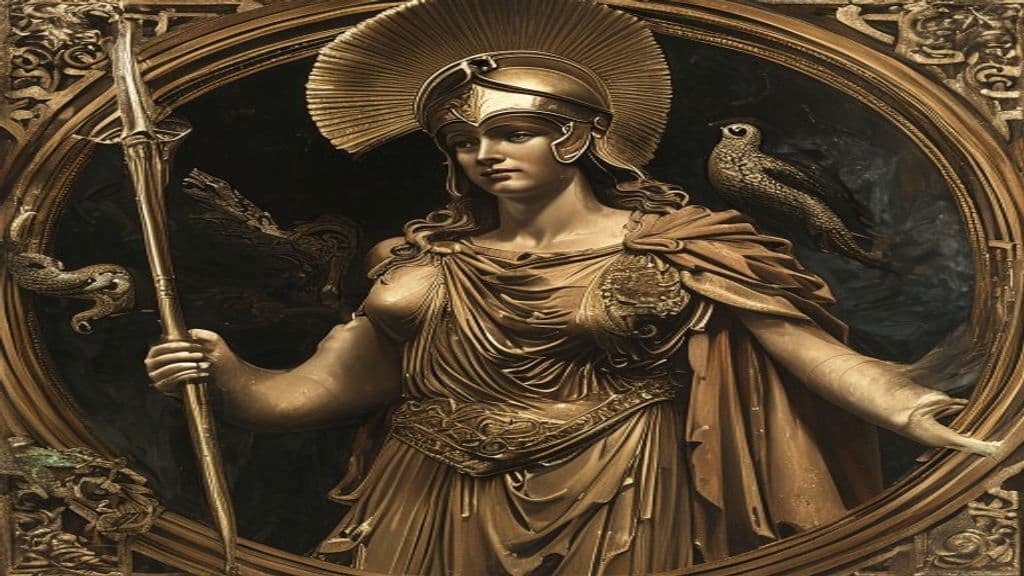
Athena is a major ancient Greek goddess associated with wisdom, handicraft (notably weaving), and warfare; she serves as a tutelary protector of cities—most prominently Athens—and is central to myth, cult, and civic identity in the Greek world.

Athis
Minor Spirit

Athis

Athis is an obscure named figure attested only in modern reference listings as part of the corpus of Greek and Roman mythology. The supplied sources provide the name but no primary narrative, attributes, ritual traditions, or consistent biographical details.

Atropos
Ancient

Atropos

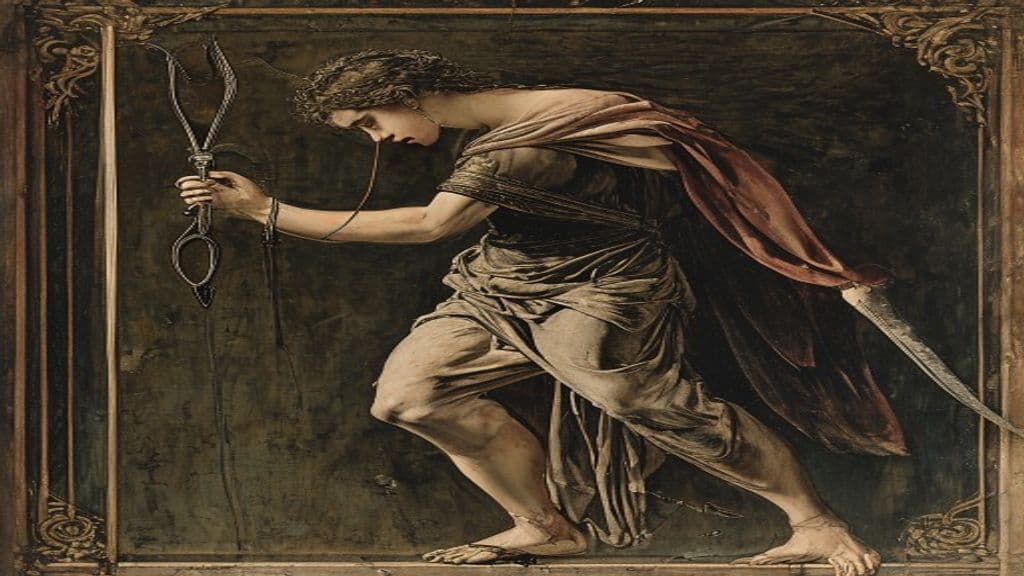
Atropos is the third of the Three Fates (Moirai) in Greek myth, the named agent who executes the termination of mortal lives by cutting their life-threads. She embodies finality and inflexibility in the ordering of life and death.

Attis
Lesser

Attis

Attis is a mythic consort and semi-divine cult figure associated with the Anatolian Mother Goddess (Cybele / Agdistis). He functions as a vegetation-associated beloved whose self-castration, death, and ritual rebirth form the core myth enacted by his priests and festivals, especially around the vernal equinox in Phrygia, Greece and later Rome.

Atys (King of Alba Longa)
Ancient

Atys (King of Alba Longa)

Atys is a legendary/regnal figure listed among the kings of Alba Longa in Roman foundational and genealogical tradition. He appears in regnal lists that connect the Aeneadic founders of Latium to later lines; ancient sources preserve his name but provide no narrative or supernatural attributes.

Aulus Vibenna
Lesser

Aulus Vibenna

Aulus Vibenna (Etruscan Avile Vipina) is a remembered historical and legendary Etruscan aristocrat and military leader from Vulci, attested in mid-1st millennium BCE inscriptions and tomb painting. He appears in votive dedications (a bucchero chalice) and in the François Tomb fresco cycle alongside his brother Caelius and companions such as Mastarna (identified with Servius Tullius in later tradition).

Aura
Lesser

Aura

Aura (Ancient Greek Αὔρα, plural Αὔραι) is a minor Greek and Roman divine figure personifying a cool breeze. She appears both as an individual breeze-nymph in literary accounts (most fully in Nonnus) and as a class of breeze-spirits (Aurae) in other sources and lexica.

Automedon
Minor Spirit

Automedon

Automedon (Ancient Greek Αὐτομέδων) is a named mortal charioteer in the Homeric epic tradition, best known as the trusted driver of Achilles who manages the immortal horses Balius and Xanthos and acts as a combatant in episodes of the Iliad. He appears in scenes surrounding Patroclus' death and in later Roman reference (Virgil's Aeneid).

Aventine Triad
Ancient

Aventine Triad

A collective cultic grouping of three Roman deities—Ceres, Liber (Liber Pater) and Libera—venerated from the early Republic in a temple-temenos on or near the Aventine Hill. The label 'Aventine Triad' is modern scholarly shorthand for a plebeian, agricultural and fertility-focused set of cults that functioned as a communal religious and political focus for Rome's plebs.

Aventinus
Lesser

Aventinus

Aventinus is a mytho-historical Roman figure presented in sources as a minor heroic/eponymous personage associated with the Aventine Hill and appearing in traditions surrounding Aeneas' Italian wars. He is variously described in brief accounts as a son of Hercules and the priestess Rhea (in Virgilian citation) and in alternate traditions as an early Latin/Alban king whose name explains the toponym Aventine.

Aventinus of Alba Longa
Ancient

Aventinus of Alba Longa

Aventinus of Alba Longa is a legendary king in the Alban/Latial regnal tradition, presented in ancient commentators and later summaries as an eponymous figure whose burial or shrine on the Aventine Hill provided an etiological explanation for that place-name. He appears in king-lists as a successor in the line purportedly descending from Aeneas and is variously dated in later regnal chronologies to the 9th–8th centuries BC.

Avernus
Lesser Spirit

Avernus

In Roman tradition, Avernus is a volcanic crater near Cumae (Cuma) in Italy associated with the underworld. (Note: 1. Power tier: Given that there are no reported interactions or abilities associated with Avernus as an entity, it should be classified as a Minor Spirit. 2. Appearance: There is no distinct physical )

Averruncus
Lesser

Averruncus

Averruncus (also Auruncus) is an ancient Roman divine name/agent associated with averting harm. Attested in Roman antiquarian discussion as a power invoked to ward off disaster to people and harvests, Averruncus appears both as a specialized protective function and as an indigitamentum (a ritual name or aspect) applied to greater gods to secure their local, protective action.

Aveta
Lesser

Aveta

Aveta is a local maternal deity attested in Roman-period Gaul, chiefly among the Treveri around Augusta Treverorum (Trier). She is represented in altars and terracotta votive figurines emphasizing motherhood and fertility; some scholars interpret associated evidence as indicating links with springs and healing.

Bacchis
Minor Spirit

Bacchis

Bacchis is not attested in the provided sources as a supernatural being; the name appears in historical, literary, and scientific contexts (the Bacchiadae clan of ancient Corinth, a modern biological genus, and titles/characters in classical drama collections). No folkloric cosmology, powers, appearance, or rituals for a spirit called Bacchis are documented in the supplied material.

Bacchus
Ancient

Bacchus

Bacchus is the Roman identification of the Greek god Dionysus, a deity associated with wine, vegetation and fertility, ritual ecstasy and theatrical performance. In Roman religion he is conflated with the Italic Liber and known for rites that induce possession, frenzy (baccheia), and group revelry.

Bandua
Lesser

Bandua

Bandua is a theonym attested in Roman‑period epigraphic sources from north‑west Iberia (Galaico‑Lusitanian area). The name appears with many localizing epithets and is reconstructed by scholars as a local tutelary or protective divine figure (or a set of closely related local figures) with occasional Roman syncretism to Mars.

Basilisk
Greater

Basilisk

A legendary serpent from classical and medieval bestiary tradition, the basilisk is described as a paradigmatic "king" of serpents whose gaze, breath, or venom is fatal and whose presence scorches and corrupts the surrounding environment. Treated variously as a monstrous animal, materia for alchemy, and a locus of local legend, it features recurrent countermeasures (weasel, rooster, mirror) in the sources.

Battus
Lesser

Battus

Battus (Ancient Greek: Βάττος) is a mortal figure in Greek and Greco-Roman tradition who, in the Hermes–Apollo cattle-theft episode, witnessed Hermes stealing Apollo's cattle, accepted a heifer for silence, later betrayed the secret and was punished by being turned into stone. The name also appears separately in Greco-Roman legend as a semi-legendary king of Malta who sheltered Anna Perenna; sources do not identify the two attestations as the same individual.

Baucis and Philemon
Lesser

Baucis and Philemon

An elderly, impoverished married couple from Ovid’s Metamorphoses who exemplify ritual hospitality (xenia) by welcoming disguised gods; as a divine reward they are granted guardianship of a temple and, at death, are transformed into an intertwined oak and linden.

Bebryces
Lesser

Bebryces

The Bebryces (Greek: Βέβρυκες) are a legendary people or tribe attested in Greek mythographic and geographic tradition, primarily located in Bithynia (northwestern Anatolia). They appear in heroic-age narratives as local rulers and warriors—not as supernatural beings—and are associated with episodes involving Heracles, the Argonauts, and named kings such as Amycus and Mygdon.

Belatucadros
Lesser

Belatucadros

Belatucadros is a native Brittonic/Celtic deity attested in northern Britain (modern Cumbria) whose cult continued into the Roman period; in Romano-British inscriptions he is commonly equated with the Roman god Mars (Mars Belatucadrus). Archaeological evidence shows roughly 28 inscriptions in the Hadrian's Wall region and small, simple altars, suggesting a local tribal protector and martial focus worshipped by Britons and lower-ranked Roman soldiers.

Belenus
Greater

Belenus

Belenus (Gaulish Belenos/Belinos; Latin Belenus/Belinus) is an ancient Celtic healing and protective deity whose cult was widespread across Celtic-speaking regions and whose worship continued into the Roman period, often equated with Apollo; he is especially associated with medicinal springs and civic protection (notably Aquileia).

Belisama
Ancient

Belisama

Belisama is a Gaulish goddess attested in Roman-period inscriptions and place-names. Epigraphic evidence records formal dedications (including a nemeton and a votive sacrum) and at least one inscription equates her with the Roman Minerva; scholars debate whether her name denotes brightness, strength, or a plant-name, and toponymic evidence also suggests riverine associations.

Bellōna
Ancient

Bellōna

Bellōna is an ancient Roman goddess personifying war, especially the destructive, bloody, and tumultuous aspects of armed conflict. She had an active civic cult in Rome (including a temple associated with a war column, the columna bellica) and appears frequently in Roman literature and art as an armed, helmeted female figure who accompanies or intensifies battle.

Belus (Tyre)
Ancient

Belus (Tyre)

Belus is the Greco‑Latin umbrella rendering of Semitic lord‑titles (bēlu/baʿal) that in classical literature appears in multiple guises; in Latin epic and genealogical tradition he functions as a legendary king of Tyre, presented as the father of Dido and Pygmalion and as an ancestral founder figure rather than a defined supernatural being.