Roman Supernatural Beings

615 documented Roman supernatural beings from the Evil Eye grimoire, including 329 lesser and 100 ancient in power tier.

page 5 of 11

Chryseis
Lesser

Chryseis

A mortal woman in Greek myth best known from Book 1 of the Iliad as the daughter of Chryses, a priest of Apollo, taken as a captive/concubine by Agamemnon; her father's supplication to Apollo and the resulting plague force Agamemnon to return her, illustrating the nexus of religious and political obligation in the epic. Later traditions give her personal names (Astynome) or rework her into medieval figures such as Cressida and, in some post-Homeric accounts, assign her children by Agamemnon.

Cicolluis
Lesser

Cicolluis

Cicolluis (Latin Cicolluis, Cicollus; reconstructed Gaulish *Cicolluos) is the tutelary god of the Lingones in eastern Gaul attested in Roman‑period votive inscriptions, commonly identified with the Roman god Mars (inscriptional formula Mars Cicolluis). He is regularly paired with an earth goddess, Litavis, and is interpreted by scholars as a local territorial protector with possible fertility or chthonic associations when read alongside Litavis.

Cinna
Minor Spirit

Cinna

Cinna is a proper name applied across multiple unrelated referents in classical history, geography, biological taxonomy, and modern culture. The provided sources treat Cinna as a Roman family name and individual Romans, an ancient town in Galatia, a genus of grasses, and various modern literary, musical, and vernacular uses rather than as a singular mythological or supernatural being.

Cinyras
Lesser

Cinyras

Cinyras is a mythic human king and eponymous founder-figure in Greek and Roman literary traditions, chiefly associated with Cyprus (notably Paphos). He functions as a legendary ancestor, founder of priestly lines connected to the cult of Aphrodite Paphia, and the tragic protagonist of the Myrrha–Adonis cycle; classical authors also link him with musical skill and eastern (Phoenician/Cilician/Byblian) cultural connections.

Circe
Greater

Circe

Circe is a figure of Greek myth known as a practitioner of potent pharmacological and ritual arts who occupies a liminal status between goddess, nymph, and witch. She is famed for her knowledge of herbs and potions, her ability to transform humans into animals in narrative episodes, and for performing ritual purification in at least one classical source.

Cisseus
Minor Spirit

Cisseus

Cisseus is a personal name borne by several distinct human figures in ancient Greek and Roman mythic traditions. Bearers of the name appear as kings, fathers, warriors, and members of dynastic genealogies across Homeric, tragic, mythographic, and Roman epic sources rather than as a single supernatural being.

Cissonius
Ancient

Cissonius

Cissonius is a native surname or epithet attached to the Roman god Mercurius (Mercury) in the Gallo‑Roman epigraphic record of the imperial period. Attested in Latin votive inscriptions chiefly from Germania Superior (the Rhineland and Swiss plateau) with outliers in Gallia Belgica, Germania Inferior, and Raetia, the name appears both as Mercurius Cissonius and alone as deus Cissonius, indicating a localized cult identity within the syncretic Roman‑Gaulish religious landscape.

Cleite (Clite / Κλείτη)
Lesser

Cleite (Clite / Κλείτη)

Cleite (Ancient Greek: Κλείτη) is a personal name borne by several mortal women in Greek myth rather than a single supernatural class. Figures called Cleite appear in different epic cycles—Argonautica, the Danaid traditions, the Trojan cycle, and Nonnus' Dionysiaca—typically as wives, mourners, maenads, or mothers whose narrative fates include grief, filial ties, and in one tradition metamorphosis into a spring.

Cleobule
Lesser

Cleobule

Cleobule (Ancient Greek: Κλεοβούλη, Kleoboúlē) is a conventional female personal name in ancient Greek mythic genealogies borne by several distinct women. The name appears in multiple, sometimes conflicting traditions as mothers or wives who establish lineage for various heroes and figures in the Homeric/Trojan War cycle and regional myths.

Clitumnus
Lesser

Clitumnus

Clitumnus is the personalized river-deity of the Clitunno (Clitumnus) spring and river in Umbria attested in Roman antiquity. Treated as a local god resident in a sacred grove and temple, he was consulted for oracles and associated in literature with white cattle and ritual consecration of sacrificial animals.

Cloacina
Lesser

Cloacina

Cloacina is a minor Roman divinity associated with the Cloaca Maxima (and the original Velabrum/Spinon stream), worshipped at a small public sacellum in the Roman Forum. She is linked to purification by moving water, civic sanitation, and rites of reconciliation, and is sometimes syncretized with Venus under the epithet Venus Cloacina.

Clonius
Lesser

Clonius

Clonius (Ancient Greek: Κλονίος, Kloníos) is a personal name used for several mortal characters in Greek and Roman epic narratives. Bearers of the name appear as a Boeotian Achaean captain in the Trojan War, as an illegitimate son of Priam, as companions of Aeneas killed in Italy, and as a defender of Thebes in the war of the Seven against Thebes.

Clotho
Ancient

Clotho

Clotho is one of the three Moirai (the Fates) of ancient Greek myth, traditionally described as the spinner who spins the thread of human life. As part of the triad with Lachesis and Atropos, she is implicated in determining birth and the commencement of an individual's life-thread and appears in myths where the Fates influence mortals and gods.

Clytius
Greater

Clytius

Clytius is a personal name (Ancient Greek Κλυτίος, Klytios) borne by numerous distinct figures in Greek myth — including several mortal warriors, princes, attendants, and at least one Giant counted among the earth-born opponents of the Olympian gods. As a Giant Clytius appears in Gigantomachy narratives and vase-painting iconography; as a mortal the name recurs in epic genealogies and lists. The lexical form also survives in modern taxonomic usage for insects and butterflies but this reception is separate from the ancient mythic tradition.

Clytoneus
Lesser

Clytoneus

Clytoneus is a personal name in ancient Greek mythic genealogies and epic narrative borne by at least two mortal figures: an Argive genealogical ancestor (also attested as Clytius) linked to seafaring descendants, and a Phaeacian prince, son of Alcinous and Arete, who competes in the athletic games for Odysseus in the Odyssey.

Cocidius
Lesser

Cocidius

Cocidius is a Romano-British local deity attested in northern Britain (Hadrian's Wall corridor and Cumbria). Roman writers and inscriptions equate him with Mars and Silvanus; archaeological remains (inscriptions, carved figures, rock-face shrines) indicate a localized cult associated with martial and woodland functions.

Concordia
Lesser

Concordia

Concordia is the Roman personification and goddess who embodies agreement and harmony, especially within marriage and in broader civic society. The name also appears in later secular toponyms and institutions derived from the same lexical root, but those are distinct from the mythological figure.

Condatis
Lesser

Condatis

Condatis is a local Celtic deity attested in Roman Britain, known from a small group of Latin votive inscriptions in which he is consistently identified with the Roman god Mars (inscriptions read 'Mars Condatis'). The name derives from the Celtic word condate, 'confluence', and the deity is associated with river‑junctions and related sacred geography; some scholars have proposed a link with healing waters, but direct ritual details are not preserved.

Consus
Lesser

Consus

Consus is a chthonic Roman deity associated with the safeguarding of grain, subterranean storage (silos, bins) and the hidden seed; his cult included earth-covered altars and public festivals (Consualia) featuring equestrian games and rites tied to harvest and settlement ceremonies.

Cornucopia (Roman Tradition)
Primordial

Cornucopia (Roman Tradition)

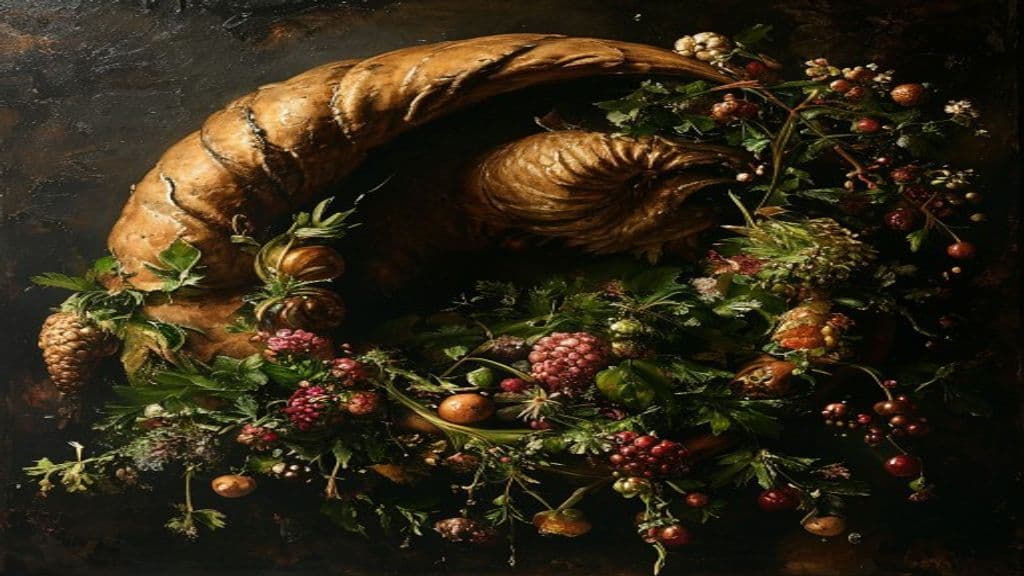
In Roman tradition, the Cornucopia is a symbol of abundance and nourishment, often depicted as a horn-shaped container overflowing with produce. (Note: 1. Power tier should be Primordial does not seem correct as Cornucopia is described as a symbol, not an entity with cosmic powers. 2. Origin story should mention Roman tradition or clarify that it ori)

Corocotta
Lesser

Corocotta

Corocotta is a name attested in two related registers: a Cantabrian legendary/historical human figure remembered as a guerrilla leader or bandit active during the late 1st century BC, and a classical natural-history term for an exotic canid/felid‑like beast (often equated with the spotted hyena) described in Greco‑Roman literature. The two usages overlap by name but represent distinct traditions—local oral memory of resistance and wider Roman wonder‑literature about exotic animals.

Corona Australis
Greater

Corona Australis

A constellation in the Southern Celestial Hemisphere associated with various cultural interpretations. (Note: 1. Power tier should be "Primordial" as Corona Australis is an astronomical object and not a deity-level entity. 2. Abilities are not mentioned in the source material; delete this section entirely. 3.)

Corynaeus
Lesser

Corynaeus

Corynaeus is the proper name of one or more mortal followers of Aeneas appearing as minor agents in Virgil's Aeneid: a ritual performer conducting a lustration after Misenus' burial (Book VI) and combatants mentioned in battlefield scenes (Books IX and XII). Scholarly sources note textual ambiguity about whether these mentions denote a single individual or multiple men sharing the same name.

Coventina
Lesser

Coventina

Coventina is a Romano-British water goddess attested at a single large votive spring complex (Coventina's Well) at Carrawburgh (Brocoliti/Procolitia) on Hadrian’s Wall. Archaeological evidence shows Roman-style altars, reliefs and large votive deposits indicating a localized cult in which the spring functioned as a focus for offerings and dedications.

Crenaeus
Lesser

Crenaeus

Crenaeus is a minor named figure in Roman-era treatments of Greek myth, attested as a son of the rustic god Pan and recorded as a combatant killed during the Theban wars in Statius' Thebaid (Book IX). He is presented as a local, place-linked offspring figure that connects Pan to Theban riverine tradition rather than as an independently worshipped deity.

Creneis
Lesser

Creneis

Creneis (also spelled Crenis) is attested in classical sources as one of the fifty Nereids, the sea-nymph daughters of Nereus and the Oceanid Doris. Her attestation in the surviving material is genealogical: she appears as a named member of the Nereid cohort in name-lists rather than as an individuated figure with distinct myths, cult, or attributes.

Creusa of Troy
Lesser

Creusa of Troy

Creusa of Troy is a mortal figure in Greek and Roman myth: a Trojan princess, daughter of Priam and Hecuba, wife of Aeneas, and mother of Ascanius. She appears in accounts of the sack of Troy as a member of Aeneas’s household who flees with him but is separated and lost during the city's fall, functioning as a familial and narrative node linking Trojan royalty to the Aeneadic foundation tradition.

Criasus
Lesser

Criasus

Criasus (Ancient Greek: Κρίασος, Kriasos) is presented in Greek mytho-historical sources as a legendary king of Argos, situated in Argive genealogies as son of Argus and ancestor of later rulers. He is credited with a fifty-four-year reign and appears chiefly as a dynastic and chronological anchor in later synchronistic chronologies.

Crinisus
Primordial

Crinisus

A Roman god associated with the Sicilian river Crinisus, able to transform into a dog. (Note: - Power tier should be Ancient (deity-level) instead of Primordial - Origin story summary is incorrect; it was in dog form that he fathered Acestes, not as a deity - Appearance description is incomple)

Cronus
Ancient

Cronus

A principal Titan in ancient Greek myth, Cronus (Κρόνος) is the youngest leader of the Titans who overthrew his father Uranus, ruled in the mythic Golden Age, devoured his newborn children to avert a prophecy, and was later overthrown by his son Zeus and confined to Tartarus. He is associated in some traditions with the harvest and is later equated with the Roman Saturn.

Cunomaglus
Ancient

Cunomaglus

Cunomaglus is a Celtic epithet applied to the Greco‑Roman god Apollo at a Romano‑British sanctuary in Nettleton Shrub, Wiltshire. The name, translated as 'Hound Lord', appears on a votive inscription and marks a localized aspect of Apollo associated in the sources with hunting and possibly healing.

Cupid
Ancient

Cupid

Cupid (Latin: Cupīdō or Amor) is the Roman god of desire, erotic love, attraction, and affection, depicted in classical and later Western art and literature as a youthful, often winged figure whose arrows inspire love or aversion.

Cybele
Ancient

Cybele

An Anatolian mother goddess (Phrygian Matar Kubileya) whose cult centers on mountains, city protection, fertility, and wild nature; adopted and reinterpreted by Greek and Roman religion where she became associated with ecstatic rites, a eunuch priesthood (the Galli), and the Roman Magna Mater cult.

Cyclopes
Ancient

Cyclopes

In Greek myth, the Cyclopes are one-eyed giant beings appearing in several related roles: Hesiodic primordial smith-craftsmen (Brontes, Steropes, Arges) who forged divine weapons; Homeric cave-dwelling pastoral giants exemplified by Polyphemus who act outside polis norms; and a traditional class of superhuman masons credited with monumental "Cyclopean" walls.

Cyclops
Greater

Cyclops

In ancient Greek tradition the Cyclopes are one‑eyed giant beings appearing in multiple, sometimes contradictory strands: Hesiodic primordial artisan brothers who forge the gods' arms; Homeric solitary, cave‑dwelling shepherd‑monsters such as Polyphemus; and a legendary explanation for monumental ‘Cyclopean’ masonry.

Cycnus of Aetolia
Lesser

Cycnus of Aetolia

Cycnus (Kyknos) of Aetolia is a mythic Aetolian prince, traditionally described as a son of Apollo by Hyrie/Thyrie and situated in Calydonian/ Aetolian narrative cycles. He appears in sources as a semi-divine youth, variously cast as a princely figure involved in erotic episodes (traditionally the beloved of Phylius in some retellings) and as a combatant referenced in heroic/martial catalogues and poetic metamorphosis traditions.

Cydon
Minor Spirit

Cydon

Cydon (Greek Κύδων) is a personal name used for multiple mortal figures in ancient Greek myth and epic: an eponymous founder associated with Cydonia in Crete, several warriors appearing in war-cycles (including the Seven against Thebes and the Lemnian massacre), an ally in Virgil's Aeneid, and even the name of a horse in epic catalogue. The name functions onomastically rather than designating a single supernatural being or class.

Cyllarus
Lesser

Cyllarus

Cyllarus is a named centaur from Greco-Roman myth, attested in Ovid's Metamorphoses (Book XII) as a handsome and valiant warrior who fought in the centaur–Lapith battle and was fatally wounded by a spear, dying in the arms of his wife Hylonome.

Cymothoe
Lesser

Cymothoe

Cymothoe (Ancient Greek: Κυμοθόη, Kymothoê) is one of the fifty Nereids in Greek mythology, a daughter of Nereus and Doris. Etymologically glossed in modern reference as 'wave‑swift' and described in some summaries as associated with gentle, quiet waves, she appears in literary and artistic sources as a named sea‑nymph who can aid mortals at sea (notably in the Aeneid tradition assisting Aeneas).

Cyrene
Lesser

Cyrene

Cyrene is an eponymous ancient Greek mythological heroine associated with the North African city of Cyrene and remembered chiefly as a mortal lover of the god Apollo and as an aetiological figure whose name is applied to place and artistic types in Greco-Roman culture.

Cytherus (Kytheros)
Lesser

Cytherus (Kytheros)

Cytherus (Ancient Greek Κύθηρρος / Κύθηρος; also attested as Cytherum, Kytheron) appears in ancient Greek sources in two distinct registers: as a local river‑god (potamos) of a small Elis stream tributary to the Alpheios, and as a place‑name — one of the twelve cities of ancient Attica that later functioned as a deme. The sources do not present an overlapping narrative uniting the two uses beyond isolated mythic onomastic links (e.g., Pausanias’ note about the Ionides).

Cyzicus
Minor Spirit

Cyzicus

Cyzicus (Ancient Greek: Κύζικος, Kúzikos) is a mytho-historical eponymous king in Greek tradition, presented as ruler of the Dolionians on the southern shore of the Propontis (Sea of Marmara). He is remembered principally as the eponymous founder/leader after whom the city of Cyzicus was named; surviving summaries do not attribute supernatural powers or a distinct cult to him.

Daedalion
Lesser

Daedalion

Daedalion (Ancient Greek: Δαιδαλίων) is a figure from Greek myth: a son of Hesperos/Phosphorus, father of Chione, and brother of Ceyx who, grieving his daughter's death, attempts suicide and is transformed by Apollo into a hawk. The metamorphosis is presented etiologically to explain hawk strength and predatory habits as continuations of his character and grief.

Daemon (classical)
Minor Spirit

Daemon (classical)

In classical Greek and Roman contexts a daemon (daimon) denotes an intermediary spirit or nature-being that can be benevolent, ambivalent, or morally mixed. Daemons occupy an ontological position between gods and humans and appear as personal guiding signs, place-linked spirits, or participants in local cultic life rather than as categorically evil entities.

Damona
Lesser

Damona

Damona is a Romano-Celtic healing goddess attested in Latin votive inscriptions from Roman-period Gaul. She is a sanctuary deity of curative mineral and thermal springs, invoked for health, fertility, and therapeutic incubation; archaeologically she is known from sanctuary contexts and a fragmentary cult statue.

Danaïdes
Lesser

Danaïdes

In ancient Greek myth the Danaïdes are the fifty daughters of Danaus, king of Libya, who—at their father's command—all but one killed their husbands on their wedding night and were punished in the underworld with the eternal, futile labor of carrying water in sieves or perforated vessels. They function as a collective genealogical and moral exemplar in Argive tradition and appear in various literary, cultic, and artistic contexts.

Danuvius
Minor Spirit

Danuvius

Danuvius is a Latin toponym that appears in two distinct referents in the supplied sources: (1) a Latin name for the Danube and an ancient Roman river-deitypersonification; and (2) a modern paleontological genus name, Danuvius guggenmosi, applied to an ~11.6-million-year-old fossil ape discovered in southern Germany. The sources treat these as separate uses of the same Latin/place-rooted name rather than a single folkloric being.

Daphnis
Lesser

Daphnis

Daphnis is a legendary pastoral youth in Greek literary tradition, presented as a Sicilian cowherd and an etiological figure for pastoral song. Various ancient authors portray him as beloved or taught by gods and nymphs; his love-affairs, suffering (blinding, petrifaction, or death), and posthumous cultic commemoration at a spring make him a liminal bridge between humans, nature-spirits, and the divine.

Dardanians (Trojan)
Lesser

Dardanians (Trojan)

A named human people or subgroup in the Homeric Trojan tradition, repeatedly distinguished from the Trojans in epic formulae (e.g., the Iliad). Later Roman poets and classical writers used the ethnonym in genealogical and territorial discourse (Dardania, Dardanus).

Daughters of Danaus
Lesser

Daughters of Danaus

A collective of fifty royal daughters of Danaus in Greek mythology who flee forced marriages and, save one (Hypermnestra), obey their father's command to kill their husbands; later mythic tradition depicts them as condemned to an eternal, futile labor of carrying water in sieves or perforated vessels.

Daunus
Minor Spirit

Daunus

Daunus is attested in the provided sources as a named, eponymous regional ruler invoked in Latin poetic geography (not as a developed supernatural being). Most directly cited in Horace's Odes (III.30), the name marks the Daunians and parts of Apulia — especially the Aufidus/Ofanto river region — as a literary-place reference and emblem of local identity.

De Divinatione
Primordial

De Divinatione

An abstract concept in Roman tradition related to prophecy and divination, described in De Divinatione by Cicero. (Note: * Power tier: The text does not support Primordial power, which typically refers to entities that are cosmic or universal in scope. A more accurate classification would be Ancient (deity-level), as it)

Dea Dia
Ancient

Dea Dia

Dea Dia is an ancient Roman agricultural goddess associated with fertility, growth, and daylight; her cult was maintained by the priestly college the Fratres Arvales, who performed a three-day festival in May in a sacred grove (lucus) and chanted the archaic Carmen Arvale to secure crop success. Her name is interpreted as 'Goddess of Daylight' or 'Bright Goddess' and she is sometimes identified with Ceres/Demeter.

Deianira
Lesser

Deianira

Deianira is a Calydonian princess in Greek myth, wife of the hero Heracles, whose acceptance of a deceitful 'love‑potion' from the dying centaur Nessus leads inadvertently to Heracles' agonizing death; she is portrayed as a tragic mortal figure in epic and dramatic traditions.

Deiphobos
Greater

Deiphobos

Deiphobos is a Trojan prince in Greek epic tradition, a son of Priam and Hecuba who fought in the Trojan War. Later epic and post-epic poets (Virgil, Chaucer in allusion) treat his household and fate among the episodes of Troy's sack; classical summaries also record him as a notable warrior who killed several named opponents.

Deiphobus
Lesser

Deiphobus

Deiphobus (Ancient Greek Δηΐφοβος) is a Trojan prince, son of King Priam and Hecuba, attested across Homeric epic and later Greek and Roman narratives as a warrior of the Trojan War. He appears in the Iliad among Trojan leaders, is given expanded roles in post‑Homeric sources (notably Euripides, Dares, Dictys, Malalas) and in Vergil’s Aeneid is depicted posthumously as a horribly mutilated corpse who recounts his death.

Deipyle
Lesser

Deipyle

Deipyle (Ancient Greek Δηιπύλη) is a mortal woman of the Argive royal house in Greek myth, daughter of Adrastus and Amphithea, who in many accounts marries Tydeus and is cited as mother of the hero Diomedes. She functions primarily as a genealogical link in heroic narratives rather than as a supernatural being.

Demoleon
Lesser

Demoleon

Demoleon (Ancient Greek Δημολέων) is a mortal Trojan warrior of the Homeric tradition, named as a son of Antenor and Theano. He is portrayed as a valiant, defensive fighter who is killed by Achilles during the Trojan War; later tradition links his family to postwar foundation legends (e.g., Patavium).

Demonassa
Minor Spirit

Demonassa

Demonassa (Ancient Greek: Δημώνασσα) is not a supernatural being in the supplied sources but a personal name attested to several mortal women in Greek mythographic and literary traditions and later reused in biological taxonomy. Attestations include multiple mythic genealogical figures, a rhetorical anecdote of a Cypriot lawgiver, and later literary stock-character uses (notably Corinthian sexualized roles). The same lexical form is also applied in modern zoological nomenclature (a beetle genus and insect species epithets).

Demonice of Aetolia
Lesser

Demonice of Aetolia

Demonice (Ancient Greek: Δημονίκη, also attested as Δημοδίκη / Demodoce) is a mythic Aetolian princess in Greek genealogical tradition. She is presented as a mortal daughter of King Agenor of Pleuron who consorted with the god Ares and bore sons whose names serve as eponyms for local rivers, cities, and peoples of Aetolia and neighbouring regions.